
Google Vids Slides to Video: Convert a Deck into a Publishable Video

AI Overview
Can Google Vids turn Google Slides into a video?
Yes. In Google Vids, each selected slide becomes a scene, and speaker notes can become script material. You can import directly or use eligible Gemini features for voiceover, music, and animation.
How long is each imported slide scene?
Without generated voiceover, imported scenes default to five seconds. Treat that as a starting point, then shorten title cards and lengthen scenes that contain narration or a detailed demonstration.
What does Google Vids not import from Slides?
Google says WordArt and video files inside Slides are not imported into the Vid. Rebuild those elements in Vids, and verify media, fonts, animations, and timing before export.
Do you need Gemini to convert Slides to Vids?
No for a basic slide import, but AI-generated scripts, voiceovers, music, animation, and avatars require eligible access. Availability depends on the Google Workspace or Google AI plan attached to the account.
What Google Vids imports from Slides
Think in scenes, not pages
The central Google Vids slides to video behavior is simple: every selected slide becomes a separate scene. From Google Slides, choose File → Convert to Video. From a new Vid, choose a landscape project and then Convert Slides; from an existing Vid, use the same command under File. Select the presentation from Drive, choose the slides, and import.
That conversion preserves the deck as a sequence, not as a finished film. Google’s help says speaker notes can feed the script, while eligible Gemini features can generate a voiceover, apply music, add animation, and offer an AI avatar. You can switch the AI option off and bring in the slides as five-second scenes for manual editing.

Illustrative generated output: the goal is a believable work video with a human action, not a deck that merely advances on a timer.
The import has boundaries. Google currently documents up to 45 selected slides when AI generation is included and up to 100 without it. Existing audio may lower the selectable total because a Vid can contain a limited number of audio objects. The Slides conversion workflow warns when imported material would push the Vid beyond its documented ten-minute import limit. WordArt and embedded slide videos do not carry over.
This page focuses on turning a deck into a useful training, sales, or update video. If your real task is generating original cinematic scenes inside Flow, the Google Flow and Veo 3 guide covers a different workflow and search intent.
Prepare the deck as a scene plan
Give each slide one spoken job
Before importing, label what each slide must do: hook, context, instruction, demonstration, proof, or next step. A slide designed for a live presenter may contain six bullets because the speaker chooses what to emphasize. In a video, every line competes with narration and screen time. Rewrite each slide until its purpose can be stated in one sentence.
A practical eight-scene training structure is: title promise, why the task matters, required equipment, first action, critical warning, second action, common mistake, and completion check. Put the intended narration in speaker notes. Read it aloud and time it. A comfortable voiceover is usually slower than silent reading, so a dense 80-word note is not a five-second scene.
Separate what must remain exact from what can move. Legal wording, safety requirements, product names, dates, and measured results need deliberate on-screen treatment. Decorative icons and generic backgrounds can be simplified. If the deck contains confidential comments or hidden slides, audit them before conversion rather than assuming the importer understands editorial intent.
Replace slide language with visual evidence
“Scan every carton before loading” is better shown as a scan than repeated as a bullet. The frame below represents that visual beat. It is an illustrative generated image, not a Google Vids screenshot or claimed Vids output.

One slide idea becomes one observable scene: scan the carton, confirm the action, then move on.
Create a simple conversion sheet with four columns: slide number, spoken message, visible action, and target duration. That document becomes the acceptance plan after import. It also reveals slides that have no visual purpose and sections that need original footage.
Convert Google Slides with or without Gemini
Use the direct import for editorial control
For a controlled edit, turn off the option to include AI voiceover, script, background music, and animation. Import only the slides you intend to use. Each arrives as a scene with a default duration of five seconds. Open the Scripts panel, confirm that speaker notes appear where expected, and set timing from the actual narration rather than from the default.
The direct route is appropriate when a subject-matter expert has already approved the script, pronunciation, and claims. It avoids rewriting language during conversion. You still need to rebuild unsupported items, replace static visuals with footage where useful, and adjust transitions.
Use Gemini when the deck is a source, not a final script
If the account has eligible access, leave AI generation on and review the proposed script, voiceover, music, animation, and avatar before the Vid is fully generated. This can accelerate a rough cut, but it does not transfer responsibility for accuracy. Compare every generated sentence with the approved deck and notes. Check names, numbers, safety instructions, and policy wording.
Google lists AI Slides conversion support for English, French, German, Italian, Japanese, Korean, Portuguese, and Spanish. Do not assume the same experience for every locale or account. For a global release, approve one master script first and localize deliberately instead of allowing different generated versions to drift.
Rewrite slides into video beats
Build an action between scene boundaries
Static slides often cut from statement to statement. Video needs an action path. For each scene, define the starting state, visible change, and ending state. In the warehouse example, the scene begins with an unscanned carton, shows the handheld scanner contacting the label, and ends after the confirmation cue. That gives the editor a reason to stay on the shot.
Use short scene labels such as “manager establishes rule,” “worker scans parcel,” and “team verifies pallet.” Then write narration that adds information instead of describing the obvious. If the viewer can see a worker scanning, the voiceover should explain when the scan is required or what to do after an error.
The manager frame below illustrates a narration beat with room for a lower-third or short safety phrase. It is a generated editorial example, not a capture from Google Vids.

Turn a paragraph of notes into one clear spoken rule, one natural gesture, and one readable composition.
For a stronger story plan, the NotebookLM cinematic prompt guide shows how to convert source material into scene-level beats without treating a summary as a finished screenplay.
Add narration, motion, and media
Use the right kind of motion
Animation should direct attention, not prove that the page is now a video. Use a restrained entrance for a key label, a slow crop on a photograph, or a transition that indicates a new chapter. Avoid animating every object independently; constant motion makes safety and training material harder to follow.
When the deck needs a real demonstration, replace the static slide with recorded or generated footage. Plan the shot around the approved visual evidence, then bring the clip into Vids. The short motion sample below is an independent Seedance output that demonstrates the difference between a static product image and a controlled moving reveal. It is not a Google Vids generation or a feature benchmark.
Seedance motion example: use footage when rotation, handling, or process change is part of the message; keep exact labels as approved graphic elements.
If the deck contains only stills, create footage from the strongest approved frame in the Seedance text-to-video workspace, or use image-led generation when identity and composition are already fixed. Keep a record of which slide, note, reference, and clip belong together.
Record and check the voice path
Choose one narration method: AI voiceover, an avatar, a camera-and-screen recording, audio-only recording, or manually uploaded speech. Avoid mixing voices without a clear editorial reason. Pronounce names, acronyms, and numbers consistently. Leave short pauses around scene changes so the viewer can absorb the visual.
Music should sit below speech and never cover an instruction. Test the complete audio path with headphones and ordinary laptop speakers. If captions are required, finish the spoken script first; the free auto-subtitle workflow explains why transcript correction and export format must be reviewed separately.
Review and export the finished Vid
Run a scene-by-scene acceptance pass
Compare the imported result with the conversion sheet. For every scene, ask: does the visible action match the spoken message, is the duration long enough, is essential text readable, did unsupported content disappear, and does the transition preserve meaning? Then play the whole Vid without stopping. Local scenes can pass while the complete pace still feels mechanical.

Illustrative end frame: finish on a visible result and next step, not on the final bullet of the source deck.
Inspect the delivery version at the actual destination size. A slide that looked comfortable on a laptop may become unreadable inside a shared player or mobile crop. Check captions, music, voice level, link behavior, and any call to action. Confirm permissions for stock media and uploaded assets according to the account’s rules.
Export or share the approved Vid according to the audience. Keep the editable Google Vids file for collaboration and version history; export a video file to Drive when the destination needs a standalone asset. For additional cutting after export, the Seedance and OpenShot editing guide covers trimming, pacing, and assembly without changing the source deck.
Conclusion
Google Vids can convert Slides into scenes quickly, but a publishable video comes from editorial decisions after import: one job per slide, timed speaker notes, visible actions, deliberate narration, restrained animation, rebuilt unsupported media, and a full delivery review. Use Gemini to accelerate a draft only when its script and voice are checked against approved source material. To turn the deck, references, generated clips, review notes, and targeted reruns into one coordinated production brief, start with Seedance Agent.
Ready to try it yourself?
Put the steps from this guide into practice with Seedance and turn prompts or images into polished videos in minutes.
Free credits on signup. Plans from $20/month.
Related Articles
More posts in the same locale you may want to read next.
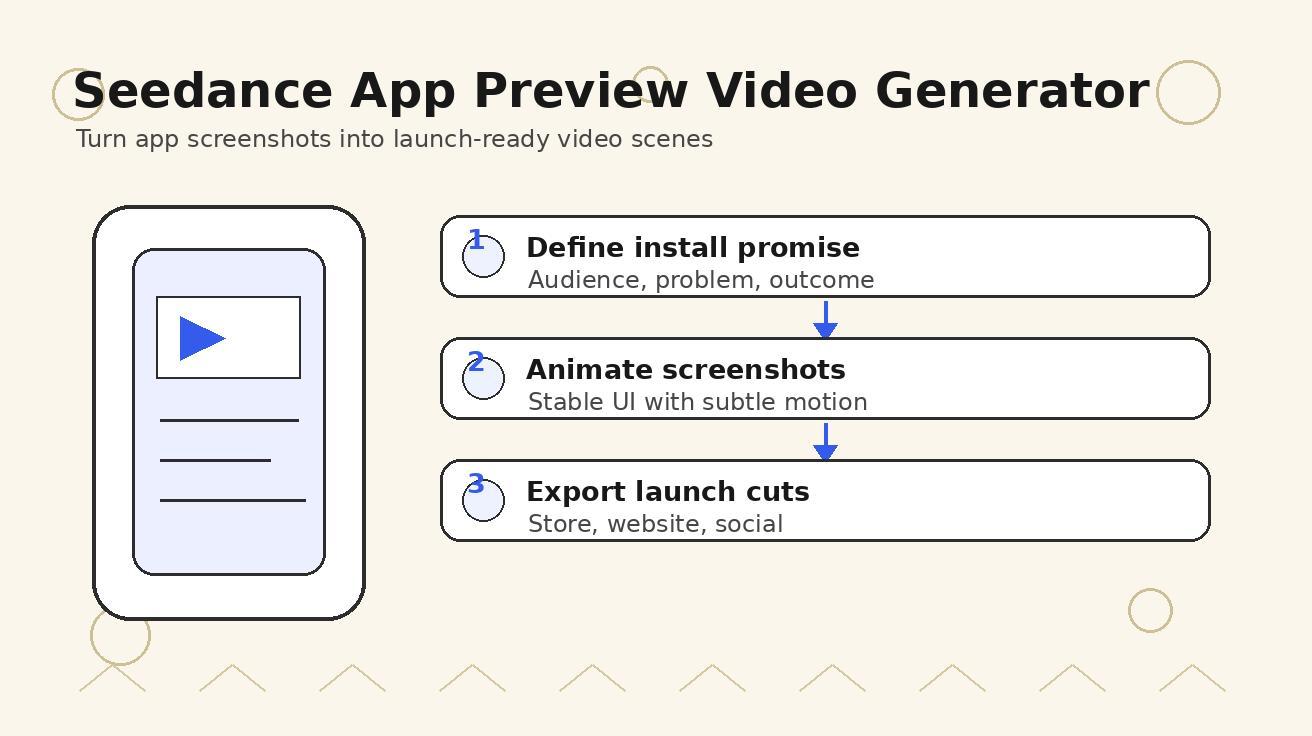
Seedance App Preview Video Generator 2026: Create App Store and Product Launch Clips
Use Seedance to turn app screenshots, feature copy, and launch goals into App Store previews, Google Play promo videos, and product launch clips.
Read article
MiniMax H3 Plastic Skin Fix for Video Ads: A Realism Workflow
Fix plastic-looking skin in MiniMax H3 video ads with better references, natural lighting, controlled prompts, motion review, and a clear regenerate-or-finish checklist.
Read article
VEED Auto Subtitles Free: A Practical Guide to Captions You Can Publish
Use VEED auto subtitles on a free plan, correct caption timing and style, understand watermark and SRT limits, and prepare a caption-ready video with Seedance.
Read article