
VidRush Pricing per Video Minute: What Each Finished Video Really Costs

AI Overview
How much does VidRush cost per finished video minute?
Published monthly-plan estimates range from about $1.83 to $2.72 per finished minute when using the standard Pro visual model with Medium reasoning. Your actual rate changes with the plan, model, reasoning level, and approved output length.
How many credits does one minute use?
VidRush documents 32 credits per minute for Mini with Low reasoning, 40 for Mini with Medium, 44 for Pro with Low, and 55 for Pro with Medium. Billing follows the completed video's duration rather than the requested duration.
What does a 10-minute VidRush video cost?
At the published monthly-plan estimates, ten finished minutes cost roughly $18.30 to $27.20 before extra usage. A rerender, unused monthly credits, or Pay-As-You-Go credit rates can make the effective cost higher.
Which VidRush plan offers the best value?
The best plan is the smallest one that covers your approved monthly output without frequent top-ups. Compare finished minutes, concurrency, team seats, and unused-credit risk—not only the advertised lowest per-minute number.
What VidRush Actually Charges per Finished Minute
VidRush is sold as a long-form production system rather than a five-second generative clip tool. Its published workflow combines research, scripting, narration, sourced footage, motion graphics, editing, and rendering into a finished video. The central billing unit is therefore the finished minute. That sounds simple, but two layers determine the bill: the subscription buys a monthly credit pool, while the model and reasoning choice determine how quickly that pool is consumed.
The documented generation rates are 32 credits per minute for Mini plus Low reasoning, 40 for Mini plus Medium, 44 for Pro plus Low, and 55 for Pro plus Medium. Mini is described as image-led storytelling with motion graphics; Pro adds video B-roll. Medium reasoning uses more credits because it allocates a stronger research and scripting route. Credits are deducted when a render completes, and a failed system job should not be charged according to the billing documentation.
Published plan estimates use Pro with Medium reasoning as the reference. On that basis, the current monthly figures are approximately:
| Plan | Monthly price | Monthly credits | Approx. finished minutes | Published price per minute |
|---|---|---|---|---|
| Starter | $99 | 2,000 | 36 | $2.72 |
| Creator | $239 | 6,000 | 109 | $2.19 |
| Pro | $639 | 18,000 | 327 | $1.95 |
| Scale | $1,750 | 50,000 | 909 | $1.93 |
| Studio | $4,990 | 150,000 | 2,727 | $1.83 |
These are planning estimates, not guaranteed rates. Pricing, tax, and annual discounts can change, so check the current checkout. Choose the model first: a Pro-Medium estimate does not describe a Mini-Low production.

This newly generated editorial example is not a VidRush benchmark. It shows the kind of research-heavy scene where script accuracy and shot relevance matter as much as image polish.
Calculate Your True Cost per Video
Start with the deliverable, not the subscription card. Write down target runtime, videos per month, visual model, reasoning level, and an approval allowance. Then calculate required credits as finished minutes × credits per minute. A channel publishing four 10-minute Pro-Medium videos needs about 2,200 credits, slightly above the 2,000-credit Starter pool. The nominal $27.20 cost of one ten-minute video does not reveal that the fourth upload pushes the month into a top-up or larger plan.
Use two cost views:
- Capacity cost: monthly plan price divided by the minutes the plan can generate at your chosen settings.
- Approved-output cost: total monthly spend divided by minutes you actually approve and publish.
Approved-output cost is the more honest number. If a $239 plan produces 80 published minutes rather than the estimated 109, the effective rate is $2.99 per approved minute. If only 60 minutes ship, it rises to $3.98. Unused credits also expire at the end of the billing cycle, so buying excess capacity creates the same effect from the other direction.
Make the same calculation for edit passes. VidRush documents editor rerenders at approximately 10% of the original generation cost. A full ten-minute Pro-Medium generation uses about 550 credits; one complete rerender adds roughly 55. Selective corrections are therefore economically important. Before generating, confirm delivery frame rate with the AI video frame-rate guide and lock narration requirements with the native-audio workflow. Preventable technical revisions should not consume the content budget.

A dense science sequence needs factual shot selection, visual continuity, and readable action. Count revision time when judging whether the per-minute rate is genuinely economical.
Choose a VidRush Pricing Plan by Publishing Volume
Starter is a test budget, not automatically the cheapest long-term choice. It suits a creator validating one format, one audience, or a small batch before committing. Creator becomes more practical when a channel needs roughly weekly long-form output and two concurrent generations. Pro is aimed at multiple channels or a steadier pipeline, while Scale and Studio only make sense when a team can actually turn the large monthly allowance into approved videos.
A useful selection rule is to keep forecast usage between 70% and 90% of monthly capacity. Below that, expiring credits can erase the advertised saving; above it, rushed approvals or repeated top-ups can do the same. Also price concurrency, team seats, and brand profiles when several channels share the pipeline.
Use three scenarios before paying:
| Publishing plan | Monthly finished minutes | Pro-Medium credits | Practical question |
|---|---|---|---|
| Four 8-minute videos | 32 | 1,760 | Is Starter enough after one rerender? |
| Eight 12-minute videos | 96 | 5,280 | Does Creator leave a safe revision reserve? |
| Twenty 15-minute videos | 300 | 16,500 | Can the team use Pro capacity before expiry? |
If your demand changes sharply with trends, compare subscription commitment with the operational flexibility described in the local versus cloud AI video guide. The cheapest spreadsheet total is not always the cheapest workflow when queue time, upload deadlines, and reviewer availability are included.
This is an actual Seedance output, not a VidRush result. Use a complete moving sample like this to define the motion density and quality threshold your cost comparison must satisfy.
Account for Credits, Rerenders, and Pay-As-You-Go
Credits renew monthly and unused balances do not roll over. Annual billing still refreshes the allowance each month, so it reduces subscription price but does not create one flexible yearly pool. Another edge case is completion timing: a job that starts before renewal but finishes afterward may charge the new month's balance. Keep a small reserve near the billing date instead of scheduling a full batch against the last remaining credits.
Pay-As-You-Go can prevent a stopped production line, but it is a premium safety valve. The documented rate ranges from $0.060 per credit on Starter to $0.033 on Studio, with charges added in $100 increments and controlled by a monthly spend cap. On Starter PAYG, a ten-minute Pro-Medium video consumes about 550 credits, or roughly $33 of incremental usage. That is higher than the subscription's approximate $27.20 capacity cost, and the billing threshold may create a larger immediate card charge than one video's credit value.
Set a warning at 70% usage, require approval before a full rerender, and impose a hard PAYG cap. Reconcile the credit ledger by project. If the same overage repeats for two months, compare the next plan; keep the smaller subscription when the spike is exceptional.

Industrial explainers often require many specific, non-interchangeable shots. Measure usable coverage and factual fit, not simply the number of rendered minutes.
Decide Whether the Output Is Worth the Cost
Price per minute matters only after quality clears your publishing threshold. Review one finished video for narration accuracy, source relevance, repeated footage, pacing, pronunciation, music balance, captions, licensing fit, and the amount of manual repair still required. VidRush positions its output as most of the way to completion, so budget the remaining editorial pass. A $2.19 rendered minute that needs extensive replacement can cost more than a $3.00 minute that ships after a short review.
Track generated minutes, approved minutes, editor hours, and revision credits. Calculate cost per approved minute and per published video, adding labor at its real hourly rate. That makes comparisons with another production route defensible.
Image-led history may work with Mini; motion-dependent travel, machines, or nature may justify Pro. Evaluate one difficult section—crowds, maps, products, specialized equipment, or fast action—before scaling. The AI editor versus DaVinci Resolve comparison helps separate automated corrections from full finishing work.

A compelling frame is not enough. The economic test is whether identity, motion, coverage, narration, and pacing remain usable throughout the approved runtime.
Where Seedance Agent Fits in the Cost Decision
VidRush prices an assembled long-form video by finished duration. Seedance Agent fits projects that need custom shots, several models, reference continuity, explicit approvals, and selective reruns. Route research-led assembly to the long-form system and reserve custom generation for moments that need original motion or branded control.
Build a shot budget before generation: mark every scene as stock-compatible, image-led, custom motion, dialogue, or continuity-critical. Then estimate its duration, model, approval rule, and retry allowance. The multi-model AI video workflow explains how to route each shot without losing the master brief.
This actual Seedance sample demonstrates why sound, motion, and picture must be approved together. A useful cost model counts the complete deliverable, not silent frames alone.
For teams, Seedance Agent can hold the brief, references, shot ownership, review notes, and acceptance checklist in one workflow. Reject only the weak shot, preserve approved assets, and compare the rerun cost with the value of the scene. That makes “per minute” one input to the decision rather than the decision itself.
Conclusion
VidRush's published monthly pricing works out to roughly $1.83–$2.72 per finished Pro-Medium minute, while model choices range from 32 to 55 credits per minute. Estimate the exact monthly runtime first, reserve credits for revisions, price unused capacity and PAYG separately, and judge value with approved minutes plus editor time. Starter fits a controlled trial; larger plans earn their lower rate only when the team can use the credits before they expire. For projects that mix assembled long-form production with custom shots, references, approvals, and selective reruns, plan the production with Seedance Agent and compare cost at the level of each approved deliverable.
Start generating for free - no credit card required
Create videos with free signup credits, then scale with affordable plans whenever you need more generations.
Free credits on signup. Plans from $28/month.
Related Articles
More posts in the same locale you may want to read next.
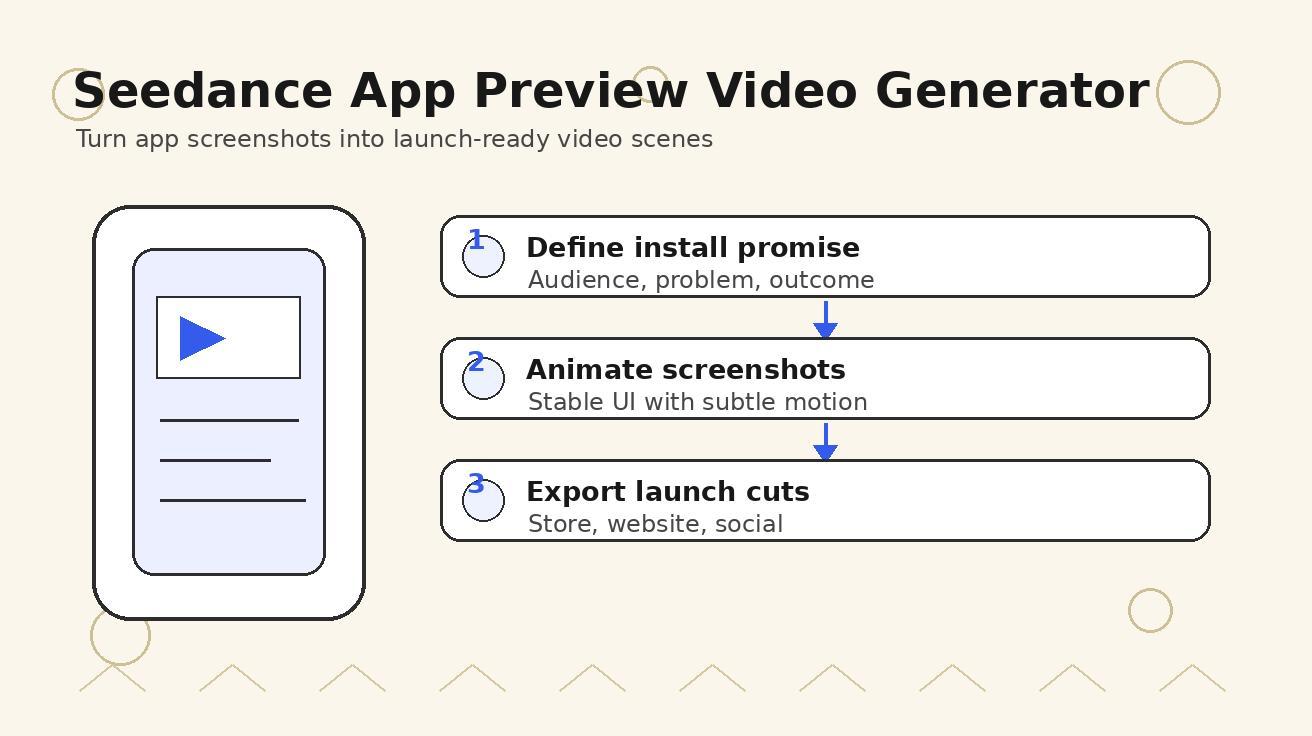
Seedance App Preview Video Generator 2026: Create App Store and Product Launch Clips
Use Seedance to turn app screenshots, feature copy, and launch goals into App Store previews, Google Play promo videos, and product launch clips.
Read article
How to Make a Talking AI Avatar You Can Reuse
Make a talking AI avatar with Seedance: design one consistent character, give it a voice, and make it speak in a talking photo or a full Seedance 2.5 scene, episode after episode.
Read article
Best AI Video-to-Video Models in 2026
The best AI video-to-video models in 2026 for editing footage you already shot: Higgsfield Genjutsu, Seedance 2.x, Runway Aleph, Luma Modify and Kling Omni compared.
Read article