
Seedance 2.5 Unavailable on ElevenLabs? Access, Region and API Fixes

AI Overview
Why is Seedance 2.5 unavailable on ElevenLabs?
The most common causes are location, plan level, workspace policy, or API approval. Seedance 2.5 is currently unavailable to ElevenLabs users in the United States, and ByteDance API models require explicit access.
Is Seedance 2.5 available on the ElevenLabs free plan?
No. ElevenLabs limits free accounts to image generation, while video generation requires a paid plan. API access also requires a qualifying account before model-specific approval is considered.
Can an ElevenLabs workspace admin enable Seedance 2.5?
An Enterprise admin can control which image and video models members may use, but cannot override a provider or regional restriction. API access to ByteDance models still requires ElevenLabs approval.
What should I use if Seedance 2.5 remains unavailable?
Use a supported Seedance route instead of repeatedly changing the same account. Preserve your prompt, references, duration, aspect ratio, and acceptance criteria so the project transfers cleanly.
Why Seedance 2.5 Can Appear Unavailable
Separate a missing model from a failed generation
“Unavailable” can describe several different states. The model may be absent from the picker, visible but locked, selectable but rejected before submission, or accepted before the generation later fails. Each state points to a different fix. A missing or locked model usually indicates region, subscription, workspace, or provider access. A validation message indicates incompatible settings. A job that reaches pending and then fails is a runtime or moderation problem, not proof that your account lacks the model.
Start by recording the exact surface: ElevenCreative web app, an Enterprise workspace, or the /v1/flows/video API. Capture the model label, account plan, billing country, current physical region, workspace role, request model ID, and full error message. Do not begin with repeated paid attempts; identify the gate first.
Check the four access gates in order
First, check region. ElevenLabs' current Seedance 2.5 page says the model is not available to users in the United States. A supported subscription does not remove that provider restriction. Second, check plan: ElevenLabs video generation is paid, while free users are limited to image requests. Third, check workspace policy: Enterprise image and video models can be disabled by an administrator. Fourth, check API approval: ByteDance models are disabled by default for API requests and require explicit approval.

A finished-output concept for testing identity, instrument geometry, wind, camera depth, and environment continuity after access is restored.
Fix Access in the ElevenLabs Website
Confirm account, plan, and workspace policy
Sign in to the intended workspace rather than a personal workspace with a similar name. Open Image & Video and confirm that other video models are available; if every video option is locked, the problem is probably the plan or a workspace-wide setting. If only Seedance is missing, check regional eligibility and model approvals. An Enterprise member should ask an admin to inspect model availability rather than assuming a browser cache problem.
Do not buy a larger credit bundle until the model is actually selectable. Credits fund generation, but they do not grant access to a restricted provider. If the account is free, upgrade only after confirming that your location and workspace can expose Seedance 2.5.
Rule out session and rollout confusion
If the account should qualify, sign out, close duplicate tabs, sign back into the correct workspace, and reopen the model library. Compare the model name carefully: Seedance 2.0, 2.0 Fast, 2.0 Mini, and 2.5 are separate entries with different request shapes. A saved project or old browser state may reopen a previous model even when 2.5 exists elsewhere in the library.
If Seedance 2.5 remains absent after account, region, and admin checks, contact ElevenLabs support with the workspace ID, country, plan, time, and a screenshot of the picker. That evidence is more actionable than “it does not work.” While access is reviewed, use the Seedance 2.5 generator to validate the creative brief without losing the production day.

The medium shot checks whether a supported route preserves the performer, dress, cello, skyline, wind direction, and bird movement from the opening frame.
Fix ElevenLabs API and Enterprise Access
Verify approval before debugging code
The current API exposes the bytedance-seedance-v2.5 request type, but documentation also states that ByteDance models are disabled by default and require explicit approval. A Pro-level API account is a prerequisite, not proof that this model has been enabled. Confirm the workspace attached to the API key, then ask support or your account team whether ByteDance video access is active for that workspace and region.
When approval is missing, changing JSON fields, rotating valid keys, or retrying the endpoint will not solve it. Keep one minimal request and its response ID for support. Never paste a production API key into a ticket or chat; provide the workspace and request identifiers instead.
Send the correct 2.5 request shape
Once access is confirmed, use the documented 2.5 model ID and supported settings. ElevenLabs describes this API model as supporting durations up to 30 seconds, larger reference limits, audio-only reference input, and no honored random seed. It does not expose 4K generation in the base request. A payload copied from Seedance 2.0 or from another provider can therefore fail even when access is valid.
Start with prompt, supported duration, 720p, 16:9, and no references. After that request works, add one reference mode. This creates a clean baseline and makes the failing field obvious.
Check Parameters Before Spending Credits
Use one reference mode at a time
Seedance 2.5 on ElevenLabs accepts large reference sets—up to 30 images, 10 videos, and 10 audio files according to the current reference guide. However, free-form references cannot be combined with start-frame or end-frame controls, and an end frame requires a start frame. A rejected combination is a parameter problem, not regional unavailability.
Choose the input family that matches the job. Use start and end frames to bound a transition. Use images, videos, or audio references to guide identity, environment, motion, style, or sound. For a first diagnostic request, do not send the maximum set. Add one asset, verify its MIME type and size, then expand.

A close finished frame reveals hand, face, string, and bow defects that a wide access test can hide.
Read the failure stage, not just the final word
ElevenLabs documents validation errors for unsupported values and invalid reference combinations before generation starts. Jobs that were accepted can later report reasons such as timeout, model error, moderation, dependency failure, charging failure, or internal error. Save the generation ID and failure reason. Failed generations are documented as not charged, so verify transaction history instead of assuming every error consumed credits.
If a minimal request works but the full request fails, reintroduce duration, resolution, audio, and references one change at a time. If every minimal request fails after approval, report the timestamps and IDs to support rather than masking a service incident with prompt edits. For budgeting beyond access, use the Seedance 2.5 film cost guide.
src=https://r2.seedance.tv/model-landing/seedance-2-5/feature-30s.mp4
poster=https://r2.seedance.tv/model-landing/seedance-2-5/feature-30s-poster.jpg
label=Seedance 2.5 finished long-scene output sample
Inspect continuous motion, scene development, identity, and pacing across a longer finished Seedance 2.5 output.
Choose a Supported Route Without Restarting
Preserve a portable generation brief
Keep the creative specification independent of the platform picker. Save the exact prompt, negative constraints, reference roles, approved source files, aspect ratio, duration, audio intent, and review checklist. If ElevenLabs is unavailable in your region, the project can then move to another supported Seedance access route without rebuilding its logic.
For current alternatives, the Google Flow access guide and Dreamina access guide explain different entry points. Availability and controls can vary, so compare the route against the job rather than assuming every Seedance host exposes identical fields.
Use Seedance Agent when coordination is the bottleneck
Access is only the first production problem. Multi-shot work still needs reference labeling, shot planning, continuity checks, approval boundaries, and selective reruns. Seedance Agent can turn the portable brief into a reviewable plan, attach references and acceptance criteria to shots, present finished outputs, and rerun only the weak section after approval.
This is especially useful when one provider disappears mid-project: the creative state remains organized instead of living inside a single model form. Keep the generated master and audio stems separate so narration or localization can be changed later. The voice-consistency guide covers that handoff.
src=https://r2.seedance.tv/model-landing/seedance-2-5/feature-audio.mp4
poster=https://r2.seedance.tv/model-landing/seedance-2-5/feature-audio-poster.jpg
label=Seedance 2.5 finished native-audio output sample
Review synchronized sound, performance timing, ambience, and motion rather than judging access from a silent frame.
What to Verify After Access Works
Test continuity before increasing complexity
Run a short baseline with one subject, one environment, and one clear action. Confirm that the result downloads, plays, includes the expected audio state, and matches the requested aspect ratio. Then test identity across wide, medium, and close views; object geometry during contact; environmental landmarks after camera movement; and speech timing where native audio is used.
Only after the baseline passes should you add a 30-second narrative, large reference pack, regional edit, or multiple outputs. This order separates account access from creative quality and prevents an expensive prompt from becoming your diagnostic tool.
Record the route that actually worked
Store the provider, workspace, model label, request ID, date, duration, resolution, reference mode, cost shown before submission, and output URL with the approved clip. Platform availability changes; a reproducible record lets another editor understand why the shot exists and where it can be rerun.

The closing frame confirms that identity, wardrobe, cello construction, rooftop layout, skyline, and light progression survive the full sequence.
Conclusion
If Seedance 2.5 is unavailable on ElevenLabs, diagnose the surface before spending credits: confirm that you are outside the restricted US region, use a paid video plan, check Enterprise model policy, and obtain explicit ByteDance approval for API access. When the model is selectable, test a minimal 2.5 request and add compatible reference controls one at a time; when it is not, preserve the prompt, references, settings, and acceptance criteria and move the same brief to a supported route. To keep access changes from breaking the production chain, start with Seedance Agent and manage planning, references, review, and selective reruns in one recoverable workflow.
Start generating for free - no credit card required
Create videos with free signup credits, then scale with affordable plans whenever you need more generations.
Free credits on signup. Plans from $28/month.
Related Articles
More posts in the same locale you may want to read next.
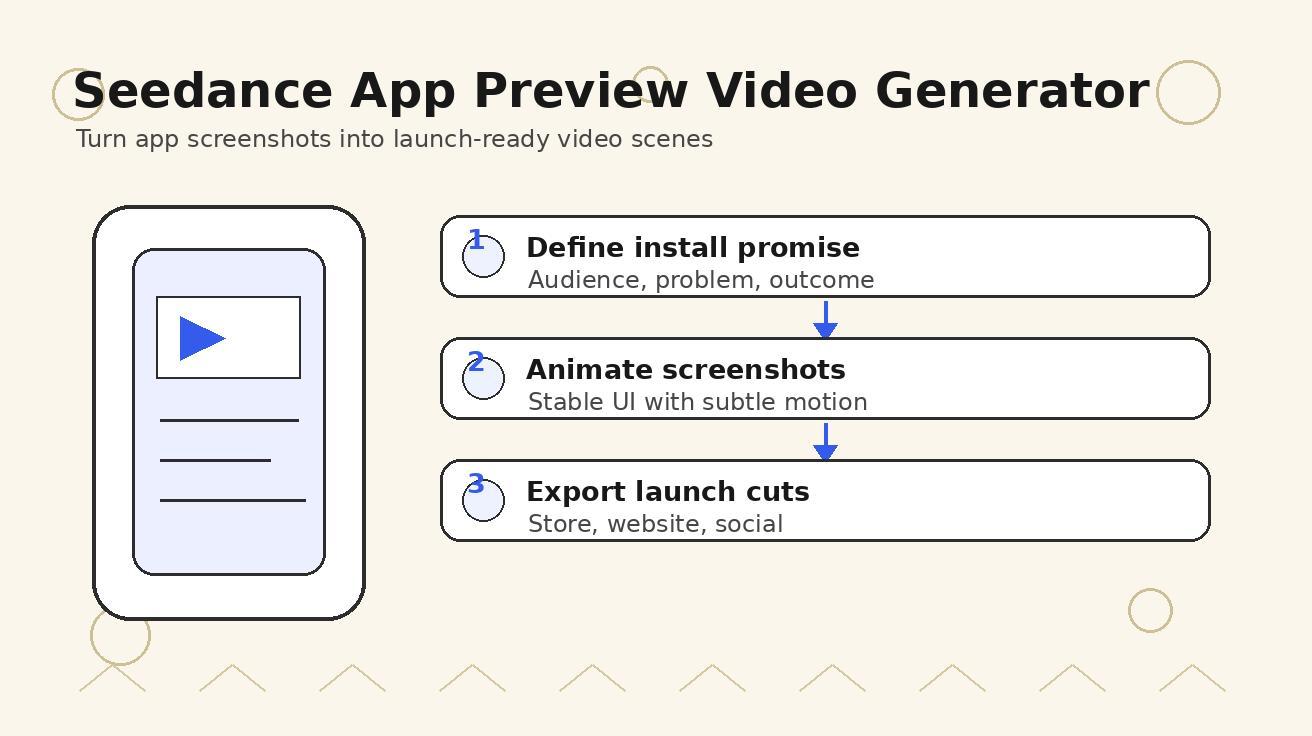
Seedance App Preview Video Generator 2026: Create App Store and Product Launch Clips
Use Seedance to turn app screenshots, feature copy, and launch goals into App Store previews, Google Play promo videos, and product launch clips.
Read article
How to Make a Talking AI Avatar You Can Reuse
Make a talking AI avatar with Seedance: design one consistent character, give it a voice, and make it speak in a talking photo or a full Seedance 2.5 scene, episode after episode.
Read article
Best AI Video-to-Video Models in 2026
The best AI video-to-video models in 2026 for editing footage you already shot: Higgsfield Genjutsu, Seedance 2.x, Runway Aleph, Luma Modify and Kling Omni compared.
Read article