
ComfyUI Batch Process Multiple Videos: A Reliable Folder Workflow

AI Overview
How do you batch process multiple videos in ComfyUI?
Use a tested video workflow, advance the input file for each queued job, and save each result separately. Verify two different clips before submitting the full folder.
Does Meta Batch Manager process a folder of videos?
Meta Batch Manager splits one long sequence into smaller executions. A file iterator or job scheduler handles separate video files.
Can ComfyUI batch processing keep the original audio?
Yes, if you route each clip’s audio to its matching video output and preserve timing. Check the exported file, especially after trimming or changing frame rate.
Is a larger batch size always faster?
No. Larger batches can exhaust memory or increase recovery cost. Start with one clip at a time and scale only after measuring successful outputs.
Choose the Right Kind of Video Batch
A search for “comfyui batch process multiple videos” usually starts with a practical problem: you have several clips and want to apply the same treatment without replacing the input after every render. Perhaps you need matching crops, an upscale, depth maps, or a consistent video-to-video style. The first decision is what should advance when a job finishes.
Three different controls are often described as batching. They solve different problems, and increasing one does not automatically configure the others.
| Your goal | What should change | What to use |
|---|---|---|
| Process independent files | Input filename per job | File iterator or an external queue controller |
| Repeat one clip with variants | Seed, prompt, or setting | Queue count plus controlled parameter changes |
| Fit a long sequence into memory | Frame range within one clip | A compatible frame-chunking workflow |
The important success condition is a clear relationship between every source and its finished file. A folder containing twelve inputs should produce twelve identifiable results, unless you deliberately requested variants. Repeating the same input twelve times is not a successful folder run.

Generated illustrations of independent source subjects. Keep each clip’s identity, timing, and output name separate; these images are not ComfyUI benchmark results.
Build One Working Clip Before Loading a Folder
Establish a complete input-to-output path
Start with a short representative source. For a VideoHelperSuite workflow, the basic route is Load Video, your image or latent processing nodes, then Video Combine. Confirm that the installed node versions accept the connected data types. A newer built-in video object is not automatically interchangeable with a custom node’s image sequence.
Save this working graph before adding automation. Check the entire exported clip for duration, crop, color, motion, and sound. If you need a crop that preserves the soundtrack, follow the ComfyUI crop video with audio guide before multiplying the job.
Set a delivery target, not just a preview size
Decide the intended aspect ratio, resolution, frame rate, and encoding format. A portrait source should not silently receive the same crop as a landscape source. Group incompatible inputs into separate runs or define a deliberate per-file policy.
Use one easy clip and one difficult clip for the initial test: for example, a slow product shot and a fast performance shot. This reveals failures that a static preview hides. The following moving sample is useful for inspecting visible impacts against sound; it is an existing generated clip, not proof of a particular batch configuration.
Load Multiple Videos and Advance the Input Reliably
Start with a small, ordered file set
Create a dedicated input folder containing only the clips for this run. Give them sortable names such as 001_cafe.mp4, 002_street.mp4, and 003_product.mp4. Keep source files unchanged and place outputs elsewhere. Otherwise, a folder scanner may eventually encounter your newly generated files.
For a small VideoHelperSuite setup, a maintainer describes converting the Load Video (Upload) video selector to an input, connecting a Primitive, and using its increment behavior to advance the selection. Queue the number of intended files and confirm the filename actually changes. Available controls and filtering depend on the installed frontend and node version.
A folder-loader or iterator from a custom pack can offer a different route. Inspect whether it returns a single file, a list, or a combined frame batch. Do not assume a node with “batch” in its name means one separate video per execution. Validate the first two filenames and outputs before expanding the run.
Give every output a recoverable identity
Use a unique output prefix derived from the source stem, treatment, and version: for example, campaign/001_cafe_crop_v01. If the iterator exposes a filename string, route it into the relevant naming field. Otherwise, set the prefix in your job controller. Keep a simple manifest with source path, output prefix, seed, workflow version, and status.
For larger sets, a controller can submit one exported API-format workflow per file, changing only the input and intended parameters. ComfyUI’s /prompt route queues work; /history/{prompt_id} and execution messages help track results. Record the returned identifier and inspect completion rather than assuming acceptance means a finished render. This is an automation option, not a requirement for a short manual queue.
Preserve Audio, Frame Rate, and Clip Boundaries
Carry audio with its own source
Images and audio travel through different connections in many video graphs. Route the loader’s audio to the corresponding Video Combine audio input. When the output should keep the source timing, use the loaded frame-rate information rather than a guessed constant. Missing audio and mismatched sound are separate failures; test for both.
Trimming, dropping frames, interpolation, and speed changes need additional care. A spatial crop does not change duration, but removing the first two seconds does. Make the audio interval match the selected picture interval. If you intentionally retime the picture, decide whether the sound should be retimed or replaced.
Check duration before trusting a “successful” job
For a constant-rate export, duration is approximately frame count divided by frame rate. Exporting 240 frames at 30 fps gives eight seconds; exporting those same frames at 24 fps gives ten. That difference can move dialogue or impacts out of sync even when every connection is valid. Our AI video frame-rate guide explains the delivery tradeoffs.
Play the beginning, middle, and end of each pilot output. Listen for early cutoffs, repeated audio, and a silent tail. Then open the actual saved file in another player so a browser preview does not become your only check.

Generated inspection examples: faces, moving hands, reflections, and rotating wheels expose different failures. Still images cannot verify temporal consistency or audio sync.
Handle Long Clips and Resume Failed Jobs
Use Meta Batch Manager for the right problem
VideoHelperSuite’s Meta Batch Manager is designed to divide a long sequence into smaller executions and must connect to both a supported input and Video Combine. Its documentation discusses RAM pressure; it should not be treated as a general solution to model VRAM limits.
Chunk boundaries can also affect operations that depend on neighboring frames. Test movement across those boundaries and verify your temporal model’s requirements. For GPU allocation failures, investigate resolution, model size, precision, and the processing node’s own batch settings instead of only changing the folder queue.
Resume from verified outputs
Keep statuses such as pending, running, failed, and verified in the manifest. A file existing on disk is not sufficient evidence: an interrupted encode can leave an incomplete result. Verify that the output opens, has the expected duration, and contains the required streams before marking it complete.
After a failure, isolate that source and rerun it with the same recorded settings before changing the whole batch. Preserve successful files. If a controller loses its connection, inspect the queue and history before resubmitting; the job may still be running. Record any revised workflow version so later results remain explainable.
Use Seedance Agent When the Work Is Creative Production
ComfyUI is useful when your main requirement is applying a controlled local graph to existing files. A different problem appears when you still need the clips themselves: turning a campaign brief into shots, arranging references, generating variants, and deciding which results deserve another pass.
That is where Seedance Agent fits naturally. Bring a clear brief, reference assets, and delivery requirements to the hosted creative workflow, then review the proposed direction and generated outputs. You can also start individual source shots through image-to-video or text-to-video. Check the model, settings, and generation cost shown for the selected task before approving production.
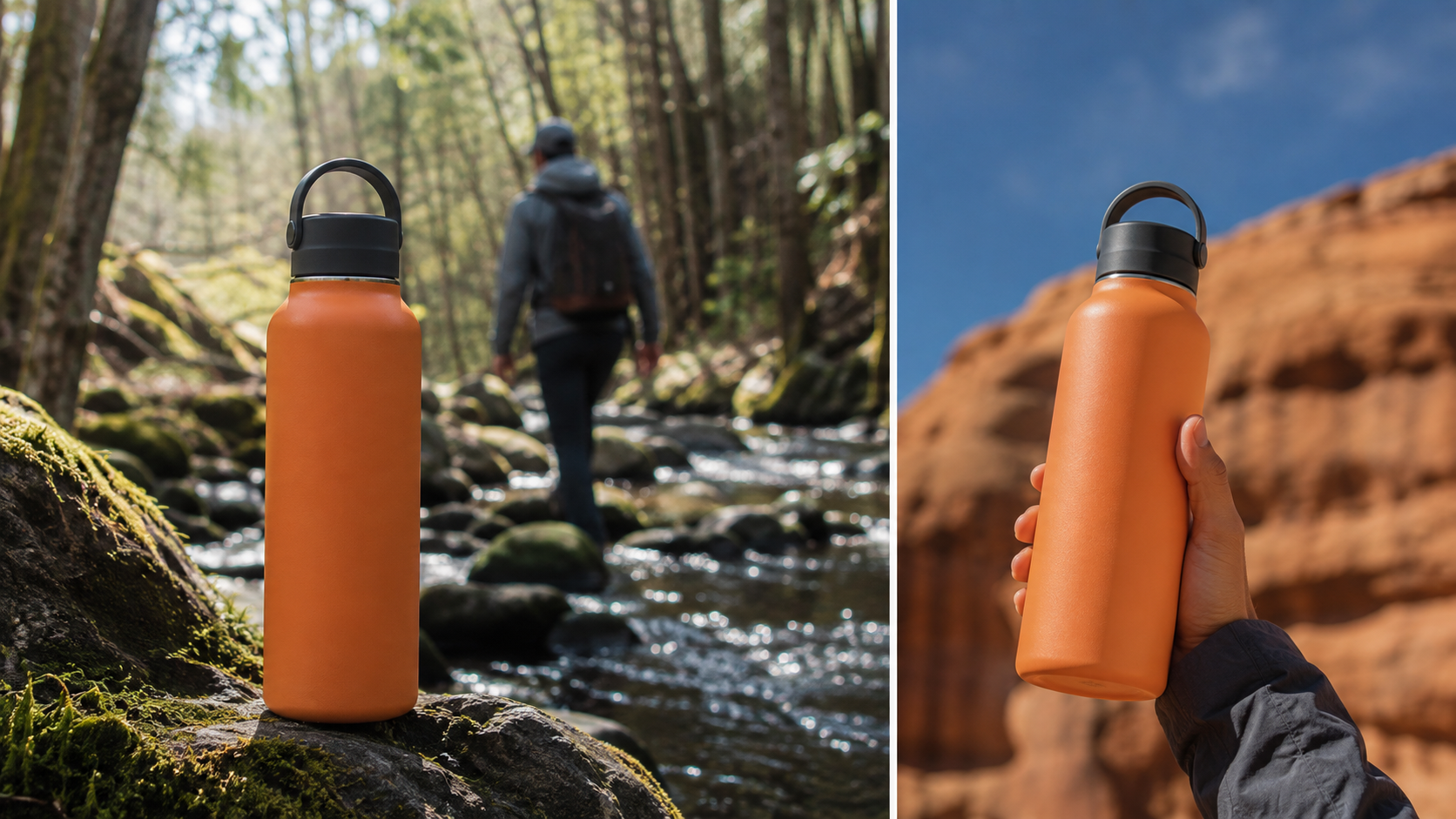
Generated campaign examples. Consistent product shape matters, but each placement still needs its own framing and review.
The product-ad sample below shows the kind of finished asset that a campaign workflow may need. Judge the product details, legibility, motion, and ending before making variants. It is a Seedance Agent output, not an exported ComfyUI processing demonstration.
A practical combination is to create and approve source clips in Seedance, then use a tested local graph for repeatable finishing. Keep that boundary explicit: Seedance Agent is not presented here as a remote runner for your custom nodes. The multi-model AI video workflow guide covers planning and reviewing assets across stages.
Conclusion
To batch process multiple videos in ComfyUI reliably, prove one complete workflow, confirm that the input advances, preserve each clip’s audio and timing, and name outputs so failures can be retried individually. Use frame chunking for long sequences only when the processing nodes support it, and expand the queue after a small pilot succeeds. When the larger job is planning and producing the source shots, start with Seedance Agent and carry approved clips into the finishing workflow you already trust.
Ready to try it yourself?
Put the steps from this guide into practice with Seedance and turn prompts or images into polished videos in minutes.
Free credits on signup. Plans from $28/month.
Related Articles
More posts in the same locale you may want to read next.
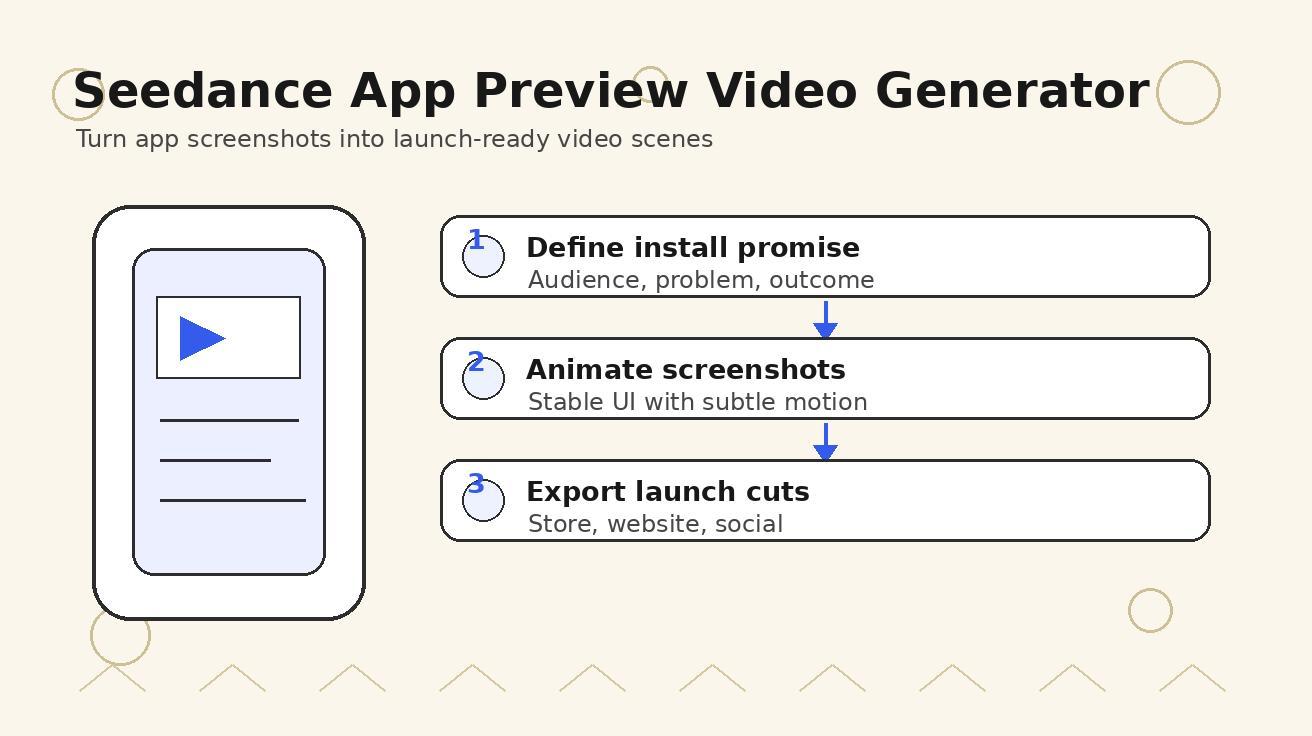
Seedance App Preview Video Generator 2026: Create App Store and Product Launch Clips
Use Seedance to turn app screenshots, feature copy, and launch goals into App Store previews, Google Play promo videos, and product launch clips.
Read article
Best AI Video-to-Video Models in 2026
The best AI video-to-video models in 2026 for editing footage you already shot: Higgsfield Genjutsu, Seedance 2.x, Runway Aleph, Luma Modify and Kling Omni compared.
Read article
Kling 4.0 vs Seedance 2.5: Full Comparison
Kling 4.0 vs Seedance 2.5 compared by spec: 30-second clips, keyframes vs 50 references, audio, 4K and 10-bit color, editing, and which model fits which job.
Read article