
Best AI Video Generator for Consistency: A Practical Test for Real Projects

AI Overview
Which AI video generator is best for consistency?
There is no universal winner. Choose by the continuity your project needs, then run the same short reference-led test in each candidate tool. Compare approved shots and repair effort, not only the best-looking first clip.
How do I keep a character consistent across AI video scenes?
Start with one approved identity reference and a small set of stable traits. Reuse those inputs for each shot, change one variable at a time, and inspect face, hair, wardrobe, and body proportions after camera or lighting changes.
What is temporal consistency in an AI video?
It means details remain coherent as frames move: hands do not multiply, products do not change shape, and motion does not jump between poses. Judge the entire playable clip at normal speed, not a single attractive frame.
Do reference images guarantee consistent AI video?
No. A reference improves control only when the selected mode supports it and the prompt does not contradict it. Use clean, role-specific images, approve a short sample, and keep a repair route for failed shots.
Define What Must Stay the Same
A good frame is not a consistent sequence
A prompt can make one impressive shot while the next shows a different person, an altered package, or a rearranged room. For a one-off mood clip, that may be harmless. For an ad series or story, the errors become expensive when the editor tries to join the shots. The useful question behind “best AI video generator for consistency” is therefore: which workflow gives me the most approvable footage with the fewest continuity repairs?
Write down the invariants before comparing tools. A character might need the same facial structure, hairstyle, jacket, and speaking voice. A product ad might prioritize container silhouette, cap shape, color, and label placement over face identity. A recurring location might need the same door, table, window geometry, and light direction. Continuity is a production requirement, not a vague visual preference.
Use five review axes. Identity covers people and costumes; object covers product geometry and material; world covers set layout and props; time covers motion within each clip; sound covers speaker and acoustic space. Give each axis a pass, repair, or reject decision. You do not need a single blended score that hides a failed product shot behind a beautiful background.

Illustrative finished-looking frame, not a benchmark result. Inspect the face, hair, apron, hands, and vessel rim as separate continuity anchors.
The Seedance character-consistency guide goes deeper on keeping one person recognizable. Here, identity is only one row in a larger buying and production decision.
Match the Generator to the Job
Reference support matters more than a model label
An AI video generator using reference images is usually easier to control than text alone when a person, product, or set already has an approved look. But reference support is not a binary feature. Check whether the active mode accepts a first frame, an end frame, a persistent character or object reference, several ingredients, an existing video, or a voice sample. Also check whether those controls are available in the quality and aspect-ratio settings you actually intend to deliver. A model's headline capability may not apply to every mode.
Separate still preparation from motion generation. An image system may be excellent at making a consistent character sheet but require a separate video pass. That is useful if the stills can be approved and reused. Another system may keep ingredients and video in one project, reducing handoff work. Neither fact proves that the final moving clip will preserve every detail. Test the full path from approved source to export.
For a quick creative concept, strong text-to-video motion may beat elaborate reference management. For a brand product, favor the route that can preserve your approved packshot and let you repair one failed shot. For an episodic character, favor reusable identity inputs and a repeatable shot card. For dialogue, include voice continuity in the trial rather than treating audio as an afterthought.

This illustrative product frame shows why silhouette, handle count, rim shape, and glaze matter independently of overall visual quality.
If your approved source is a still, the image-to-video workflow is the natural place to test a controlled motion baseline. If you have only a scene brief, use the text-to-video route for exploration, then promote the best frame to a reusable reference before building a longer sequence.
Build a Fair Six-Shot Consistency Trial
Keep the brief stable, vary only the stress condition
Do not compare one tool's carefully prepared reference sequence with another tool's one-line prompt and call that a ranking. Give each candidate the same approved subject, object, location, script, duration, aspect ratio, and output target. If a feature is unavailable in one tool, note that limitation explicitly instead of silently substituting a different test. Record generation credits or time, but the main result is how many clips pass review.
Create six short shots from one story: (1) a medium subject introduction; (2) a wide view of the subject in the set; (3) a close product interaction; (4) the subject moving behind a partial occlusion; (5) a camera-angle or lighting change; and (6) a return to the original composition. This sequence stresses identity, object shape, geography, motion, and the ability to return to a known state. For voice projects, put a short repeated line in the first and final shots and compare timbre, pace, and room sound.
Before generating, lock a reference manifest: one identity image, one clean product image, one set image, optional first/last frames, and a short shot card per clip. Give each asset a role. Do not ask an image of a busy room to double as a clean product reference. Keep the same negative constraints in all six cards: no new people, no label changes, no extra props, no wardrobe change unless requested.

A wide frame makes window geometry, table position, shelving, and object location reviewable. It is an illustration of the test, not proof of cross-shot identity retention.
The environment-consistency article shows why a recognizable room needs more than similar color. Preserve landmarks that an editor and viewer can track through a change of composition.
Review moving footage, not a contact sheet
Pause at the first, middle, and last frame, then play the clip at normal speed. Look for brief identity swaps, disappearing handles, warped hands, or motion that changes direction at an extension boundary. A contact sheet can reveal obvious drift, but it cannot prove smooth movement. The following older Seedance media-library clip is a playable continuity-inspection example, not a new head-to-head model test.
Track the glasshouse frame, long table, chairs, lamps, and subject placement as the composition changes. Judge the motion and the cut, not just the poster.
Score Continuity and Repair Cost
Use a pass, repair, reject matrix
For each shot, mark the five axes as pass, repair, or reject. A pass means the clip meets the delivery brief without continuity work. A repair means a bounded intervention—crop, local edit, alternate reference, or one rerun—is likely to fix it. Reject means the subject, product, action, or scene has changed so much that keeping the clip risks the whole sequence. Add a note naming the first visible failure and its timecode. “Looks off” is not actionable; “right handle disappears at 00:04” is.
Then calculate approved shots per generation attempt and cost per approved shot, including reruns and any manual repair. This prevents an inexpensive model with a high failure rate from looking cheaper than it is, and it prevents a costly model from winning on a single showcase frame. Keep separate notes for render time, resolution, audio quality, and editability; they matter to delivery even if they are not continuity itself.
If the product must match a real item, reject altered text or geometry before debating color grade. If the story depends on a recognizable performer, reject face drift before polishing camera movement. If a background prop shifts slightly but remains outside the final crop, a repair might be enough. The rubric should reflect the consequence of failure in your project, not an arbitrary universal score.

This illustrative frame invites a motion check: follow the hands, handle positions, vessel rim, and screen direction through the full clip.
Audio can fail even when the picture passes. If the same speaker returns in the last shot, compare voice identity and acoustic space; the voice-consistency guide covers that focused problem. Do not let a strong image score conceal a voice that changes character mid-story.
Turn the Winner Into a Repeatable Workflow
Keep references, approvals, and reruns attached to shots
Once a route passes the trial, save the exact reference set, shot cards, generation settings, approved outputs, and rejection notes. A useful project template names what is locked, what can vary, and what the reviewer must inspect. For example: “Keep the vessel's two handles, cobalt glaze, white uneven rim, worktable, and apron unchanged; vary camera distance and actor movement only.” This is more reliable than asking for “cinematic consistency” six times.
Do not regenerate the entire sequence because shot four failed. Return to the failed shot with the same approved source, a narrower motion instruction, and one changed constraint. If an occlusion breaks identity, reduce the occlusion or re-establish the subject with a clean frame. If the vessel deforms during a fast pan, shorten the move or hold the object in a clearer plane. If scene geography drifts, return to the set reference and name fixed landmarks. These are targeted repairs, not promises that any model is perfect.
At a larger scale, coordinating references, approvals, and selective reruns can take more work than writing prompts. Seedance Agent fits when the deliverable is a planned sequence: keep the brief and reference roles together, review the proposed shots before generation, approve real moving outputs, and rerun only the rejected part. The same continuity matrix still applies after a generation succeeds.
Conclusion
The best AI video generator for consistency is the one that preserves the specific character, product, world, motion, and sound your project cannot afford to change. Run the same six-shot reference-led trial, review complete moving clips, count approved outputs and repair attempts, and retain the exact inputs that worked. For a production that needs shot planning and revisions in one place, start with Seedance Agent.
Ready to try it yourself?
Put the steps from this guide into practice with Seedance and turn prompts or images into polished videos in minutes.
Free credits on signup. Plans from $20/month.
Related Articles
More posts in the same locale you may want to read next.
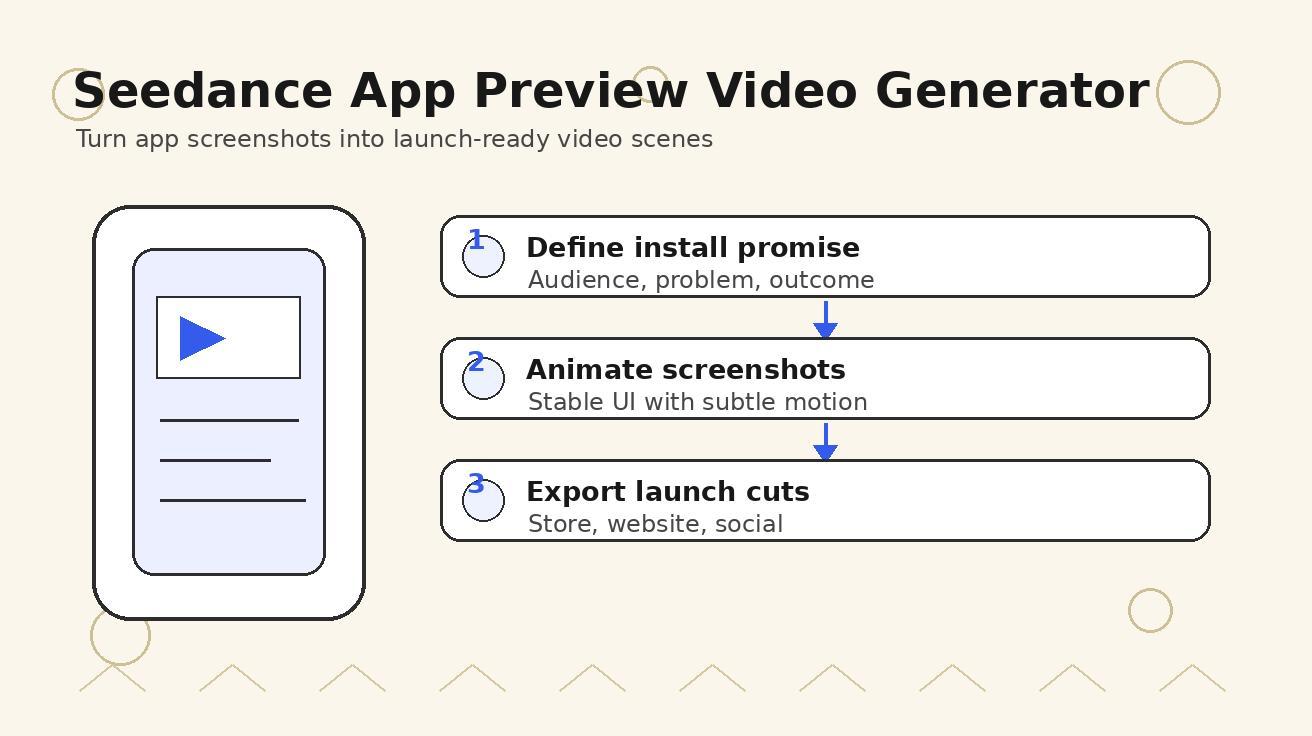
Seedance App Preview Video Generator 2026: Create App Store and Product Launch Clips
Use Seedance to turn app screenshots, feature copy, and launch goals into App Store previews, Google Play promo videos, and product launch clips.
Read article
AI Video Sound Effects Tutorial: Make Every Sound Land on the Action
Add believable sound effects to AI video with a cue sheet, copy-ready prompts, frame-level sync checks, layering rules, and a practical repair workflow.
Read article
Dreamina Video Extension Prompt Examples: Continue a Clip Without Drift
Copy Dreamina video extension prompts for a character, product, camera move, and scene ending. Learn the upload workflow and review every clip join.
Read article