
Socialive Catalyst Early Access Guide: Prepare a Useful First Pilot

AI Overview
Is Socialive Catalyst available now?
Socialive began early access in September 2026 for a select group of existing customers. The company says broader availability is planned for October, so access is currently best pursued through a Catalyst demo or an existing account contact.
What does Catalyst create from a prompt?
Catalyst turns an idea, document, recording, or existing asset into a planned, branded video workflow. It can help create scripts, visuals, clips, graphics, and transitions while applying an organization's approved theme and permissions.
What should you prepare before requesting early access?
Bring one real source asset, a narrow audience and goal, approved brand elements, named reviewers, and a measurable output plan. A small repeatable pilot reveals more than asking for a broad product tour.
Are approval workflows and audit trails already complete?
Not according to the current product page: review routing and a full audit trail are marked as coming soon. Confirm the exact beta capability with Socialive before treating either function as a production control.
What Socialive Catalyst Early Access Includes
Read the launch language literally
Socialive Catalyst is a prompt-based video creation engine layered over Socialive's enterprise platform. Early access began in September 2026 with a select group of existing customers, and general availability is planned for October. That makes this a limited beta, not a public self-serve launch with a universal sign-up button, published queue position, or guaranteed acceptance date.
The useful distinction is orchestration. Catalyst does not merely answer a prompt with a paragraph or a detached media file. Socialive says the system starts with a conversational project plan, gathers source material and brand requirements, then coordinates capabilities already used for recording, editing, managing, and distributing enterprise video. Inputs can include a plain-language brief, a deck or report, a webinar recording, and assets already stored in a library.

Illustrative generated campaign frame: a strong beta test begins with a real presenter, approved source material, and a defined production team rather than an abstract feature list.
Current published examples include polishing recordings with automatic graphics and transitions, converting static content into video, and finding shareable moments in interviews, podcasts, or webinars. Reusable themes can hold approved logos, colors, fonts, and templates. Assigned roles limit who can create, edit, and view work.
Keep a separate roadmap column. Socialive currently labels approval routing and a complete audit trail as coming soon. Those are important enterprise promises, but they should not be written into a launch checklist as if they have already passed your organization's compliance review. The same discipline applies to pricing: a demo route is visible, while a public Catalyst-specific price card is not the basis for this guide.
For a wider view of prompt-led production systems, the Higgsfield MCP AI video agent guide explains why an agent becomes valuable when it coordinates assets and decisions rather than producing one isolated clip.
How to Request Access and Prepare
Ask for a workflow conversation, not a generic demo
Start with the official Catalyst demo route or the Socialive representative attached to your account. State that you want early access, but make the request useful to the beta team: describe the organization, number and roles of prospective users, current Socialive products, regulated or brand-sensitive requirements, monthly video volume, and one workflow you can test promptly. Do not imply that a form submission guarantees a beta seat.
Prepare a one-page access brief before the call:
| Brief item | Practical answer to bring |
|---|---|
| Audience and outcome | Who should watch, and what should they understand or do? |
| Source package | One approved report, recording, deck, or asset folder |
| Deliverables | One hero edit plus four channel-specific cutdowns |
| Brand boundaries | Approved theme, logo use, fonts, colors, lower thirds, forbidden claims |
| Roles | One admin, one creator, one reviewer, and one final approver |
| Success measures | Time to first review, revision count, brand exceptions, usable outputs |
Ask product-specific questions that can change the pilot. Which input formats are enabled in the current beta? Can existing Socialive Library assets be selected directly? Which editing decisions remain manual? How are generated or enhanced versions grouped? What export and publishing destinations are active? Which promised approval or audit functions are unavailable today? What data handling terms apply to the source material you plan to use?

Illustrative generated source frame: use representative footage with the same voice, framing, and compliance sensitivity as the work your team expects to publish.
Avoid uploading confidential reports merely to make a demo feel realistic. Use cleared material until the account team confirms data boundaries, retention, permissions, and the models or subprocessors relevant to your organization. Early access is an evaluation environment; your governance bar does not disappear because the interface is conversational.
Choose a First Pilot Worth Measuring
Give the agent decisions it can test
A good Catalyst prompt should contain an outcome, source, audience, deliverables, brand direction, editorial limits, and approval state. “Make this webinar engaging” forces the system to guess. A testable brief sounds more like this:
Turn the approved 28-minute customer webinar into one 75-second summary and four 20-second clips for professional social feeds. Preserve the speakers' meaning, use the approved theme, add concise lower thirds, avoid performance claims not stated in the source, and present a review plan before rendering final exports.
Build the First Enterprise Video Brief
Package source and delivery constraints
Attach only the assets needed for that test. Include the clean master recording, transcript, approved spelling of names and titles, current theme, logo variants, a small music library if cleared, and the destination aspect ratios. Mark any quotation that must remain verbatim. If a clip needs fresh establishing footage rather than repurposed material, define it as a separate generation task so the origin of each shot remains visible.
The first pilot should be deliberately small: one source, one message, one audience, five related outputs. That scope is large enough to test planning and repurposing but small enough to review every claim and edit. Track elapsed time from brief to first review, human interventions, rejected clips, visual-brand exceptions, caption corrections, and the number of outputs actually approved. A fast draft with four unusable variants is not a productivity win.
For teams comparing agent-led systems, the MiniMax Hailuo AI video agent guide separates planning, shot generation, and approval decisions that are often collapsed into one vague “agent” label.
Test Brand, Version, and Review Controls
Verify behavior with deliberate edge cases
Do not test a brand system only with perfect inputs. Place an obsolete logo and an approved logo in the source folder, include one off-brand slide, and specify which assets are prohibited. Confirm that the resulting video uses the reusable approved theme and that a creator cannot silently change admin-controlled elements. Repeat the test with the viewer and editor roles you actually intend to assign.
Socialive's Library can group AI-enhanced iterations as versions under one video entry, with a selected version becoming the default view for other users who have access to that Space. During the pilot, name the baseline, first agent draft, human revision, and approved master in a simple decision log. Check whether the chosen version is visible to the right people and whether a reviewer can reconstruct why it became the preferred cut.

Illustrative generated review scene: evaluate a complete sequence with named decision owners, not a single attractive frame viewed in isolation.
Treat the current review process honestly. If beta approval routing is not enabled, keep your existing review and compliance step outside Catalyst and record the handoff. “Coming soon” is not a control. Before public use, verify caption accuracy, speaker attribution, claim fidelity, music rights, crop safety, brand treatment, and export playback. For material with synthetic or enhanced voices, the Seedance voice-consistency workflow offers a focused listening checklist.
Actual Seedance output, not a Catalyst beta result: use real moving footage to test dialogue continuity, listening review, and approval criteria before judging an agent workflow.
The finished acceptance sheet should contain evidence, not impressions. Record whether the brief was followed, whether every source claim is traceable, whether roles behaved as expected, how many revisions were needed, and whether each export is usable without hidden cleanup. This turns early-access feedback into information the product team can act on.
Where Seedance Agent Fits
Separate repurposing from original shot production
Catalyst's strongest published story is enterprise orchestration around recordings, documents, existing assets, brand rules, and distribution. A different production problem begins when the brief requires original visual sequences: a new product reveal, cinematic establishing shot, controlled camera move, character action, or image-to-video insert that does not exist in the source library.
Seedance Agent can handle that generative shot track. Build a shot plan, attach visual references, create candidates, review motion and continuity, and rerun only the failed section. Then pass approved exports into the enterprise editorial workflow with source labels and rights notes intact. The Google Flow and Veo workflow guide provides another useful comparison for scene-level iteration, while the Seedance image-to-video page shows a direct path from an approved still to motion.

Illustrative generated approval frame: the final handoff should preserve source ownership, version state, brand decisions, and the reviewer responsible for release.
Do not claim that the two products are directly integrated unless your account team confirms it. The practical connection is operational: use the best environment for each job, export approved assets, and maintain a manifest that names the source, generator, prompt or edit brief, version, rights status, reviewer, and destination. That boundary prevents a polished enterprise edit from obscuring where a synthetic shot came from.
Conclusion
Socialive Catalyst early access is a limited September 2026 beta for selected customers, with broader availability planned for October. Request a workflow-focused demo, bring one cleared source package and measurable five-output pilot, verify current brand and role controls, and keep coming-soon approval and audit features outside the production control list until they are enabled. When the campaign also needs original motion rather than repurposed enterprise footage, plan and review those generative shots with Seedance Agent.
Ready to try it yourself?
Put the steps from this guide into practice with Seedance and turn prompts or images into polished videos in minutes.
Free credits on signup. Plans from $20/month.
Related Articles
More posts in the same locale you may want to read next.
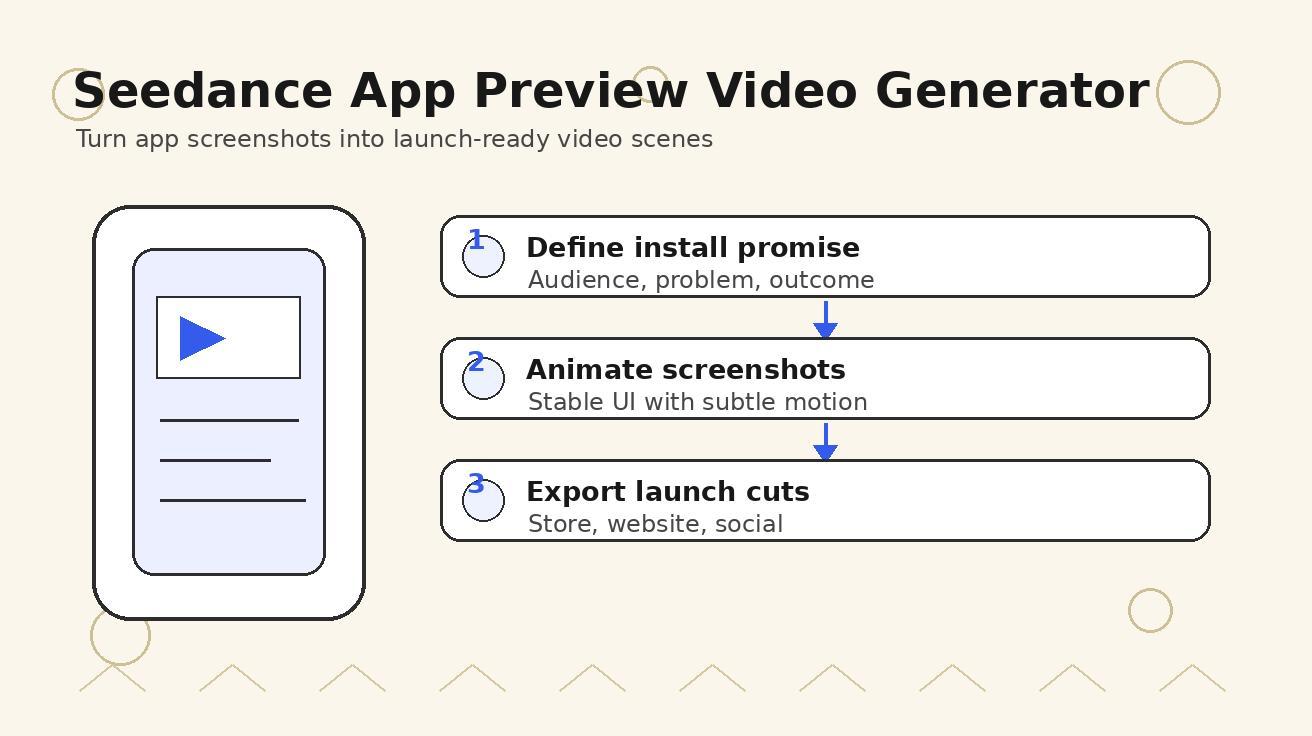
Seedance App Preview Video Generator 2026: Create App Store and Product Launch Clips
Use Seedance to turn app screenshots, feature copy, and launch goals into App Store previews, Google Play promo videos, and product launch clips.
Read article
FramePack Torch CUDA Not Enabled: Diagnose and Fix the Right Environment
Fix FramePack when Torch has no CUDA support by checking the exact Python runtime, replacing a CPU-only wheel, handling driver or RTX compatibility, and proving the repair.
Read article
Google Vids Personal Avatar Tutorial: Record, Prompt, and Fix It
Create a Google Vids personal avatar, pass face and voice capture, write a useful Gemini Omni prompt, fix missing access, and manage your recording.
Read article