
Which tools help creators ship better content, faster, without forcing them into a bloated stack that slows everything down? That's the gap most lists miss. The best content creator tools aren't just the ones with the flashiest AI demos, they're the ones that fit real workflows, from scripting and storyboarding to editing, publishing, and repurposing. In the UK especially, that matters because creator-led content is moving from a side activity into serious infrastructure. The UK creator economy is forecast to reach £3.2 billion in revenue by 2026 (StateGlobe), and independent UK research projected creator numbers rising from 14.5 million to 21.8 million by 2032 with 10.5 million video creators included in that forecast (YouTube presentation). For teams building practical workflows, that means the winning stack is less about novelty and more about output.
The smartest way to choose tools is by content type, then by workflow depth. A short-form social team needs speed, captions, and templates. A filmmaker needs control, colour, and finishing. A marketer wants AI that plugs into publishing and distribution, not just ideation. That's also why UK usage patterns matter. Content creation and idea generation are already the most common AI use cases in UK business workflows, and SEO and marketing optimisation are close behind (Net72). In plain terms, the market is already telling you that prompt-to-output tools need to work alongside publishing and promotion tools, not sit in isolation.
For a broader comparison of editing options, see top video editing tools.
Table of Contents
- 1. Seedance
- 2. Adobe Premiere Pro
- 3. CapCut
- 4. Canva
- 5. Descript
- 6. VEED
- 7. Runway
- 8. Pika
- 9. Luma AI Dream Machine
- 10. DaVinci Resolve Free and DaVinci Resolve Studio
- Top 10 Content Creator Tools Comparison
- Next Steps to Streamline Your Content Production
<a id="1-seedance"></a>
1. Seedance

Seedance is the most strategically interesting tool on this list because it solves the part of video creation that still slows most creators down, turning a good idea into a coherent multi-scene video without a full production setup. The platform's own materials describe text-to-video, image-to-video, and reference-guided video generation, with controls for scene description, camera direction, aspect ratio, resolution, and audio options. It also emphasises multi-shot storytelling, character consistency, and styles ranging from photorealism to cyberpunk, which makes it unusually useful for creators who need a narrative rather than a single clip.
The strongest practical use case is commercial content that needs to look expensive without being expensive. A small agency can draft a product concept, generate a few visual options, then move straight into an ad-style sequence for testing. A solo creator can turn a script into a short cinematic intro, then reuse the same visual language for a trailer, a social teaser, and a landing-page video. The platform's 2026 positioning also matters for UK users, because the UK AI-in-media market is projected to grow from USD 0.33 million in 2024 to USD 4.74 million by 2032, with a 34.6% CAGR from 2025 to 2032 (Credence Research). That doesn't just point to growth, it points to a market where workflow speed and output quality can matter more than brand familiarity.
Practical rule: use Seedance when the brief needs motion, scene changes, or narrative continuity. Use it to get from concept to draft video fast, then refine elsewhere only if the final channel demands more control.
<a id="why-it-stands-out-for-ai-video-workflows"></a>
Why it stands out for AI video workflows
Seedance 2.0 advertises a free, no-watermark 1080p generator, which is useful for quick experiments and polished prototypes. That's a real advantage when you're testing hooks, ad openings, or explainer structure before you commit time to a longer edit. The platform also aggregates multiple models, including Sora 2, Veo 3, and Seedance variants, so creators can experiment without jumping between tools. The creative value is obvious, but the workflow value is better, because the same environment can support different levels of ambition, from a rough visual pitch to a more polished branded piece.
<a id="best-fit-and-trade-offs"></a>
Best fit and trade-offs
Seedance is strongest when you care about cinematic motion, character consistency, and fast iteration. It's less convincing if you need complete clarity around ownership, licensing, and procurement, because the provided materials don't fully settle the platform's origin details, and the product pages don't make the pricing structure as explicit as a procurement team might want. The outputs are currently described as 1080p, so if your workflow depends on native 4K delivery, you'll need another finishing stage.
The other thing to watch is prompt discipline. The platform gives creators a lot of control, which is a benefit, but it also means weak prompts can produce generic motion or visual drift. For teams using AI video in production, that means Seedance works best as the generation layer, then another editor handles cut-downs, sound polish, and final delivery. You can see the platform directly at Seedance, and if you want a deeper look at adjacent editing workflows, the internal guide on best video editing software is a useful companion.
<a id="2-adobe-premiere-pro"></a>
2. Adobe Premiere Pro

Adobe Premiere Pro is still the safest choice when the job is serious, collaborative, and deadline-driven. It's built for professional timeline editing, and that matters when you're managing long-form interviews, multi-camera shoots, campaign cuts, or brand assets that must stay consistent across deliverables. Its value is not just editing depth, it's the ecosystem around it, especially the hand-off to After Effects and Photoshop, plus review and approval workflows through Frame.io.
<a id="why-professionals-still-rely-on-it"></a>
Why professionals still rely on it
A marketing team can cut a webinar into a lead-gen clip, send the rough version through Frame.io, and keep revisions moving without scattering feedback across email threads. A filmmaker can sync dialogue, mix audio, adjust captions, and move into colour with a level of control that simpler tools just don't match. Adobe also pushes Firefly creative AI and text-based editing aids, which helps when you need to search, trim, or repurpose spoken content faster than a pure manual workflow would allow.
That wider Adobe hand-off is the key reason Premiere stays in the stack for agencies and in-house teams. It's not just one app. It's a production layer tied to design, compositing, and asset management.
<a id="where-it-wins-and-where-it-slows-you-down"></a>
Where it wins and where it slows you down
Premiere Pro is excellent when you already know what you're doing and you need reliability. It's less forgiving for solo creators who only need to ship quick social edits, because the learning curve is steeper and the subscription cost can feel heavy if you're not using the full stack. If your workflow is mostly Reels, Shorts, or simple talking-head videos, the power can be overkill.
The right test is simple. If your edit needs colour precision, layered audio, shared review, and hand-off to motion graphics, Premiere Pro earns its place. If you just need speed, it may slow you down.
You can see the platform at Adobe Premiere Pro. For editors who need a more guided comparison of creator video software, the linked guide to best video editing software is worth keeping nearby, especially if your team is deciding between pro control and speed-first tools.
<a id="3-capcut"></a>
3. CapCut

CapCut is the tool most social teams reach for when the brief is fast, vertical, and trend-aware. Its strength is that it lowers the barrier to getting something publishable, especially for shorts, Reels, and TikTok clips where timing and format matter more than deep finishing control. Templates, auto-subtitles, background removal, and cloud sync make it easy to work quickly on mobile and desktop without turning every edit into a mini post-production job.
A lot of teams underestimate how valuable that friction reduction is. A marketer can cut a founder quote, add captions, swap in a template, and publish before the trend cools off. A creator can build several versions of the same clip for different hooks, then let the platform do the repetitive formatting work. That's exactly why CapCut sits so comfortably inside modern creator workflows.
<a id="why-social-teams-keep-returning-to-it"></a>
Why social teams keep returning to it
Paid tiers add brand assets, shared libraries, and more structured team workflows, which makes it more useful once content becomes a repeatable process rather than a one-off post. A key advantage is speed. CapCut handles the kind of edits that social teams make all day, and it does so with enough style options that videos don't look bare.
The trade-off is clear. It's not the right choice for heavy colour work, advanced audio mixing, or complex long-form timelines. If your content needs precision sound design or broadcast-grade finishing, CapCut can get you part of the way there, but not all the way.
<a id="what-to-watch-before-scaling-up"></a>
What to watch before scaling up
Regional pricing can vary, and recent price changes have been reported, so teams should check the current plan details before standardising on it. That's especially important if you're building a larger workflow around shared templates and assets. The platform is strong at social production, but it works best when another tool takes over for finishing, archiving, or high-end post.
For the official product, visit CapCut. If you're also comparing AI-assisted social workflows, Seedance's broader approach to best AI video generator decisions can help frame where CapCut fits, especially when you want quick social edits rather than generative scene creation.
<a id="4-canva"></a>
4. Canva

Canva is still the easiest all-rounder for teams that need content out the door without depending on a designer for every asset. It handles social posts, presentations, ads, and basic video editing in one place, which is why it shows up in so many creator stacks. The important thing isn't that it can do everything, it's that non-designers can do enough with it to stay on brand.
<a id="why-it-belongs-in-most-creator-stacks"></a>
Why it belongs in most creator stacks
A small business can build a campaign kit, reuse a brand palette, and push out consistent thumbnails, carousels, and lightweight video assets without a steep learning curve. Teams also benefit from brand kits and collaboration features, which help keep approvals and asset consistency under control. Canva's AI tools for image and video generation make it even more useful for marketers who need quick variations rather than fully bespoke design work.
The UK market is clearly comfortable with AI-assisted production, too. A UK digital marketing statistics report found that 31% of UK businesses use AI for image/video generation, 63% use AI for written content creation, and 44% use AI for marketing automation (LocaliQ UK). Canva fits neatly into that reality because it supports visual output, written assistive work, and fast campaign production in a way that small teams can maintain.
<a id="when-its-enough-and-when-it-isnt"></a>
When it's enough and when it isn't
Canva is ideal when speed, consistency, and ease matter more than granular control. It's less suitable when a project needs complex motion, heavy compositing, or advanced video finishing. In practice, that means Canva works well as the content factory for social graphics and simple edits, while a more powerful editor handles the final video layer.
Use Canva to standardise repetitive assets. Use something more specialised when your visuals need to feel custom, cinematic, or technically demanding.
You can review the platform at Canva. For teams who also need visual planning around motion and animation, the internal guide on how to animate pictures pairs well with Canva's lighter design workflow.
<a id="5-descript"></a>
5. Descript

Descript changes the editing process by making the transcript the centre of gravity. For podcasters, educators, and marketers who create a lot of talk-driven content, that is a big deal. Instead of scrubbing a timeline for every cut, you can remove filler words, trim sentences, and reshape the final piece by editing text.
<a id="why-transcript-editing-changes-the-workflow"></a>
Why transcript editing changes the workflow
A webinar team can record a speaker session, generate the transcript, strip out repeated phrases, and pull a clean social clip from the same source file. An educator can record a lesson, fix a mistake by editing the transcript, and add captions without going through a full manual post-production pass. Descript also includes screen recording, multi-track editing, overdub voice tools, and AI-assisted video assembly, which makes it especially good for content that starts with speech rather than imagery.
The biggest gain is repurposing. One long recording can become a podcast episode, a chaptered video, and a handful of short clips if the transcript is clean and the edits are disciplined. That's a real workflow advantage for creators trying to stretch one recording across several channels.
<a id="where-it-fits-best"></a>
Where it fits best
Descript is excellent for speed, but it isn't always the final finishing tool. Precision colour work, complex timing, and polished post still often need a traditional NLE. The platform also uses credits, and some users watch the pricing structure closely because usage can add up if you're generating a lot of AI output.
For the right use case, though, it's hard to beat. A solo creator can record, edit, caption, and publish with less friction than most traditional workflows demand. That's especially useful if your content cadence depends on interviews, tutorials, internal training, or explainers.
Visit Descript if you want transcript-first editing. It pairs well with broader AI writing and repurposing tools, especially when teams are already building a multi-channel workflow around source content.
<a id="6-veed"></a>
6. VEED

VEED is built for people who want the convenience of browser editing without giving up too much structure. It's especially appealing for teams that don't want to manage software installs, local storage, or complicated hand-offs just to make a quick social asset. Auto-subtitles, templates, a screen recorder, and social-ready exports give it a strong practical role in modern SME workflows.
<a id="why-browser-editing-matters"></a>
Why browser editing matters
A small agency can upload a client clip, generate captions, resize it for different platforms, and share the result without leaving the browser. A comms team can use VEED as a one-tab production space for quick edits and internal collaboration. That simplicity matters because it reduces the number of places a project can break.
The UK angle is worth noting too. Browser-based tools fit the reality of distributed teams, freelancers, and small businesses that need something approachable rather than over-engineered. VEED's workflow is less about cinematic depth and more about making regular content production painless.
<a id="where-teams-get-the-most-value"></a>
Where teams get the most value
VEED is best when subtitles, quick formatting, and easy collaboration are the priority. It becomes less attractive if you need deep colour control, serious audio processing, or a timeline that behaves like a high-end desktop editor. Lower tiers also bring storage and usage limits, so teams that publish regularly should check whether the free or entry plans will support their volume.
That said, for fast editing and caption workflows, it does the job cleanly. It's the kind of tool that helps a team stay consistent because it removes excuses.
Explore VEED if your process lives in the browser. For teams deciding how browser tools compare with more AI-heavy generation, the broader editing ecosystem around best video editing software helps set expectations.
<a id="7-runway"></a>
7. Runway

Runway sits closer to the experimental end of the creator stack, but that's exactly why it matters. It's built for creators and production teams that want generative video tools with enough maturity to be useful, not just interesting. Text-to-video, image-to-video, and frequent model updates make it a strong option for ideation, previs, and stylised motion clips.
<a id="why-generative-video-creators-use-it"></a>
Why generative video creators use it
A creative director can sketch a scene, generate a motion concept, and use that output to brief a larger edit. A social team can create stylised ad assets that feel more original than template-only video. Runway's generative UX is one of the most developed for creator use, which makes it appealing when you want a fast visual concept without building everything from scratch.
It's also useful for testing tone. Some brands need something abstract, moody, or highly stylised before they commit budget to a full production. Runway can help them get to that decision faster.
<a id="practical-trade-offs"></a>
Practical trade-offs
The credit system can be confusing, especially if you're forecasting usage across a campaign. Heavy generation can also become expensive, so it's not the best tool for endless trial-and-error. And while visual quality is strong, photoreal continuity for longer stories is still a work in progress.
Runway works best as a concepting engine, not as the only place your video lives.
Visit Runway if you want a mature generative-video environment. It's strongest when paired with a downstream editor that handles trimming, audio, and delivery.
<a id="8-pika"></a>
8. Pika

Pika is the kind of tool creators use when they want to make something quickly and see where the idea goes. It focuses on ease and speed, with text-to-video and image-to-video generation, scene controls, and effects that make social-first experimentation feel low friction. That matters for creators who are testing concepts rather than building polished productions on day one.
<a id="why-it-works-for-fast-experiments"></a>
Why it works for fast experiments
A creator can throw in a prompt, generate a visual, and decide within minutes whether the aesthetic is worth pursuing. That's useful for ad concepts, meme-style motion, lightweight intros, and visual experiments that would take longer in a traditional pipeline. The interface is lightweight, which keeps the process from feeling cumbersome.
This is also where Pika fits nicely with the wider creator workflow problem. A lot of teams need a fast first draft, not a final answer. Pika gives them that draft, then they can move it into another editor if the piece needs refinement.
<a id="where-it-needs-backup"></a>
Where it needs backup
The biggest limitation is finishing depth. Entry tiers can cap output quality, and the platform is not designed to replace a full editor for professional delivery. If you need a final export with careful pacing, grading, and audio treatment, you'll probably need to bring the clip into another tool.
That doesn't make Pika weak. It makes it specific. It's good at speed, style, and experimentation, which is often exactly what social teams need.
Try Pika for quick AI clips. For a more detailed comparison of generation-first tools, the internal overview of best AI video generator is a useful companion.
<a id="9-luma-ai-dream-machine"></a>
9. Luma AI Dream Machine

Luma AI Dream Machine appeals to creators who care about motion quality and concept exploration. It offers text-to-video and image-to-video generation, plus a web app and iOS app for people who want to create on the move. That mix makes it practical for early-stage ideation, especially when a creative team wants to test how a scene might feel before any serious edit begins.
<a id="why-it-appeals-to-concept-driven-creators"></a>
Why it appeals to concept-driven creators
The useful detail here is the in-product cost estimate before generation. That gives creators a clearer sense of what they're about to spend, which helps when they're testing multiple visual directions. For freelancers and small teams, that transparency is not cosmetic. It helps control output decisions before credits are consumed.
The visual strength of Dream Machine is in concept work and stylised transformations. It's good for shots that need atmosphere, movement, or experimental framing. That makes it valuable for pitches, rough-cut ideas, and quick visual exploration.
<a id="how-to-use-it-without-wasting-credits"></a>
How to use it without wasting credits
Start with a single clean prompt and a narrow visual goal. If you're testing a scene for a branded clip, don't ask the model to solve the whole story in one pass. Use it to find a visual language first, then carry that language into a more stable editor.
The platform is still maturing on long-form continuity, so it's not the strongest choice for extended narratives. It's much better for concept work, short sequences, and visual proof-of-concept clips.
Visit Luma AI Dream Machine if you want a mobile-friendly generative tool with transparent budget cues.
<a id="10-davinci-resolve-free-and-davinci-resolve-studio"></a>
10. DaVinci Resolve Free and DaVinci Resolve Studio

DaVinci Resolve is the best value on this list if your priority is serious post-production without a subscription-heavy lock-in. It combines Edit, Color, Fairlight, and Fusion in one application, which is why filmmakers and post teams keep it near the top of their shortlist. The free version is fully functional, and Studio adds more advanced AI, noise reduction, and pro codecs through a one-time purchase.
<a id="why-its-the-strongest-finishing-tool-here"></a>
Why it's the strongest finishing tool here
Resolve is where a lot of creators go when they need the final pass to feel professional. Colour grading is a standout, audio tools are strong, and the app lets you stay inside one environment from rough cut to finishing. That matters when you're trying to reduce tool switching, file shuffling, and version confusion.
The Studio version adds the kind of extras that production teams notice, especially if they work with more demanding codecs or complex sessions. Blackmagic Cloud collaboration also helps teams work across locations without breaking the post pipeline.
<a id="when-to-choose-free-versus-studio"></a>
When to choose free versus Studio
The free version is the best entry point if you want to learn the workflow, handle demanding projects, or finish content without paying upfront. Studio makes sense once you need the AI and codec features that support higher-end delivery. The main cost of Resolve isn't the licence, it's the learning curve and the hardware demand, especially on complex projects.
For creators who want an editor that can grow with them, Resolve is a strong long-term bet. It's not the easiest tool in this list, but it's one of the most complete.
Explore DaVinci Resolve if you need a serious finishing environment. If your workflow also includes AI generation upstream, pairing it with a generator like Seedance gives you a more complete production path.
<a id="top-10-content-creator-tools-comparison"></a>
Top 10 Content Creator Tools Comparison
| Product | Core Features (✨) | Quality (★) | Price / Value (💰) | Best For (👥) | USP / Notes (🏆) |
|---|---|---|---|---|---|
| Seedance 🏆 | Text/image→video, multi‑shot storytelling, character consistency, 1080p ✨ | ★★★★☆ | 💰 Free no‑watermark 1080p tier; paid plans (site) | 👥 Creators, advertisers, commercial & pro content | 🏆 Recommended, cinematic multi‑shot AI studio, multiple engines (Sora2/Veo3) |
| Adobe Premiere Pro | Pro NLE, timeline, color/audio, After Effects/CC integration ✨ | ★★★★★ | 💰 Subscription (Creative Cloud), higher cost | 👥 Filmmakers, agencies, post teams | Industry standard; deep ecosystem & broadcast workflows |
| CapCut | Templates, auto‑subtitles, background removal, cloud sync ✨ | ★★★★☆ | 💰 Freemium; paid tiers for cloud/brand assets | 👥 Short‑form creators, social teams | Fast social-first edits & trending effects |
| Canva | Drag‑drop editor, templates, brand kits, basic video ✨ | ★★★★☆ | 💰 Freemium; Pro for brand governance | 👥 Marketers, SMBs, non‑designers | Huge template library; easy on‑brand outputs |
| Descript | Transcript editing, overdub TTS, screen recording, captions ✨ | ★★★★☆ | 💰 Subscription / credit features | 👥 Podcasters, educators, talk‑driven creators | Edit by text; rapid repurposing and onboarding |
| VEED | Browser editor, auto‑subtitles, screen recorder, templates ✨ | ★★★☆☆ | 💰 Freemium; credit/storage limits on low tiers | 👥 Small teams, SMEs | One‑tab browser workflow; fast subtitle tools |
| Runway | Generative text/image→video, frequent model updates, credits ✨ | ★★★★☆ | 💰 Credit‑based; can be costly at scale | 👥 Creators, concepting, stylized clips | Mature gen‑video UX; rapid model/tool refreshes |
| Pika | Text/image→video, scenes & effects, lightweight UI ✨ | ★★★☆☆ | 💰 Affordable entry; lower default res on basic plans | 👥 Beginners, social experimenters | Low‑friction, fast iterations for quick clips |
| Luma AI – Dream Machine | Text/image→video, web & iOS apps, pre‑cost estimates ✨ | ★★★★☆ | 💰 Credit/usage with transparent pre‑estimates | 👥 Concept artists, mobile creators | Pre‑generation cost cues for budget control |
| DaVinci Resolve (Free / Studio) | Edit, Color, Fairlight, Fusion; Studio AI & pro codecs ✨ | ★★★★★ | 💰 Powerful free tier; one‑time Studio license option | 👥 Filmmakers, colorists, post studios | Industry‑leading color & end‑to‑end finishing |
<a id="next-steps-to-streamline-your-content-production"></a>
Next Steps to Streamline Your Content Production
The best stack isn't the biggest one. It's the one that matches your content type, your publishing cadence, and the amount of control your team needs. If you create short-form social content, CapCut, Canva, and VEED can cover a lot of ground quickly. If you work on long-form video or multi-camera production, Adobe Premiere Pro and DaVinci Resolve give you the depth that lighter tools can't match. If your workflow starts with AI generation, Seedance, Runway, Pika, and Luma AI help you move from prompt to visual draft faster, then hand off to an editor for polish.
The UK market makes this even more relevant. AI is already embedded in written content creation, marketing automation, and image and video generation for a meaningful share of UK businesses (LocaliQ UK), while British creators are using AI regularly for ideation, scripting, editing text, and SEO optimisation (The Drum). That means the practical question isn't whether to use AI, it's where in the workflow AI saves the most time without degrading quality. For many teams, that means using a generator for concepting, a lightweight editor for rough cuts, and a finishing tool for final delivery.
Start by mapping your current bottleneck. If briefs stall at the idea stage, test a generator like Seedance or Runway. If subtitles and repurposing eat the most time, Descript or VEED will probably help more than a new design suite. If your team needs on-brand assets at scale, Canva is usually the simplest place to tighten the workflow. If you already have strong production habits and need a deeper post layer, DaVinci Resolve or Premiere Pro will give you more long-term control.
Trial the free tiers, keep the stack small, and add one tool at a time. The fastest workflow wins usually come from removing hand-off friction, not from piling on more software. For creators and teams ready to build faster, sharper video output, start with Seedance, test it against your current process, and use the results to decide where the next upgrade belongs.
Ready to create your own AI video?
Turn ideas, text prompts, and images into polished videos with Seedance. If this article helped, the fastest next step is to try the product.
Free credits on signup. Plans from $28/month.
Related Articles
More posts in the same locale you may want to read next.
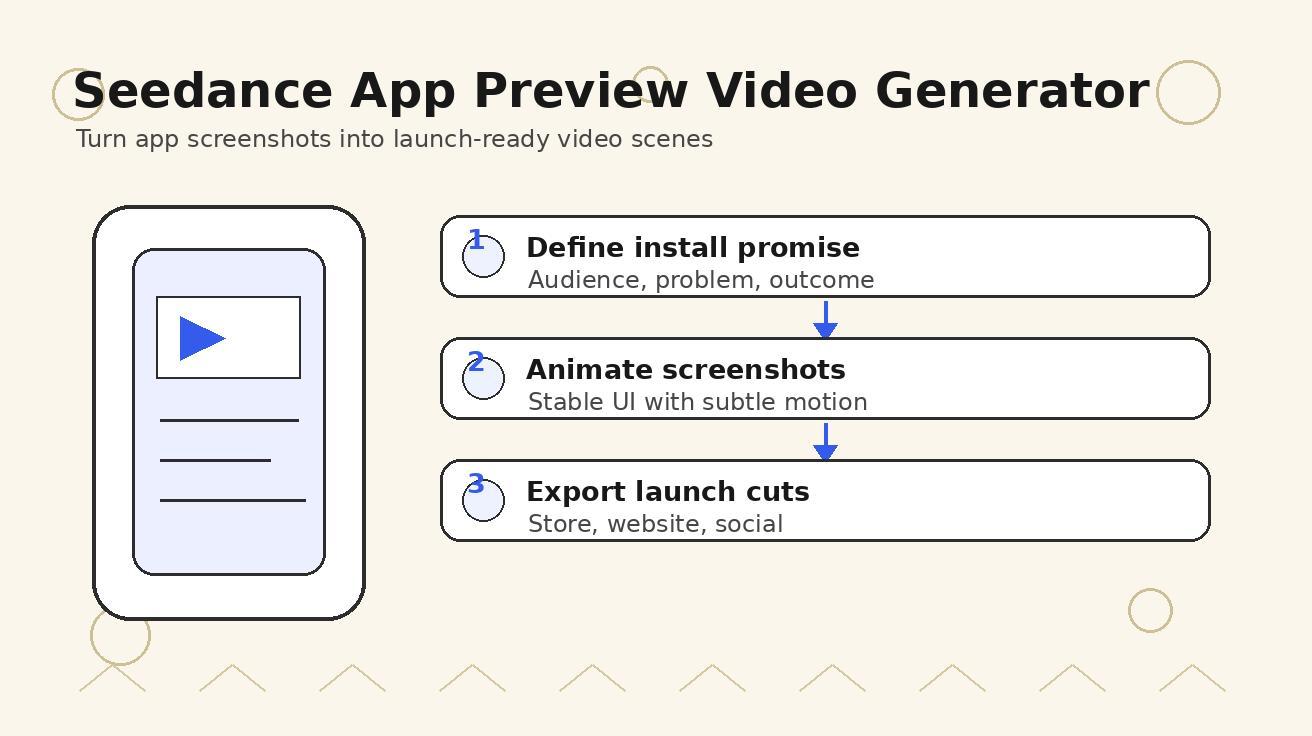
Seedance App Preview Video Generator 2026: Create App Store and Product Launch Clips
Use Seedance to turn app screenshots, feature copy, and launch goals into App Store previews, Google Play promo videos, and product launch clips.
Read article
Best AI Video-to-Video Models in 2026
The best AI video-to-video models in 2026 for editing footage you already shot: Higgsfield Genjutsu, Seedance 2.x, Runway Aleph, Luma Modify and Kling Omni compared.
Read article
Kling 4.0 vs Seedance 2.5: Full Comparison
Kling 4.0 vs Seedance 2.5 compared by spec: 30-second clips, keyframes vs 50 references, audio, 4K and 10-bit color, editing, and which model fits which job.
Read article