
You've got a product that makes sense to your team, but not yet to your audience. Maybe it's a new SaaS feature, a consulting offer with too many moving parts, or a training module nobody wants to read. That's the moment an animated explainer video maker earns its keep. It turns a dense message into something people can follow.
The business case is strong. Companies using animated explainer videos report an average ROI of 280%, according to Educational Voice's explainer video statistics. That matters because bespoke production still isn't cheap. In the UK, a professional 60-second explainer typically costs between £3,000 and £8,000, with delivery often taking four to six weeks, based on Educational Voice's UK explainer video company guide. For many teams, software is the faster route to a solid first draft or even a publishable final cut.
If you're building a content engine, not a one-off video, the right tool choice matters more than the flashiest demo. This guide keeps the focus practical. Use it alongside a broader plan for how to create a video strategy, then pick the tool that fits the job you need done.
Table of Contents
- 1. Seedance
- 2. Vyond
- 3. Animaker
- 4. Powtoon
- 5. Biteable
- 6. Renderforest
- 7. Moovly
- 8. VideoScribe Sparkol
- 9. Toonly
- 10. Synthesia
- Top 10 Animated Explainer Video Makers Comparison
- Your Next Step From Plan to Production
<a id="1-seedance"></a>
1. Seedance

A common brief sounds like this: the founder wants an explainer that feels like a trailer, not a slide deck with motion. That job is where Seedance makes sense. It is built for text-to-video and image-to-video generation, and its real value is continuity across shots. For cinematic explainers, that matters more than a long feature list.
Plenty of AI video tools can generate a striking single clip. The harder production problem is keeping characters, tone, and visual logic consistent from one scene to the next. Seedance is aimed at that problem. If the video needs atmosphere, pacing, and a stronger sense of direction, it gives you more room than template-first platforms.
<a id="why-seedance-fits-cinematic-explainers"></a>
Why Seedance fits cinematic explainers
I would place Seedance in the "best for cinematic product stories and concept-led explainers" category. That is the useful frame here. It is less about pumping out repeatable business videos, and more about shaping a visual idea quickly enough to test whether the concept deserves full production.
The platform includes multiple model options in one workspace, including Seedance variants and other major engines available through the tool. That helps during early creative development. A team can test whether the same script works better as photoreal footage, stylised motion, or a more dramatic sequence before committing to one direction.
Its strongest use cases are practical:
- Best for product launch explainers: Strong fit when the goal is to create interest and brand recall, not just explain steps.
- Best for start-up pitch visuals: Useful when a company has a concept, a script, and limited design assets, but still needs something investors can feel.
- Best for reference-led storyboards: Image inputs help keep scenes aligned with a product mockup, campaign frame, or art direction.
For teams building around image references, Seedance's guide on animating an image into video scenes is worth reviewing because it speaks directly to one of the platform's more practical strengths.
Practical rule: Choose Seedance when the visual treatment is doing strategic work. Choose another tool when repeatability, governance, and accessibility checks matter more than style.
<a id="where-it-works-best-and-where-it-does-not"></a>
Where it works best and where it does not
The free generator offers 1080p output without a watermark, which lowers the risk of testing it on a live brief. That matters for solo marketers, founders, and small creative teams. They can validate whether the idea works before they put editing time behind it.
The trade-off is control outside the visual layer. Seedance gives more artistic range than template libraries, but that does not automatically make it a better fit for every explainer project. Teams producing compliance content, internal training, or heavily reviewed stakeholder material usually need caption workflows, approval structure, and predictable revision cycles more than cinematic output.
There is also a procurement angle. The site states that Seedance is operated by ASTROINSPIRE LTD and is an independent product, not affiliated with ByteDance. For enterprise buyers, that means checking ownership, licensing terms, and support expectations before adding it to a wider production stack.
A simple way to decide: if a start-up needs a 45-second teaser for investor outreach, launch pages, and paid social cutdowns, Seedance is a strong option. If a university, insurer, or large HR team needs a training asset with strict accessibility standards and recurring updates, I would treat Seedance as a concept or first-draft tool, then plan for human editing and post-production.
<a id="2-vyond"></a>
2. Vyond

Vyond has been around long enough to know exactly what business users need. It isn't chasing cinematic AI spectacle. It's trying to help marketing, L&D, HR, and internal comms teams produce clear, brand-safe animation without hiring an animator for every update.
That's why Vyond works well in companies with repeatable video needs. Think onboarding series, policy explainers, sales enablement clips, and feature walkthroughs that need to stay on-brand across departments.
<a id="best-for-corporate-training-and-internal-communication"></a>
Best for corporate training and internal communication
Its strength is structure. The character creator, pose controls, scene templates, and lip-sync options make it easier to produce consistent episodes rather than one-off experiments. Vyond Go also helps with draft creation, which is useful when a subject matter expert has the knowledge but not the storytelling instinct.
Here's where I'd choose Vyond over flashier tools:
- Best for training libraries: Character rigs and templates let you build a repeatable style.
- Best for internal comms: Team collaboration and enterprise controls matter when multiple people touch the same file.
- Best for risk-averse brands: It's easier to keep messaging polished and predictable.
Vyond's weakness is the same thing that makes it dependable. It can feel a bit systematised. If the brief calls for visual surprise or a more cinematic feel, you'll notice the limits faster than with an AI-first generator. Still, when the job is “help 500 employees understand a process change by Monday”, predictability beats novelty.
You can explore it directly on the Vyond platform.
<a id="3-animaker"></a>
3. Animaker

Animaker sits in a useful middle ground. It gives you more style variation than very simple template tools, but it doesn't ask you to think like a professional motion designer. For a lot of small teams, that's the sweet spot.
I like it most for founders, small agencies, and in-house marketers who need a mix of animated explainers, whiteboard videos, and infographic-style content from one interface. The custom character builder helps when you want a recognisable visual identity without commissioning bespoke illustration.
<a id="best-for-start-up-pitches-and-lean-marketing-teams"></a>
Best for start-up pitches and lean marketing teams
Animaker is strong when speed matters, but so does flexibility. You can move from text-led draft to something more visual without switching platforms, and the AI additions like subtitles, translation, and text-to-speech make repurposing easier.
A practical example: say you've got a pitch deck for a new B2B service and want a short landing page explainer plus a cutdown for LinkedIn. Animaker can support both without forcing a total rebuild.
- Best for mixed-format explainers: Whiteboard, infographic, and character-based styles sit in one tool.
- Best for solo operators: Competitive value if one person is doing scripting, editing, and publishing.
- Watch for UI overload: The asset library is broad, which is helpful once you know the system, but busy at first.
If you're working from static creative, this extra guide on animating an image is a useful companion to the workflow.
One caution. When teams get access to huge asset libraries, they often overbuild. Too many icons, too many scene changes, too much motion. Animaker works best when you keep the script tight and use its flexibility to clarify, not decorate.
Visit Animaker if you want that blend of affordability and breadth.
<a id="4-powtoon"></a>
4. Powtoon

Powtoon is the tool I'd choose when the source material already looks like a presentation. Some explainer videos aren't really animation-led stories. They're structured arguments. A problem, a solution, a process, a pitch. Powtoon handles that shape well.
Its large template library and straightforward timeline make it approachable for non-designers, especially in business teams that are used to working from slides and talking points rather than storyboards.
<a id="best-for-presentation-style-explainers"></a>
Best for presentation-style explainers
Powtoon is good for three common jobs: turning a deck into a more watchable sales asset, creating a polished internal announcement, and packaging a straightforward service explainer without overcomplicating production.
What tends to work:
- Pitch videos: Good when founders want movement and polish, but not full custom animation.
- Training intros: Templates are strong for standard “what this covers and why it matters” segments.
- Marketing explainers: A solid fit for product overviews that don't need visual experimentation.
What doesn't work as well is deep customisation. The AI credits model also adds another layer to manage, which can become mildly annoying if multiple people on a team are iterating quickly.
Keep Powtoon for message-led videos, not mood-led ones.
That distinction saves time. If the script is doing the heavy lifting and you need clean support visuals, Powtoon is efficient. If you need strong character work or a distinctive visual world, move elsewhere. You can review the platform on Powtoon's website.
<a id="5-biteable"></a>
5. Biteable

Biteable is built for momentum. Open it, swap text, update colours, drop in a logo, publish. If your team keeps delaying video because every tool feels like a production suite, Biteable removes that excuse.
It's especially good for short explainers tied to campaigns, internal announcements, and social ads where clarity matters more than originality. The ready-made scenes are the point. You're buying speed.
<a id="best-for-short-campaign-explainers"></a>
Best for short campaign explainers
A useful example is a product update that needs to go live across email, paid social, and your help centre in the same week. Biteable lets a marketer make something clean and serviceable without chasing design support for every edit.
Its collaboration features and brand kit options also help when multiple stakeholders want to review a draft. The seven-day trial with publishing enabled is practical because you can test the full workflow, not just the editor shell.
The trade-off is obvious once you use it a bit longer. Stock scenes can start to look like stock scenes.
- Use Biteable when: You need a fast explainer for a campaign with limited shelf life.
- Skip Biteable when: The video is central to your brand positioning or investor narrative.
- Improve results by: Rewriting template copy completely and trimming scene count hard.
For those use cases, the platform is efficient and honest about what it is. You can try it on Biteable.
<a id="6-renderforest"></a>
6. Renderforest

Renderforest is less of a pure animated explainer video maker and more of a bundled creative toolkit. That's why it appeals to start-ups, freelancers, and small agencies that don't just need one video. They also need logo animation, mockups, design assets, and sometimes even a lightweight website presence.
That breadth is its advantage. One subscription can cover more brand surface area than a dedicated animation tool.
<a id="best-for-brands-that-need-more-than-video"></a>
Best for brands that need more than video
If you're building a new brand and need an explainer, an intro sting, some promo assets, and presentation visuals, Renderforest can reduce tool sprawl. The pay-per-product option also makes sense for occasional users who don't want another monthly bill sitting idle.
It's most useful in these situations:
- Best for early-stage branding: One place to build supporting visual assets around a new product.
- Best for agencies on smaller accounts: Fast delivery without a bespoke pipeline.
- Best for one-person marketing teams: Less switching between tools.
The limitation is that template logic shows through quickly. That isn't necessarily bad. For many commercial jobs, “clear and finished” is enough. But if you're aiming for a distinctive motion identity, you'll hit a ceiling. The free plan's watermark also means serious testing usually leads to a paid step.
There's also a bigger market signal behind tools like this. The UK animation services market is valued at about £1.2 billion and is projected to grow annually through 2026, while the broader UK animation market is projected to expand from £3.1 billion in 2025 to £7.4 billion by 2030, according to Educational Voice's UK animation industry outlook. That growth explains why all-in-one platforms keep gaining traction. Businesses want more video output without full studio overhead.
For multi-asset brand building, Renderforest is a sensible pick.
<a id="7-moovly"></a>
7. Moovly

Moovly makes the most sense when your production volume is uneven. Some months you need several explainers. Other months you need none. That's where its mix of subscriptions and export-credit options becomes practical.
It's deeper than beginner-first tools, so I wouldn't call it the easiest entry point. I would call it flexible.
<a id="best-for-agencies-and-mixed-volume-production"></a>
Best for agencies and mixed-volume production
Moovly's AI text-to-video, auto-subtitles, translation tools, brand asset management, and large stock library make it a good fit for agencies, distributed teams, and businesses managing multiple brands. The white-label and workspace features are also useful if video production is becoming an operational process, not a side task.
A practical example: an agency supporting three clients with different brand kits can build a more controlled workflow here than in a lightweight template tool. The pay-as-you-go model also helps if one client wants a burst of activity without locking everyone into a higher recurring plan.
Agencies usually regret tools that are easy for one-off videos but messy at account level. Moovly is stronger once process matters.
It's not perfect. The interface has more depth, which means onboarding takes longer. UK users should also keep an eye on USD pricing and any cross-border billing implications.
Still, for teams that need room to scale without committing to full custom production, Moovly offers a sensible balance.
<a id="8-videoscribe-sparkol"></a>
8. VideoScribe Sparkol

VideoScribe remains the specialist pick for whiteboard animation. That hand-drawn reveal style still works well in education, training, and process explanation because it slows the viewer down just enough to follow the logic.
The UK roots also matter for some buyers, especially schools, training providers, and organisations that prefer local billing and a familiar education footprint.
<a id="best-for-education-and-whiteboard-learning-content"></a>
Best for education and whiteboard learning content
Where VideoScribe shines is linear explanation. Cause and effect. Steps in a process. A concept broken into digestible visual beats. For teachers and trainers, that's often more useful than a flashy general-purpose animation tool.
A practical example is a compliance training segment or a classroom explainer where the visual style needs to support recall, not brand theatre. The desktop and browser versions, SVG library, voiceover import, and auto-draw animation all support that workflow well.
There is one major caveat for UK public sector and education use. Accessibility is where many AI and maker tools still fall short. A UK-focused review found that 42% of educators and 31% of public sector marketers cited lack of accessibility audit tools as their main barrier to adoption, while 59% of AI-generated videos required manual re-editing to meet UK accessibility guidelines, according to VideoScribe's explainer video page. That doesn't make VideoScribe unusable. It means accessibility checks can't be an afterthought.
- Best for lesson explainers: Whiteboard pacing suits concept teaching.
- Best for process visuals: Draw-on sequences make steps easier to follow.
- Watch for repetition: If every video uses the same hand and same reveal rhythm, audience fatigue sets in.
For whiteboard-first teams, VideoScribe is still one of the clearest specialist choices.
<a id="9-toonly"></a>
9. Toonly

Toonly knows its lane. It isn't trying to be cinematic, enterprise-heavy, or primarily AI-driven. It's a desktop-friendly drag-and-drop tool for making cartoon business explainers without much friction.
That focus makes it useful for first-time creators who need to explain a service, onboarding flow, or customer problem with approachable 2D scenes.
<a id="best-for-simple-cartoon-business-stories"></a>
Best for simple cartoon business stories
The reason Toonly works is that it reduces decisions. You get ready-to-animate characters, props, backgrounds, and transitions designed to fit together. That makes it easier to finish a video, even if it means sacrificing some flexibility.
A good use case is a small service business that wants a homepage explainer with a friendly tone. Another is an onboarding sequence for a software tool where the visuals need to stay simple and not compete with the narration.
What I'd keep in mind:
- Strongest for beginners: You can get to a usable result without animation knowledge.
- Strongest within its own style: The cartoony asset set works best when you don't fight it.
- Less suited to premium branding: If your brand positioning is sleek or high-end, the style may feel off.
Toonly is easy to recommend when the main risk is never publishing anything at all. In that scenario, a simpler tool often beats a more capable one. You can check it out on Toonly.
<a id="10-synthesia"></a>
10. Synthesia

Synthesia is the outlier on this list because it isn't really about animation in the classic motion-graphics sense. It's about presenter-led explainer videos using AI avatars and voiceovers. For some teams, that's exactly the better choice.
If the audience expects a person on screen, or if the content benefits from a presenter guiding the message, Synthesia can be much faster than assembling a live-action shoot.
<a id="best-for-presenter-led-training-and-multilingual-rollouts"></a>
Best for presenter-led training and multilingual rollouts
The tool demonstrates its value in applications like training modules, onboarding, internal communication, product walkthroughs, and sales enablement content, all of which benefit from a clear speaker. The editor, scene templates, brand kits, and screen-content support make it practical for teams that need a lot of instructional content.
A practical example: a global company rolling out the same compliance message across regions can use one source script, adapt scenes, and produce presenter-led outputs without cameras or actors. It's also a London-based company, which can help with procurement comfort for UK organisations.
There's a broader market reason tools like Synthesia are getting more attention. The global AI video generator market stood at USD 716.8 million in 2025 and is projected to reach USD 3,350.00 million by 2034, with an 18.80% CAGR, according to Fortune Business Insights on the AI video generator market. The demand is there because businesses want repeatable video production, not one-off hero pieces.
For faster ideation around this workflow, this guide to a text to video creator is also relevant.
The limitation is straightforward. If you need expressive 2D character animation or a fully designed animated world, Synthesia isn't the right fit. But for talking-head explainers at scale, Synthesia is one of the strongest options.
<a id="top-10-animated-explainer-video-makers-comparison"></a>
Top 10 Animated Explainer Video Makers Comparison
| Product | Key features ✨ | Quality ★ | Pricing & Value 💰 | Best for 👥 |
|---|---|---|---|---|
| Seedance 🏆 | ✨ Text→1080p multi-shot storytelling; model switch (Sora/Veo/Seedance); wide visual styles; no-watermark free generator | ★★★★★ cinematic motion & character consistency | 💰 Free 1080p/no-watermark + paid tiers, high pro value | 👥 Creators, marketers, filmmakers, commercial teams |
| Vyond | ✨ 2D character rigs, templates, Vyond Go AI, enterprise governance | ★★★★ polished 2D UX, enterprise-ready | 💰 Premium enterprise plans, built for scale | 👥 L&D, marketing, internal comms |
| Animaker | ✨ Text-to-animation, custom character builder, whiteboard & templates | ★★★ easy, template-driven | 💰 Competitive SMB pricing; export caps on lower tiers | 👥 Solo creators, SMBs, educators |
| Powtoon | ✨ Large template library, timeline editor, credit-based AI actions | ★★★ simple & quick | 💰 Credit model + paid 1080p, mid-range value | 👥 Marketers, trainers, small teams |
| Biteable | ✨ Ready-made scenes, team collaboration, rapid edits | ★★★★ very fast for short explainers | 💰 Trial + subscription, great for quick social content | 👥 Marketers, social teams, startups |
| Renderforest | ✨ Video + design/web assets, logo stings, pay‑per‑product or subs | ★★★ broad creative suite beyond video | 💰 Flexible billing (pay-per-product/sub), variable value | 👥 Agencies, branding teams, startups |
| Moovly | ✨ AI text-to-video, 100M+ assets, credits or subscription exports | ★★★★ scalable with deep asset library | 💰 Pay-as-you-go packs or subs, cost-effective for occasional use | 👥 Agencies, teams needing scale |
| VideoScribe | ✨ Whiteboard/doodle animation, auto-draw, large SVG library | ★★★★ best-in-class for whiteboard explainers | 💰 Plan-based downloads; free tier with limits | 👥 Educators, trainers, instructional designers |
| Toonly | ✨ Drag-and-drop cartoon scenes, desktop app, business-focused library | ★★★ approachable, very beginner-friendly | 💰 Affordable/desktop licensing, simple value for novices | 👥 Small businesses, first-time explainer creators |
| Synthesia | ✨ 140+ AI avatars, multilingual TTS, script-to-video editor | ★★★★ fast presenter-led output | 💰 Enterprise/credited pricing (avatar minutes), strong for scale | 👥 Global teams, training, product walkthroughs |
<a id="your-next-step-from-plan-to-production"></a>
Your Next Step From Plan to Production
A common mistake made is picking an animated explainer video maker by feature list alone. A better filter is the job the video needs to do. If you need cinematic narrative and visual control, Seedance is the obvious short list. If you need structured training content that a team can maintain, Vyond is safer. If you need presenter-led explainers for onboarding or multilingual communication, Synthesia is built for that workflow.
Start with a small production test. Don't begin with your flagship launch video or your most politically sensitive internal announcement. Build a 30-second version of a real message. Use the same short script across two tools and compare what happens in production. Which editor slows you down. Which one makes revisions easier. Which one gives you a result that still looks good after stakeholder edits.
That test should be practical, not abstract. For example, if you run a SaaS company, take a single feature update and turn it into a quick customer education video. If you work in L&D, convert one policy section into a training draft. If you're a founder, turn your homepage value proposition into a short pitch clip. The best tool becomes obvious when it meets a real brief under time pressure.
Keep expectations realistic with AI-heavy tools. Fast output doesn't automatically mean polished output. Some projects still need human review for brand consistency, accessibility, legal confidence, or simple editorial judgment. That's especially true for public sector, education, and broadcast-adjacent work. A quick draft can save time, but only if you budget for the fixes that matter.
It also helps to match the tool to the lifespan of the asset. For a short-lived campaign explainer, a template-first tool like Biteable or Powtoon may be more than enough. For a reusable training library, governance and consistency matter more than novelty. For premium launch content, more advanced scene control is worth the extra effort.
One more practical point. Don't confuse “I can make a video” with “I now have a video system.” If your organisation needs regular output, think about templates, approval flow, voiceover approach, captions, file naming, and distribution from day one. That's what turns one decent video into a repeatable content engine. If scaling that process is the priority, look at a solution for video automation at scale.
Pick one tool. Run one short brief. Publish one useful video. That's how most strong explainer programmes start.
If you want an animated explainer video maker that goes beyond slide-like templates, Seedance is worth trying first. It's especially strong when you need multi-shot storytelling, more cinematic output, and faster concept visualisation from prompts or reference images. Start with a short product teaser or feature explainer and test whether its scene consistency gives you the polish your current workflow is missing.
Ready to create your own AI video?
Turn ideas, text prompts, and images into polished videos with Seedance. If this article helped, the fastest next step is to try the product.
Free credits on signup. Plans from $28/month.
Related Articles
More posts in the same locale you may want to read next.
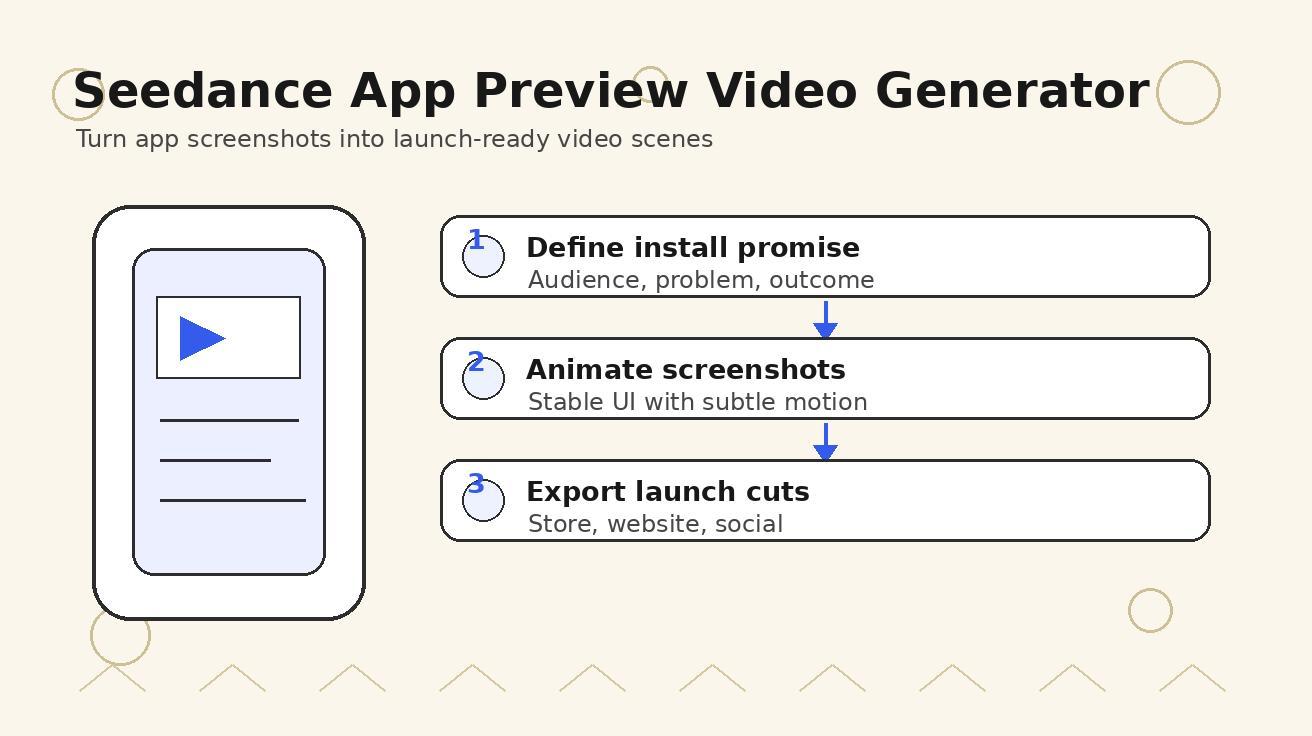
Seedance App Preview Video Generator 2026: Create App Store and Product Launch Clips
Use Seedance to turn app screenshots, feature copy, and launch goals into App Store previews, Google Play promo videos, and product launch clips.
Read article
Best AI Video-to-Video Models in 2026
The best AI video-to-video models in 2026 for editing footage you already shot: Higgsfield Genjutsu, Seedance 2.x, Runway Aleph, Luma Modify and Kling Omni compared.
Read article
Kling 4.0 vs Seedance 2.5: Full Comparison
Kling 4.0 vs Seedance 2.5 compared by spec: 30-second clips, keyframes vs 50 references, audio, 4K and 10-bit color, editing, and which model fits which job.
Read article