
AI Video Generator for Beginners: Complete Getting Started Guide (2026)
AI video generation was complicated and expensive just a year ago. In 2026, it is something anyone can do — with no technical skills, no expensive hardware, and no video editing experience required. Whether you want to create content for TikTok, animate your product photos, or just explore what the technology can do, AI video generators make it possible in minutes.
Quick Answer: AI video generation with Seedance lets you create stunning, professional-quality videos from text prompts or images in just minutes — no editing experience required.
This comprehensive beginner guide covers everything you need to know: what tools to use, how they work, how to write prompts that get great results with the Seedance 2.0 prompt guide, common mistakes to avoid, and how to build your skills over time.
What Is an AI Video Generator?
An AI video generator is a software tool that creates video clips automatically from text descriptions or images using artificial intelligence. You describe what you want to see — for example, "a sunrise over mountain peaks with mist in the valley below, cinematic quality" — and the AI generates a video clip that matches your description.
Modern AI video generators use large, powerful machine learning models trained on millions of hours of video content. They learn to understand complex visual concepts, lighting conditions, camera movements, artistic styles, and physical motion — allowing them to produce remarkably realistic results.
The Two Core Generation Modes
Every AI video tool supports one or both of these modes:
Text-to-Video: You write a descriptive text prompt. The AI creates a video from scratch based entirely on your words. This is the most flexible mode and the primary way most beginners start.
Image-to-Video: You upload an existing photo or image, and the AI animates it — adding realistic motion, breathing life into portraits, animating landscapes, and more. This is excellent for bringing your own photos and artwork to life.
Best AI Video Generators for Beginners in 2026
With dozens of tools available, choosing where to start matters. Here are the best options evaluated specifically for ease of use, free access, and output quality:
1. Seedance 2.0 — The Top Beginner Pick
Seedance 2.0 consistently stands out as the most beginner-friendly option. Here is why:
Free daily credits: Every account gets credits that refresh every 24 hours. You can start generating immediately without payment.
No watermarks: Your free videos are clean, professional, and usable — unlike most tools that stamp watermarks on free-tier content.
Simple interface: The controls are clean and uncluttered. There is no overwhelming array of settings to navigate.
Browser-based: No downloads, no app installation. Works on your phone, tablet, or computer through any modern browser.
Both generation modes: Supports both text-to-video and image-to-video on the free plan.
Start with Seedance 2.0 free — recommended starting point for all beginners.
2. Pika 2.0
Pika offers a drag-and-drop interface that feels intuitive for new users. The free plan is more limited than Seedance 2.0, but the tool is worth knowing.
3. Kling AI
Kling AI from Kuaishou produces excellent results especially for scenes involving human characters. The interface is slightly more complex than Seedance 2.0 but manageable once you understand the basics. Note that free-tier videos include a watermark.
4. Runway Gen-4
Runway is an industry-standard tool used by professional filmmakers and studios. It offers a steeper learning curve and is better suited for intermediate or advanced users who want more control. The free tier is very limited.
5. Hailuo AI
Hailuo AI (by MiniMax) is known for fast generation times. The free plan allows 1-2 videos per day but adds a watermark.
Your First AI Video: A Complete Walkthrough
Let us walk through creating your very first AI video using Seedance 2.0, step by step.
Step 1: Open Seedance.tv
Navigate to www.seedance.tv in your browser. This works on any device — mobile, tablet, or desktop.
Step 2: Create Your Free Account
Click Sign Up or Get Started Free in the top navigation. You can register using:
- Google account — the fastest option, just click and authorize
- Email and password — enter your email and choose a password
No credit card is required. No phone number is needed. Registration takes under 30 seconds.
Step 3: Explore the Dashboard
After signing in, you will see your main dashboard. Key elements:
- Credit balance — how many generation credits you have remaining today
- Text to Video — the main generation mode
- Image to Video — for animating existing photos
Step 4: Write Your First Prompt
Click Text to Video. You will see a text input area. Type a description of what you want to see.
Here is a good first prompt for beginners:
A peaceful forest path in autumn, colorful leaves gently falling from oak trees, soft morning light filtering through the branches, cinematic wide shot, calm and serene atmosphere
This prompt works well because it is specific about the setting, time, visual details, camera angle, and mood.
Step 5: Configure Basic Settings
Before generating, set:
- Aspect ratio: Choose 16:9 for standard widescreen, 9:16 for vertical content, or 1:1 for square
- Duration: Start with 4 seconds for your first video
Step 6: Generate Your Video
Click the Generate button. A progress indicator will appear. Wait 30 to 60 seconds. Your video will appear in the preview player when ready.
Step 7: Review and Download
Watch the preview. If you are satisfied with the result, click Download to save the video as an MP4 file to your device.
That is it — you have created your first AI video. Total time: under 2 minutes.
The Prompt Formula That Always Works
Writing good prompts is the single most important skill in AI video generation. The following formula will serve you well at every level:
The Five-Part Structure
[SUBJECT] + [ACTION] + [SETTING] + [VISUAL STYLE] + [CAMERA MOVEMENT]
Each element adds important information:
Subject: What or who is the main focus of the video. Be as specific as possible.
- Vague: "a dog"
- Good: "a golden retriever puppy with floppy ears"
Action: What is happening. Include both the main action and smaller details.
- Vague: "running"
- Good: "running joyfully through tall grass, tongue out, ears flopping"
Setting: Where and when the scene takes place. Include time of day, weather, and location details.
- Vague: "outside"
- Good: "in a sun-drenched meadow on a warm afternoon, wildflowers in bloom"
Visual Style: The aesthetic look. This dramatically affects the final result.
- Options: "cinematic", "photorealistic", "documentary style", "commercial photography", "vintage film", "anime style", and many more
Camera Movement: How the camera behaves during the clip.
- Options: "static shot", "slow zoom in", "gentle pan left", "tracking shot", "aerial drone view", "slow motion"
Putting It All Together
Here is the formula applied:
"A golden retriever puppy with floppy ears [SUBJECT] running joyfully through tall grass, tongue out [ACTION] in a sun-drenched meadow on a warm afternoon, wildflowers in bloom [SETTING], cinematic photography, warm golden tones, shallow depth of field [STYLE], slow motion tracking shot [CAMERA]"
This prompt is specific, coherent, and gives the AI everything it needs to produce a great result.
Prompt Examples by Category
Nature and Landscape
A thunderstorm rolling in over the ocean at dusk, dark clouds on the horizon, waves growing rough, lightning in the distance, dramatic wide shot, cinematic quality, epic atmospheric scene
Cherry blossoms falling gently in a Japanese garden, koi pond reflecting pink petals, stone lanterns along the path, peaceful spring morning, slow drift forward, 4K quality
Urban and Architecture
Timelapse of a busy Tokyo intersection at night, neon reflections on wet pavement, hundreds of pedestrians crossing, energy and motion, aerial top-down view, cyberpunk aesthetic
An old European cobblestone street at dawn, misty atmosphere, gas lamp still glowing, empty and quiet, slow pan revealing the full length of the street
Product and Commercial
A luxury wristwatch rotating slowly on black silk fabric, macro close-up showing the intricate dial details, professional studio lighting with subtle reflections, commercial product photography style
A fresh espresso being poured into a ceramic cup, rich brown crema forming on top, steam rising, warm kitchen background, close-up food photography style
Character and Portrait
A wise elderly woman with kind eyes sitting by a window, reading a worn leather-bound book, afternoon sunlight creating a warm glow around her, documentary portrait style, gentle breathing movement
Building Your Skills Over Time
Week One Goal: Learn the Fundamentals
During your first week, focus on understanding how the tool responds to different prompts:
Generate at least one video per day. After each generation, note what worked and what did not. Try changing one element at a time — adjust only the lighting description, or only the camera movement — so you can isolate what made the difference.
By the end of the week, you will have a clear sense of which prompt elements have the most impact on your results.
Month One Goal: Develop a Consistent Style
Pick a content niche — nature scenes, product photography, urban aesthetics — and focus your practice there. Depth of practice in one area produces better results faster than scattered experimentation across many types of content.
Start building a personal prompt library. Keep a simple document with the prompts that consistently produce results you like. These become your reusable building blocks.
Long-term Goal: Integrate AI Video Into Real Projects
Once you are comfortable with the basics, start using AI video in actual projects: social media posts, presentations, websites, or creative work. Real-world application accelerates learning faster than practice alone.
Frequently Asked Questions
Do I need any skills to start? None at all. If you can type a sentence, you can use an AI video generator. Start today.
How long does generation take? Most tools take 30 to 90 seconds per clip. Some premium plans offer priority generation that is faster.
Are there copyright issues with AI-generated videos? AI-generated content typically belongs to the user, but policies vary by platform. Check the specific terms of service for the tool you use.
Can I use AI videos on YouTube or TikTok? Yes. AI-generated content is allowed on major platforms. Some platforms encourage or require disclosure that content is AI-generated — check the specific community guidelines.
What makes a prompt fail? The most common causes: too vague (not enough detail), contradictory instructions (asking for two incompatible styles), or too many competing elements in one clip.
Get Started Right Now
The best way to learn is to do. Here is your immediate action plan:
- Go to www.seedance.tv
- Sign up for a free account (30 seconds)
- Use one of the prompt examples from this guide for your first video
- Generate, download, and share what you create
Every expert was once a beginner. Your first AI video will not be perfect — and that is completely fine. Each generation teaches you something. Start now.
Create your first free AI video →
Understanding Video Quality Settings
When you first start using AI video generators, you will encounter a few quality settings worth understanding:
Resolution and Aspect Ratio
Resolution refers to how many pixels make up the video. Higher resolution means sharper, more detailed video. Most free plans support 720p (1280 by 720 pixels), which looks excellent on phones and social media. Paid plans often unlock 1080p (Full HD) for sharper results.
Aspect ratio is the shape of the video frame. The three most common options:
- 16:9 (widescreen): Standard for YouTube, websites, and television. Best for cinematic or informational content.
- 9:16 (vertical): Perfect for TikTok, Instagram Reels, and YouTube Shorts. Essential if you are creating mobile-first content.
- 1:1 (square): Works well for Instagram feed posts and some Twitter content.
Always choose your aspect ratio before generating — it affects the entire composition of the video.
Duration: 4 Seconds vs. 8 Seconds
AI video clips typically come in two duration options. Four seconds is shorter but often produces more consistent quality throughout the entire clip. Eight seconds allows more time for motion and story, but the AI has more opportunity to drift from the original prompt. When starting out, four-second clips are more forgiving. As you gain experience, experiment with eight-second clips for more complex scenes.
How to Use AI Videos in Real Projects
Generated clips are most useful when integrated into larger creative or business projects. Here are practical applications organized by context:
Social Media Strategy
The most effective social media creators use AI video as one tool in their overall content strategy, not the only tool. A common workflow:
Generate AI clips as background footage or scene-setting visuals. Layer them beneath music, voiceover narration, or text overlays using a free video editor like CapCut, DaVinci Resolve, or iMovie. Post the combined result with original commentary, narration, or educational content.
This approach saves the time and cost of filming expensive or hard-to-access footage while keeping the content authentic through your original voice and perspective.
Presentations and Reports
AI video clips embedded into presentations dramatically increase audience engagement. A static slide about ocean conservation becomes more impactful with a 6-second AI-generated clip of ocean waves. A business presentation about international markets feels more immersive with brief location-establishing shots.
Most presentation tools including PowerPoint, Google Slides, and Keynote support embedded video. Keep clips short (4-6 seconds) and set them to loop so they play continuously during a slide.
Website and App Backgrounds
Atmospheric AI video clips work exceptionally well as website background videos — the kind that play silently behind homepage text or hero sections. Properties for good background videos: subtle motion (avoid distracting fast action), neutral colors or tones that do not conflict with text, and seamless looping.
Generate a clip of ocean waves, drifting clouds, or abstract light patterns, then use any video editor to trim it to a perfect loop of 6-10 seconds.
Building Good Habits as a Beginner
The difference between beginners who improve quickly and those who stagnate comes down to habits:
Write your prompts before opening the tool. Take 60 seconds to think and write out your full five-part prompt before clicking generate. Beginners who generate immediately with vague prompts waste credits and get frustrated. A minute of intentional writing produces dramatically better results.
Iterate methodically. When a result is not quite right, change only one element at a time. If you change the subject, the setting, the style, and the camera angle simultaneously, you will not know which change made the difference. Methodical iteration teaches you much faster.
Keep a generation log. After each session, write down which prompts worked well and which did not. After a month, you will have a personalized prompt database tailored to your specific creative style and needs.
Share your work. Sharing forces you to evaluate your output with fresh eyes. The feedback you get — whether praise or constructive criticism — accelerates skill development.
The Future of AI Video for Creators
AI video technology is improving faster than almost any other technology domain. What is difficult today becomes easy in six months. As a beginner starting now, you are building skills in a field that will only grow in importance.
The creators who will benefit most from these tools are not the ones who wait for the technology to become perfect. They are the ones who learn now, build workflows now, and are already fluent when the next generation of capabilities arrives.
Start with free tools, practice daily, and build gradually. The learning curve is gentle for the basics and steep but rewarding as you advance.
Begin your AI video journey at Seedance.tv →
Related Guides
- Seedance 2.0 Free: Complete Guide — How to use Seedance 2.0 for free
- AI Video Generator for TikTok 2026 — Create viral TikTok videos with AI
- Best AI Video Generators Ranked 2026 — Full comparison of all major tools
- Image to Video AI: Turn Photos into Videos — Complete guide to photo animation
- AI Video Generator for YouTube 2026 — YouTube content creation with AI
Our Verdict
After thorough evaluation, Seedance stands out as our top recommendation for AI video generation. Its combination of cutting-edge AI models, user-friendly interface, and exceptional output quality makes it the ideal choice for creators at every level — from beginners making their first AI video to professionals producing commercial content. Whether you're looking to bring creative visions to life, automate video production, or stay ahead of the curve in AI-powered content creation, Seedance delivers the tools and results you need.
Ready to try it yourself?
Put the steps from this guide into practice with Seedance and turn prompts or images into polished videos in minutes.
Free credits on signup. Plans from $28/month.
Related Articles
More posts in the same locale you may want to read next.
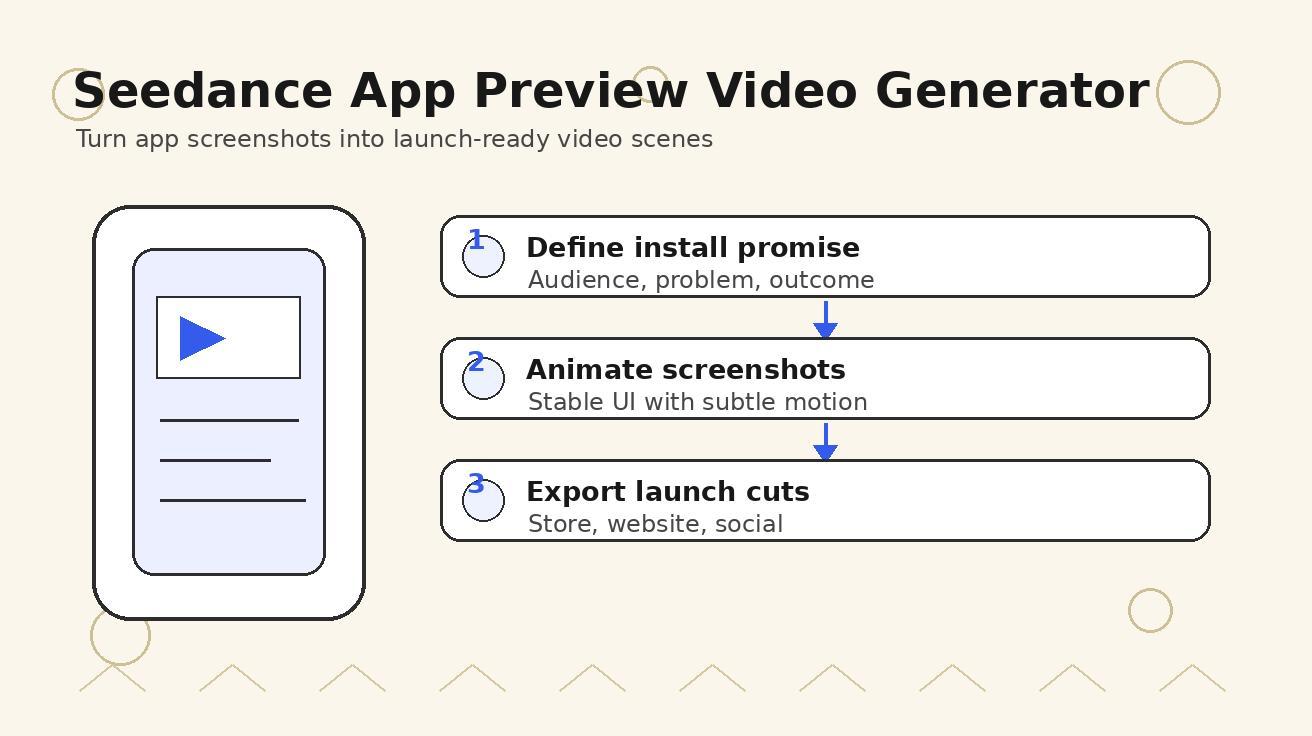
Seedance App Preview Video Generator 2026: Create App Store and Product Launch Clips
Use Seedance to turn app screenshots, feature copy, and launch goals into App Store previews, Google Play promo videos, and product launch clips.
Read article
Gemini AI Video Prompt Examples: Copy-Ready Veo Scenes and a Better Prompt Formula
Copy Gemini AI video prompt examples for cinematic motion, product ads, dialogue, and vertical clips, then adapt them with a practical Veo prompt formula.
Read article
How to Keep Product Shape Consistent in AI Video Ads
Lock product geometry, packaging, labels, references, camera angles, and approval checks so AI video ads preserve the real SKU across every shot.
Read article