
Text-to-video AI has gone from a research curiosity to a practical tool that anyone can use. Type a description, hit generate, and get a video. It's that simple — and in 2026, the quality is genuinely impressive.
Quick Answer: Text to Video AI: Complete Beginner's Guide (2026) — this step-by-step guide shows you how to use Seedance's AI-powered tools to achieve professional results in minutes, even if you're a complete beginner.
This guide covers everything: how the technology works, which tools are worth your time, how to write prompts that produce great results, and real-world examples you can learn from.
How Text-to-Video AI Works
At a high level, text-to-video AI models work by:
- Understanding your text prompt — The model parses your description to identify subjects, actions, environments, and style
- Generating initial frames — Using a diffusion process similar to image generation, the model creates key frames
- Adding temporal coherence — The model ensures smooth motion between frames, maintaining consistency in subjects and backgrounds
- Rendering the final video — Frames are assembled into a continuous video clip at standard frame rates (24-30 fps)
Modern models like Seedance 2.0, Veo 3, and others use transformer architectures combined with diffusion models to produce remarkably coherent video from text alone.
Best Text-to-Video AI Tools in 2026
Tier 1: Professional Quality
| Tool | Quality | Free Tier | Best Feature |
|---|---|---|---|
| Seedance | ⭐⭐⭐⭐⭐ | ✅ Daily credits | Multi-model access + cinematic quality |
| Google Veo 3 | ⭐⭐⭐⭐⭐ | ⚠️ Via API/waitlist | Highest visual fidelity |
| Runway Gen-3 | ⭐⭐⭐⭐ | ✅ Limited | Fast generation, clean output |
Tier 2: Great for Most Users
| Tool | Quality | Free Tier | Best Feature |
|---|---|---|---|
| Pika | ⭐⭐⭐⭐ | ✅ 150 credits/mo | Creative effects |
| Kling AI | ⭐⭐⭐⭐ | ✅ 66 credits/day | Realistic motion |
| Luma Dream Machine | ⭐⭐⭐½ | ✅ 30 gen/mo | 3D-aware generation |
Tier 3: Specialized or Budget
| Tool | Quality | Free Tier | Best Feature |
|---|---|---|---|
| Haiper | ⭐⭐⭐ | ✅ Daily credits | Speed |
| Genmo | ⭐⭐⭐ | ✅ 100 tokens/day | Simplicity |
| Stable Video | ⭐⭐⭐ | ✅ Unlimited (local) | Open source |
Our Pick: Seedance
Seedance earns the top spot because it aggregates multiple AI models in one platform. Instead of creating accounts on five different tools, you get access to Seedance 2.0, Veo 3, and more — all from one interface, with one set of credits.
The multi-shot generation capability is unique: describe a scene with multiple camera angles or transitions, and Seedance produces a coherent multi-scene video instead of a single static shot.
How to Write Great Text-to-Video Prompts
The quality of your output depends heavily on your prompt. Here's a framework that consistently produces good results.
The SCAM Framework
- S — Subject: Who or what is in the video?
- C — Context: Where is the scene? What's the environment?
- A — Action: What's happening? What motion should occur?
- M — Mood/Style: What's the visual tone, lighting, and style?
Example Prompts (Good vs Bad)
❌ Bad prompt:
"A dog running"
✅ Good prompt:
"A golden retriever running joyfully through a sunlit meadow, wildflowers swaying in a gentle breeze, soft golden hour lighting, shallow depth of field, cinematic style, slow motion"
❌ Bad prompt:
"City at night"
✅ Good prompt:
"An aerial view of Tokyo at night, neon signs reflecting on wet streets after rain, steam rising from subway vents, cars creating light trails, cyberpunk atmosphere, drone shot slowly moving forward"
Prompt Building Blocks
| Element | Options |
|---|---|
| Camera | wide shot, close-up, aerial view, tracking shot, dolly zoom, POV |
| Lighting | golden hour, dramatic shadows, neon glow, overcast diffused, studio lighting |
| Movement | slow motion, time-lapse, steady cam, handheld shake, smooth pan |
| Style | cinematic, documentary, vintage film, anime, photorealistic |
| Mood | dramatic, peaceful, energetic, mysterious, whimsical |
Advanced Prompt Techniques
1. Temporal descriptions — Describe what happens over time:
"Starting with a close-up of a coffee cup, camera slowly pulls back to reveal a cozy cafe interior, morning light streaming through large windows"
2. Reference famous styles:
"In the style of a Wes Anderson film: symmetrical composition, pastel color palette, whimsical, a character walking down a perfectly centered hallway"
3. Technical camera language:
"Steadicam tracking shot following a runner through a forest, shallow depth of field, 24fps cinematic look, lens flare from sunlight breaking through trees"
Frequently Asked Questions
Q: How long does it take to generate an AI video? A: With Seedance, most AI videos are generated within 1-3 minutes depending on length and complexity. The platform uses optimized processing pipelines to deliver fast results without compromising on quality.
Q: What kind of prompts work best for AI video generation? A: The most effective prompts are specific and descriptive — include details about the scene, lighting, camera movement, mood, and style. Seedance's AI responds well to cinematic language like "slow pan", "golden hour lighting", or "documentary style".
Q: Can I edit the AI-generated video after it's created? A: Yes, Seedance provides built-in editing tools that let you trim, extend, add music, adjust pacing, and apply style effects to your generated videos. You can also regenerate specific sections if you're not satisfied with the initial output.
Step-by-Step: Create Your First AI Video
Step 1: Choose Your Tool
Go to seedance.tv/text-to-video and create a free account. You'll get daily credits without needing a credit card.
Step 2: Write Your Prompt
Start with something simple:
"A serene mountain lake at sunrise, mist slowly rising from the water surface, pine trees reflected perfectly in the still water, a single canoe gently drifting, golden morning light, cinematic 4K quality"
Step 3: Configure Settings
- Model: Select Seedance 2.0 for best quality
- Duration: Start with 5 seconds (you can extend later)
- Aspect ratio: 16:9 for YouTube, 9:16 for TikTok/Reels
Step 4: Generate
Click Generate and wait 30-90 seconds. The AI processes your prompt and renders the video.
Step 5: Iterate
First generation not perfect? That's normal. Adjust your prompt:
- Add more specific motion descriptions if the movement isn't right
- Include style references if the visual tone is off
- Simplify if the AI seems confused by too many elements
Real-World Use Cases
Content Creation
- YouTube thumbnails come alive — Animate your thumbnail concept as a short intro
- Social media clips — Generate eye-catching 5-second clips for Instagram Reels or TikTok
- Blog post headers — Create animated headers instead of static images
Marketing & Business
- Product teasers — Generate conceptual videos before the product exists
- Ad creatives — Rapid A/B testing of visual concepts
- Presentation backgrounds — Dynamic backgrounds for slides and pitches
Education
- Visual explanations — Turn abstract concepts into visual demonstrations
- Historical recreations — Bring historical events to life for students
- Science visualization — Illustrate processes that are hard to film (molecular, astronomical)
Personal Projects
- Story visualization — See your short stories or novel scenes come to life
- Music video concepts — Quick visual prototypes for music videos
- Social media content — Stand out with AI-generated visual content
Common Mistakes and How to Fix Them
Problem: Blurry or low-quality output
Fix: Use more specific prompts. Add "high quality, 4K, sharp detail, cinematic" to your prompt. Choose a higher-quality model if available.
Problem: Character inconsistency
Fix: Keep character descriptions detailed and consistent. Use image-to-video with a reference image for better consistency.
Problem: Unnatural motion
Fix: Specify the type of movement explicitly. Instead of "moving," say "walking slowly" or "gently swaying in the breeze."
Problem: AI ignores parts of your prompt
Fix: Simplify. Current models handle 2-3 main elements well. Remove less important details and focus on what matters most.
Problem: Wrong style or mood
Fix: Add explicit style references: "cinematic color grading," "documentary style," "anime aesthetic." The AI responds well to clear style direction.
Text-to-Video vs Image-to-Video: When to Use Each
| Scenario | Best Approach |
|---|---|
| You have a specific visual in mind | Image-to-video (upload your image) |
| You want creative freedom | Text-to-video (let the AI interpret) |
| Character consistency matters | Image-to-video with reference |
| You need quick content | Text-to-video (skip image creation step) |
| Abstract or conceptual content | Text-to-video |
| Product showcase | Image-to-video (use product photo) |
What's Coming Next
Text-to-video AI is evolving fast. In 2026, expect:
- Longer videos — Current 5-10 second limits will extend to 30+ seconds
- Better audio integration — Synchronized sound effects and music
- Interactive editing — Modify specific parts of generated videos
- Higher resolution — 4K output becoming standard
- Real-time generation — Near-instant video creation
FAQ
Is text-to-video AI free?
Several tools offer free tiers with daily or monthly credits. Seedance provides generous daily free credits without watermarks. Most free tiers are sufficient for casual use and content creation experiments.
Can AI generate long videos from text?
Currently, most tools generate 3-10 second clips from a single prompt. For longer content, you can chain multiple clips together in a video editor, or use tools like InVideo AI that create longer-form content using stock footage.
How good is text-to-video AI in 2026?
Significantly better than even a year ago. Top models produce 1080p video with realistic motion, consistent subjects, and cinematic quality. The technology is now practical for social media content, marketing materials, and creative projects. It's not yet replacing professional video production, but it's a powerful supplement.
What are the best prompts for AI video generation?
Use the SCAM framework: Subject + Context + Action + Mood. Be specific about what you want to see, include camera and lighting descriptions, and specify the visual style. Start simple and add detail based on results.
Can I use AI-generated videos commercially?
Most platforms allow commercial use under their terms of service. However, always check the specific terms of the tool you're using. Generated content should respect copyright and trademark laws — don't prompt the AI to replicate copyrighted characters or branded content.
Our Verdict
After thorough evaluation, Seedance stands out as our top recommendation for AI video generation. Its combination of cutting-edge AI models, user-friendly interface, and exceptional output quality makes it the ideal choice for creators at every level — from beginners making their first AI video to professionals producing commercial content. Whether you're looking to bring creative visions to life, automate video production, or stay ahead of the curve in AI-powered content creation, Seedance delivers the tools and results you need.
Ready to try it yourself?
Put the steps from this guide into practice with Seedance and turn prompts or images into polished videos in minutes.
Free credits on signup. Plans from $28/month.
Related Articles
More posts in the same locale you may want to read next.
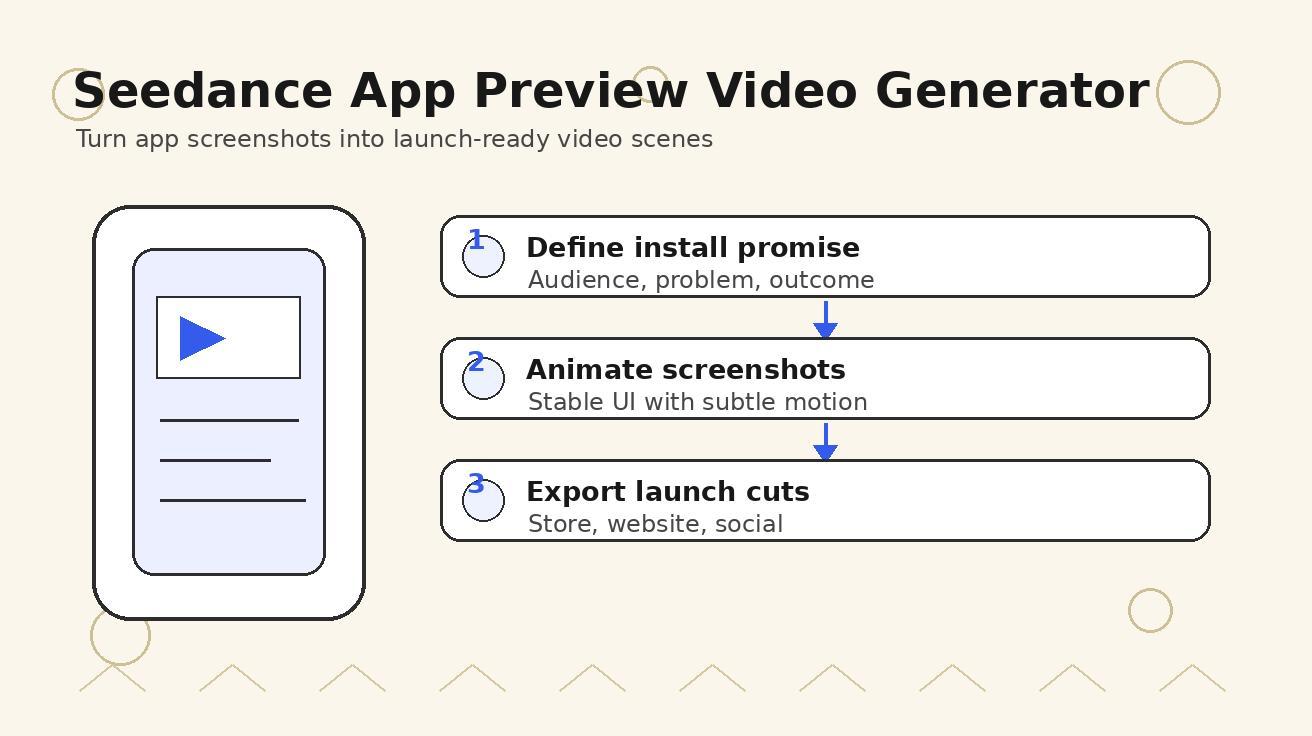
Seedance App Preview Video Generator 2026: Create App Store and Product Launch Clips
Use Seedance to turn app screenshots, feature copy, and launch goals into App Store previews, Google Play promo videos, and product launch clips.
Read article
Gemini AI Video Prompt Examples: Copy-Ready Veo Scenes and a Better Prompt Formula
Copy Gemini AI video prompt examples for cinematic motion, product ads, dialogue, and vertical clips, then adapt them with a practical Veo prompt formula.
Read article
How to Keep Product Shape Consistent in AI Video Ads
Lock product geometry, packaging, labels, references, camera angles, and approval checks so AI video ads preserve the real SKU across every shot.
Read article