
Seedance vs Kling AI 2026: Complete Side-by-Side Comparison
The AI video generation market has consolidated around a handful of serious contenders, and Seedance and Kling AI represent two very different approaches to the same goal. This comprehensive comparison examines every dimension that matters for content creators, marketers, and developers choosing between the two platforms in 2026.
Quick Summary
Choose Seedance if: You want free commercial rights, no watermarks, and a simpler interface with strong output quality.
Choose Kling AI if: You need longer clip durations (up to 3 minutes) or access to motion brush and character reference features.
For most creators, Seedance's combination of accessibility, commercial licensing, and output quality makes it the better daily-use tool.
Company and Platform Background
Seedance is developed by ByteDance, one of the world's largest technology companies and the parent company of TikTok. This backing means significant compute resources, rapid model improvements, and a long-term commitment to the platform. Seedance 2.0, released in early 2026, represents a major leap forward in temporal consistency and instruction following.
Kling AI is developed by Kuaishou Technology, ByteDance's primary Chinese competitor in short-video platforms. Kling was one of the first AI video generators to achieve viral recognition for its quality of human motion rendering, particularly walking and running animations. Kling AI 1.6 and subsequent versions have continued to push boundaries in character animation quality.
Feature Comparison Table
| Feature | Seedance 2.0 | Kling AI 1.6 |
|---|---|---|
| Free plan | ✅ Yes | ✅ Yes (limited) |
| Free watermark | ❌ None | ✅ Watermarked |
| Free commercial rights | ✅ Yes | ❌ No |
| Max resolution | 4K (Pro) | 1080p |
| Max clip length | 8 seconds | 3 minutes (Pro) |
| Image to video | ✅ Yes | ✅ Yes |
| Text to video | ✅ Yes | ✅ Yes |
| Camera control | ✅ Prompt-based | ✅ Motion brush |
| Character reference | ❌ Limited | ✅ Advanced |
| Lip sync | ❌ No | ✅ Yes (Pro) |
| API access | ✅ Pro+ | ✅ Enterprise |
| 9:16 vertical | ✅ Yes | ✅ Yes |
| Generation speed | Fast (30-90s) | Moderate (1-3 min) |
| Interface language | Multi | Multi |
Video Quality Comparison
Temporal Consistency
Temporal consistency refers to how stable subjects and objects remain throughout a video clip. An inconsistent model might show a person's face morph slightly between frames, or cause an object to flicker or change shape.
Seedance 2.0 made temporal consistency a core focus of its 2.0 update. For most common scenes — landscapes, products, atmospheric content — Seedance delivers very stable, consistent output. Complex scenes with multiple moving subjects can occasionally show minor inconsistencies.
Kling AI built its reputation largely on strong character motion rendering. Walking, running, and other full-body human movements are a Kling strength. For content centered on realistic human movement, Kling has historically performed well.
Verdict: For non-character content (landscapes, products, abstract), Seedance and Kling are comparable. For realistic human motion, Kling has an edge; for everything else, Seedance is on par or better.
Prompt Following
How accurately does each model execute what you describe in your prompt?
Seedance 2.0 has excellent prompt adherence for scene descriptions, camera movements, and style specifications. It reliably executes directional instructions (pan left, zoom in, tracking shot) and style references (cinematic, neon, golden hour).
Kling AI follows prompts well for basic scene generation but can be less consistent with specific camera movement instructions. Complex multi-element prompts sometimes produce outputs that partially match the description.
Verdict: Seedance has a slight edge in prompt adherence, particularly for camera direction and style specifications.
Aesthetic Quality
Both platforms produce visually impressive output, but with different aesthetic profiles:
Seedance tends toward cinematic realism with natural color grading. Output feels polished and production-ready, suitable for commercial applications.
Kling AI has a slightly more stylized quality that some creators prefer for creative or artistic content. The aesthetic can feel more "AI-generated" which can be either a feature or a limitation depending on your use case.
Pricing Comparison
Seedance Pricing
| Plan | Price | Daily Generations | Notes |
|---|---|---|---|
| Free | $0 | 2–5 | No credit card, commercial rights |
| Basic | ~$8/month | 20–30 | Priority queue |
| Pro | ~$24/month | 50–200+ | 4K, API, batch |
| Enterprise | Custom | Unlimited | Dedicated infrastructure |
Kling AI Pricing
| Plan | Price | Monthly Credits | Notes |
|---|---|---|---|
| Free | $0 | Limited | Watermarked, no commercial rights |
| Standard | ~$10/month | 660 credits | No watermark |
| Pro | ~$35/month | 3000 credits | Advanced features |
| Premier | ~$55/month | 8000 credits | Full access |
Key pricing difference: Seedance's free plan includes commercial rights and no watermarks. Kling's free plan adds watermarks and restricts commercial use. This makes Seedance significantly more valuable at the zero-cost entry point.
Use Case Recommendations
When to Choose Seedance
Content creators on a budget: The free commercial license is a genuine advantage. You can monetize YouTube videos, run paid social ads, and deliver client work all without paying for a plan upgrade.
High-volume social media creators: The daily refresh model and fast generation speed make Seedance efficient for creators who need consistent output.
Product and commercial video: Seedance's clean, commercial aesthetic and reliable prompt following make it well-suited for product showcases and marketing content.
Beginners: The simpler interface and strong free plan make Seedance a better entry point for creators new to AI video.
Developers and integrators: The API on Pro plans enables workflow integration that many Seedance users leverage for automated content pipelines.
When to Choose Kling AI
Long-form video content: If you need clips longer than 8 seconds, Kling's up to 3-minute generation is a meaningful advantage. This is important for certain creative and documentary applications.
Character-focused content: For content that centers on realistic human character movement — full-body action sequences, walking and running animations — Kling's specialized training on human motion is an advantage.
Lip sync video: Kling AI Pro includes lip sync capability for animated characters speaking. Seedance does not currently offer this feature.
Motion brush control: Kling's motion brush feature allows precise control over which parts of an image move and in which direction. This fine-grained control suits creators who need exact compositional control over their animations.
Which Is Better for Specific Creators?
YouTubers and Video Creators
For most YouTube creators, Seedance is the better choice. B-roll generation, establishing shots, abstract visualizations, and product showcases all work excellently. The 8-second maximum is sufficient for most b-roll needs, and the commercial license simplifies monetization.
Kling becomes relevant if you're producing character-driven narrative content that requires longer clips or realistic human movement sequences.
TikTok and Short-Form Creators
Seedance is better suited for TikTok. The native 9:16 support, fast generation times, and free commercial license align perfectly with TikTok's production demands. Most effective TikTok AI content uses clips of 3–6 seconds anyway, making Kling's longer clip capability irrelevant.
Marketing and Advertising
For most marketing applications, Seedance wins on total cost and commercial rights clarity. The free commercial license removes licensing ambiguity that can be problematic for legal and compliance teams. The clean, commercial aesthetic of Seedance output is well-suited for advertising contexts.
Filmmakers and Artistic Creators
This use case genuinely depends on the work. For atmospheric and scenic content, both platforms perform well. For character-driven experimental work that requires longer clips, Kling's extended duration capability can be the deciding factor.
The Verdict
In a direct comparison across the full range of creator needs in 2026, Seedance 2.0 is the better choice for most users. The free commercial license, watermark-free output on all plans, fast generation speeds, and strong prompt adherence make it the most practical daily-use AI video tool.
Kling AI remains the preferred choice for specific use cases: long-form clips, lip sync, and realistic human motion in character-focused content. For these specialized needs, Kling's specific capabilities justify the higher cost and more restrictive free tier.
The best strategy for creators who can't decide: start with Seedance (free, no commitment) and only add Kling to your workflow if you encounter specific limitations that Seedance can't address.
Frequently Asked Questions
Q: Can I use both Seedance and Kling AI together? A: Yes. Many professional creators use multiple AI video tools, choosing the best one for each specific project. There's no conflict between accounts.
Q: Which has better customer support? A: Both platforms offer documentation and community support. For paid plans, both provide direct support channels. Response times are comparable.
Q: Is Seedance or Kling better for generating anime-style content? A: Both handle anime and animated styles. Seedance responds well to explicit style prompts ("anime style," "2D animation"). Kling has strong anime output quality as well. Test both with your specific style requirements to determine which better matches your aesthetic.
Q: Which platform is updating faster? A: Both are actively developed with frequent model updates. Seedance benefits from ByteDance's substantial AI research resources. Check each platform's changelog for the most current feature additions.
Q: Are the generation speeds accurate? A: Stated speeds are averages. Actual generation time varies based on server load, plan tier (Pro users get priority queue), prompt complexity, and output resolution. During peak usage hours, both platforms may be slower than average.
Deep Dive: Output Quality Analysis
To make an informed decision between Seedance and Kling AI, it helps to understand what specific quality characteristics each model excels at.
Scene Complexity Handling
Simple scenes (single subject, plain background, clear lighting): Both platforms perform excellently. A product on a white background, a single person walking, or a landscape with simple weather conditions will produce high-quality results on either platform.
Moderate complexity (multiple subjects, dynamic backgrounds, complex lighting): Seedance 2.0's temporal consistency improvements mean it handles moderate complexity well without the flickering or morphing artifacts seen in earlier AI video models. Kling AI also performs well here, particularly when the scene involves human subjects.
High complexity (crowds, complex physics, multiple moving elements, detailed environments): Both platforms can struggle with extreme complexity. Seedance tends to handle complex environments (urban scenes, nature with many elements) more cleanly. Kling handles complex character interactions better.
Motion Physics
The realism of how objects and materials move is a key differentiator between AI video models:
Seedance strengths: Water, clouds, fabric, hair, and atmospheric elements move realistically. The model has strong physics simulation for environmental elements and products.
Kling AI strengths: Human body mechanics, particularly walking gaits and running motion, are Kling's most celebrated capability. When Kling AI first launched, its walking animations set a new standard for the industry.
Practical implication: If your content primarily features environmental b-roll, product showcases, or abstract visuals, Seedance's physics simulation is excellent. If you specifically need realistic human movement sequences, Kling has historically been the leader.
Color Science and Grading
Both platforms produce well-graded output, but with different profiles:
Seedance produces cinematic-style output with balanced, natural color. The default output looks like it was color-graded by a professional colorist with a neutral, film-adjacent profile. This makes it immediately usable for commercial work without additional color correction.
Kling AI has a slightly different color profile that some creators describe as "warmer" or "more stylized." For certain aesthetic applications, this differentiation can be desirable.
Integration with Post-Production Workflows
Both Seedance and Kling output standard MP4 files that integrate with any professional video editing application.
Recommended Editing Software Pairings
For TikTok/Instagram Reels: CapCut (free, mobile-first, TikTok-owned) pairs extremely well with Seedance outputs. The app's built-in templates and effects complement AI-generated b-roll.
For YouTube: DaVinci Resolve (free professional grade) or Adobe Premiere Pro. Seedance's color-balanced output requires minimal correction in either application.
For professional commercial work: Adobe Premiere Pro with Adobe After Effects for motion graphics. Seedance handles the video generation; After Effects handles text animation and graphic overlays.
For podcasters and educators: Descript (AI-powered editing tool) works well with Seedance b-roll. Generate atmospheric visuals to supplement screen recordings and talking head content.
The Hybrid Workflow
The most sophisticated creators don't use AI video exclusively — they combine AI-generated content with filmed footage in a ratio that maximizes both quality and efficiency:
- 70% filmed: Face-to-camera, interviews, product demonstrations requiring real interaction
- 30% AI-generated: B-roll, establishing shots, abstract visualizations, atmospheric content
In this hybrid model, Seedance handles the 30% of content that would otherwise require either expensive stock footage subscriptions or time-consuming additional filming sessions.
Total Cost of Ownership Analysis
When comparing Seedance and Kling AI, it's useful to calculate the true total cost for a typical creator's monthly usage:
Scenario: Independent Content Creator (50 videos/month)
With Seedance Free Plan:
- Platform cost: $0
- Commercial license: Included
- Watermark removal: N/A (no watermarks)
- Total: $0/month
With Kling AI Free Plan:
- Platform cost: $0
- Commercial license: Not included (cannot monetize)
- To get commercial rights: Upgrade to Standard ($10/month)
- Total for commercial use: $10/month minimum
Annual savings with Seedance (free plan): $120
Scenario: Marketing Professional (200 videos/month)
With Seedance Basic Plan (~$8/month):
- 20–30 daily generations
- Commercial rights, no watermarks
- Total: $8/month
With Kling AI Standard Plan ($10/month):
- 660 credits/month
- For 200+ videos: likely requires Pro at $35/month
- Total: $35/month
Annual savings with Seedance: ~$324
These calculations illustrate why Seedance's free commercial rights and competitive pricing create significant real-world savings, especially for professional applications.
Final Recommendation
After a thorough analysis across all dimensions — output quality, features, pricing, commercial rights, and use cases — here is the bottom line:
Seedance 2.0 is the better choice for approximately 85% of content creators in 2026. The combination of free commercial rights, watermark-free output on all plans, competitive output quality, fast generation speed, and simple pricing makes it the clear winner for everyday content creation needs.
Kling AI is the specialist tool for the 15% of use cases where its specific capabilities matter: long-form clip generation (>8 seconds), advanced character motion, or lip sync features. If your content specifically requires these capabilities, Kling's additional cost is justified.
The ideal approach for most creators is to start with Seedance as your primary tool — it costs nothing to test — and evaluate whether any of your specific content needs exceed what Seedance can provide. Only if you regularly encounter those specific limitations should you consider adding Kling AI to your workflow.
Start with Seedance for free today →
Practical Testing Guide: How to Evaluate Both Tools
If you want to make your own comparison rather than relying on written analysis, here's a structured testing protocol that will give you meaningful data within one hour:
Test 1: Standard B-Roll Quality (10 minutes)
Generate the same prompt on both platforms:
"Golden hour sunlight through forest trees, slow forward tracking shot, cinematic, HD quality"
Evaluate: Which output has better temporal stability? Which has better color? Which matches the prompt more accurately?
Test 2: Product Showcase (10 minutes)
Use this prompt on both:
"Minimalist watch on black leather surface, soft studio lighting, slow 360-degree rotation, commercial quality"
Evaluate: Which looks more suitable for an advertisement? Which has cleaner motion? Which would you use in a client deliverable?
Test 3: Abstract/Atmospheric (10 minutes)
Test with:
"Abstract neon light trails in rain, urban night, cinematic bokeh, moody atmosphere"
Evaluate: Which produces more visually compelling output? Which would stop a scroll on social media?
Test 4: Character Motion (10 minutes, Kling's strength)
Generate:
"Professional woman walking confidently through modern office, tracking shot, business attire, natural lighting"
Evaluate: Which has more realistic walking motion? Are there any artifacts in the limb movements?
After these four tests, you'll have direct comparative data for your specific use case. Most creators find that Seedance wins or ties in tests 1–3, and Kling wins in test 4. Your content mix will determine which platform better serves your needs.
Community and Ecosystem
Beyond the tools themselves, the communities and ecosystems around each platform affect the long-term value for creators.
Seedance community: Growing rapidly, particularly strong among TikTok and short-form video creators given the ByteDance connection. Active Discord and social media communities share prompt techniques and results.
Kling AI community: Strong among character animation enthusiasts and creators who discovered AI video through Kling's early viral walking demonstrations. A more established community with deeper resources for character-focused use cases.
Both communities are valuable resources for prompt inspiration and technique sharing. Following creators who produce content similar to yours on both platforms will accelerate your learning curve significantly.
The AI video market continues to evolve rapidly. Both Seedance and Kling AI release regular model updates that can shift the competitive balance. Checking each platform's release notes quarterly keeps you informed of new capabilities that might change your platform preferences. For the current moment in 2026, Seedance offers the strongest overall value proposition for the broadest range of creators.
Ready to create your own AI video?
Turn ideas, text prompts, and images into polished videos with Seedance. If this article helped, the fastest next step is to try the product.
Free credits on signup. Plans from $28/month.
Related Articles
More posts in the same locale you may want to read next.
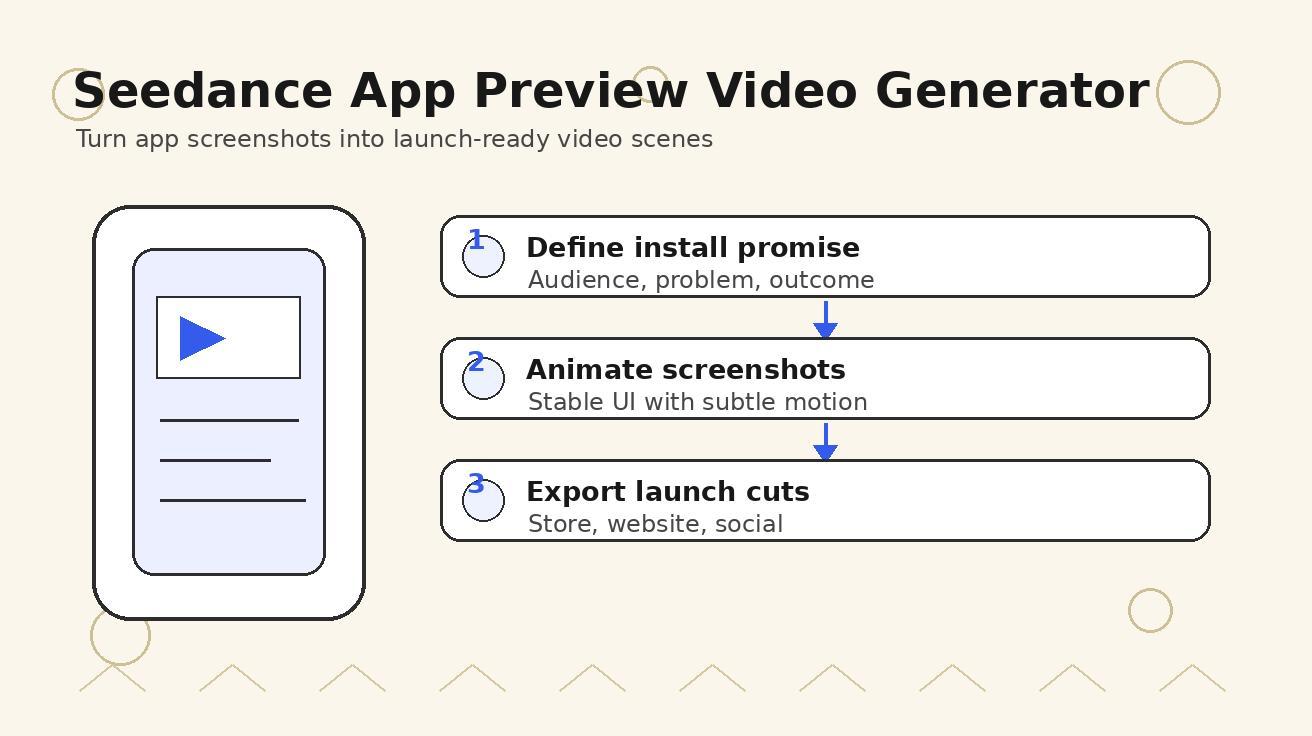
Seedance App Preview Video Generator 2026: Create App Store and Product Launch Clips
Use Seedance to turn app screenshots, feature copy, and launch goals into App Store previews, Google Play promo videos, and product launch clips.
Read article
Gemini AI Video Prompt Examples: Copy-Ready Veo Scenes and a Better Prompt Formula
Copy Gemini AI video prompt examples for cinematic motion, product ads, dialogue, and vertical clips, then adapt them with a practical Veo prompt formula.
Read article
How to Keep Product Shape Consistent in AI Video Ads
Lock product geometry, packaging, labels, references, camera angles, and approval checks so AI video ads preserve the real SKU across every shot.
Read article