
Seedance for Cooking and Food Tutorial Videos 2026: Complete AI Video Guide
Cooking video is one of YouTube and TikTok's most watched content categories. From Michelin-chef tutorials to home cooking hacks, food tutorial video drives billions of views every month. Creating high-quality cooking video content has traditionally required professional setups — overhead camera rigs, proper lighting, skilled editing. Seedance's AI video generation changes that equation, making professional cooking video production accessible to every food creator, brand, and culinary educator.
The Cooking Video Market Opportunity
The numbers behind cooking video content are compelling:
YouTube: Cooking content generates billions of monthly views. The category spans professional chefs, home cooks, food science, baking, and cuisine-specific channels.
TikTok: Short-form cooking content is one of TikTok's highest-performing categories. Food content generates exceptional engagement and has launched multiple food trends annually.
Instagram: Recipe content and food aesthetics drive high save rates — a key signal in Instagram's algorithm.
Pinterest: Food and recipe content is Pinterest's largest category, with users actively saving and returning to cooking content.
For brands, restaurants, food creators, and culinary educators, cooking video is one of the clearest ROI content investments available.
How Seedance Serves Cooking Video Content
Seedance's capabilities align well with cooking video requirements:
Ingredient beauty shots: Fresh vegetables, proteins, herbs, and spices rendered with photorealistic accuracy and appetite appeal.
Preparation sequences: Chopping, mixing, folding, sautéing — cooking process moments that communicate technique and build anticipation.
Finished dish presentations: The final plated dish in its most appetizing presentation, with perfect lighting and composition.
Kitchen atmospherics: The warmth and inviting quality of a well-lit kitchen — one of the most universally appealing environments in video content.
Texture details: The steam rising from a dish, the crust of fresh bread, the melt of chocolate — sensory details that make food video irresistible.
Cooking Tutorial Video Prompt Techniques
Ingredient and Setup Shots
Great cooking video starts before the cooking begins — with the ingredients:
Fresh produce arrangement:
Fresh colorful vegetables arranged on wooden cutting board,
morning kitchen light,
organized and abundant, fresh and appetizing, 16:9
Premium proteins:
Fresh salmon fillet and herbs on marble surface,
dramatic side lighting revealing texture and freshness,
premium and appetizing, 16:9
Mise en place:
Mise en place arrangement, small bowls of measured ingredients,
warm kitchen light, organized and professional,
culinary preparation, overhead or 45-degree angle, 16:9
Spices and herbs:
Colorful spices in small ceramic bowls,
warm overhead light revealing color and texture,
aromatic and vibrant, culinary detail, 16:9
Cooking Process Shots
Process shots communicate technique and build engagement:
The sauté:
Pan sauté, aromatic vegetables in hot pan,
steam and sizzle, warm kitchen light,
slow motion pan toss, technique and skill, 16:9
The chop:
Professional knife skills, herbs being finely chopped,
overhead view, quick and precise motion,
culinary technique, 16:9
The pour:
Olive oil being poured into hot pan,
slow motion, golden oil and heat shimmer,
dramatic warm kitchen light,
sensory and inviting, 16:9
Dough and baking:
Bread dough being kneaded on floured surface,
warm hands and tactile process,
artisan and craft, baking aesthetic, 16:9
The flip:
Perfect pancake flip in cast iron pan,
slow motion, golden surface,
satisfying and skilled, 16:9
Finished Dish Presentation
The hero shot — the final plated dish — is the most critical cooking video element:
Restaurant-quality plating:
Beautifully plated main course,
dramatic side lighting on dark slate,
micro herbs and sauce detail,
restaurant quality, slow zoom, 16:9
Home cooking warmth:
Comfort food dish, rustic ceramic bowl,
warm kitchen table setting,
steam rising, inviting and warm, 16:9
Overhead flat lay:
Overhead flat lay of complete meal,
natural window light,
beautiful arrangement, food photography quality, 16:9
Close-up texture reveal:
Cross-section of baked good or dish revealing interior,
dramatic lighting showing texture and layers,
slow zoom in to detail,
satisfying reveal, 16:9
Cooking Content by Video Type
Short-Form Tutorial (30-60 seconds)
Short-form tutorials dominate TikTok and Instagram Reels:
The 60-second recipe format:
- Ingredient shot (5 seconds) — visual hook
- First process step (10 seconds)
- Key technique moment (15 seconds)
- Intermediate result (10 seconds)
- Final dish reveal (20 seconds)
Generate AI video for each step as individual clips, then edit together with text overlays for the complete tutorial.
Prompt approach for each step: Create a distinct visual for each stage — the ingredients look different from the cooking process, which looks different from the finished dish.
Long-Form Tutorial (5-20 minutes)
Long-form tutorials on YouTube require more comprehensive coverage:
B-roll categories to generate:
- Multiple ingredient shots (5-10 clips)
- Multiple process angles (10-15 clips)
- Kitchen atmosphere shots (3-5 clips)
- Multiple finished dish angles (5-8 clips)
- Detail and close-up shots (5-10 clips)
Total: 28-48 clips per recipe for comprehensive long-form B-roll coverage.
Recipe Showcase (30-90 seconds)
For food brands and restaurants, recipe showcases are marketing content rather than tutorials:
Focus: Appetite appeal and brand positioning rather than technique instruction.
Approach: Dramatic, beautiful shots of the dish at multiple stages and angles. Less process, more beauty.
Hero dish in beautiful lifestyle setting,
warm aspirational light,
slow approach,
maximum appetite appeal, 16:9
Meal Prep Content
Meal prep content is highly searched and watched:
Organized meal prep, multiple containers being filled,
overhead view, efficient and satisfying,
clean and healthy aesthetic, 16:9
Refrigerator full of prepared meal containers,
organized and abundant,
satisfying and organized, meal prep aesthetic, 16:9
Cooking Video for Different Creators and Brands
Professional Chefs and Culinary Educators
Professional chefs use cooking video for education, brand building, and income:
Technique mastery content: Demonstrate specific techniques with precision and clarity Recipe development: Show the creative process of developing dishes Culinary education: Teach cooking principles and methods
For professional chefs, AI-generated B-roll supplements self-shot content, elevating production quality without expensive crew.
Food Bloggers and Recipe Creators
Recipe creators need consistent, high-quality visual content for blogs and social:
Recipe card accompaniment: Short video version of each written recipe Social media hooks: Eye-catching thumbnail and opening shots Seasonal content: Fresh visual content aligned with seasonal ingredients and occasions
Food Brands and CPG
Food brands use cooking tutorial content for:
Product integration: Show their ingredient or product being used in recipes Recipe suggestion: Drive purchase intent by showing what can be made with their product Brand positioning: Premium food brands communicate quality through beautiful cooking content
[Brand product] being used in recipe preparation,
beautiful kitchen setting,
product integration natural and aspirational, 16:9
Restaurants
Restaurants use cooking tutorial content to:
Build chef personality: Show the human expertise behind the dining experience Explain signature dishes: Give diners a glimpse of what they will experience Drive catering and event interest: Showcase event-ready cooking capability
Meal Kit and Subscription Services
Meal kit brands particularly benefit from cooking tutorial content:
Step-by-step instruction support: Visual guidance for the cooking instructions included with kits Marketing content: "See how easy it is" content that drives subscription sign-ups Seasonal menu showcase: Beautiful content for each week's menu selection
Cooking Video Lighting Guide
Lighting is the single most important technical element in cooking video quality:
Window Light (Natural)
Best for: Home cooking aesthetics, authentic and approachable content, clean and natural brands
Characteristics: Soft, directional, warm or neutral depending on time of day
Prompt approach:
Warm window light from the left, soft and natural,
[cooking content], home kitchen aesthetic, 16:9
Overhead Kitchen Light
Best for: Flat lay shots, mise en place, organized preparation content
Characteristics: Even top illumination, minimal shadow
Prompt approach:
Overhead cooking shot, even top lighting,
[cooking content], clean and organized, 16:9
Dramatic Side Light
Best for: Hero dish presentation, premium restaurant quality, dramatic reveals
Characteristics: Strong directional light from one side, dramatic shadow play
Prompt approach:
Dramatic side lighting, deep shadows,
[dish or product], restaurant quality, 16:9
Backlight
Best for: Steam shots, liquid pours, transparent ingredients, drinks
Characteristics: Light source behind subject, halo effect, reveals transparency
Prompt approach:
Dramatic backlight, [steam/liquid/transparent element] glowing,
slow motion, sensory and beautiful, 16:9
Cooking Video SEO and Discovery
For cooking content creators, search optimization is critical for discoverability:
YouTube search: Cooking tutorial content ranks on specific recipe and technique searches. Video titles should include the exact recipe name and key technique terms.
Pinterest search: Recipe and ingredient-specific searches drive Pinterest discovery. Pin descriptions should include recipe names and key ingredients.
TikTok search: Trending food hashtags and sounds drive initial distribution; search plays an increasing role in recipe discovery.
Google search: Long-form cooking tutorial pages with embedded video increasingly appear in Google's featured snippets and video carousels.
Seedance-generated videos should be accompanied by well-optimized titles, descriptions, and metadata to maximize search-driven discovery.
ROI of AI-Generated Cooking Video
Content Volume Impact
A typical cooking creator using traditional production might publish:
- 2-3 YouTube videos per month
- 5-7 Instagram posts per week
- 10-15 TikTok videos per week
With Seedance generating B-roll and supporting content:
- 4-6 YouTube videos per month (more B-roll options per recipe)
- Daily Instagram posting (fresh content always available)
- 2-3 TikTok videos per day (high volume sustainable)
Volume directly correlates with channel growth speed. AI-generated content multiplies output without multiplying time investment.
Cost Savings
Traditional cooking video production:
- Overhead camera rig: $200-2,000 equipment investment
- Lighting setup: $500-3,000 equipment investment
- Editing time: 5-15 hours per video
- Total investment per video: $100-500 time value equivalent
Seedance-assisted production:
- AI B-roll generation: $0
- Editing time: 2-5 hours per video (more content options, less reshooting)
- Annual time savings: 150-500 hours
Frequently Asked Questions
Can Seedance show my specific recipe accurately? Seedance generates food in the described style rather than your exact recipe. Use it for atmospheric and category-accurate content, and supplement with your own filming for specific recipe steps.
How do I make food look appetizing in AI-generated video? Use warm lighting descriptors, slow motion for textures and steam, high-resolution descriptions of colors and textures. Include "appetizing," "fresh," and specific texture words in your prompts.
What kitchen styles work best? Clean white studio kitchens (professional, modern), rustic farmhouse kitchens (warm, home cooking), dark dramatic kitchens (fine dining aesthetic), outdoor/natural kitchens (outdoor cooking content).
How do I show steam and heat in cooking video? Include "steam rising," "heat visible," "warm vapor" in your prompt. Use backlight to make steam visible. Slow motion enhances the visual impact of steam.
What's the overhead vs. side angle best for? Overhead (flat lay): Mise en place, organized prep shots, plated dish top views Side angle (45 degrees): Most cooking processes, sauté shots, plating details Close-up: Texture reveals, cross-sections, detail shots
Cooking video is one of the clearest opportunities in content marketing — universally appealing, algorithmically rewarded, and commercially valuable for food brands and creators alike. Seedance removes the production barrier and makes professional cooking video achievable for every food creator and brand. The opportunity to build an audience and a business through cooking video content is available to everyone with creativity, knowledge, and the willingness to use the tools that make quality production accessible.
Start creating cooking video content with Seedance's free tier at seedance.tv →
Building Your Cooking Content Library
A systematic cooking content library ensures you always have fresh, relevant content ready:
Library Architecture
By cuisine type:
- Italian/Mediterranean
- Asian (Chinese, Japanese, Thai, Indian)
- American comfort food
- French/European
- Plant-based/vegan
By meal type:
- Breakfast and brunch
- Lunch/light meals
- Dinner/main courses
- Snacks and appetizers
- Desserts and baking
- Drinks and cocktails
By occasion:
- Everyday weeknight meals
- Weekend cooking projects
- Special occasions and holidays
- Outdoor/BBQ
- Healthy eating
By technique:
- Knife skills
- Sauce making
- Baking fundamentals
- Grilling and roasting
- One-pan/one-pot cooking
Library Size Targets
Minimum viable library (gets you started):
- 50 clips across 3 cuisine types
- Coverage of all 5 meal categories
- 3 different lighting styles
Strong library (sustainable daily posting):
- 200+ clips across all cuisine types
- Deep coverage of each meal category
- Multiple angles per dish type
- Seasonal content refreshed quarterly
Professional library (brand-ready, sponsorship-quality):
- 500+ clips across comprehensive categories
- Multiple style variations per category
- Platform-optimized cuts for all formats
- Trend-responsive content updated monthly
Seedance's unlimited free tier makes building even the professional-level library achievable without budget constraints.
Advanced Cooking Video Techniques
The Reveal Sequence
The most engaging cooking video structure is the reveal — building anticipation for the finished dish:
Visual sequence:
- Ingredients (raw state, anticipation building)
- First transformation (heat applied, things change)
- Key technique moment (the skill that matters)
- Intermediate state (it's coming together)
- Final reveal (the beautiful result)
Each step is a separate AI generation clip, edited together with transition effects and music to create the complete reveal narrative.
The Close-Up Detail Strategy
Close-up shots add texture and richness to cooking video:
Extreme close-up, [specific food detail],
dramatic raking light revealing micro texture,
slow zoom in, tactile and sensory, 16:9
Close-up targets:
- Pasta strands in al dente water
- Chocolate melting
- Bread crust crackling
- Cheese pull
- Caramel stretch
- Egg yolk breaking
- Fresh herbs being torn
These sensory details create the visceral food response that drives engagement and sharing.
The Atmosphere Frame
Kitchen atmosphere shots create context and emotional warmth:
Warm kitchen at dinner preparation time,
steam and aromas suggested,
warm ambient light,
inviting and comfortable, 16:9
Baker's kitchen in early morning,
flour and bread visible,
warm pre-dawn light,
artisan and peaceful, 16:9
Atmosphere clips placed at the beginning of cooking videos create the emotional frame for everything that follows.
The Seasonal Connection
Seasonal cooking content performs particularly well because it is immediately relevant:
Spring: Asparagus, peas, strawberries, light salads Summer: Tomatoes, corn, stone fruits, grilled everything Fall: Squash, apples, root vegetables, warm soups Winter: Citrus, cabbage, hearty braises, holiday baking
Generate seasonal content in advance — at least 4-6 weeks before the season — to ensure your library is ready when the season arrives.
Monetization Strategies for Cooking Content Creators
Cooking content creators can monetize their audience through multiple channels:
Platform revenue: YouTube AdSense, TikTok Creator Fund, Instagram Bonuses Brand partnerships: Food brands, kitchen equipment, grocery services Courses and workshops: Teaching cooking skills online Cookbooks and digital products: Recipes and technique guides Affiliate marketing: Kitchen tools, ingredients, meal kit services Consulting: Recipe development for food brands and restaurants
The common thread across all monetization paths: audience size and engagement quality. Seedance helps build both by enabling consistent, high-quality content production at volume.
The creator who publishes 5 cooking videos per week with professional AI-generated visual quality will grow their audience faster than one publishing 1 video per week with lower production value. The compounding effect of higher volume × higher quality × better algorithm distribution creates an enormous long-term advantage.
The tools are here. The opportunity is immense. The cooking content category rewards creators who show up consistently with professional quality. Seedance makes that consistent professional quality achievable for every cooking creator, every day.
Start creating cooking video content with Seedance's free tier today →
Cooking is one of the most human activities — it nourishes, it connects, it celebrates. Cooking video content shares that humanity with the world. Seedance gives you the visual production tools to share it beautifully, consistently, and at the scale that today's content platforms reward. Your first session starts today. The kitchen is calling. Answer it with Seedance.
Quick Reference: Cooking Video Prompt Templates
Save these templates and adapt them for your specific content needs:
Ingredient hero shot:
[Ingredient(s)] on [surface], [light direction] [light quality], slow zoom in, [mood], 16:9
Process shot:
[Cooking action] in [vessel/context], [heat/steam descriptor], slow motion [camera detail], [mood/technique], 16:9
Finished dish:
[Dish name], [plating style], [light direction and quality], slow zoom, [appetite descriptor], 16:9
Kitchen atmosphere:
[Kitchen style] kitchen, [time of day/activity], warm ambient light, [mood], 16:9
Detail close-up:
Extreme close-up of [specific texture/detail], [light type], slow zoom revealing detail, tactile and [descriptor], 16:9
These five templates cover 90% of all cooking video content requirements. Master these five, and you have a systematic framework for any cooking video project.
Ready to try it yourself?
Put the steps from this guide into practice with Seedance and turn prompts or images into polished videos in minutes.
Free credits on signup. Plans from $28/month.
Related Articles
More posts in the same locale you may want to read next.
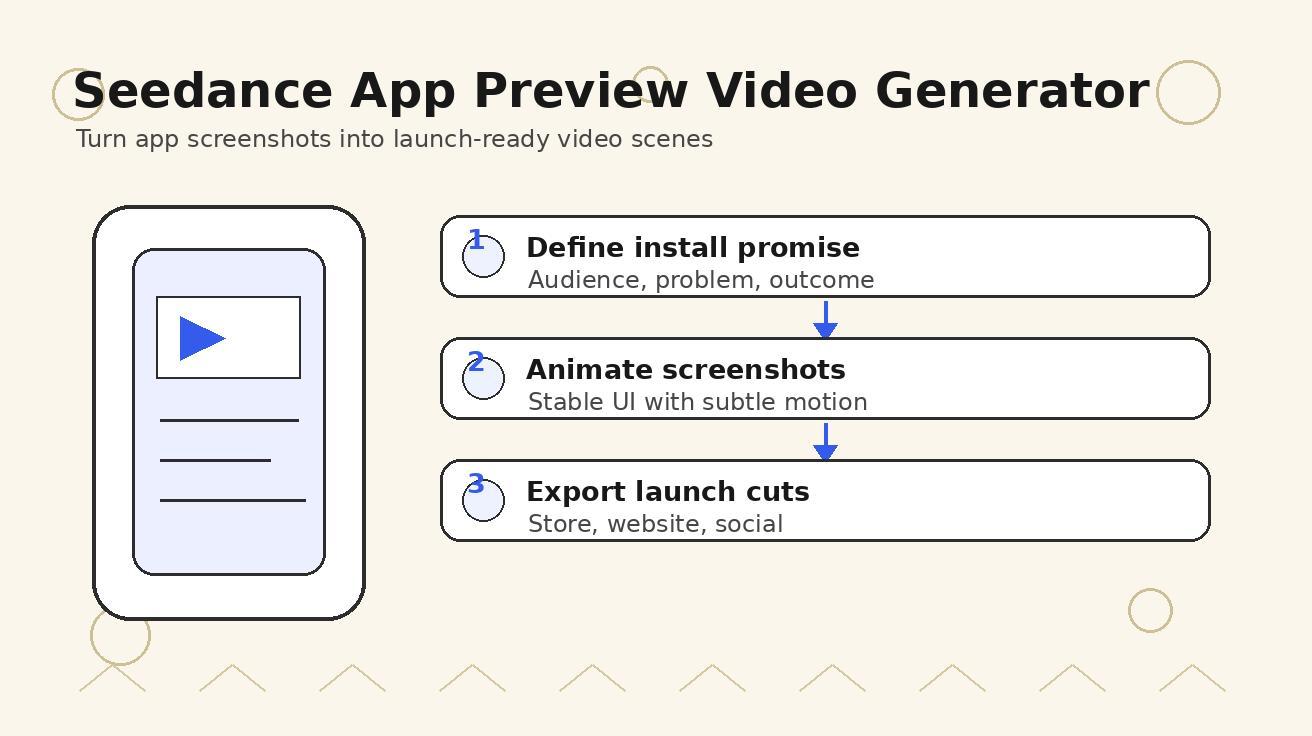
Seedance App Preview Video Generator 2026: Create App Store and Product Launch Clips
Use Seedance to turn app screenshots, feature copy, and launch goals into App Store previews, Google Play promo videos, and product launch clips.
Read article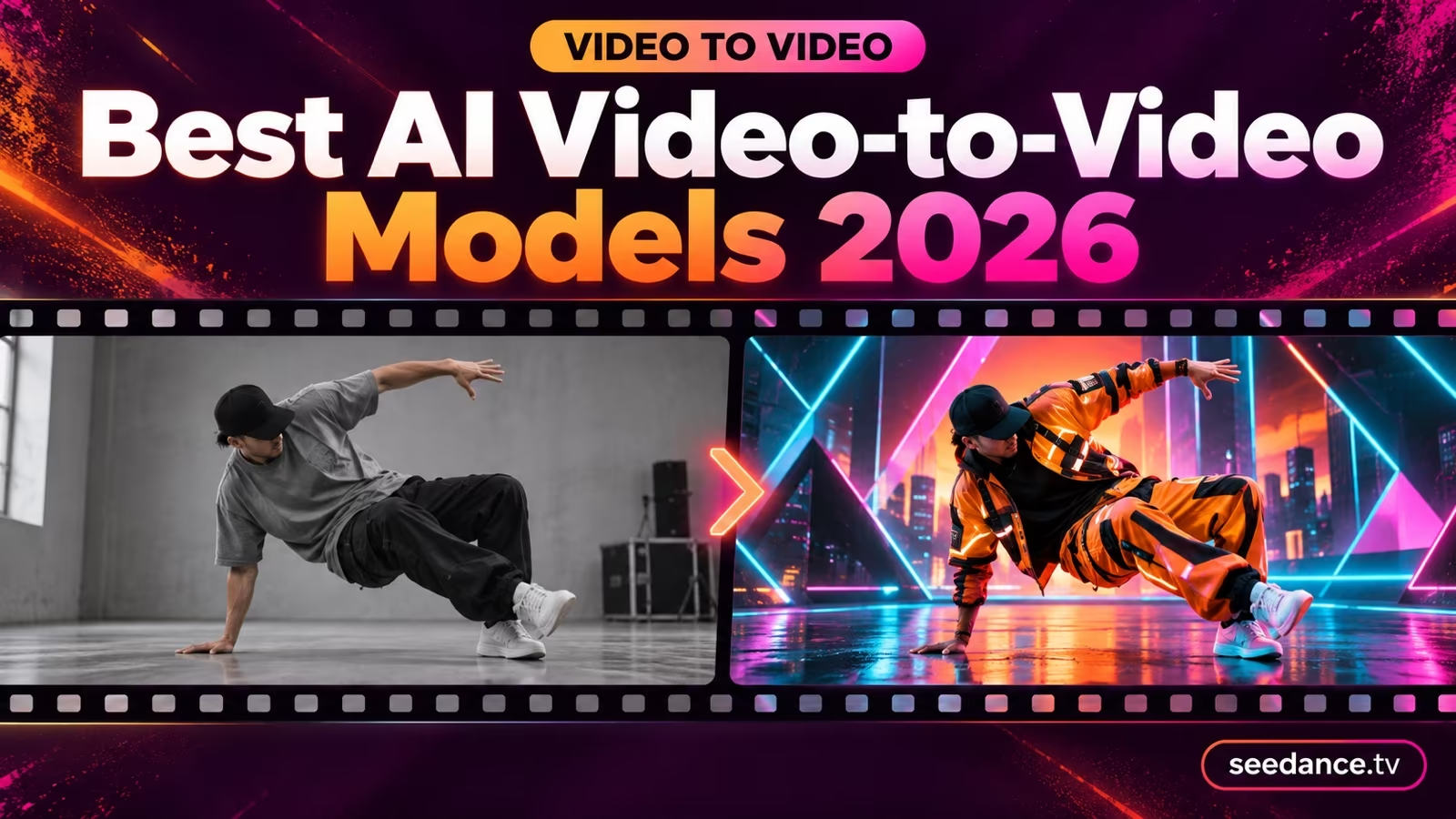
Best AI Video-to-Video Models in 2026
The best AI video-to-video models in 2026 for editing footage you already shot: Higgsfield Genjutsu, Seedance 2.x, Runway Aleph, Luma Modify and Kling Omni compared.
Read article
Kling 4.0 vs Seedance 2.5: Full Comparison
Kling 4.0 vs Seedance 2.5 compared by spec: 30-second clips, keyframes vs 50 references, audio, 4K and 10-bit color, editing, and which model fits which job.
Read article