
8 Actionable Seedance 2.0 Prompts to Revolutionise Your Video Creation in 2026
Welcome to the future of video production, powered by ByteDance's Seedance 2.0. This guide moves beyond basic commands to offer a comprehensive toolkit of advanced, actionable Seedance 2.0 prompts. We will dissect eight powerful prompt structures, providing practical examples and strategic insights to help you transform simple text into stunning 1080p multi-shot narratives.
Quick Answer: Seedance 2 0 Prompts — Seedance provides a comprehensive solution with cutting-edge AI video generation technology, making it easy for creators at every level to produce professional-quality content quickly and efficiently.
The rise of generative video tools is fundamentally shifting how we approach production. As we delve into specific Seedance 2.0 prompts, it's essential to understand the broader landscape and consider what the future of AI in content creation truly holds for creative professionals. This guide provides the practical skills needed to stay at the forefront of this evolution, demonstrating how precise commands can yield professional-grade results.
Whether you're a marketer aiming for high-impact product demos, a filmmaker experimenting with new visual styles, or an educator creating engaging explainers, these prompts are designed to elevate your content. You will learn to control narrative arcs, define visual aesthetics, and maintain stylistic continuity across multiple shots. This listicle is not just a collection of examples; it's a strategic playbook for mastering the art of AI filmmaking. Prepare to produce professional-quality videos that captivate your audience, drive engagement, and deliver tangible results. Let’s explore the prompts that will unlock your creative potential.
1. Narrative Story Structure Prompt
The Narrative Story Structure Prompt is a foundational technique for leveraging Seedance 2.0’s multi-shot capabilities to create coherent, cinematic stories. Instead of generating isolated clips, this method guides the AI through a complete narrative arc, ensuring character and style consistency across a beginning, middle, and end. It’s a game-changer for anyone moving beyond simple animations to craft complex, engaging video content.
This approach involves structuring your prompt as a sequence of scenes, each with specific instructions. By defining the plot progression, character actions, and emotional tone scene-by-scene, you provide the AI with a clear blueprint. This method is exceptionally powerful for creating branded content, such as a company's origin story, or educational videos that break down complex topics into a narrative format.
Example Prompt Breakdown
Consider a prompt for a short product launch video with a problem-solution-benefit structure:
Prompt:
[SCENE 1] A frustrated office worker, ANNA (30s, blonde hair, wearing a blue blouse), sits at a messy desk under harsh fluorescent lighting. She sighs, looking at a cluttered computer screen. Camera: static wide shot. Emotion: stressed, overwhelmed. // [SCENE 2] Anna discovers a new productivity app on her phone. Her expression changes to curiosity. A soft, warm light illuminates her face. Camera: slow zoom in on her face. Emotion: hopeful. // [SCENE 3] Anna, now at a clean, organised desk, confidently uses the app. The office is bright and airy. She smiles, looking accomplished. Camera: gentle pan from her smiling face to the clean desk. Emotion: confident, relieved.
Strategic Analysis
- Scene-by-Scene Logic: Using
[SCENE_NUMBER]and the//separator creates distinct, sequential instructions. This prevents the AI from blending elements from different parts of the story. - Character Consistency: Anna's description is front-loaded in Scene 1 (
ANNA (30s, blonde hair, wearing a blue blouse)). This anchors her appearance, helping Seedance 2.0 maintain her look across all subsequent scenes. - Environmental Storytelling: The lighting and setting evolve with the narrative. The journey from "harsh fluorescent lighting" and a "messy desk" to a "bright and airy" office with a "clean, organised desk" visually reinforces the product’s positive impact.
- Emotional Arc: Explicitly defining emotions (
stressed,hopeful,confident) ensures the character’s performance aligns with the story's progression.
Actionable Takeaways
- Outline First: Before writing, map out your story in a simple three-act structure (Setup, Confrontation, Resolution). For instance, for a coffee brand, your outline might be: 1. A character is tired. 2. They drink your coffee. 3. They feel energised and productive.
- Define Characters Explicitly: Always describe your character's key features in their first appearance to lock in their identity. Be specific: "MARCO (40s, curly brown hair, green jacket)" is better than "a man".
- Use Camera and Lighting Directives: Guide the visual tone with specific camera movements (
slow zoom,gentle pan) and lighting conditions (harsh,soft warm) for each scene to control the mood and focus.
This structured method is one of the most effective Seedance 2.0 prompts for transforming a simple idea into a compelling visual narrative. For those new to AI-driven video creation, exploring a powerful and intuitive AI video generator that is free to use can provide a great starting point for experimenting with these narrative techniques.
2. Visual Style & Aesthetic Control Prompt
The Visual Style & Aesthetic Control Prompt is a specialised technique designed to give creators precise command over the visual identity of their video. Instead of letting the AI default to a generic look, this method prioritises detailed aesthetic descriptions, allowing you to dictate a specific artistic direction. It’s perfect for establishing a consistent look, whether you need photorealistic luxury, gritty cyberpunk, vintage nostalgia, or a clean, minimalist design.
This approach is crucial for brands needing to maintain a uniform visual language across campaigns and for artists with a distinct creative vision. By front-loading the prompt with stylistic keywords, colour palettes, and lighting references, you instruct Seedance 2.0 to apply this aesthetic consistently to every generated shot. This transforms the AI from a simple clip generator into a disciplined digital art director.

Example Prompt Breakdown
Consider a prompt for a luxury watch brand that wants a consistently premium and sophisticated visual style:
Prompt:
[STYLE] Cinematic, hyper-realistic, 8K detail. Aesthetic of a Wes Anderson film with symmetrical compositions. Colour palette: deep emerald green, polished gold, rich mahogany. Lighting: soft, diffused golden hour light creating gentle shadows. Texture: smooth metallic surfaces, cinematic grain. // [SCENE 1] A close-up shot of a luxury watch with a green face on a polished mahogany table. // [SCENE 2] A handsome man (40s, sharp suit) fastens the watch onto his wrist. Camera: shallow depth of field, focus on the watch. // [SCENE 3] The man drives a vintage convertible, the golden hour sun glinting off the watch.
Strategic Analysis
- Style Tokenisation: The
[STYLE]tag at the beginning acts as a global instruction. It tells Seedance 2.0 that all subsequent scenes must adhere to these specific visual rules, ensuring aesthetic cohesion. - Multi-Layered Descriptions: The prompt combines different layers of aesthetic detail: cinematic references (
Wes Anderson film), colour specifics (deep emerald green, polished gold), lighting (golden hour light), and texture (cinematic grain). This rich vocabulary provides a clearer and more robust guide for the AI. - Separation of Style and Content: By defining the style before the scenes, you prevent the AI from getting confused. The scenes focus purely on the action (
fastens the watch), while the style directive handles the look and feel. - Implicit Consistency: Because the style is defined once, you don't need to repeat "cinematic" or "golden hour" in every scene description. This makes the prompt cleaner and more efficient.
Actionable Takeaways
- Create a "Style Bible" Tag: Start your prompt with a dedicated
[STYLE]or[AESTHETIC]section to lock in the visual rules from the outset. For a tech startup, this might be[STYLE] Minimalist, clean, bright, light blue and white colour palette, high-tech aesthetic. - Reference Specific Artists or Films: Naming directors (like Wes Anderson) or films (like Blade Runner) gives the AI a powerful and well-established visual library to draw from.
- Be Explicit with Colour and Light: Use precise colour descriptions (
deep navy blue,vibrant orange) or lighting terms (neon,harsh shadows,soft fill light) to control the mood. Details from well-crafted prompts with Seedance 2.0 prompts can significantly improve how the AI interprets your text for videos.
This method is indispensable for any project where the visual style is as important as the narrative itself, making it a cornerstone of professional AI video production.
3. Product Demo & Commercial Prompt
The Product Demo & Commercial Prompt is a targeted technique designed for creating compelling product showcases, explainer videos, and high-impact commercial content. This method structures the prompt to highlight a product's features, context, and benefits in a clear, multi-shot sequence. It is an invaluable tool for e-commerce brands, marketers, and small business owners needing to produce professional-quality promotional videos efficiently, bypassing the high costs and long timelines of traditional production.
This approach guides Seedance 2.0 to build a visual narrative around a product, moving from a wide establishing shot to detailed close-ups and lifestyle use cases. By defining each shot with a specific marketing objective-like showcasing craftsmanship or demonstrating a key feature-you can create a persuasive video that drives customer interest. This makes it one of the most practical Seedance 2.0 prompts for anyone focused on sales and marketing.

Example Prompt Breakdown
Consider a prompt for a short commercial for a new luxury smartwatch:
Prompt:
[SCENE 1] A sleek, gold smartwatch with a black leather strap displayed on a minimalist marble stand. Studio lighting, elegant and luxurious feel. Camera: slow pan right. // [SCENE 2] Close-up shot of the smartwatch face, displaying a colourful, animated health data interface. Macro detail on the polished gold bezel. // [SCENE 3] A man (40s, well-dressed in a business suit) glances at the smartwatch on his wrist while in a modern, sunlit airport lounge. Camera: medium shot, focused on the man's interaction with the watch. // [SCENE 4] Extreme close-up of the smartwatch screen showing a "Flight Delayed" notification. The man calmly taps the screen. Emotion: calm, in control.
Strategic Analysis
- Product-Centric Staging: The first scene
(minimalist marble stand, studio lighting)establishes the product as a premium, hero item. This immediately sets a luxurious tone. - Feature Highlighting: Scene 2 uses a
close-up shotandmacro detailto draw attention to specific, high-value features like the animated interface and build quality. - Lifestyle Context: By placing the product in a real-world scenario (
modern, sunlit airport lounge), Scene 3 connects the product to an aspirational lifestyle, showing its practical application. - Benefit-Driven Narrative: The sequence doesn't just show features; it tells a mini-story. The "Flight Delayed" notification demonstrates the watch's benefit: staying informed and in control, reinforcing its value proposition.
<iframe width="560" height="315" src="https://www.youtube.com/embed/WW_odt7uZTs" frameborder="0" allow="accelerometer; autoplay; clipboard-write; encrypted-media; gyroscope; picture-in-picture" allowfullscreen></iframe>
Actionable Takeaways
- Start with the "Hero Shot": Always begin with a clean, establishing shot that presents the product in the best possible light before moving to details. For a new sneaker, this could be:
A single pristine white sneaker rotating slowly on a black pedestal, spotlight from above. - Break Down Features into Scenes: Dedicate individual scenes or shots to specific features. For a blender, Scene 1 could show the sharp blades, Scene 2 could show the powerful motor base, and Scene 3 could show the easy-to-clean glass jar.
- Show, Don't Just Tell: Place the product in a relevant environment and show it being used. Instead of saying a backpack is durable, prompt a scene of
a hiker wearing the backpack while crossing a rocky stream. - End with a Clear Message: While not in this prompt's visual, a final scene could include text overlay like "Elegance Meets Intelligence. Available Now." to drive action.
By using this structured prompting method, marketers can systematically create engaging and effective advertisements. For those looking to dive deeper into video marketing strategies, you can explore detailed guides on how to make promotional videos that convert.
4. Educational & Explainer Content Prompt
The Educational & Explainer Content Prompt is a specialised template for creating clear, sequential instructional videos. It guides Seedance 2.0 to break down complex information into digestible visual segments, making it an indispensable tool for educators, corporate trainers, and anyone creating tutorials. This method prioritises conceptual clarity and learner engagement by structuring the prompt around a logical flow of information.
This approach involves mapping out a lesson or explanation as a series of distinct visual steps. By defining the concept, providing visual analogies, and directing on-screen text or graphical elements, you create a structured learning path. This is highly effective for visualising abstract scientific concepts, demonstrating software workflows, or illustrating historical events in a dynamic, easy-to-follow format.
Example Prompt Breakdown
Consider a prompt for a short educational video explaining the water cycle for a young audience:
Prompt:
[SCENE 1] A bright sun shines over a calm blue ocean. Text overlay: "Evaporation". A gentle upward shimmer animation shows water turning into vapour and rising. Camera: wide static shot. Style: colourful, simple 2D animation. // [SCENE 2] Water vapour gathers in the sky, forming a fluffy white cloud. Text overlay: "Condensation". The cloud slowly grows larger and drifts across the screen. Camera: slow pan following the cloud. Style: consistent colourful 2D animation. // [SCENE 3] The cloud turns grey and heavy. Animated raindrops fall from the cloud onto a green landscape with hills and trees. Text overlay: "Precipitation". Camera: medium shot, tilt down with the rain. Style: consistent colourful 2D animation.
Strategic Analysis
- Conceptual Segmentation: Each scene (
[SCENE 1],[SCENE 2]) is dedicated to one specific stage of the water cycle. This prevents conceptual overlap and ensures the AI builds the explanation step-by-step. - Visual Reinforcement: Simple, direct text overlays (
"Evaporation","Condensation") act as signposts, reinforcing the key term for each visual stage. This is a core principle of effective educational content. - Consistent Style: Specifying the style (
colourful, simple 2D animation) in each scene command ensures a cohesive visual language throughout the video, which is crucial for maintaining focus and brand identity in educational series. - Guided Animation: The prompt uses specific action words (
upward shimmer animation,cloud slowly grows,raindrops fall) to direct the motion, visually explaining the process rather than just showing static images.
Actionable Takeaways
- One Idea Per Scene: Dedicate each scene to a single, core concept or step. To explain photosynthesis, Scene 1 would show the sun, Scene 2 the leaf absorbing light, and Scene 3 the plant releasing oxygen. This builds a clear and logical progression.
- Use Text Overlays: Integrate keywords and labels directly into your prompt to serve as visual anchors for learning. For a history lesson, you might add
Text Overlay: "1776"to a scene depicting the signing of a document. - Define a Consistent Style: Lock in a specific animation or visual style from the beginning to create a professional and unified look. For technical tutorials, a
clean, vector-based animation style with a blue and white colour schemeis often effective.
Leveraging these structured Seedance 2.0 prompts can transform dense topics into engaging and memorable video lessons, significantly enhancing the learning experience.
5. Social Media Content Series Prompt
The Social Media Content Series Prompt is a streamlined template designed for creating consistent, high-volume video content tailored for platforms like TikTok, Instagram Reels, and YouTube Shorts. This technique prioritises rapid generation and platform-specific optimisation, making it indispensable for creators and marketers. It focuses on producing a cohesive series of videos with recurring themes, styles, or characters, which is key for building audience loyalty and brand recognition in a fast-paced digital landscape.
This method involves crafting a flexible core prompt that can be easily modified to produce numerous variations of a single concept. By defining a strong hook, a consistent character or style, and a clear call-to-action, you create a reusable framework. This approach is perfect for generating a month’s worth of content for a fitness challenge, a weekly series of beauty tips, or quick-fire educational facts, ensuring brand consistency while maximising engagement potential.
Example Prompt Breakdown
Consider a prompt for a series of 15-second fitness motivation videos for Instagram Reels:
Prompt:
[ASPECT RATIO 9:16] A fit male athlete, MARK (20s, athletic build, wearing black shorts and a grey tank top), performs a powerful kettlebell swing in a modern, minimalist gym. Camera: low angle, dynamic upward tracking shot, dramatic slow motion on the upward swing. Lighting: high contrast, cinematic. Text Overlay: "Your only limit is you". // [VARIATION 1] Mark performs a box jump. Text Overlay: "Conquer from within". // [VARIATION 2] Mark does battle ropes. Text Overlay: "Stronger every day".
Strategic Analysis
- Platform-Specific Formatting: The prompt starts with
[ASPECT RATIO 9:16], immediately optimising the video for vertical mobile viewing, which is crucial for Reels and TikTok. - Hook-Driven Visuals: The use of
low angle,dynamic upward tracking, anddramatic slow motioncreates a visually arresting opening shot that grabs attention within the first second. - Character and Style Consistency: Defining Mark's appearance and the "modern, minimalist gym" setting establishes a consistent brand aesthetic. This ensures that every video in the series feels connected and recognisable.
- Efficient Variation Generation: The
// [VARIATION]structure allows for rapid iteration. By only changing the action (box jump,battle ropes) and text overlay, you can produce dozens of unique clips from a single core idea, which is a powerful feature of these Seedance 2.0 prompts.
Actionable Takeaways
- Lead with the Hook: Always start your prompt with the most dynamic action and camera instructions to capture viewer attention instantly. For a cooking video, start with a
dramatic close-up of a knife swiftly chopping vegetables, not a wide shot of the kitchen. - Establish a Reusable Template: Define your character, setting, and style once. Use a
[VARIATION]command to swap out only the key actions or messages for efficient content creation. For a "Quote of the Day" series, the background and style remain the same, while only the text changes. - Incorporate Text Overlays: Use
Text Overlay:to add key messages or calls-to-action directly in the prompt, saving post-production time and ensuring the message is integral to the video.
After mastering AI prompts for your social media content series, understanding how to efficiently distribute them is the next logical step, such as learning how to schedule social media posts with AI. This approach bridges the gap between content creation and strategic publishing.
Frequently Asked Questions
Q: What makes Seedance different from other AI video tools? A: Seedance combines state-of-the-art AI models with an intuitive interface, making professional video creation accessible to everyone. Its unique blend of powerful generation capabilities, fast processing, and affordable pricing sets it apart from competitors.
Q: How good is the video quality from Seedance? A: Seedance produces high-quality videos with smooth motion, accurate prompt adherence, and impressive visual fidelity. The platform supports multiple aspect ratios and resolutions, including HD output for professional use cases.
Q: Is Seedance suitable for professional video creators? A: Absolutely. Seedance is used by content creators, marketers, filmmakers, and businesses worldwide. Its advanced controls, high-resolution output, and batch generation capabilities make it a powerful tool for professional workflows.
What Makes a Good Seedance Prompt?
The best Seedance prompts share four key characteristics:
- Clear subject description: Who or what is in the video
- Motion specification: What movement should happen
- Environment context: Where the scene takes place
- Style/mood cues: Cinematic, realistic, animated, etc.
Example: "A confident woman in a red dress walking through a crowded Tokyo street at night, neon lights reflecting on wet pavement, cinematic slow motion"
How Do You Write Prompts for Seedance Text-to-Video?
For text-to-video prompts, follow this structure:
- Subject: [person/object/animal] + [description]
- Action: [specific movement or activity]
- Setting: [location + time of day + weather]
- Style: [cinematic/realistic/animated] + [camera movement]
Bad prompt: "A woman walking in a city" Good prompt: "A young businesswoman in a blue suit walking purposefully through midtown Manhattan at dusk, close-up tracking shot, golden hour lighting, light rain"
Which Seedance Prompts Get the Best Results?
The highest-performing Seedance prompt categories are:
- Nature scenes: Forests, oceans, mountains with environmental motion
- Urban environments: City streets with crowds, traffic, and atmospheric lighting
- Product videos: Clean product shots with subtle rotation or reveal motion
- Character animations: People walking, gesturing, or interacting in specific settings
6. Brand Story & Heritage Prompt
The Brand Story & Heritage Prompt is a strategic method for using Seedance 2.0 to craft powerful origin stories and brand narratives. This technique goes beyond simple product showcases, weaving together multi-scene storytelling with emotional resonance to communicate a company’s values, mission, and journey. It is exceptionally effective for building a deep brand identity and differentiating a business through authentic, compelling storytelling.
This approach guides the AI to visualise a brand’s history, from its humble beginnings to its present-day impact. By focusing on the human elements-the founders, the challenges, the core values-you can create content that builds an emotional connection with your audience. This is ideal for premium brands establishing a legacy, purpose-driven companies highlighting their mission, or startups creating compelling investor narratives.

Example Prompt Breakdown
Consider a prompt for an artisan furniture brand showcasing its generational heritage:
Prompt:
[SCENE 1] Vintage 1950s photo style. A young craftsman, JOHN (20s), works in a small, dusty workshop, carving a piece of oak. Sunlight streams through a window. Camera: static medium shot. Emotion: focused, passionate. Style: sepia tones, grainy. // [SCENE 2] Modern day. A middle-aged man, DAVID (50s, John's son), stands in a bright, modern workshop, examining a detailed furniture blueprint. He looks at an old, framed photo of John on the wall. Camera: slow pan from the photo to David's face. Emotion: proud, thoughtful. // [SCENE 3] A finished, elegant oak dining table sits in a beautifully decorated home. A family is gathered around it, laughing. The final shot is of the company's logo subtly carved into the table leg. Camera: gentle pull-back shot. Emotion: warm, connected.
Strategic Analysis
- Generational Continuity: The narrative visually connects the past (John in sepia) with the present (David in a modern setting). This transition establishes a clear lineage and reinforces the brand's enduring legacy.
- Symbolic Objects: The use of an "old, framed photo" and the "oak" material acts as a narrative anchor, tying the scenes together and representing the transfer of skill and values across generations.
- Value Visualisation: The story doesn't just state the brand's values; it shows them. Scene 1 shows "passion," Scene 2 shows "thoughtful" evolution, and Scene 3 demonstrates the ultimate benefit: bringing families "together."
- Style as a Storytelling Tool: The shift from "sepia tones, grainy" to a "bright, modern" aesthetic visually communicates the brand’s journey through time while maintaining its core craft.
Actionable Takeaways
- Lead with the Human Story: Begin with a personal, relatable moment (a founder’s passion) before expanding to the broader brand narrative. For a software company, start with a scene of
two friends sketching ideas on a napkin in a coffee shop. - Show, Don't Tell Values: Instead of saying "we value quality," show a craftsman meticulously working. To show "innovation," prompt a scene of
engineers excitedly gathered around a glowing prototype. - Use Archival Styles: Employ styles like
vintage photo,sepia tones, or8mm film effectfor past scenes to clearly delineate the timeline. You can even specify a decade, like1980s VHS style, for a more specific feel.
This is one of the most powerful Seedance 2.0 prompts for building brand equity and forging a genuine audience connection. By telling your unique story, you create a narrative that competitors cannot replicate.
7. Interactive & Engagement Prompt
The Interactive & Engagement Prompt is a sophisticated technique designed to create videos with built-in hooks that encourage direct viewer participation. Instead of producing content for passive consumption, this method guides Seedance 2.0 to generate visuals that ask questions, present choices, or set up scenarios that invite comments and shares. It's a powerful strategy for creators aiming to boost engagement metrics and foster a strong community around their content.
This approach involves structuring a prompt around a central question or a "what happens next" scenario. By creating visual dilemmas or comparisons, you effectively pass the narrative baton to the audience, prompting them to contribute their opinions or predictions. This is exceptionally useful for lifestyle channels creating 'choose your adventure' style content, or for educational creators posing visual problems for their audience to solve.
Example Prompt Breakdown
Consider a prompt for a lifestyle channel asking viewers to choose between two aesthetics:
Prompt:
[SCENE 1] A minimalist, Scandinavian-style living room. A woman with dark hair in a chic bun, wearing a cream linen dress, calmly sips tea. Sunlight streams through a large window. Atmosphere: serene, clean, peaceful. Text on screen: "Which life would you choose?" // [SCENE 2] A vibrant, maximalist living room filled with colourful art, overflowing bookshelves, and lush plants. The same woman, now with her hair down and wearing a brightly patterned top, laughs while painting on a canvas. Atmosphere: energetic, creative, expressive. Camera: dynamic handheld shots in both scenes.
Strategic Analysis
- Direct Engagement Hook: The prompt explicitly includes the engagement question (
"Which life would you choose?"). While Seedance 2.0 doesn't render text perfectly yet, this instruction guides the AI to create two contrasting scenes that visually represent the question, which you can overlay with text in post-production. - Visual Juxtaposition: The prompt creates a clear A/B comparison. The contrast between the "minimalist, Scandinavian-style" room and the "vibrant, maximalist" one is stark, making it easy for viewers to form an opinion and comment on their preference.
- Consistent Anchor: The "same woman" acts as a consistent element, ensuring viewers focus on the environmental and atmospheric differences rather than being distracted by changing characters. This keeps the choice clear and focused.
- Atmospheric Cues: Defining the atmosphere (
serene, peacefulvs.energetic, creative) directs the AI to produce visuals that evoke distinct feelings, strengthening the emotional pull of each choice.
Actionable Takeaways
- Ask Open-Ended Questions: Frame your prompt around opinion-based questions ("Which do you prefer?") rather than simple yes/no queries to stimulate more detailed discussion. For a travel channel, prompt:
[SCENE 1] A person relaxing on a sunny beach. // [SCENE 2] The same person hiking a snowy mountain.and ask viewers "Beach or mountains?" - Create Artificial Tension: Use a "guess what happens next" structure. For example, prompt:
A chef carefully places a complex dessert on a plate, but their hand starts to shake. This builds curiosity and encourages viewers to make predictions in the comments. - Leverage Visual Opposites: When creating comparison videos, use strong visual contrasts in colour, style, and mood to make the choice clear and compelling. An example would be prompting a scene of a
futuristic neon cityversus atranquil, ancient forest.
This method transforms your content from a monologue into a dialogue, making it one of the most effective Seedance 2.0 prompts for building an active and loyal community.
8. Multi-Language & Global Localization Prompt
The Multi-Language & Global Localization Prompt is a sophisticated technique designed to create universally appealing video content that can be easily adapted for diverse international markets. This method guides Seedance 2.0 to generate visuals that transcend cultural barriers, focusing on shared human emotions and experiences rather than region-specific cues. It’s an indispensable tool for global brands, international educators, and creators aiming to build a worldwide audience while maintaining a consistent core message.
This approach involves crafting a prompt that deliberately avoids cultural idioms, slang, and specific landmarks, instead favouring universal visual language. By focusing on fundamental human interactions and emotions, you create a versatile video asset that can be paired with different languages and localised text overlays without feeling out of place. This is crucial for launching global marketing campaigns or developing inclusive educational materials that resonate everywhere.
Example Prompt Breakdown
Consider a prompt for a global technology brand launching a new communication device, designed to be used in multiple regions.
Prompt:
[SCENE 1] A diverse group of friends (East Asian woman, Black man, Caucasian woman) laugh together in a bright, modern café with minimalist decor. They are sharing a tablet. Camera: medium shot, eye-level. Emotion: joyful connection. Style: clean, vibrant, natural lighting. // [SCENE 2] A grandfather (South Asian, 70s) sits in a cosy living room and smiles warmly at a tablet, video calling his granddaughter. The setting is comfortable and universal. Camera: close-up on the grandfather's face. Emotion: heartwarming, loving. // [SCENE 3] A business team (diverse ethnicities and genders) collaborates around a sleek conference table, pointing at a large screen displaying the same tablet interface. The environment is a generic, professional office. Camera: wide shot, slow pan across the smiling team. Emotion: collaborative, successful.
Strategic Analysis
- Universal Settings: The prompt uses generic locations like a "modern café," "cosy living room," and "professional office." These settings are globally recognisable and avoid tying the narrative to a specific country or culture.
- Diverse Representation: The explicit inclusion of characters from various ethnic backgrounds (
East Asian woman,Black man,South Asian grandfather) ensures the content feels inclusive and representative of a global audience. - Emotion-Driven Narrative: The story is built on universal emotions like
joyful connection,heartwarming love, andcollaboration. These feelings translate across all cultures, making the core message universally understood. - Flexible Visuals: By avoiding specific text, symbols, or culturally-loaded gestures, the generated video serves as a perfect visual bed. Localisation can then be achieved by adding region-specific voiceovers, music, and on-screen text during post-production.
Actionable Takeaways
- Prioritise Universal Themes: Build your narrative around concepts like family, friendship, achievement, and discovery. For a food brand, show
a family sharing a meal and laughing, which has broad cross-cultural appeal. - Describe Diversity Explicitly: Specify a mix of ethnicities, ages, and genders in your character descriptions to create visuals that reflect a global customer base. For example,
A group of young adults, including a woman in a hijab and a man with vitiligo, study together. - Use Generic Environments: Set your scenes in locations that are internationally understood, like a park, a modern library, or an airport, free from specific cultural markers to maximise the content's adaptability.
This strategic approach to Seedance 2.0 prompts is essential for any organisation looking to scale its video content strategy across borders efficiently and effectively.
Seedance 2.0 — 8 Prompt Types Compared
| Prompt | Implementation Complexity (🔄) | Resource & Speed (⚡) | Expected Outcomes (📊 ⭐) | Ideal Use Cases | Key Advantages (💡) |
|---|---|---|---|---|---|
| Narrative Story Structure Prompt | High 🔄🔄🔄 — detailed planning required | Moderate resources; longer setup ⚡⚡ | Coherent multi-scene arcs; strong character consistency 📊 ⭐⭐⭐ | Brand films, educational narratives, product launches | Reduces revisions; ensures professional pacing 💡 |
| Visual Style & Aesthetic Control Prompt | Medium–High 🔄🔄 — needs aesthetic knowledge | High visual references & iterations; slower to finalize ⚡ | Distinctive, consistent branded visuals; high fidelity 📊 ⭐⭐⭐ | Luxury campaigns, stylized creatives, brand identity work | Precise artistic control; maintains visual voice 💡 |
| Product Demo & Commercial Prompt | Medium 🔄🔄 — focused structure | Moderate resources; fast turnaround for ads ⚡⚡⚡ | Persuasive, conversion-focused videos; measurable impact 📊 ⭐⭐⭐ | E‑commerce, product launches, SaaS demos | Commercial polish at lower cost; easy A/B testing 💡 |
| Educational & Explainer Content Prompt | Medium 🔄🔄 — needs pedagogy & sequencing | Moderate resources; careful scripting required ⚡⚡ | Clear concept progression; improved comprehension 📊 ⭐⭐⭐ | Courses, tutorials, corporate training, STEM explainers | Scales learning materials; supports diverse learning styles 💡 |
| Social Media Content Series Prompt | Low–Medium 🔄🔄 — optimized formulas | Low per-item resources; high-volume & fast production ⚡⚡⚡ | Platform-ready, high-engagement clips; shorter depth 📊 ⭐⭐ | TikTok, Reels, Shorts, viral series, trend testing | Rapid production; trend-optimized; easy iteration 💡 |
| Brand Story & Heritage Prompt | High 🔄🔄🔄 — needs authentic material | High resources (history, interviews); slower build ⚡ | Deep emotional connection; strong differentiation 📊 ⭐⭐⭐ | Brand identity campaigns, investor narratives, heritage pieces | Builds trust/loyalty; enhances brand recall 💡 |
| Interactive & Engagement Prompt | Medium 🔄🔄 — design for participation | Moderate resources; needs moderation & follow-up ⚡⚡ | Increased comments/shares and community growth 📊 ⭐⭐⭐ | Community channels, challenges, discussion-led content | Boosts engagement; generates UGC and insights 💡 |
| Multi-Language & Global Localization Prompt | High 🔄🔄🔄 — cultural research required | High resources (localization, approvals); slower rollout ⚡ | Broader market reach; culturally appropriate messaging 📊 ⭐⭐⭐ | Global campaigns, international education, product launches | Cost-effective global scaling; inclusive messaging 💡 |
Your Next Steps in AI Video Mastery
Throughout this guide, we have journeyed deep into the architecture of effective Seedance 2.0 prompts. We've moved beyond simple commands, dissecting eight powerful frameworks that transform abstract ideas into tangible, high-quality video content. From structuring complex narratives to controlling precise visual aesthetics, you are now equipped with the strategic blueprints used by top creators.
The core lesson is this: mastery of AI video generation is not about finding a single "magic" prompt. Instead, it is about understanding the fundamental principles of control, consistency, and creativity. The examples provided for product demos, educational explainers, and brand heritage stories all share a common thread: they use structured, detailed instructions to guide the AI, not just request an outcome.
Synthesising Your Knowledge: Core Takeaways
To truly elevate your video creation process, internalise these critical concepts we've explored:
- Specificity is Supreme: Vague prompts yield vague results. The difference between "a video about a car" and a detailed prompt specifying a "vintage red convertible, driving along the Amalfi coast at sunset, cinematic shot on 35mm film, golden hour lighting" is the difference between a random clip and a compelling scene.
- Structure is Your Scaffolding: Utilise the
[SCENE],[ACTION], and[STYLE]tokens as your foundational tools. These are not just labels; they are strategic commands that allow you to build coherent, multi-shot sequences and maintain narrative flow, as demonstrated in our social media series and story structure examples. - Iteration is Inevitable (and Powerful): Your first generated video will rarely be your last. Think of the initial output as your first draft. Use the troubleshooting tips-like adjusting
pacing_factoror refiningstyle_influence-to methodically refine and polish your work. Each iteration gets you closer to your vision.
Remember the power of combining frameworks. Why not use the Visual Style & Aesthetic Control Prompt to define a unique look for your Brand Story & Heritage Prompt? Or apply the techniques from the Multi-Language Prompt to localise a successful Product Demo for a new market? This interdisciplinary approach to using Seedance 2.0 prompts is where true innovation begins.
Your Action Plan for AI Video Creation
Reading is one thing; doing is another. The time has come to put this knowledge into practice. Here is a clear, actionable plan to get started:
- Select a Project: Choose a small, manageable project first. This could be a 15-second social media clip for your business, a short animated explainer for a personal project, or a creative brand introduction.
- Choose Your Framework: Revisit the eight prompt types covered in this article. Select the one that most closely aligns with your project's goal. Don't just copy it; adapt it.
- Draft Your Master Prompt: Write out your prompt in a separate document. Be meticulous. Define your scenes, specify your camera angles, detail your colour palettes, and dictate the pacing.
- Generate, Review, and Refine: Run your prompt in Seedance 2.0. Analyse the output critically. What worked? What didn’t? Go back to your master prompt, make specific adjustments, and generate again. Repeat this process until you are proud of the result.
The value of mastering Seedance 2.0 prompts extends far beyond creating visually appealing videos. It is about gaining a new form of creative literacy. You are learning to communicate with a powerful new medium, enabling you to produce professional-grade content at a fraction of the traditional cost and time. This skill is a strategic advantage for marketers, a powerful tool for educators, and a new canvas for filmmakers and artists. Go forth, experiment with intention, and start creating the future of video today.
Ready to move from theory to practice? The best way to master Seedance 2.0 prompts is to start creating. Sign up for Seedance and begin transforming your ideas into stunning AI-generated videos with the very frameworks you've just learned about.
Conclusion: Our Seedance Verdict
After extensive testing, our recommendation is clear: Seedance is one of the top AI video generators in 2025, particularly excelling at character consistency and smooth motion. For creators who need reliable, high-quality AI video generation, Seedance is a strong choice alongside Veo 3.
Best choice for: Narrative content, character-driven videos, marketing content, and social media creators who need consistent visual identity.
Bottom line: Seedance delivers professional-quality AI video generation with a generous free tier. We recommend starting with a free account and testing your first video today at seedance.tv.
Ready to create your own AI video?
Turn ideas, text prompts, and images into polished videos with Seedance. If this article helped, the fastest next step is to try the product.
Free credits on signup. Plans from $28/month.
Related Articles
More posts in the same locale you may want to read next.
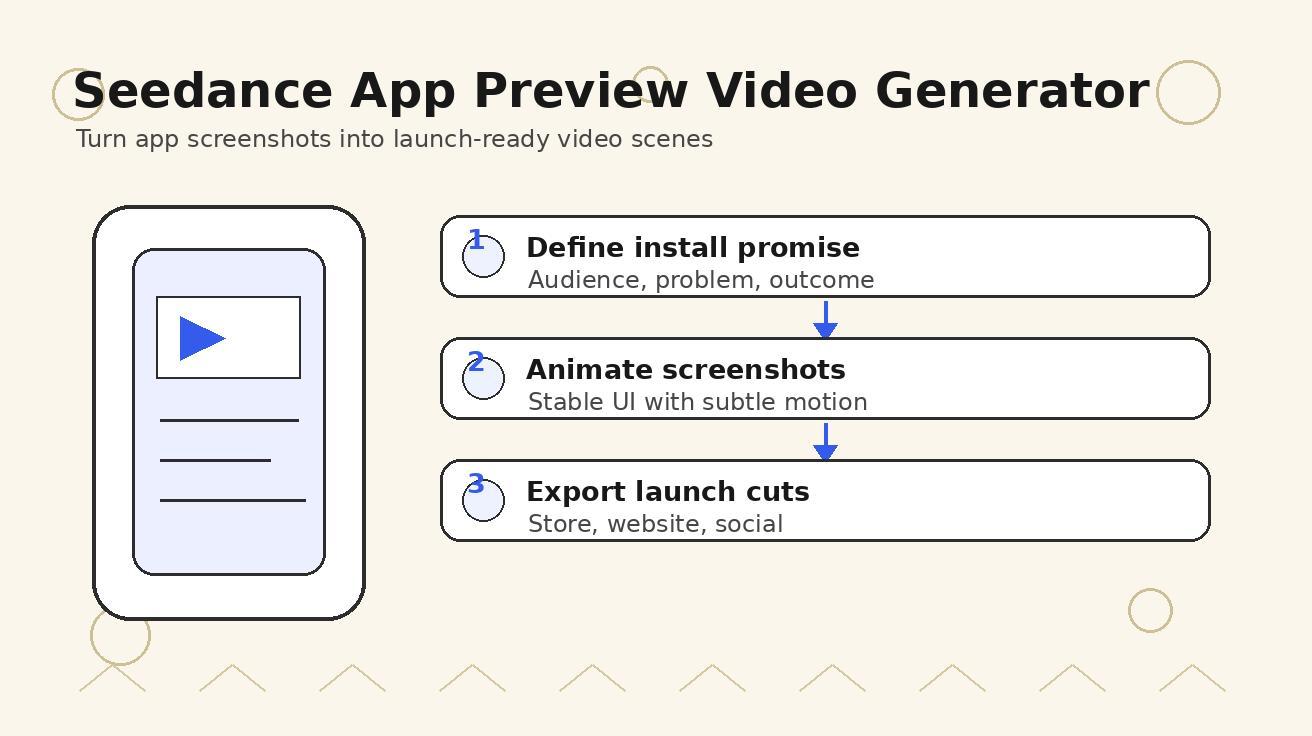
Seedance App Preview Video Generator 2026: Create App Store and Product Launch Clips
Use Seedance to turn app screenshots, feature copy, and launch goals into App Store previews, Google Play promo videos, and product launch clips.
Read article
Best AI Video-to-Video Models in 2026
The best AI video-to-video models in 2026 for editing footage you already shot: Higgsfield Genjutsu, Seedance 2.x, Runway Aleph, Luma Modify and Kling Omni compared.
Read article
Kling 4.0 vs Seedance 2.5: Full Comparison
Kling 4.0 vs Seedance 2.5 compared by spec: 30-second clips, keyframes vs 50 references, audio, 4K and 10-bit color, editing, and which model fits which job.
Read article