
Ready to turn your ideas into high-quality videos? Seedance 2.0 is designed to convert simple text prompts into impressive 1080p videos, complete with consistent characters and smooth, cinematic motion.
Quick Answer: How To Use Seedance 2 0 — this step-by-step guide shows you how to use Seedance's AI-powered tools to achieve professional results in minutes, even if you're a complete beginner.
You just write what you want to see, pick a visual style, and the AI handles the heavy lifting, stitching together a multi-shot story in minutes. Forget about needing complex software or expensive film gear.
Your First Steps with Seedance 2.0
Welcome to a new way of creating video. Seedance 2.0 isn't just another AI gadget; it's a storytelling tool built from the ground up. It lets you produce professional-looking videos straight from text, which is a massive help for creators, marketers, and educators.
The UK's AI sector is really taking off, making powerful tools like this more available than ever. For anyone looking to make content—whether you're a marketing pro or a small business owner—this means you can start making incredible videos without a huge budget. Think about it: a cinematic 1080p video, crafted from a few lines of text in just a few minutes. That's exactly where Seedance 2.0, ByteDance's AI video generator, comes in, especially with its ability to create multi-shot stories where everything flows together.
This guide is all about showing you how to get the most out of Seedance 2.0. We'll skip the tech jargon and focus on actionable steps you can take today.
What Makes Seedance 2.0 Different
Many AI video tools spit out single, disconnected clips. Where Seedance 2.0 really shines is in its multi-shot storytelling. You can generate a whole sequence of scenes that logically connect, which is essential for telling a proper story.
Here’s a quick summary of the core functionalities that make Seedance 2.0 a powerful tool for your creative projects.
Seedance 2.0 Key Features at a Glance
| Feature | How It Helps You | Actionable Insight |
|---|---|---|
| Character Consistency | Your characters look the same from one shot to the next, which is a huge hurdle with most AI video. | Define your character with specific, repeatable details in every prompt to maintain their look. |
| Cinematic Quality | Videos are generated in sharp 1080p with realistic motion, making your final cut look professional. | Specify "cinematic quality" and "1080p" in your prompts to ensure high-resolution, film-like output. |
| Diverse Visual Styles | You can pick from tons of styles—photorealistic, cyberpunk, anime—to get the exact feel you're after. | Match the style to your message. Use "photorealistic" for a product ad, "anime" for an educational explainer. |
| Artistic Control | You can specify camera angles, lighting, and pacing to give your video a polished, intentional look. | Add terms like "wide-angle shot" or "slow-motion" to your prompt to direct the AI like a cinematographer. |
These features combine to give you a level of control that's usually reserved for traditional video production, but with the speed and simplicity of AI. To get a better sense of how this technology works under the hood, this ultimate guide on an AI video generator from text is a great read.
Here’s a look at the dashboard you'll be using. It’s clean, simple, and gets straight to the point.

This uncluttered interface is where your ideas start coming to life. If you want to dive deeper into the process, you can find more on turning your ideas into video by exploring the guides at https://www.seedance.tv/text-to-video.
Writing Prompts That Get Results
Think of your prompt as a creative brief you're handing to an artist—in this case, the AI. If the brief is vague, the result will be generic and uninspired. But a detailed, thoughtfully crafted prompt gives Seedance 2.0 the exact blueprint it needs to bring your vision to life. Honestly, getting this part right is the single most important skill you'll develop.
Your goal is to move beyond simple commands like "a cat running" and start thinking in layers. The most effective prompts are a rich blend of subject, action, setting, mood, and even technical direction. Each element you add refines the output, nudging the AI closer to the specific image you have in your head.
The Anatomy of a Powerful Prompt
A great prompt doesn’t just state what's happening; it paints a complete picture for the AI. Let's break down the essential components that turn a basic idea into a cinematic instruction.
- Subject: Who or what is the focus? Get specific. Instead of "a woman," try "a young woman with curly red hair, wearing a vintage leather jacket."
- Action: What is the subject doing? Describe the movement with purpose. "Walking" is okay, but "strolling thoughtfully along a cobblestone street, hands in her pockets" tells a much richer story.
- Setting: Where is all this happening? Build the world around your subject. "A city" is far too broad. "A rain-soaked neon-lit alley in Tokyo at midnight, steam rising from the grates" immediately sets a powerful scene.
- Mood & Atmosphere: What’s the emotional vibe? Use descriptive words to set the tone. Add elements like "sombre mood, nostalgic feeling, dramatic lighting from a single streetlamp."
- Camera & Style: How should it be filmed? This is where you get to be the director. Include instructions like "cinematic quality, wide-angle shot, slow-motion, shallow depth of field, photorealistic style."
When you weave these elements together, you're giving the AI clear, actionable instructions. It leaves far less room for it to make creative choices you didn't ask for.
Practical Examples: From Vague to Vivid
Seeing the difference is the best way to grasp just how much a detailed prompt matters. Let’s walk through a couple of real-world scenarios.
Scenario 1: Marketing a Coffee Brand
- Vague Prompt:
A cup of coffee on a table. - Vivid Prompt:
Extreme close-up shot of steam rising from a black ceramic mug filled with fresh coffee. Morning sunlight streams through a window, highlighting the rich, dark liquid. The background is a cosy café with soft, out-of-focus lights. Photorealistic, warm and inviting atmosphere, 4K resolution.
That second prompt instantly produces a much more professional and enticing clip, perfect for marketing. It specifies the shot, lighting, mood, and background—all crucial details.
Scenario 2: Educational Animation
- Vague Prompt:
The Earth and the Moon. - Vivid Prompt:
An animated educational video for children. The Earth, a cheerful smiling character, watches as the smaller, friendly Moon character orbits around it. A trail of sparkling stars follows the Moon. The background is a deep blue space with soft cartoonish nebulas. Playful, simple animation style.
Here, defining the style ("simple animation") and personifying the subjects ("cheerful smiling character") guides the AI to create something perfectly suited for kids.
Actionable Insight: A prompt is really a conversation with the AI. The more detail and context you provide, the more intelligent and relevant its response will be. Think of it less as a command and more as a detailed creative brief.
Advanced Prompting Techniques
Once you've got the hang of the basics, you can start using more advanced methods to get even more control over your video. These techniques are your secret weapons for troubleshooting and refining your results.
One of the most powerful tools in your arsenal is the negative prompt. This tells the AI what you don't want to see. If your videos keep showing unwanted objects or have a blurry quality, a negative prompt is the fix.
Imagine you're creating a futuristic cityscape, but the AI keeps adding old-fashioned cars. Your prompt could look like this:
- Main Prompt:
A futuristic cyberpunk city with flying vehicles and neon skyscrapers. - Negative Prompt:
--no old cars, vintage buildings, daytime
That simple addition helps filter out elements that clash with your vision. This is a fundamental technique for anyone using Seedance 2.0 professionally. The UK's rapidly growing AI sector, for example, highlights the need for such precise tools. To create a distinctly British scene, you might write 'A bustling London street in cyberpunk style with a consistent protagonist walking through rain-soaked markets,' then select a photorealistic style and a 1080p resolution for a professional-grade video. You can find more on this in the government's recent Artificial Intelligence Sector Study.
You can also guide the style by adding specific artistic and filmmaking terms. Words like "chiaroscuro lighting," "Dutch angle," or "lens flare" are powerful keywords that the AI understands from its training data. Building a personal vocabulary of these terms is a fantastic way to elevate your creations. To dig deeper into this, you might find our guide on crafting compelling text for videos really helpful.
Building Narratives with Multi-Shot Storytelling
This is where Seedance 2.0 really starts to shine. Moving beyond single, one-off clips is the key to creating something truly memorable. The platform’s standout feature is its multi-shot storytelling capability, which lets you string together a sequence of connected scenes to build a proper narrative. It’s the difference between a cool visual and a compelling story.
The ability to create shots that flow together is what separates basic AI video from something more cinematic. It lets you guide the viewer's eye, build suspense, and reveal information piece by piece, resulting in a much more polished and professional final video. Instead of one static scene, you can now trace a character's journey or showcase a product from multiple angles and moments in time.
Planning Your Multi-Shot Sequence
Before you even think about writing a prompt, take a few minutes to map out your story. Trust me, a simple storyboard—even just a few bullet points jotted down—will be your best friend. This little bit of prep work ensures your final video feels intentional, not like a jumble of random clips.
First, pin down the core message. Are you introducing a character? Showing off a new product? Explaining a tricky concept? Once you know your goal, break the story down into distinct shots or "beats."
Let's imagine you're making a short ad for a new pair of running shoes. Your sequence might look something like this:
- Shot 1: A tight close-up on the brand-new running shoes, sitting pristine by a doorway.
- Shot 2: A wider shot of a runner tying the laces, their face set with determination.
- Shot 3: A dynamic side-view of the runner in full sprint along a scenic trail.
- Shot 4: The final shot shows the runner smiling, shoes now lightly dusted with dirt, looking out at a sunset.
This simple, four-shot sequence tells a complete story: preparation, action, and satisfaction. Having this structure makes writing the individual prompts so much easier and far more effective.
The process for crafting each individual prompt in your sequence follows a simple but powerful workflow, centring on the core elements of subject, action, and setting.

As you can see, a solid prompt is built in layers. You start with a clear subject, then add action and context to flesh out the entire scene.
Nailing Character Consistency
Let's be honest, one of the biggest headaches with AI video has always been keeping a character looking the same from one shot to the next. While Seedance 2.0 is much better at this, your prompts are still doing the heavy lifting. To stop your hero from changing their face or outfit between scenes, you have to be incredibly specific and consistent with your descriptions.
Actionable Insight: Create a "character sheet" in your notes. Define the key visual details and then reuse that exact description every single time they appear.
Character Sheet Example
Name: Anya
Description: "A young woman in her late 20s with short, platinum blonde hair, wearing a worn brown leather jacket, a simple white t-shirt, and dark blue jeans."
By copying and pasting this exact description into each prompt, you’re giving the AI a strong, consistent anchor. This massively reduces the chances of the model hallucinating a completely different person in the next shot.
Crafting Prompts for a Cohesive Flow
With your storyboard and character sheet ready, you can get to work on the prompts. The trick is to make each prompt distinct enough to show progress, but similar enough that the scenes feel connected.
Let's use a fictional detective, Kaito, to see this in action.
Shot 1 Prompt:
A close-up shot of Detective Kaito, a man in his 40s with sharp features and a five-o'clock shadow, wearing a classic beige trench coat. He's standing under a flickering streetlamp on a rain-slicked city street at night. He looks down, his face partially obscured by shadow. Moody, noir film style.
Shot 2 Prompt:
A wide shot from across the street. Detective Kaito, a man in his 40s with sharp features wearing a beige trench coat, looks up as a vintage car drives past. The neon signs of the city reflect in the puddles on the pavement. The atmosphere is tense. Noir film style.
Shot 3 Prompt:
An over-the-shoulder shot of Detective Kaito, a man in his 40s wearing a beige trench coat, looking at a clue in his hand. He raises his head slightly, a look of realisation on his face. The background remains the rain-slicked city street. Close-up on his determined expression.
See what’s happening here? The core description of Kaito and the setting are repeated, but the camera angle, the action, and the emotional tone all shift. This is the secret sauce for building a sequence that feels like it was genuinely filmed.
Thinking About Pacing and Transitions
Finally, think about the rhythm of your story. The length and style of your shots will dictate the video's pace. A string of quick, punchy shots creates energy and excitement. On the other hand, longer, slower shots with subtle camera moves can build a more dramatic or thoughtful atmosphere.
While Seedance 2.0 doesn't have manual transition effects like a dissolve or wipe, you can bake them right into your prompts.
- Practical Example for a "Cut": To create a "cut," just generate two completely different scenes back-to-back.
- Practical Example for a "Pan": To mimic a "pan," ask for it in the prompt (e.g., "the camera pans slowly from left to right").
By planning your sequence, locking in your character's look, and writing detailed, connected prompts, you'll be able to make the most of Seedance 2.0's multi-shot storytelling. It’s how you take your work from simple AI clips to something that feels like real filmmaking.
Frequently Asked Questions
Q: How long does it take to generate an AI video? A: With Seedance, most AI videos are generated within 1-3 minutes depending on length and complexity. The platform uses optimized processing pipelines to deliver fast results without compromising on quality.
Q: What kind of prompts work best for AI video generation? A: The most effective prompts are specific and descriptive — include details about the scene, lighting, camera movement, mood, and style. Seedance's AI responds well to cinematic language like "slow pan", "golden hour lighting", or "documentary style".
Q: Can I edit the AI-generated video after it's created? A: Yes, Seedance provides built-in editing tools that let you trim, extend, add music, adjust pacing, and apply style effects to your generated videos. You can also regenerate specific sections if you're not satisfied with the initial output.
Controlling the Look and Feel of Your Video

Getting your prompts right is half the battle. The other half—and what truly elevates your work from a simple AI output to a piece of directed art—is making deliberate choices about the visual style and camera motion. Seedance 2.0 gives you a fantastic set of tools to control the aesthetic, letting you step into the role of a genuine creator.
Choosing a visual style isn't just about what looks good; it’s about reinforcing your story’s emotional core. A gritty, photorealistic style tells a completely different story than a vibrant, fantastical anime one, even when the prompt is identical.
Selecting the Perfect Visual Style
Seedance 2.0 comes loaded with a diverse library of visual styles, each designed to nail a specific look and feel. The key is to understand the subtle differences between them. Don't just pick one at random; think about the feeling you want your audience to walk away with.
Let's dive into some of the most popular options and where they really shine.
This simple guide can help you match the right aesthetic to your project's goals.
| Visual Style | Key Characteristics | Practical Example |
|---|---|---|
| Photorealistic | Aims for true-to-life accuracy, with natural lighting and textures. | Product adverts, corporate videos, or any project needing a grounded, authentic feel. |
| Cinematic | Adds dramatic lighting, a shallow depth of field, and a richer colour palette for a film-like quality. | High-impact marketing clips, narrative work, and brand storytelling. |
| Cyberpunk | Defined by neon lights, high-tech cityscapes, and a gritty, futuristic atmosphere. | Sci-fi stories, music videos, or branding that speaks to a modern, tech-savvy audience. |
| Anime | Adopts the distinct look of Japanese animation, with expressive characters and vibrant settings. | Animated explainers, creative storytelling, or projects that benefit from a non-realistic, imaginative touch. |
This level of control is particularly powerful for specialised fields. For example, educators and filmmakers can create incredibly immersive narratives, like historical reenactments of UK events, while maintaining visual and character consistency from one shot to the next. The UK government's own analysis highlights the immense potential of this technology, noting the AI sector's significant growth.
Actionable Insight: The visual style you select is your video's first impression. It sets the tone before a single thing happens on screen. Always choose a style that aligns with the emotional core of your message, not just one that looks cool.
Choosing a style that fits your narrative is the first crucial step in becoming the director of your AI-generated film.
Directing the Camera with Motion Controls
Beyond the overall look, you get to direct the camera itself. How the "camera" moves within your scene has a massive impact on the pacing and energy of the final video. With Seedance 2.0, you can call these shots directly in your prompt.
Think of yourself as the virtual cinematographer. It’s on you to create everything from slow, contemplative pans to frantic, high-energy action sequences.
Here are a few essential camera commands and some real-world examples of how you might use them in a prompt:
- Pan: Creates a sense of scale and exploration. Try:
The camera pans slowly from left to right across a misty Scottish glen at sunrise. - Tilt: Emphasises verticality and grandeur. For instance:
The camera tilts up to reveal the full height of a futuristic skyscraper piercing the clouds. - Zoom: Focuses attention and builds emotional intensity. A classic use is:
The camera zooms in slowly on the character's face as a single tear rolls down her cheek. - Tracking Shot: Creates a feeling of dynamic, forward motion. Something like:
A side-tracking shot follows the hero as they sprint through a dense, ancient forest.
When you start combining these motion controls with your chosen visual style, you unlock a remarkable level of artistic direction. A Cyberpunk style mixed with a fast Tracking Shot gives you an energetic, futuristic chase scene. On the other hand, a Cinematic style paired with a slow Zoom creates a moment of powerful, emotional revelation.
The best way to get a feel for this is to experiment. Play around with different combinations to find what works for your vision. If you're ready to take it even further, check out our guide on applying various video effects with Seedance for more advanced techniques. Ultimately, your ability to make these deliberate choices is what will make your AI-generated videos truly stand out.
Real-World Workflows for Professionals
<iframe width="100%" style="aspect-ratio: 16 / 9;" src="https://www.youtube.com/embed/rX64Q8Qx6dg" frameborder="0" allow="autoplay; encrypted-media" allowfullscreen></iframe>
Knowing the individual techniques is one thing, but the real magic of Seedance 2.0 happens when you weave it into a professional, goal-driven workflow. It’s not just about making a single, cool clip. It’s about solving genuine challenges, whether you're a marketer needing to grab attention, an educator trying to simplify a tough concept, or a filmmaker sketching out a vision.
The key is to think strategically. How can these features get you from your initial idea to the final product more efficiently? The tool is flexible enough to adapt, but you need to guide it with a clear purpose in mind.
A Marketer’s Workflow for Social Media Ads
For anyone in marketing, speed and the ability to test ideas without breaking the bank are everything. Seedance 2.0 gives you a way to pump out compelling video ads in a fraction of the time it would normally take.
This isn’t just theory. For UK marketers, AI-driven content has been shown to slash production costs by up to 80%. And it’s not just cheaper—it’s effective. Early adopters of Seedance 2.0 have reported engagement rates climbing by 20%. It’s a tangible advantage. If you want to dive deeper into the UK's growing AI scene, the government's Artificial Intelligence Sector Study has some fascinating insights.
Here’s a practical, start-to-finish process for an ad for a new artisanal coffee brand:
- The Concept: First, nail down the core message: "Our coffee turns your morning routine into a moment of bliss." Then, map out a simple, three-shot story: a tired person, the coffee brewing, and that same person now happy and energised.
- Prompting Each Shot: Now, write specific prompts, focusing on keeping the character consistent.
- Shot 1:
A young professional with messy brown hair, looking sleepy at their kitchen table, early morning light. Photorealistic style. - Shot 2:
Extreme close-up on a pour-over coffee maker, rich dark coffee dripping into a ceramic mug. Cinematic, warm lighting. - Shot 3:
The same young professional, now smiling and alert, taking a sip from the mug, looking out a bright window. Photorealistic style.
- Shot 1:
- A/B Testing the Vibe: This is where you can get really smart. Generate the entire sequence twice. First, use the Photorealistic style for a down-to-earth, relatable feel. Then, run the exact same prompts again but select the Cinematic style for a more polished, aspirational look. You now have two distinct versions ready to test with your audience.
- Final Touches: Download both videos. Drop them into your favourite video editor to add your logo, a call-to-action, and some good music. You’re ready to launch your campaign.
An Educator’s Workflow for Animated Explainers
As an educator, your biggest challenge is often making complex ideas stick. Seedance 2.0 is a brilliant tool for creating short, animated explainers that can hold a student's attention far better than a static diagram.
Let’s imagine we need to explain photosynthesis.
- Script the Key Moments: Break the process down into simple, visual beats.
- Sunlight hits a leaf.
- Water travels up from the roots.
- The leaf uses them to create energy (sugar).
- Oxygen gets released as a byproduct.
- Pick Your Style: Go for something approachable. The Anime or a basic Animated style works wonders here. It makes the science feel less intimidating and more engaging.
- Generate the Scenes: Keep your prompts simple and direct.
Animated cartoon sun sending friendly rays of light towards a happy green leaf.A cute water droplet character travelling up the stem of a plant.The happy green leaf character glows, creating a sparkling sugar cube.
- Add the Lesson: Once you have your clips, import them into an editing program. You can record a simple voiceover explaining what’s happening in each scene and add text labels to highlight key terms.
A Filmmaker's Workflow for Pre-Vis and B-Roll
For filmmakers and creators, Seedance 2.0 is an absolute game-changer for pre-visualisation (pre-vis) and for generating unique B-roll that would be too expensive or just plain impossible to shoot.
Actionable Insight: Using AI for pre-visualisation isn't about replacing the creative process; it's about accelerating it. It allows you to test camera angles, lighting, and pacing for a key scene before ever stepping on set, saving invaluable time and budget.
Say you're planning a sci-fi short film. Here’s how Seedance fits into your workflow:
- Pre-Visualising a Key Scene: You have a scene where the hero discovers a glowing alien artefact in a cave. Instead of static storyboards, bring it to life.
- Prompt:
Wide shot of a female explorer in a futuristic silver suit entering a dark, crystalline cave. Her flashlight beam reveals a pulsating blue artefact on a pedestal. Cinematic, moody lighting, lens flare.
- Prompt:
- Creating Impossible B-Roll: You need some abstract shots for a character's dream sequence, but standard stock footage just feels generic.
- Prompt:
Surreal, abstract visuals of swirling galaxies morphing into liquid light, ethereal colours, slow-motion, dreamlike atmosphere.
- Prompt:
- Putting It All Together: Use the pre-vis sequence to refine your shot list and camera plan for the actual shoot. Later, in the edit, you can splice in that abstract B-roll to add a layer of visual texture and emotion that you couldn't have captured otherwise.
As you start blending Seedance 2.0 into your work, it’s helpful to see how it stacks up against the best AI video editing software tools available. This gives you a better sense of where it fits best in your toolkit—whether as your main creative engine, a pre-vis tool, or your go-to source for unique visual assets.
Tackling Common Creative Hurdles
Even with a tool as intuitive as Seedance 2.0, you're bound to hit a few creative snags. Maybe your character looks different from one scene to the next, the camera work feels a bit off, or the final video just doesn't capture the mood you were after. Don't worry – this is all part of the process. Learning how to navigate these challenges is what really unlocks the platform's potential.
Think of it less as a problem and more as a creative puzzle. The AI gives you the pieces, but it's your job to guide it with clearer instructions. More often than not, the solution lies in refining your prompt or tweaking a motion setting. It's usually a simple fix, like adding a specific detail or adjusting a single parameter.
Fixing Inconsistent Characters
One of the classic frustrations is seeing your character's appearance shift between shots. One moment they have a certain hairstyle, the next it's completely different, or their outfit changes for no reason. This usually happens when the AI doesn't have a strong, consistent visual reference to work from.
The trick is to give it one. Create a mini "character sheet" right inside your prompt. Pin down a few key, unchangeable features and make sure you repeat that exact description in every shot featuring that character.
- Vague Prompt:
A detective in a trench coat. - Stronger Prompt:
Detective Kaito, a man in his 40s with sharp features and a five-o'clock shadow, wearing a classic beige trench coat.
By reusing this precise description, you give the AI a solid anchor, dramatically cutting down on those random changes. Get into the habit of doing this for any story that spans multiple shots.
Taming Unnatural Motion
Ever get a video where the camera movement feels jittery, overly fast, or just plain strange? That’s a sign your motion commands might have been a bit too ambitious for a single prompt, or the AI simply interpreted them in an unexpected way. The key here is to simplify and be direct.
Instead of trying to cram several camera movements into one command, break them down into individual shots.
Practical Example: Rather than prompting for a
zoom in while panning left– which can sometimes confuse the model – it's better to create two separate shots. Have one shot establish the scene, and then follow it with a cleanslow zoom in on the character's face.
This method gives you much cleaner, more predictable results and ensures the final motion feels intentional and smooth.
When the Output Misses the Mark
So, the video is technically perfect, but the feeling is all wrong. You aimed for moody and atmospheric, but ended up with something bright and cheerful. This is where your secret weapons come in: negative prompts and stylistic keywords.
Use negative prompts (using --no) to tell the AI exactly what you don't want. If your dark, rainy alley scene keeps generating pesky bits of sunshine, simply add --no sunlight, clear sky, daytime.
Then, layer in artistic terms to really steer the mood. Words like chiaroscuro lighting, sombre atmosphere, or muted colour palette are powerful signals that guide the AI towards the vibe you're envisioning. This is how you move beyond just fixing glitches and start truly art-directing your creations. By mastering these techniques, UK creators can tap into a rapidly growing market where 33% of businesses are already adopting AI, contributing to a sector valued at £15.75 billion. You can get the full picture in the government's Artificial Intelligence Sector Study 2023.
How Seedance 2.0 Compares to Other AI Video Tools
If you're evaluating options, here's an honest comparison:
| Tool | Free Tier | Video Quality | Multi-Model | Price From |
|---|---|---|---|---|
| Seedance 2.0 | ✅ Yes, no card | 1080p cinematic | ✅ 4+ models | $9.9/month |
| Runway Gen-4 | ⚠️ 125 credits one-time | 4K (paid) | ❌ | $15/month |
| Kling 2.0 | ✅ 66 credits/day | 1080p | ❌ | $5.99/month |
| Google Veo 3 | ❌ Paid only | Highest | ❌ | Pay-per-use |
Bottom line: If you want to experiment without committing, Seedance offers the most flexible free entry point. Runway is worth paying for if you need its motion brush and advanced editing tools. Google Veo 3 has the best output quality but requires technical setup.
Start Using Seedance 2.0 Today
You've got the knowledge. Now generate something.
- Text to Video → — Write a prompt, pick a model, generate
- Image to Video → — Animate any reference image
- Seedance 2.0 Model → — Dedicated model page with quality examples
Free credits on signup. No credit card required. Paid plans from $9.9/month.
Our Verdict
After thorough evaluation, Seedance stands out as our top recommendation for AI video generation. Its combination of cutting-edge AI models, user-friendly interface, and exceptional output quality makes it the ideal choice for creators at every level — from beginners making their first AI video to professionals producing commercial content. Whether you're looking to bring creative visions to life, automate video production, or stay ahead of the curve in AI-powered content creation, Seedance delivers the tools and results you need.
Ready to try it yourself?
Put the steps from this guide into practice with Seedance and turn prompts or images into polished videos in minutes.
Free credits on signup. Plans from $28/month.
Related Articles
More posts in the same locale you may want to read next.
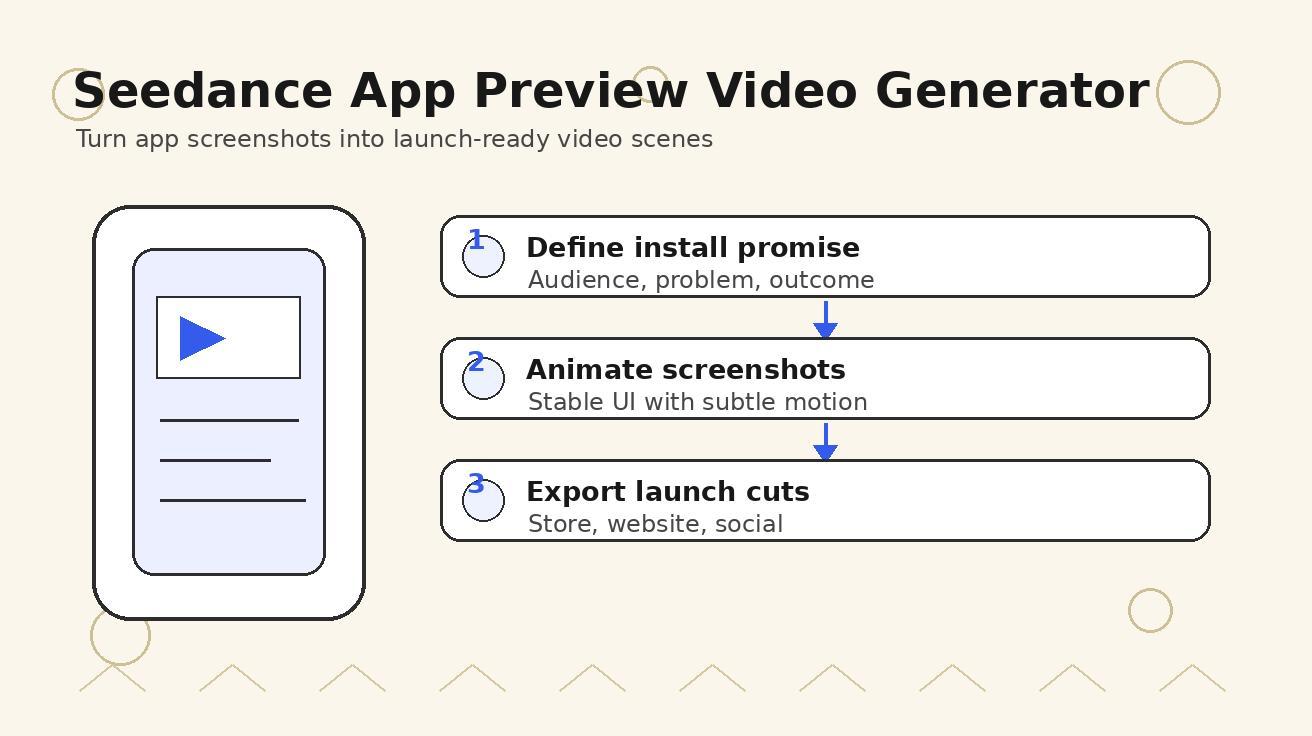
Seedance App Preview Video Generator 2026: Create App Store and Product Launch Clips
Use Seedance to turn app screenshots, feature copy, and launch goals into App Store previews, Google Play promo videos, and product launch clips.
Read article
Best AI Video-to-Video Models in 2026
The best AI video-to-video models in 2026 for editing footage you already shot: Higgsfield Genjutsu, Seedance 2.x, Runway Aleph, Luma Modify and Kling Omni compared.
Read article
Kling 4.0 vs Seedance 2.5: Full Comparison
Kling 4.0 vs Seedance 2.5 compared by spec: 30-second clips, keyframes vs 50 references, audio, 4K and 10-bit color, editing, and which model fits which job.
Read article