
How to Make Viral AI Videos in 2026: Complete Creator Guide
Want to make a viral AI video? Here's the short version: choose the right AI video tool, craft a compelling prompt, then post and optimize for your platform. That's the three-step framework. The rest of this guide unpacks every step with examples, comparisons, and the exact tactics creators are using to rack up millions of views in 2026.
Quick Answer: How to Make Viral AI Videos in 2026 — Complete Step-by-Step Guide — this step-by-step guide shows you how to use Seedance's AI-powered tools to achieve professional results in minutes, even if you're a complete beginner.
What Makes an AI Video Go Viral in 2026?
The AI video landscape exploded in 2025 and matured dramatically by 2026. Millions of creators now use AI video tools every day, which means standing out requires more than just pressing "generate." Understanding what actually makes an AI video go viral separates the creators hitting seven-figure view counts from those stuck at triple digits.
Emotional hook in the first two seconds. Every platform's algorithm measures early retention. If viewers don't feel something — curiosity, shock, humor, awe — within two seconds, they swipe. Your AI video prompt needs to lead with the visual climax, not the setup.
Photorealistic or strikingly stylized visuals. In 2026, the "AI video" aesthetic itself is no longer a novelty. Viewers have been conditioned to scroll past generic AI content. What gets shares are videos that either look indistinguishable from real footage or commit hard to a distinct artistic style — anime, retro sci-fi, watercolor, etc.
Motion dynamics and camera movement. Static AI videos feel like slideshows. Viral content uses deliberate camera motion — tracking shots, dramatic zooms, parallax — that draws the eye and creates a sense of presence.
Short runtime. Data from TikTok and Instagram Reels shows 9–15 second AI videos consistently outperform longer ones on first-watch completion rate, which is the strongest algorithmic signal. YouTube Shorts has a slightly wider window at 30–60 seconds.
Audio-visual synchrony. Adding a trending audio track that matches the energy and rhythm of your AI video creates a combined emotional impact greater than either element alone. Many viral AI videos exist specifically because of perfect music pairing.
Novelty factor. Transformations (photo → animation, realistic → fantastical), unexpected juxtapositions, and "impossible" camera angles that real cameras could never achieve are currently among the highest-performing AI video formats.
Step 1 — Choose the Right AI Video Tool (Seedance vs Runway vs Pika)
The tool you choose determines your ceiling. Not all AI video generators are equal in 2026, and each has different strengths. Here's an honest comparison:
Seedance
Seedance is one of the most powerful AI video generators available in 2026. Built on advanced video diffusion architecture, it excels at:
- Text-to-video generation with nuanced understanding of complex prompts
- Image-to-video animation that preserves subject identity while adding cinematic motion
- Seedance 2.0 — the latest model with dramatically improved temporal consistency, meaning objects don't drift or morph between frames
- High-resolution output (up to 1080p)
- Support for multiple aspect ratios (9:16 for TikTok/Reels, 16:9 for YouTube, 1:1 for Instagram)
- Generous free tier with no watermark
Best for: Creators who want maximum visual quality and are serious about content performance. Seedance consistently produces the kind of cinematic output that goes viral.
Runway Gen-3 Alpha
Runway remains a strong choice in 2026, especially for users who need tight camera control. Its Motion Brush feature lets you paint motion paths onto specific regions of an image, giving fine-grained control over what moves and how.
Strengths: Camera motion presets, image-to-video quality, professional-grade output Weaknesses: Higher price point, more complex UI curve, slower generation
Pika 2.0
Pika has repositioned in 2026 as the "fun and accessible" AI video tool. Its interface is extremely beginner-friendly, and it includes quick-access effects like "Pikaffects" — transformations that apply pre-built visual changes to images.
Strengths: Easiest to use, fun effects, fast generation Weaknesses: Less photorealistic output, more stylized results, limited fine-tuning
The Verdict for Viral Content
For creators aiming at virality, Seedance delivers the best quality-to-effort ratio. It generates videos that genuinely surprise viewers, handles complex prompts better than the competition, and its free tier means you can experiment without financial commitment.
Step 2 — Write a Winning AI Video Prompt
Your prompt is the creative brief for the AI. A weak prompt produces generic, forgettable output. A strong prompt produces something share-worthy. Here's the framework for writing winning AI video prompts:
The Anatomy of a High-Performing Prompt
[Subject] + [Action/Motion] + [Environment/Setting] + [Camera Movement] + [Mood/Lighting] + [Style]
Every element matters:
- Subject: Be specific. "A woman" → "a young woman in a vintage red leather jacket"
- Action: Use dynamic verbs. "Standing" → "spinning with arms outstretched, hair catching the wind"
- Environment: Ground the scene. "Outside" → "on a rooftop at golden hour overlooking a neon-lit city"
- Camera: Direct the shot. "Camera slowly orbiting the subject, revealing the cityscape behind her"
- Mood: Set the feeling. "Cinematic, dreamlike, warm orange tones"
- Style: Define aesthetics. "Shot on 35mm film, photorealistic"
Prompt Examples by Niche
Lifestyle / Personal Brand:
"A confident entrepreneur in a cream linen suit walking toward camera through a sun-drenched Milan street café, slow-motion, camera pulls back and tilts up to reveal the Italian architecture, golden hour lighting, cinematic 35mm film aesthetic"
Food & Restaurant:
"A perfectly plated dish of pasta carbonara, steam rising, fork twisting through the noodles in slow motion, extreme close-up pulling back to reveal a candlelit Italian restaurant, warm amber lighting, 4K cinematic"
Fashion & Beauty:
"A fashion model in a flowing silk dress walking on a mirrored runway, dress rippling in slow motion, dramatic spotlight, confetti falling in ultra-slow motion, high fashion editorial aesthetic"
Real Estate:
"A dramatic aerial drone shot flying over a luxury oceanfront villa at sunset, camera descends through the outdoor terrace into the living room, architectural photography style, golden hour lighting"
Technology / SaaS:
"Abstract visualization of data flowing through glowing blue neural networks, camera traveling through the network at high speed, particles bursting into colorful explosions, futuristic tech aesthetic"
Fitness / Wellness:
"An athlete in peak form executing a perfect Olympic lift in a sunlit gym, slow-motion capture catching every muscle, sweat droplets suspended in air, motivational cinematic style"
Travel & Adventure:
"Camera rockets over the turquoise bays of Santorini at sunrise, swooping down to reveal white-washed buildings with blue domes, golden hour light painting the scene, travel documentary style"
E-commerce / Product:
"A premium minimalist perfume bottle rotating slowly on a mirrored surface, light refracting through the glass creating rainbow caustics, product photography aesthetic, clean white background"
Prompt Mistakes to Avoid
- Vague subjects: "A person" generates inconsistent, average-looking characters
- Overloaded prompts: More than 5 distinct elements confuses the model
- Contradictory styles: "Photorealistic anime" creates inconsistent output
- No camera direction: Without camera instructions, AI defaults to static shots
Step 3 — Generate Your Video with Seedance
Here's the exact workflow for generating a high-quality AI video with Seedance:
Step 3.1 — Access Seedance
Navigate to seedance.tv. You can start generating immediately on the free tier — no credit card required.
Step 3.2 — Choose Your Generation Mode
Seedance offers two primary generation modes:
Text-to-Video (seedance.tv/text-to-video): Start from a written prompt. Best for:
- Original creative content
- Conceptual or abstract visuals
- Scenarios that don't exist in real photos
Image-to-Video (seedance.tv/image-to-video): Animate an existing image. Best for:
- Personal brand content using your own photos
- Product visualization
- Character consistency across multiple videos
Step 3.3 — Configure Your Settings
For viral social content, use these settings:
- Aspect Ratio: 9:16 for TikTok and Instagram Reels, 16:9 for YouTube Shorts
- Duration: 5–10 seconds for most social content (15 seconds for YouTube Shorts)
- Motion Intensity: Start at medium; increase for dynamic action scenes, reduce for subtle animations
Step 3.4 — Enter Your Prompt
Paste your crafted prompt. Use the examples from Step 2 as starting points. Hit generate and wait approximately 30–90 seconds depending on resolution and server load.
Step 3.5 — Review and Iterate
Don't post your first generation. Review it critically:
- Does the motion feel natural?
- Is the key visual element compelling in the first 2 seconds?
- Are there any quality artifacts or distortions?
If the output isn't perfect, refine your prompt. Common refinements:
- Add "smooth camera movement" if motion feels jerky
- Add "no text, no watermarks" if you're seeing unwanted overlays
- Specify "realistic skin texture" for human subjects
- Add "high detail, sharp focus" for product shots
Step 3.6 — Download and Post-Process
Download your generated video at the highest available quality. Before uploading to social media:
- Add captions using a tool like CapCut or Canva
- Layer trending audio
- Add a hook text overlay for the first 2 seconds
Frequently Asked Questions
Q: How long does it take to generate an AI video? A: With Seedance, most AI videos are generated within 1-3 minutes depending on length and complexity. The platform uses optimized processing pipelines to deliver fast results without compromising on quality.
Q: What kind of prompts work best for AI video generation? A: The most effective prompts are specific and descriptive — include details about the scene, lighting, camera movement, mood, and style. Seedance's AI responds well to cinematic language like "slow pan", "golden hour lighting", or "documentary style".
Q: Can I edit the AI-generated video after it's created? A: Yes, Seedance provides built-in editing tools that let you trim, extend, add music, adjust pacing, and apply style effects to your generated videos. You can also regenerate specific sections if you're not satisfied with the initial output.
Step 4 — Platform-Specific Optimization
Different platforms have different algorithms, audiences, and technical requirements. Here's how to optimize your AI video for each:
TikTok
Technical specs: 9:16 vertical, 1080x1920px, under 300MB, MP4/MOV Optimal length: 9–15 seconds for maximum completion rate; 30–60 seconds for storytelling Algorithm signals: Strong watch-through rate, comments, shares (weighted heavier than likes)
TikTok-specific tactics:
- Start with motion — TikTok's algorithm previews videos in the feed before the user taps. A static first frame gets scrolled past.
- Use trending sounds. TikTok's algorithm actively promotes videos using trending audio.
- Post within trending topics. "AI video" + "[trend]" has built-in search volume.
- Caption text strategy: Put your hook in the first 2 seconds of visible captions. TikTok shows captions in search results.
- Optimal posting times: 7–9 AM, 12–2 PM, and 7–10 PM in your target audience's timezone.
Hashtag formula for AI videos: 1 broad (#AIVideo) + 1 niche (#AIArtist) + 1 trend (#FYP) + 1 platform (#TikTokAI)
YouTube Shorts
Technical specs: 9:16 vertical, 1080x1920px, under 60 seconds, MP4 Optimal length: 30–59 seconds (YouTube's algorithm gives a slight boost to Shorts close to the 60-second limit) Algorithm signals: Completion rate, likes-to-views ratio, subscriber conversion
YouTube Shorts-specific tactics:
- Unlike TikTok, YouTube Shorts viewers are highly search-motivated. Include your target keyword in the video title, description, and in spoken/written text within the video.
- End with a clear call to action — subscribing or watching a related long-form video.
- Use chapters (even for short videos) to increase time spent on your channel.
- The Shorts Feed rewards novelty — try to be the first creator covering a new AI video trend.
Instagram Reels
Technical specs: 9:16 vertical, 1080x1920px, under 90 seconds, MP4 Optimal length: 15–30 seconds Algorithm signals: Saves and shares (the strongest signals on Reels), comments, replays
Instagram Reels-specific tactics:
- Instagram is an aesthetics-first platform. Quality matters more here than on TikTok. Your Seedance video should be visually flawless before posting.
- Cover frame selection: Instagram lets you choose a thumbnail. Pick the most visually striking frame.
- Reels travel via saves and DMs. Create content people want to reference — "how-to" and "wow factor" content performs best.
- Caption strategy: Instagram Reels captions appear below the video. Write a description with 1–2 sentences and 3–5 relevant hashtags.
- Cross-post Reels to Stories immediately after publishing to double your exposure.
Technical specs: 16:9 or 9:16, under 5GB, MP4, under 15 minutes Optimal length: 30–90 seconds Algorithm signals: Comments and meaningful engagement; LinkedIn deprioritizes external links
LinkedIn-specific tactics:
- Professional context is essential. An AI video that would go viral on TikTok may flop on LinkedIn. Frame your content around professional value.
- The highest-performing LinkedIn AI videos demonstrate a professional use case: AI for presentations, AI for product demos, AI for training videos.
- Start with a business hook: "I generated this product demo in 90 seconds with AI. Here's how."
- Native video outperforms YouTube links on LinkedIn. Always upload directly.
- Post as a personal profile, not a company page — personal posts receive significantly more organic reach.
12 Viral AI Video Ideas That Work Right Now
These formats are generating the highest engagement for AI video creators in 2026:
1. "Before vs. After AI Transformation" Show a static photo transforming into a cinematic AI animation. The contrast drives shares and comments.
2. "AI Recreates [Famous Location] 100 Years Ago" Historical reimaginings are consistently shared by people who grew up near or love the location.
3. "What Your City Would Look Like in 2100" Futuristic city visualizations get saved and shared with local pride or curiosity.
4. "AI Animates Your Childhood Photo" Personal and emotionally resonant. Family photos coming to life are extremely shareable.
5. "AI Product Visualization Before the Product Exists" For entrepreneurs and product designers, visualizing an unbuilt product creates massive engagement from both enthusiasts and skeptics.
6. "AI Recreates Movie Scene in a Different Art Style" "What if [Marvel movie] was Miyazaki-style" content has consistent virality because of the massive fanbase overlap.
7. "Impossible Camera Shot" A continuous camera move that would be physically impossible in real life — flying through a keyhole, shrinking to molecule-size, orbiting the Earth — stops scrollers cold.
8. "AI Turns Your Pet Into [Fantasy Creature]" Pets are the internet's eternal content engine. An AI video of someone's cat as a dragon has guaranteed engagement.
9. "Day in the Life of [Fictional Character] in [Modern Setting]" Sherlock Holmes in 2026. Napoleon in a New York coffee shop. Relatable-meets-historical has a massive crossover audience.
10. "AI Shows What Dreams Look Like" Surreal, dreamlike visuals from AI have a uniquely compelling quality when labeled as "dream visualization." Deep curiosity driver.
11. "AI Visualizes a Song Lyric Literally" Take a famous song lyric and generate a hyper-literal visual interpretation. Music fans share these constantly.
12. "Time-Lapse of a Building Being Built (AI Imagined)" Real estate developers and architecture fans love before-and-after construction visualizations.
Advanced Tips: Editing, Captions, Hooks
Even the best AI-generated video benefits from post-processing. Here's how professional creators elevate their content:
The First 2-Second Hook
This is the single most important element of any short-form video. Your hook must create an immediate "I need to see more" reaction. Effective hook types:
- The Visual Disruption: Start in the middle of something impossible or unexpected
- The Text Question: Overlay "Wait until the end..." or "Nobody believes this is AI"
- The Transformation: Begin showing the "before" state to tease the transformation
- The Drop: Begin right as the music drops for an instant adrenaline hit
Adding Captions
Auto-captioning has become table stakes. TikTok's native captions, CapCut's auto-caption, or a third-party tool like Kapwing can generate captions from your audio track. Styled captions (bold, color-highlighted keywords) significantly increase watch time by giving viewers something to read while watching.
Color Grading
AI videos sometimes have inconsistent color tones. Run your generated video through a simple LUT (Look-Up Table) in CapCut or DaVinci Resolve to create visual consistency. Popular LUT styles for AI video:
- Cinematic Film: Slightly desaturated, lifted shadows, warm highlights
- Cyberpunk: High contrast, teal-and-orange color shift
- Dreamy Pastel: Softened highlights, pink/lavender tone shift
Sound Design
Background music is just the start. Professional AI video creators add:
- Sound effects that match on-screen movements (whoosh, impact, transition sounds)
- Voice-over narration using AI voice tools to add context
- ASMR-style ambient sound for calm, meditative content that performs well in evenings
Transition Timing
For series content (multiple AI video clips edited together), timing transitions to the beat of the music is a professional-level technique that dramatically elevates production feel.
Common Mistakes That Kill Views
Even great AI videos can fail because of avoidable distribution mistakes. Here are the most common ones:
Posting inconsistently. The algorithm rewards regular posting. One viral video followed by nothing for two weeks resets your account's momentum. Maintain a minimum of 3 posts per week.
Using low-resolution output. Uploading a compressed or low-resolution AI video to a 1080p-optimized platform like Instagram creates immediate quality issues. Always download and post at maximum available resolution.
Ignoring the thumbnail/cover frame. On Instagram and YouTube, the cover frame is your billboard. Choose the most visually striking moment in your video as the thumbnail.
Not adding captions. A significant percentage of social media is consumed on mute. Uncaptioned videos lose these viewers entirely.
Generic AI disclosure. Hiding that your content is AI-generated creates trust issues. Being upfront with "#AIVideo" or "Made with AI" actually increases engagement because it triggers curiosity and discussion.
Posting at the wrong time. Analytics show that posting when your specific audience is online vs. the general "best times" can result in 3–4x difference in initial engagement.
Not engaging in the first hour. After posting, actively respond to every comment for the first 60 minutes. Platforms interpret high comment response rates as quality engagement signals.
Using the wrong aspect ratio. A 16:9 video posted to TikTok appears with black bars and gets algorithmically deprioritized. Always generate and post in the native aspect ratio for each platform.
Repeating the same visual format. The first three times a novel visual format appears, it surprises viewers. By the tenth time they've seen it from you, it doesn't. Rotate your visual styles and concepts continuously.
Not testing. Post 10 different types of AI videos and let your audience's response tell you what to double down on. Data beats intuition every time.
FAQ
How long does it take to make an AI video?
With Seedance, a complete AI video can be generated in 30–90 seconds after you submit your prompt. Add 15–20 minutes for prompt writing, review, iteration, and post-processing (captions, music, color grading), and a polished, post-ready AI video takes about 30 minutes total. Experienced creators who have mastered prompt writing can go from idea to posted content in under 20 minutes.
Do I need any special skills to make an AI video?
No. Seedance's interface requires no technical skills — you enter a text prompt and click generate. What matters more than technical skill is creative thinking: developing compelling prompts, choosing strong subject matter, and understanding what resonates with your target audience. The creative and analytical skills that make great content creators are exactly the skills that translate to great AI video creation.
Can I make money from AI videos?
Yes, through multiple channels: YouTube Shorts monetization (available at 500 subscribers and 3,000 watch hours), TikTok Creator Fund or TikTok Shop affiliate, brand partnerships where companies pay you to create AI videos showcasing their products, selling AI video creation as a service to businesses, and licensing your best AI videos through stock video platforms. Many AI video creators in 2026 earn $3,000–$15,000/month from a combination of these revenue streams.
Are AI videos detectable by platforms?
Most major platforms (TikTok, Instagram, YouTube) are developing AI content detection and have begun requiring AI content disclosure on some categories of content. The best practice in 2026 is to voluntarily disclose that your content is AI-generated — not because of a requirement, but because transparency builds audience trust and the "made with AI" disclosure actually drives curiosity-based engagement.
What's the best AI video for beginners?
Seedance is consistently recommended as the best starting point for AI video beginners because it combines high output quality with a simple interface, offers a free tier with no watermark, and handles complex prompts well even for users without prior AI experience. The text-to-video tool requires nothing more than a descriptive sentence to generate compelling results.
How do I make my AI video look more realistic?
The most effective tactics for photorealistic AI video output: (1) specify camera and lens type in your prompt ("shot on Sony A7S III, 24mm lens"), (2) reference specific lighting conditions ("golden hour backlighting," "overcast diffuse light"), (3) include texture details ("realistic skin texture," "weathered fabric"), (4) specify "cinematic" and "photorealistic" in your prompt, (5) avoid contradictory style cues that confuse the model. Seedance's latest model (Seedance 2.0) has significantly improved photorealism compared to earlier versions.
Start Making Viral AI Videos Today
You now have everything you need: the viral framework, the prompt formulas, the platform playbooks, and the 12 highest-performing video ideas. The only missing piece is execution.
Ready to create? Start generating with Seedance for free:
- 👉 Text-to-Video — Turn your written ideas into cinematic video
- 👉 Image-to-Video — Animate your photos and product images
The best time to start was yesterday. The second best time is right now. Generate your first viral AI video today.
Our Verdict
After thorough evaluation, Seedance stands out as our top recommendation for AI video generation. Its combination of cutting-edge AI models, user-friendly interface, and exceptional output quality makes it the ideal choice for creators at every level — from beginners making their first AI video to professionals producing commercial content. Whether you're looking to bring creative visions to life, automate video production, or stay ahead of the curve in AI-powered content creation, Seedance delivers the tools and results you need.
Ready to try it yourself?
Put the steps from this guide into practice with Seedance and turn prompts or images into polished videos in minutes.
Free credits on signup. Plans from $28/month.
Related Articles
More posts in the same locale you may want to read next.
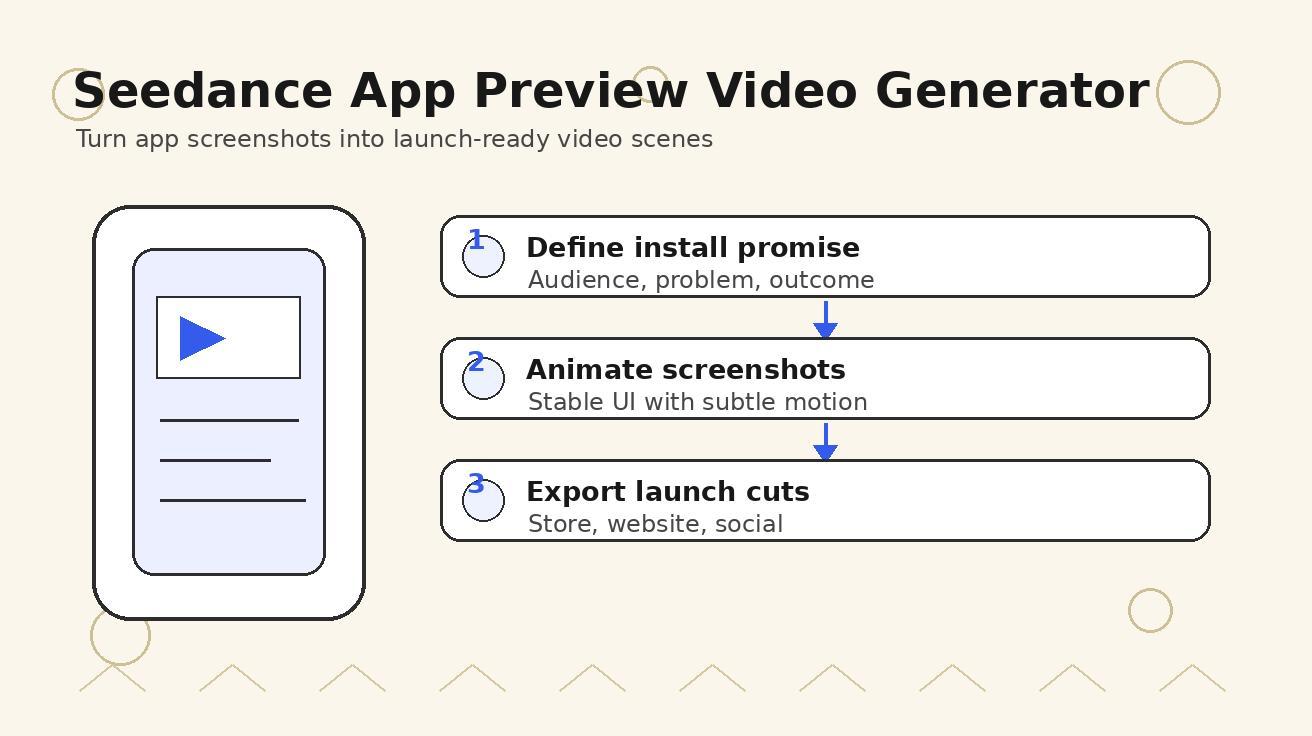
Seedance App Preview Video Generator 2026: Create App Store and Product Launch Clips
Use Seedance to turn app screenshots, feature copy, and launch goals into App Store previews, Google Play promo videos, and product launch clips.
Read article
Gemini AI Video Prompt Examples: Copy-Ready Veo Scenes and a Better Prompt Formula
Copy Gemini AI video prompt examples for cinematic motion, product ads, dialogue, and vertical clips, then adapt them with a practical Veo prompt formula.
Read article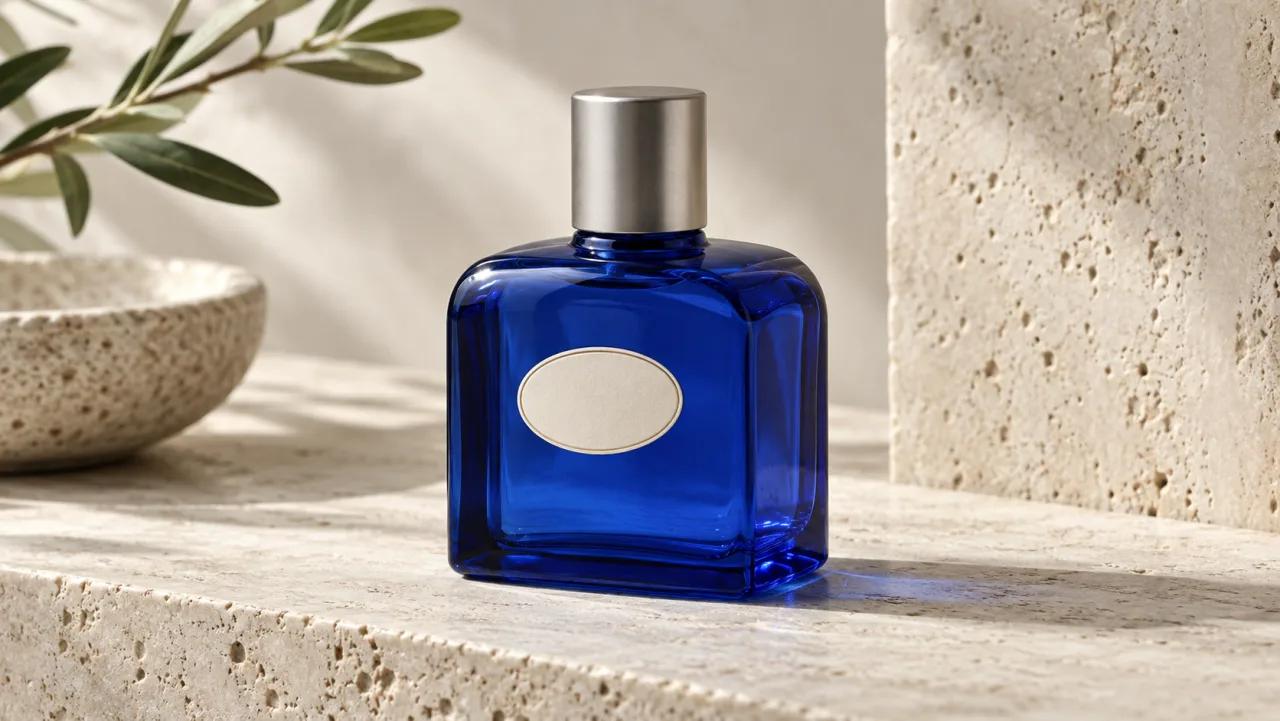
How to Keep Product Shape Consistent in AI Video Ads
Lock product geometry, packaging, labels, references, camera angles, and approval checks so AI video ads preserve the real SKU across every shot.
Read article