
How to Create AI Videos for TikTok: The Complete Guide for 2026

Target Keyword: how to create ai videos for tiktok
Secondary Keywords: ai video tiktok, ai video generator for tiktok, tiktok ai video creation, ai video tutorials 2026
Word Count Target: 2,500+ words
Author: Emma Chen
Publish to: seedance.tv blog
Quick Answer: How to Create AI Videos for TikTok: The Complete Guide for 2026 — this step-by-step guide shows you how to use Seedance's AI-powered tools to achieve professional results in minutes, even if you're a complete beginner.
Meta Description: Learn how to create AI videos for TikTok in 2026 with a step-by-step workflow covering prompts, generation, editing, posting, monetization, and performance tracking.
URL slug: how-to-create-ai-videos-for-tiktok-2026
TikTok is still the fastest distribution engine on the internet, but the rules changed. In 2026, creators are not winning because they have expensive cameras or large teams. They are winning because they can turn ideas into vertical videos quickly, test multiple hooks in a day, and repeat what the algorithm rewards. That is exactly where AI video creation fits.
If you want to learn how to create AI videos for TikTok, the goal is not just generating pretty visuals. Pretty is cheap now. The real game is using AI to produce short, high-retention videos that stop scrolling, trigger rewatches, and give you enough creative volume to learn faster than everyone else.
This guide breaks down the full workflow I would use today as a creator or growth lead: choose the right concept, write prompts that produce usable footage, generate vertical clips in Seedance, edit them for TikTok retention, publish with a growth system, and track the numbers that actually matter. You will also get prompt templates, troubleshooting fixes, monetization paths, and a repeatable production framework you can use every week.
Why AI Videos Perform So Well on TikTok
AI videos match TikTok's distribution logic unusually well. The platform rewards novelty, fast pacing, emotional reaction, and repeat viewing. AI-generated content can deliver all four when used properly.
The algorithm cares about reactions, not effort
TikTok does not care that a creator spent six hours filming something. It cares whether viewers stay, rewatch, comment, save, and share. AI clips can generate that behavior because they are:
- Visually unexpected
- Easy to iterate
- Cheap to test
- Naturally suited to short-form loops
- Strong at "wait, how did they make that?" moments
That last point matters. A lot of AI TikTok videos perform because the content itself is interesting, but a second layer of curiosity also kicks in: viewers want to know the prompt, the tool, or the trick behind it.
The best AI TikTok videos usually fit one of five formats
If you are stuck on content ideas, start here. Most high-performing AI video TikToks fall into one of these buckets:
1. Transformation
Turn one thing into another.
Examples:
- Sketch to cinematic scene
- Selfie to fantasy character
- Empty room to dream interior
- City street to cyberpunk world
2. Impossible reality
Show something that should not exist but feels visually convincing.
Examples:
- Ocean waves moving through a subway tunnel
- Floating houses drifting over farmland
- Coffee pouring upward into a cup
3. Prompt reveal
The content is the result, and the hook is the prompt.
Examples:
- "I typed one prompt and got this"
- "Use this AI prompt before it gets overused"
- "POV: your TikTok editor discovers Seedance"
4. Educational visualization
AI turns abstract concepts into visual explanations.
Examples:
- How black holes bend light
- What ancient Rome might look like today
- How a brand campaign could look before production
5. Series-based character or worldbuilding
One recurring character, theme, or universe across many clips.
Examples:
- "My orange cat in different movie genres"
- "Famous cities reimagined in 2090"
- "If startup founders were fantasy warriors"
The important part: format beats randomness. Do not open your AI tool and hope inspiration appears. Pick a repeatable format first.
Choose the Right AI Video Workflow for TikTok
Before you start generating, set up a workflow built for vertical content. The right tool stack should help you move from idea to posted video fast, not bury you in settings.
What to look for in an AI video generator for TikTok
For TikTok, the tool needs five practical qualities:
- Fast generation speed
- Vertical or TikTok-friendly framing
- Good prompt adherence for short clips
- Easy export into CapCut or TikTok editor
- Low enough cost to test frequently
Seedance 2.0 is a strong default for this workflow because it is fast, handles short social-ready concepts well, and gives you a realistic free tier for daily testing. If you want a broader overview of tools, also see best-ai-video-generator-2026, but for this guide I recommend building your process around Seedance so you can move quickly.
A practical creator stack for 2026
This is the simplest stack that still works:
- Idea + prompt writing: Notes app, Google Docs, or Notion
- AI generation: Seedance text-to-video or image-to-video
- Editing: CapCut
- Posting + analytics: TikTok app
- Prompt library + metrics log: spreadsheet
That is enough. Do not overcomplicate your stack in week one.
Step 1: Plan the TikTok Before You Write the Prompt
This is where most people get lazy, and then they blame the AI tool. Bad brief in, mediocre video out.
Before writing prompts, define four things:
1. The content goal
Decide what this clip needs to do.
Choose one:
- Get views
- Get shares
- Get comments
- Get follows
- Get profile clicks
- Sell a product or service
Trying to do all of them at once usually weakens the result.
2. The hook
Your first line or visual should create immediate curiosity.
Strong hook types:
- "I asked AI to make the most satisfying video possible"
- "This prompt got me my highest TikTok reach this month"
- "What if Tokyo looked like this in 2090?"
- "Comment a word and I'll turn it into an AI video"
3. The payoff
What exactly will the viewer get by staying to the end?
Examples:
- A surprising final transformation
- A beautiful visual reveal
- A useful prompt they can copy
- A funny character twist
- A practical tutorial outcome
4. The interaction trigger
You want the video to invite some action.
Use one clear trigger:
- "Comment the next theme"
- "Which version wins?"
- "Should I do part 2?"
- "Want the prompt? I’ll post it next"
The one-minute content brief template
Use this before every video:
Topic:
Audience:
Format:
Hook:
Visual payoff:
Call to action:
Prompt direction:
Trending sound or voiceover idea:
Example brief for a growth-friendly TikTok
Topic: Dream bedrooms generated with AI
Audience: Teen and young adult lifestyle viewers
Format: Transformation
Hook: "POV: AI designs your dream room in 5 seconds"
Visual payoff: Bedroom transforms from blank white room to neon gaming setup
Call to action: "Comment your style and I’ll make part 2"
Prompt direction: cinematic interior design, glowing LED lights, cozy luxury, vertical
Trending sound or voiceover idea: dreamy synth audio
This planning step looks minor, but it saves a ridiculous amount of wasted generations.
Step 2: Write Better AI Video Prompts for TikTok
Once your content brief is clear, write prompts like a director, not like a bored search query.
The best prompt formula for TikTok AI videos
Use this structure:
[subject] + [action] + [environment] + [visual style] + [camera movement] + [mood] + [vertical framing] + [duration]
Weak vs strong prompt example
Weak:
cat in space
Strong:
Orange tabby cat in a tiny astronaut suit floating inside a bright futuristic spaceship, paws gently touching the window, Earth glowing in the distance, cinematic lighting, slow push-in camera, whimsical and emotional, vertical composition for TikTok, 5 seconds
The strong version gives the model enough structure to create a usable clip. It also gives you better odds of getting a video that feels intentional instead of generic.
Prompt templates that work well for TikTok
Transformation template
Transform [starting subject] into [ending scene], smooth visual transition, high detail, cinematic lighting, satisfying motion, vertical TikTok framing, 5 seconds
Examples:
Transform a plain white sneaker into a luxury futuristic fashion shoe, glowing materials, smooth morphing transition, cinematic product lighting, vertical TikTok framing, 5 seconds
Transform a pencil sketch of a castle into a photoreal medieval fortress at sunset, dramatic clouds, smooth reveal, cinematic, vertical TikTok framing, 6 seconds
Lifestyle fantasy template
POV: [aspirational scenario], rich detail, trendy aesthetic, cinematic movement, dreamy mood, vertical framing, 6 seconds
Examples:
POV: you wake up in a glass cabin above snowy mountains, soft morning sun, warm coffee steam, cozy luxury aesthetic, slow camera drift, vertical framing, 6 seconds
Educational visualization template
Show how [concept] works, clear visual breakdown, visually intuitive animation, clean background, educational but cinematic, vertical framing, 8 seconds
Examples:
Show how lightning forms inside a storm cloud, layered atmosphere, electric charge buildup, visually intuitive science animation, cinematic detail, vertical framing, 8 seconds
Product ad template
[product] rotating in a premium studio environment, dramatic reflections, luxury commercial style, close-up details, smooth camera orbit, vertical framing, 5 seconds
Examples:
Minimalist silver smartwatch rotating in a premium black studio, glossy reflections, luxury tech commercial style, close-up details, smooth camera orbit, vertical framing, 5 seconds
Character series template
[character description] in [new scenario], consistent appearance, expressive action, stylized cinematic look, vertical framing, 5 seconds
Examples:
Small orange cat with a blue bow tie working as a sushi chef in Tokyo, consistent appearance, playful expression, cinematic anime-inspired style, vertical framing, 5 seconds
Add negative prompts when the output keeps drifting
If your tool supports negative prompts, use them to remove junk.
Example:
Negative prompt: blurry, extra limbs, distorted face, low detail, text artifacts, watermark, duplicate objects
Prompt rules that improve results fast
- Use one main idea per clip.
- Keep the motion understandable in 3 to 8 seconds.
- Always mention vertical framing if the tool does not lock ratio cleanly.
- Use mood words sparingly. One or two are enough.
- If a character matters, repeat the defining details every time.
Common prompt mistakes
Bad prompts usually fail for one of three reasons:
- They are too vague
- They ask for too much in one shot
- They ignore the platform format
Bad:
Make something crazy for TikTok
Better:
Skyscrapers melting into ocean waves in downtown Manhattan, surreal but elegant, cinematic realism, slow sweeping camera, vertical TikTok framing, 5 seconds
Step 3: Generate AI Videos in Seedance for TikTok
Now turn the prompt into footage.
If you have not used Seedance before, the simplest entry points are text-to-video for pure prompt generation and image-to-video if you want to animate a photo, product shot, selfie, or brand asset.
Step-by-step Seedance workflow
1. Open the right creation mode
Choose:
- Text-to-video if the entire idea starts from a written concept
- Image-to-video if you already have a visual reference and want better control
For TikTok, image-to-video is underrated. If you want consistent characters, product shots, or room makeovers, reference images reduce randomness.
2. Set the aspect ratio
Choose vertical 9:16 when available. If the tool supports flexible framing, tell the model to keep the subject centered and composed for vertical viewing.
3. Set duration strategically
Do not max out duration by default.
Use this rule:
- 3 to 5 seconds for loops, reveals, satisfying visuals
- 5 to 7 seconds for transformations
- 7 to 10 seconds for explainers or richer sequences
Shorter clips often perform better because completion rate is easier to win.
4. Generate variants, not just one clip
This is a growth habit, not a design preference.
For any promising concept, create 3 variations:
- Version A: safe and clear
- Version B: more dramatic motion
- Version C: different style or lighting
That gives you options for testing hooks and editing.
5. Save your winners with labels
Name files in a useful way:
date_topic_hook_version
2026-04-10_dream-room_pov-design_B
Future-you will hate vague filenames.
A sample Seedance TikTok workflow
Let’s say you want a "dream room transformation" clip.
- Write three prompt variants
- Generate all three vertically
- Pick the cleanest result with the strongest first frame
- Export to CapCut
- Add text hook and trending audio
- Post with a comment CTA
When to use image-to-video instead of text-to-video
Use image-to-video when:
- You need a consistent face
- You are animating product photos
- You want a real location to become cinematic
- You are building a recurring character series
Example image-to-video prompt:
Animate this bedroom photo into a cozy luxury gaming room reveal, LED lights turning on, subtle camera push-in, cinematic atmosphere, vertical framing, 5 seconds
A batching system for creators posting daily
If you want TikTok growth, do not create one video at a time from scratch. Batch your production.
Use this weekly system:
- Monday: brainstorm 15 hooks
- Tuesday: write 15 prompts
- Wednesday: generate 20 to 30 variants
- Thursday: edit 7 to 10 final clips
- Friday to Sunday: post, reply, and analyze
That is how you turn AI from a novelty into a content machine.
Frequently Asked Questions
Q: How long does it take to generate an AI video? A: With Seedance, most AI videos are generated within 1-3 minutes depending on length and complexity. The platform uses optimized processing pipelines to deliver fast results without compromising on quality.
Q: What kind of prompts work best for AI video generation? A: The most effective prompts are specific and descriptive — include details about the scene, lighting, camera movement, mood, and style. Seedance's AI responds well to cinematic language like "slow pan", "golden hour lighting", or "documentary style".
Q: Can I edit the AI-generated video after it's created? A: Yes, Seedance provides built-in editing tools that let you trim, extend, add music, adjust pacing, and apply style effects to your generated videos. You can also regenerate specific sections if you're not satisfied with the initial output.
Step 4: Edit the AI Video for Retention in CapCut or TikTok
Raw AI output is rarely the final post. Editing is where the clip becomes a TikTok instead of just a generated video.
Focus on the first 0.5 seconds
This is the make-or-break window. If the opening frame is weak, your retention dies before the video gets a chance.
Use one of these editing moves immediately:
- Big text hook
- Fast zoom-in
- Audio hit on frame one
- Visual contrast jump
- Start with the most surprising frame, then reveal context
Add on-screen text with a purpose
Text overlays should do one of three jobs:
- Explain what the viewer is seeing
- Create curiosity
- Push interaction
High-performing text examples:
- "I used one AI prompt for this"
- "Which version should I post next?"
- "POV: AI designs your apartment"
- "Wait for the final reveal"
Use audio strategically
Trending sound helps, but alignment matters more than trend-chasing.
Match the strongest visual beat to:
- A beat drop
- A sound effect
- A spoken reveal line
If the video is educational, use voiceover instead of forcing a trend sound. Clear explanation often outperforms random music in tutorial content.
Keep the pacing tight
Cut anything that feels slow. On TikTok, one dead second is a tax you cannot afford.
Good editing rules:
- Remove weak opening frames
- End right after the payoff
- Consider looping the ending into the beginning
- Keep captions readable without blocking the subject
A simple edit structure that works
0.0-0.5s: hook text or strongest visual
0.5-3.0s: build motion and curiosity
3.0-5.0s: reveal or transformation
5.0-6.0s: CTA or loop back
CapCut features that are especially useful for AI TikTok videos
- Auto-captions for voiceover tutorials
- Keyframes for subtle zoom and motion
- Speed ramp for dramatic reveals
- Cutout or overlay for reaction videos
- Template reuse for fast series production
If you build a repeatable format, save it as a template. That is how you produce faster without making every post feel lazy.
Step 5: Post for TikTok Growth, Not Just for Upload Completion
A lot of creators do the hard part, then post badly. Distribution matters.
Best posting rhythm for AI TikTok accounts
For most accounts, start with:
- 1 to 2 posts per day
- At least 5 days per week
- One format tested across multiple angles
You do not need 10 posts a day. You need enough volume to learn what the audience wants from you.
Caption framework for AI videos
Use short captions that reinforce the hook or invite interaction.
Templates:
I typed one prompt and got this. Want part 2?
Comment a theme and I’ll turn it into an AI video.
This is your sign to start using AI for TikTok.
Prompt + tool breakdown if this hits 1,000 saves.
Hashtag strategy
Do not stuff hashtags. Use 3 to 5 total:
- 1 broad tag:
#tiktokaior#aivideo - 1 format tag:
#promptdesign,#aitutorial,#beforeandafter - 1 audience tag:
#gamingsetup,#interiordesign,#animeedit - 1 brand or series tag if relevant
What to do in the first hour after posting
The first hour matters because TikTok is testing whether your video deserves more reach.
Do this:
- Reply to early comments quickly
- Pin a question comment
- Share the video to Stories or another channel
- Watch retention and save rate if analytics appear fast enough
Do not do this:
- Spam comments on your own post
- Delete and repost immediately because the first ten minutes were quiet
- Change the caption three times in a panic
The smartest growth loop for AI creators
Use comments as content input.
Example:
- Video 1: "AI turned my cat into a samurai"
- Viewer comment: "Now do space pirate"
- Video 2: reply with that exact video
This loop works because it:
- Generates ideas from the audience
- Proves you listen
- Creates built-in series momentum
- Increases comment volume across multiple posts
That is real TikTok growth strategy, not generic "post consistently" fluff.
Step 6: Build Repeatable AI Video Series
Series outperform isolated one-off experiments because they train the audience on what to expect from you.
Good AI TikTok series ideas
"Comment and I’ll generate it"
Best for engagement and easy ideation.
"One prompt, three styles"
Best for saves, shares, and comparison comments.
"Real photo to cinematic AI video"
Best for image-to-video and client lead generation.
"If this brand existed in the future"
Best for designers, marketers, and product creators.
"Dream spaces generated by AI"
Best for lifestyle, interior design, and aesthetic audiences.
How to structure a weekly series
Use this simple framework:
- Monday: launch the theme
- Tuesday: post version 2
- Wednesday: respond to comments
- Thursday: show behind-the-scenes prompt
- Friday: compile the best results
This creates variety without losing brand identity.
Monetizing Your AI TikTok Content
Views are nice. Revenue is better.
The strongest monetization paths for AI TikTok creators in 2026 are usually not the creator fund alone. They are a mix of audience monetization, service monetization, and affiliate monetization.
1. Creator rewards and ad revenue
This can be incremental income, but it is rarely the main prize unless your volume is massive. Treat it as baseline upside, not your business model.
2. Brand deals
AI creators are attractive to brands because they can show products in imaginative ways without a full production setup.
Good niches for sponsorships:
- Tech
- Productivity tools
- Design tools
- Gaming gear
- Lifestyle products
- Education apps
Pitch angle example:
I create short-form AI videos that turn product concepts into high-retention TikTok content. I can produce concept ads, product reveals, and prompt-led creator posts that feel native to TikTok rather than traditional ads.
3. Affiliate income
If you are already teaching people how to make AI TikTok videos, affiliate offers fit naturally.
Good affiliate angles:
- AI video tools
- Editing tools
- Creative templates
- Creator education products
If you mention Seedance, use a real workflow and disclose properly. Forced affiliate content smells bad and performs bad.
4. Services
This is the fastest path to real money for smaller creators.
Offer:
- AI short-form content packages
- Product animation clips
- Prompt development for brands
- TikTok creative concepts for ads
Simple starter offer:
5 AI TikTok videos per month for one niche brand
That is easier to sell than pretending you are a full agency on day one.
5. Digital products
Once you have traction, package the process:
- Prompt packs
- CapCut templates
- Niche idea banks
- AI TikTok playbooks
This works especially well if your audience keeps asking how you make the videos.
How to Track Performance and Improve Fast
If you do not track outcomes, you are just entertaining yourself with dashboards.
The metrics that matter most for AI TikTok videos
Track these for every post:
- Views
- Average watch time
- Completion rate
- Rewatch behavior
- Shares
- Saves
- Comments
- Follows generated
- Profile visits
- CTA response rate
Benchmarks worth watching
These are practical early signals:
- Completion rate: aim for 65%+ on 5 to 8 second clips
- Share rate: 1%+ is a strong sign of concept strength
- Save rate: especially important for prompt and tutorial content
- Follows per 1,000 views: good signal of account-level value
A simple tracking sheet
Use columns like this:
Date | Topic | Format | Hook | Prompt style | Length | Views | Completion rate | Shares | Saves | Comments | Follows | Notes
What to analyze every week
Review:
- Which hooks got the highest retention
- Which visual styles got the most shares
- Which CTAs produced real comments
- Which video lengths performed best
- Which posting windows gave the best early velocity
Then make one change at a time next week. Not ten.
The best A/B tests for AI TikTok creators
Test one variable per batch:
- Same concept, different hook text
- Same prompt, different video length
- Same video, trending audio vs voiceover
- Same idea, text-to-video vs image-to-video
- Same format, broad CTA vs specific CTA
AI gives you leverage because testing becomes cheap. Use that leverage instead of making one precious post and calling it strategy.
Troubleshooting Common AI TikTok Problems
This is the section most creators need after the first week.
Problem: the AI video looks generic
Cause: prompt is too broad, style is undefined, or there is no visual tension.
Fix:
- Add a stronger environment
- Add specific camera movement
- Choose one visual style clearly
- Build contrast into the idea
Weak:
beautiful city at night
Better:
Rain-soaked Tokyo street at night, neon reflections, cinematic handheld camera, moody atmosphere, vertical TikTok framing, 5 seconds
Problem: the character changes too much between videos
Cause: no consistent reference or repeated character description.
Fix:
- Use image-to-video if possible
- Repeat the exact same character details in every prompt
- Avoid changing too many costume and lighting variables at once
Problem: TikTok compression makes the video soft
Fix:
- Export the cleanest high-quality file possible
- Avoid over-layering tiny text
- Keep contrast strong so the image survives compression
- Use simple compositions for small screens
Problem: views are low even though the video looks good
Usually the issue is not generation quality. It is packaging.
Check:
- Is the first frame strong enough?
- Is there a reason to comment?
- Is the clip too long?
- Is the text hook clear in under one second?
- Did you post three versions of the concept to test the hook?
Good content can still die with weak packaging. TikTok is ruthless about that.
Problem: the prompt keeps producing chaotic motion
Fix:
- Reduce the number of moving elements
- Shorten duration
- Ask for one main subject
- Use words like
subtle,smooth,controlled, orslow
Problem: you run out of ideas
Fix:
- Turn comments into prompts
- Reuse your best format in a new niche
- Use one idea across three styles
- Pull concepts from movies, design trends, gaming, memes, and aspirational lifestyle content
The fix for idea drought is usually structure, not inspiration.
A 30-Day Action Plan for TikTok AI Video Growth
If you want a practical starting system, use this.
Week 1: Build the engine
- Choose 2 content formats
- Write 20 hooks
- Generate 10 to 15 videos
- Post 1 video daily
- Track completion rate and comments
Week 2: Find the winning hook type
- Double down on the best-performing format
- Test 3 hook styles
- Start asking viewers what to generate next
- Save top prompts in a library
Week 3: Build a series
- Turn your best concept into a 3 to 5 post sequence
- Reply to comments with new videos
- Introduce a recognizable visual identity or recurring character
Week 4: Monetize and refine
- Add a soft CTA to your profile or offer
- Create a rate card or affiliate landing page
- Review top 10 posts and extract patterns
- Cut what is not working
This is enough to create real signal. You do not need a giant content operation to start learning.
Final Take
If you want to know how to create AI videos for TikTok in 2026, the answer is not "find the fanciest generator." The answer is build a system: clear format, stronger prompts, faster generation, sharper editing, and disciplined testing.
AI gives you speed. TikTok rewards learning speed. Put those two together and you have a very real growth advantage.
Start simple. Pick one format. Create ten clips. Track the metrics. Improve the hook. Then repeat.
If you want to go deeper on the production side, read text-to-video, image-to-video, and seedance-2-0 for more detailed workflows and platform-specific tips.
Author: Emma Chen, AI Video Content Strategist
Last Updated: April 10, 2026
Word Count: 2,500+ words
Specialties: TikTok growth strategies, AI video creation, prompt engineering, content monetization
Our Verdict
After thorough evaluation, Seedance stands out as our top recommendation for AI video generation. Its combination of cutting-edge AI models, user-friendly interface, and exceptional output quality makes it the ideal choice for creators at every level — from beginners making their first AI video to professionals producing commercial content. Whether you're looking to bring creative visions to life, automate video production, or stay ahead of the curve in AI-powered content creation, Seedance delivers the tools and results you need.
Ready to try it yourself?
Put the steps from this guide into practice with Seedance and turn prompts or images into polished videos in minutes.
Free credits on signup. Plans from $28/month.
Related Articles
More posts in the same locale you may want to read next.
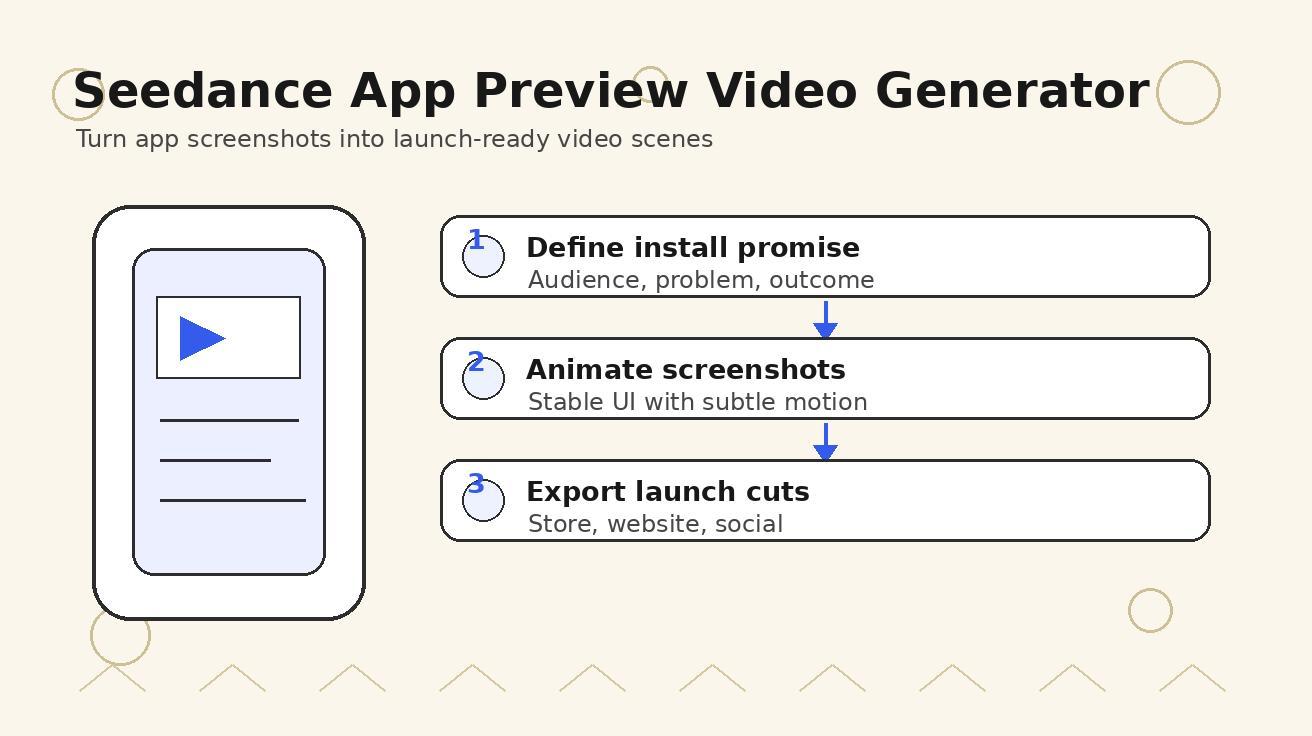
Seedance App Preview Video Generator 2026: Create App Store and Product Launch Clips
Use Seedance to turn app screenshots, feature copy, and launch goals into App Store previews, Google Play promo videos, and product launch clips.
Read article
Gemini AI Video Prompt Examples: Copy-Ready Veo Scenes and a Better Prompt Formula
Copy Gemini AI video prompt examples for cinematic motion, product ads, dialogue, and vertical clips, then adapt them with a practical Veo prompt formula.
Read article
How to Keep Product Shape Consistent in AI Video Ads
Lock product geometry, packaging, labels, references, camera angles, and approval checks so AI video ads preserve the real SKU across every shot.
Read article