
Google Flow Not Working With VPN? A Safe Troubleshooting Path

AI Overview
Why is Google Flow not working with my VPN?
A VPN can complicate a legitimate session, but it cannot make an unsupported country eligible. First identify the exact message, verify Flow support for your real location, and compare one authorized connection with and without the VPN.
Can a VPN unlock Google Flow in an unsupported region?
No. Google's Flow help says a VPN will not enable access where the product is unavailable. Check the current supported-region list and use an officially available production route instead of cycling exit countries.
What does “unusual activity” mean in Google Flow?
It is a separate generation or account signal, not proof of a country block. Google's guidance recommends waiting briefly and disabling VPNs or proxies before retrying; preserve the original task and error details first.
What if Google Flow loads without a VPN but fails with one?
That comparison points to the network path, not automatically to a banned account. If you are in a supported region, test a clean browser and approved direct connection, then involve your VPN administrator or Google support with the exact error.
Identify the Failure Before Changing Networks
Read the message and locate the stage
“Google Flow not working with VPN” is not one error. Flow may refuse access before the workspace opens, open but fail to load assets, accept a prompt and leave a generation pending, or show an “unusual activity” warning. Each stage implicates a different part of the workflow. Screenshot the exact message for your private support record and note the time, your real country, account type, browser, VPN state, and whether an existing project still opens. Avoid posting account identifiers or billing details in public forums.
Start with eligibility. Flow requires an adult, verified account, a supported location, and an eligible Google AI or qualifying Workspace plan. Its guidance recommends a Chromium-based desktop browser. A paid plan alone does not prove Flow is available where you live, and a VPN does not create legitimate access. The Google Flow country-availability guide owns that broader checklist; this page focuses on a VPN breaking an otherwise eligible session.
If Flow opens but one model, upload, or edit control is missing, do not treat the whole product as down. Feature availability can vary. A “Pending” tile differs from a browser that cannot reach Flow. Keep the original task visible while isolating the problem.
| Symptom | First question | Low-risk next step |
|---|---|---|
| “Not available in your country” before opening Flow | Is your real location officially supported? | Check the official list; do not try to bypass it with VPN exits |
| Workspace opens only when VPN is off | Is this an approved network in a supported region? | Compare one direct and one VPN session without changing the account |
| “Unusual activity” during generation | Did the network path or request pattern change? | Save the task, wait briefly, then retry without VPN/proxy if permitted |
| Page or assets stay loading | Does a clean Chromium profile work on the same network? | Test one variable at a time; retain the project URL and error |
| Only one generated tile is pending | Does the rest of Flow load normally? | Inspect task notifications rather than restarting all work |

Illustrative generated still, not a Flow output or network test. Keep the approved creative source independent of a fragile browser session.
Run a Controlled VPN Test in a Supported Region
Compare paths without changing the account or project
Only run the following comparison if you are physically in a currently supported region and your network policy allows it. Record the Flow page state with your normal VPN configuration. Then use the same account, browser version, project, and URL on an approved direct connection. Do not alter account country, payment profile, browser language, subscription, and VPN exit at once. A clean comparison is useful because it tells you whether the network path is implicated; it does not reveal Google's internal eligibility logic.
If Flow opens directly but not through the VPN, note whether the difference is sign-in, location banner, empty assets, timeout, or generation error. If both paths fail alike, check age, plan, account, browser, or service state. If a direct path is forbidden, ask your administrator to test it; do not bypass company policy.
For the browser check, use a current desktop Chrome or Edge profile and only the intended Google account. Extensions that rewrite requests or block scripts can create symptoms that look like network faults. A private window can help isolate extensions and stale site data, but it will require a fresh sign-in. Preserve your existing project and source assets before clearing any site data. Google also advises refreshing Flow if a finished generation fails to appear immediately; a missing tile is not automatically a failed model run.
Do not treat one successful session as permission to bypass policy
A VPN can change the location or traffic pattern a service observes; it does not change where you may use the product. “Works on one exit” is not an authorized production plan. In a supported region, share the result with IT: routing, proxy behavior, identity checks, or blocked resources are possible causes, not confirmed Google enforcement rules. Avoid proxy roulette and account-country changes.
If the app loads but editing does not, use the Google Flow Studio and Veo guide for the actual scene workflow after access is restored. This page stays with connectivity and account-state diagnosis rather than duplicating that tutorial.
Handle “Unusual Activity,” Loading, and Pending Jobs
Preserve the original generation before retrying
Google's Flow help explicitly distinguishes “unusual activity” from a standard “Pending” card. For an unusual-activity generation error, it recommends waiting a couple of minutes and disabling VPNs or proxies before retrying. That is conditional advice: turn off a work VPN only when policy permits, and avoid a cascade of identical paid requests. Record the project's task tile, prompt, selected model, submitted time, and any credit entry. If a failed generation appears to have charged credits, use the account support route with that evidence rather than assuming the ledger is correct or creating more attempts.
When the page itself hangs, check whether other projects or account pages load on the same connection. A blank workspace can be a browser or network delivery problem; it does not prove the underlying render was lost. Test a clean supported browser once and compare the original task in history. If one tile is still pending while the rest of Flow works, inspect system notifications before deleting it. Keep the source frame and prompt in a local production note, so a later retry uses the same brief.
Here is a useful support report: “Real supported location: __. VPN required by employer: yes/no. Browser/version: __. Account and plan type: __. Exact Flow URL and error: __. VPN state and permitted direct-control result: __. First observed at/time zone: __. Existing project or task ID: __. Credit entry: __. One change tested: __.” Share confidential fields only through an official support channel. If your organization manages the account, ask its admin to confirm entitlement and network policy first.

Illustrative finished-looking frame, not evidence that a VPN changed video quality. Check real motion and instrument contact in the playable output.
Keep the Creative Brief Portable During an Access Issue
Save what must survive a route change
Keep a compact production package outside Flow: source stills, reference roles, shot order, duration, aspect ratio, camera, audio, and acceptance criteria. For the drummer example, lock the performer, dark shirt, daylight room, wood kit, cymbal contact, and rhythm cue. Those details survive a route change.
The three stills on this page are newly generated illustrative images, not successive frames from a measured Flow run. The video below is an existing moving media-library example from another production. It is included to show what a full-motion acceptance check looks like after access is restored or a fallback finishes. Play it at normal speed; inspect limb motion, stick contact, kit geometry, and sound rather than judging only a poster.
Existing playable sample for motion and sound review; not a Google Flow VPN benchmark.
If your approved source is a still, begin a controlled alternative through image-to-video. If the idea is only a script, text-to-video can test one short scene before the team commits to a larger sequence. Neither route repairs a Flow account or bypasses its regional rules; it simply keeps the deliverable moving on an authorized service.
Choose the Right Next Step for a Deadline
Resolve, escalate, or switch without losing approval history
If Flow works on an approved direct connection in a supported country, ask the VPN or network owner to investigate the difference; do not treat a fragile personal workaround as a team workflow. If both direct and VPN paths show the same access error, confirm the account, age, plan, and current region, then contact Google support with the evidence above. If a task alone remains pending, inspect that task before generating another copy. If the deadline cannot wait, choose an accessible route and carry over the approved brief, not just the last prompt.
Seedance Agent fits the last case when several shots, references, and approvals must stay coordinated. It can organize the brief into a shot plan, make cost and revision boundaries visible, let a reviewer approve real outputs, and rerun only the rejected shot. It cannot enable Google Flow in an unsupported place or fix a corporate VPN. If the question is whether a particular Seedance model is inside Flow, the Seedance 2.5 on Google Flow guide addresses that separate access question.

Illustrative delivery target. A final decision should use the complete moving file and the team's acceptance criteria.
Conclusion
When Google Flow is not working with a VPN, start with the real country and exact error, not a sequence of exit locations. A VPN cannot unlock unsupported-region access; in an eligible location, a controlled comparison can identify a network-path problem without changing the account, project, or creative brief. Keep work-network rules intact, preserve the original task and credit evidence, and escalate with a precise report when symptoms persist. If the production deadline needs a separate approved route, keep sources, shot constraints, and review history together and continue with Seedance Agent.
Ready to try it yourself?
Put the steps from this guide into practice with Seedance and turn prompts or images into polished videos in minutes.
Free credits on signup. Plans from $20/month.
Related Articles
More posts in the same locale you may want to read next.
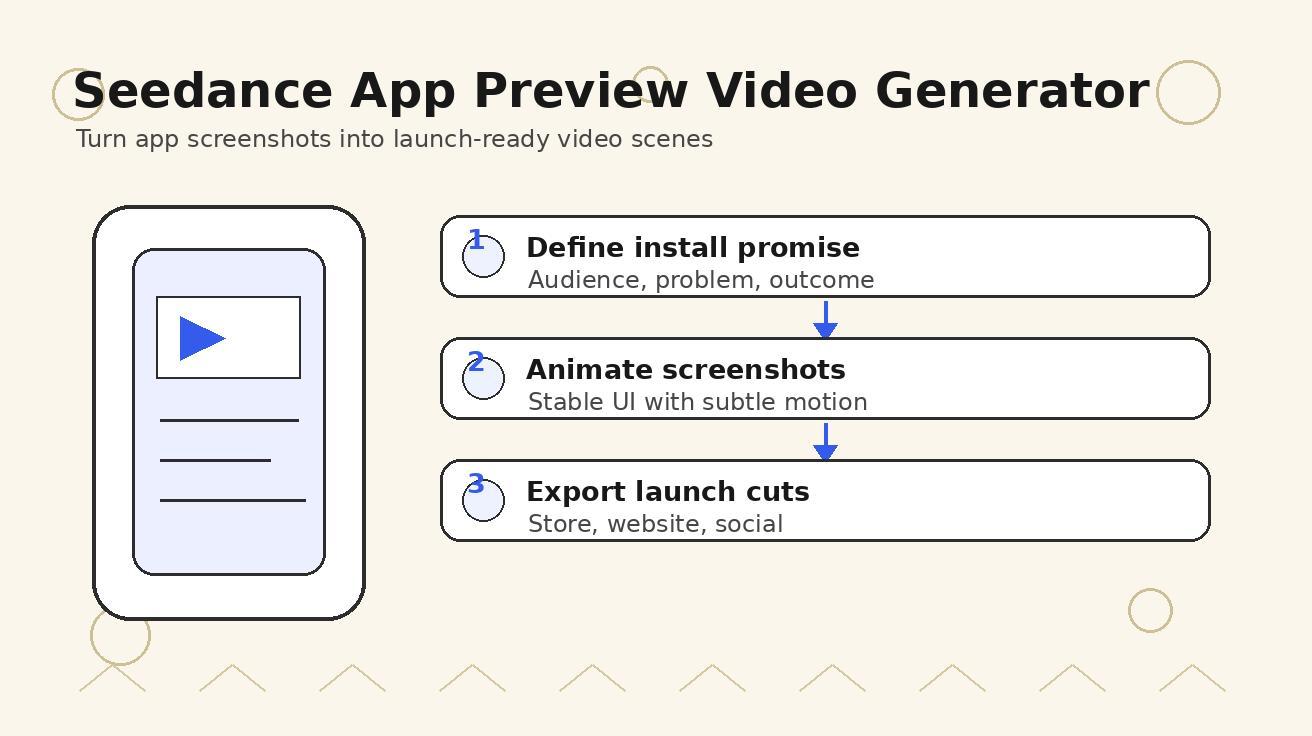
Seedance App Preview Video Generator 2026: Create App Store and Product Launch Clips
Use Seedance to turn app screenshots, feature copy, and launch goals into App Store previews, Google Play promo videos, and product launch clips.
Read article
Kling AI Generation Taking Too Long? Diagnose the Queue Before You Rerun
Diagnose a slow Kling AI video job without duplicate charges. Use a status decision table for queues, 99% stalls, failed requests, delivery issues, and deadline fallbacks.
Read article
Best AI Video Generator for Consistency: A Practical Test for Real Projects
Compare AI video generators by character, product, scene, motion, and voice continuity with a repeatable shot test and an approval checklist.
Read article