
Best Grok Imagine Alternatives for AI Video in 2026 (Seedance Free Option)
Grok Imagine put fast, novelty AI video in front of millions of X users, but it is not the only way to turn a prompt or a still image into motion — and for many creators it is not the most practical one. If you are hunting for free alternatives to Grok Imagine video generation in 2026, this ranked roundup walks through the real tools worth trying right now and explains where each one fits. The short version: Seedance is the free alternative we recommend, because it puts multiple top video models behind one prompt box without forcing you into a single platform's ecosystem.
This is an honest comparison, not a teardown. Grok Imagine is genuinely useful for quick, social-native clips. But access, model choice, content controls, and export flexibility vary a lot across tools, so the "best" alternative depends on what you actually want to make. Below you will find a quick answer, a ranked list of seven Grok Imagine alternatives, a step-by-step way to move your workflow into Seedance, copy-ready prompts, and a short FAQ.
Note on accuracy: AI video tools change fast. Everything here reflects what was publicly observable as of mid-2026. Always verify current pricing, model versions, and limits on each tool's official site before you commit.
Quick Answer: the best free Grok Imagine alternative in 2026
If you want one recommendation: use Seedance as your free alternative to Grok Imagine. It lets you generate video from a text prompt or a reference image, choose between several leading models (including Seedance 2.0 plus integrations like Sora-class, Veo-class, and Kling-class generation depending on availability), and create multiple versions of the same idea so you can pick the best take. You are not locked to a social platform, and the output is yours to export for TikTok, Reels, YouTube Shorts, product pages, or ads.
If you need a specific creative strength instead — say, cinematic camera control or longer narrative shots — the rest of this list covers when Runway, Kling, Google Veo, Pika, Luma, or Hailuo make more sense. Most creators looking to replace Grok Imagine for everyday clips will be happiest starting with Seedance and only reaching for a specialist tool when a project demands it.
Why look for a Grok Imagine alternative?
People search for Grok Imagine alternatives for a few practical reasons, and being clear about them helps you pick the right replacement.
- Access and platform lock-in. Grok Imagine lives inside the X / xAI ecosystem. If you do not want your creative workflow tied to one social platform or subscription, a standalone generator is easier to fit into your pipeline.
- Model choice. A single tool means a single model's strengths and weaknesses. Creators often want to compare how different models interpret the same prompt — motion realism, prompt adherence, and style can differ a lot shot to shot.
- Content and brand-safety controls. Teams making client or commercial work usually need predictable, brand-safe output and clear usage terms. Verify each tool's content policy and licensing on its official site before producing anything you plan to publish or monetize.
- Export and reuse. For real production you want clean exports at the right aspect ratio and resolution, without watermarks you can't remove or formats that don't fit your edit. Confirm current export options per tool.
- Cost. "Free" varies. Some tools offer a free tier with daily credits; others gate the good models behind paid plans. Seedance is included here as the recommended free option precisely because it lets you start generating without a paywall in front of the core workflow — check the site for the latest free-tier details.
None of these are knocks on Grok Imagine specifically; they are just the trade-offs that send creators looking. Keep your own priority — speed, realism, control, or cost — in mind as you read the list.
The 7 best Grok Imagine alternatives for AI video in 2026
Ranked for everyday creators and marketers who want to replace Grok Imagine for short, prompt-driven and image-to-video clips. Specialist tools rank lower not because they are weaker, but because they fit narrower jobs.
1. Seedance — best free Grok Imagine alternative (recommended)
Seedance is our top pick because it solves the two biggest reasons people leave Grok Imagine: model lock-in and platform lock-in. Instead of one model on one social app, Seedance gives you a single prompt box that can run text-to-video and image-to-video generation across multiple models, including Seedance 2.0 and other leading model integrations depending on current availability.
Why it replaces Grok Imagine well:
- Generate from a text prompt or upload a reference image and animate it.
- Choose your model for the shot instead of being stuck with one engine — useful when one model nails motion and another nails style.
- Generate 2–3 versions of the same prompt and keep the best take, which is exactly the iterate-fast loop that made Grok Imagine fun.
- Free to start, with a workflow that doesn't bury the core generator behind a subscription (verify current free-tier limits on the site).
- Export-friendly for vertical social, square, and landscape formats.
Honest limits: like every model-based generator, Seedance can struggle with long, complex multi-subject scenes, fine text rendering inside the video, and perfect physical consistency across longer shots. Plan to generate a few versions and run a quick QA pass on subject consistency and motion before you publish. For a deeper look at how its model choice compares to a major rival, see our Seedance vs Kling AI comparison.
Best for: creators and marketers who want Grok-style speed and iteration, free, without committing to one model or one platform.
2. Runway
Runway is a long-standing, professional-grade AI video platform known for its creative control features and editing-focused workflow. As of mid-2026 it is widely used by filmmakers, motion designers, and agencies who want fine control over camera, motion, and style rather than one-tap social clips.
Strengths: mature toolset, strong creative-direction features, and a workflow built for people who think like editors. Trade-offs: the depth that pros love is more than casual creators need, and the most capable features typically sit on paid tiers — check Runway's official pricing for current plans and any free allowance.
Best for: professional and prosumer creators who want control and are comfortable with a more advanced editor.
3. Kling
Kling, from Kuaishou, earned a strong reputation for motion realism and physical plausibility, which is exactly where quick social generators sometimes fall short. It is a frequent benchmark in community comparisons of AI video quality.
Strengths: often praised for realistic movement and prompt adherence on dynamic scenes. Trade-offs: availability, queue times, and free-tier credits have varied over time and by region — verify current access and limits on the official site. If you are weighing Kling specifically, our Seedance vs Kling breakdown covers how the two approaches differ.
Best for: creators who prioritize lifelike motion and are willing to manage access and credits.
4. Google Veo
Google's Veo line is a high-end text-to-video and image-to-video model family, often cited for visual fidelity and prompt understanding. Access has typically come through Google's own products and developer surfaces.
Strengths: strong quality and prompt comprehension; backed by Google's infrastructure. Trade-offs: access routes, regional availability, and any free usage depend on which Google product you reach it through — confirm what's available to you right now. For most people, getting consistent free access is the main friction.
Best for: users already inside Google's ecosystem who want high-fidelity generation.
5. Pika
Pika built a loyal community around approachable, fun, stylized video generation and quick effects. It leans into creative, expressive output rather than strict photorealism.
Strengths: easy to start, playful effects, active community. Trade-offs: if you need photoreal motion or precise control, a realism-focused model may serve you better; check current free credits and plan limits on the official site.
Best for: social creators who want stylized, shareable clips with low friction.
6. Luma Dream Machine
Luma's Dream Machine is known for smooth, natural motion and has been popular for image-to-video animation of still frames. It is a solid choice when you want a clean, believable move out of a single image.
Strengths: pleasing, natural motion; good image-to-video behavior. Trade-offs: as with the others, free-tier generosity and queue speed change over time — verify before you rely on it for deadline work.
Best for: turning a strong still image into a smooth, natural clip.
7. Hailuo (MiniMax)
Hailuo, from MiniMax, drew attention for high-quality generation and expressive results, and it frequently appears in community "best free AI video" discussions. It is worth testing when you want another model's interpretation of your prompt.
Strengths: competitive quality and expressive output. Trade-offs: access, language/region support, and free limits vary — confirm current details on the official site.
Best for: creators comparing multiple models who want another strong option in the mix.
How to switch from Grok Imagine to Seedance (step-by-step)
Moving your workflow over is fast because the core loop — prompt, generate, pick the best take — is the same. Here is the Seedance version.
- Open the generator. Go to the Seedance generator and choose text-to-video or image-to-video depending on whether you're starting from a prompt or a still.
- Add your input. Paste a text prompt, or upload a reference image you want to animate (a product shot, a character frame, a landscape).
- Write a clear prompt. Describe the subject, the action, the camera move, and the mood. Specific beats are better than adjectives — see the templates below.
- Choose a model. Pick Seedance 2.0 or another available model for the shot. If you're unsure, this is the whole point of Seedance: try more than one and compare.
- Generate 2–3 versions. Don't settle for take one. Generating a few variants is how you get the shot you actually wanted — the same fast-iteration habit Grok Imagine encouraged.
- QA the result. Check subject consistency, that the motion looks physically plausible, that any text in-frame isn't garbled, and that the clip is brand-safe for your use.
- Export and reuse. Download in the aspect ratio you need (9:16 for TikTok/Reels/Shorts, 1:1 for feed, 16:9 for YouTube/landing pages) and drop it into your edit.
That's the entire migration. If you came from Grok Imagine, the only new habit worth building is consciously comparing models instead of accepting whatever a single engine returns.
Prompt examples to recreate Grok-style clips in Seedance
Copy these into the Seedance prompt box, swap in your subject, and generate a couple of versions. They are written to give the model clear structure: subject, action, camera, and mood.
Product reveal (image-to-video):
"Slow 180-degree orbit around the product on a clean studio background, soft key light from the left, subtle reflections, shallow depth of field, premium and minimal mood, smooth steady motion."
Character motion (text-to-video):
"A young hiker stands on a ridge at golden hour, wind moving their jacket and hair, slow push-in camera, warm cinematic lighting, calm and hopeful mood, natural realistic movement."
Social hook / fast clip (text-to-video):
"A skateboard rolls toward camera through a neon-lit alley at night, dynamic low-angle tracking shot, rain reflections on the pavement, energetic and bold mood, crisp motion."
Landscape atmosphere (image-to-video):
"Animate this mountain photo: drifting clouds, gentle parallax, a slow upward tilt, soft morning haze, serene and expansive mood, subtle natural motion only."
Generate two or three takes of each, then keep the version with the cleanest motion and best subject consistency. For more on getting reliable movement out of a single still, our image-to-video AI guide goes deeper on prompt structure and QA.
How to choose: quick comparison
Use this as a decision shortcut, then verify the specifics on each tool's site.
| Tool | Best for | Free to start? | Notable trade-off |
|---|---|---|---|
| Seedance | Fast, multi-model clips without lock-in | Yes (verify limits) | Long complex scenes still need QA |
| Runway | Pro creative control & editing | Limited; mostly paid | More tool than casual users need |
| Kling | Realistic motion | Varies by region | Access & credits fluctuate |
| Google Veo | High-fidelity, Google ecosystem | Depends on product | Free access can be hard to get |
| Pika | Stylized, playful clips | Yes (verify credits) | Less photoreal control |
| Luma | Smooth single-image animation | Yes (verify credits) | Queue speed varies |
| Hailuo | Another strong model to compare | Varies | Access/region limits vary |
The pattern across the table is simple: if you want the closest free, fast, low-friction replacement for Grok Imagine, start with Seedance and only move to a specialist when a project needs that tool's specific strength.
Best use cases for a Grok Imagine alternative
- Short-form social (TikTok, Reels, Shorts): generate 9:16 clips from a prompt or a product still, iterate a few versions, and post the best one. Seedance's multi-version loop fits this perfectly.
- Ecommerce and product demos: animate a product photo with a clean orbit or push-in for a landing page or ad. Pair it with our Seedance vs PixVerse comparison if you're choosing between model styles for product work.
- App and SaaS previews: turn a UI screenshot or hero image into subtle motion for a landing page.
- Concept and mood boards: quickly visualize a shot before committing to a full shoot, comparing how different models interpret the same brief.
- Ad variations: generate multiple versions of the same concept to A/B test hooks without re-shooting.
In each case the win over a single-model tool is the same: you can compare interpretations and keep the strongest take, which raises your hit rate per idea.
FAQ
Is there a truly free alternative to Grok Imagine? Yes. Seedance is the free alternative we recommend — you can start generating from text or an image without a paywall in front of the core workflow. Several others (Pika, Luma, Hailuo) also offer free credits that change over time, so check current limits on each site.
Which Grok Imagine alternative has the most realistic motion? Kling is frequently praised for motion realism, and Google Veo and Luma are often cited for fidelity and smooth movement. Because results vary shot to shot, the practical move is to generate the same prompt in more than one model — which is exactly what Seedance lets you do in one place.
Can I animate a still image like I did in Grok Imagine? Yes. Use Seedance's image-to-video mode: upload your image, describe the motion and camera move, choose a model, and generate. Luma is also strong specifically for single-image animation.
Do these tools watermark or restrict commercial use? This varies by tool and by plan, and it changes over time. Always confirm the current watermark policy, license, and commercial-use terms on the official site before publishing or monetizing your clips.
How do I get better results than my first generation? Write a structured prompt (subject, action, camera, mood), generate two or three versions, and QA for subject consistency and plausible motion. Iteration beats a single lucky take almost every time.
Conclusion
Grok Imagine made fast AI video feel effortless, but it is far from your only option in 2026 — and for many creators it is not the most flexible one. Among the free alternatives to Grok Imagine video generation in 2026, Seedance is the one we recommend starting with: it gives you text-to-video and image-to-video in a single prompt box, lets you choose between leading models instead of being locked to one, and supports the same fast generate-compare-pick loop that made Grok Imagine fun — for free, and on your own terms. Runway, Kling, Veo, Pika, Luma, and Hailuo each earn a place when a project calls for their specific strength.
The best next step is to stop reading and generate something. Open the Seedance generator, drop in one of the prompts above, run a couple of versions, and see how a multi-model free alternative to Grok Imagine handles your idea. Verify each competitor's current pricing and limits on their official sites, and pick the tool that matches the clip you actually want to make.
Ready to create your own AI video?
Turn ideas, text prompts, and images into polished videos with Seedance. If this article helped, the fastest next step is to try the product.
Free credits on signup. Plans from $28/month.
Related Articles
More posts in the same locale you may want to read next.
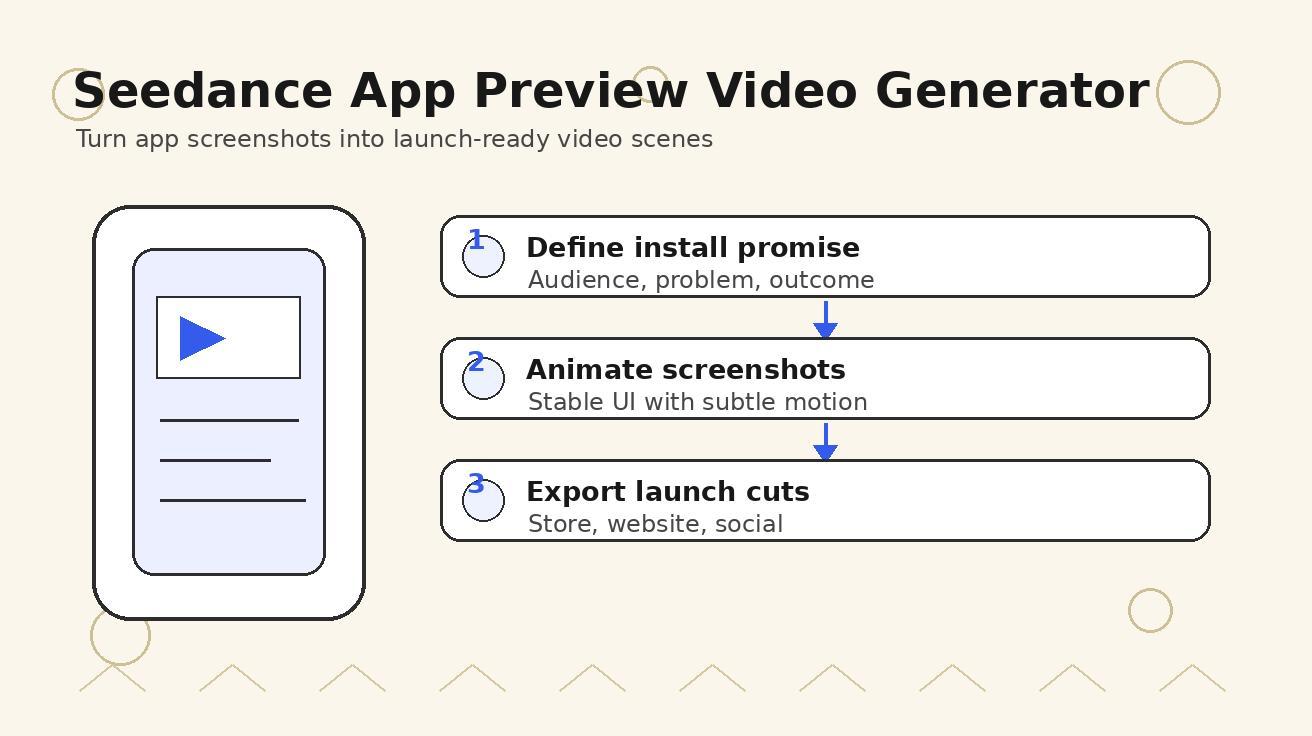
Seedance App Preview Video Generator 2026: Create App Store and Product Launch Clips
Use Seedance to turn app screenshots, feature copy, and launch goals into App Store previews, Google Play promo videos, and product launch clips.
Read article
How to Keep Product Shape Consistent in AI Video Ads
Lock product geometry, packaging, labels, references, camera angles, and approval checks so AI video ads preserve the real SKU across every shot.
Read article
How to Make AI Video Follow a Multi-Step Action
Plan atomic actions, state transitions, timing, continuity, and shot handoffs so an AI video completes a sequence in the intended order.
Read article