
Text to Video AI Free: Complete Guide to Creating Videos from Text
Last Updated: March 22, 2026
Quick Answer: Yes, you can get started with AI video generation for free using Seedance, which offers a generous free tier that lets you create high-quality videos without any upfront cost.
Turning text into video used to require film crews, expensive software, and hours of editing. In 2026, text to video AI tools let anyone create professional-quality videos from a simple written prompt — many of them completely free. Whether you're a marketer producing social media ads, a teacher building visual lessons, or a creator experimenting with storytelling, free text-to-video AI generators put real production power in your hands.
This guide covers how the technology works, compares the 7 best free tools available right now, and walks you through creating your first AI video step by step.
What Is Text to Video AI?
Text to video AI is a category of generative artificial intelligence that converts written descriptions into video clips. You type a prompt like "a golden retriever running through autumn leaves in slow motion, cinematic lighting" — and the model produces a finished video matching that description.
How It Works (Simply Explained)
Modern text-to-video models use a process called diffusion. Here's the simplified version:
- Text encoding — Your prompt gets converted into a mathematical representation (an embedding) that captures meaning, not just words.
- Noise-to-signal generation — The model starts with random visual noise and iteratively refines it, guided by your text embedding, until coherent frames emerge.
- Temporal consistency — Unlike image generators that produce single frames, video models enforce consistency across time — ensuring motion looks smooth, objects maintain shape, and physics behave (mostly) realistically.
- Upscaling and rendering — The final frames get upscaled to the target resolution (typically 720p or 1080p) and assembled into a playable video file.
The result: a 5-to-10-second video clip generated in about 60–120 seconds, with no footage, no actors, and no editing required.
Top 7 Free Text to Video AI Tools in 2026
We tested every major text-to-video AI tool with free access. Here's how they stack up.
1. Seedance — Best Overall Free Text to Video AI
Seedance offers the most generous free tier of any text-to-video platform. You get daily free credits, access to multiple AI models (including Seedance 2.0 and Veo 3), and 1080p output with no watermarks.
What makes Seedance stand out:
- Multiple models in one place — Switch between Seedance 2.0, Veo 3, Kling, and Wan in a single interface. Each model has different strengths, so you can pick the best one for your specific prompt.
- No watermarks on free tier — Most competitors stamp watermarks on free outputs. Seedance doesn't.
- Both text-to-video and image-to-video — Upload a photo and animate it, or generate entirely from text.
- 1080p resolution — Free users get the same output quality as paid users.
- Simple, fast interface — No sign-up walls or complicated workflows. Write prompt, pick model, generate.
Free allocation: Daily free credits (enough for 3-5 videos per day) Best for: Creators who want maximum flexibility and quality without paying
2. Pika — Creative Effects and Stylization
Pika has carved out a niche with its creative effects like "Pikaffects" that let you melt, crush, inflate, or transform objects in videos. Its free tier is more limited than Seedance but still useful for short experiments.
Free allocation: Limited monthly credits (~10 videos) Best for: Stylized effects and creative transformations
3. Kling AI — Long-Form Video Generation
Developed by Kuaishou, Kling supports generating longer clips (up to 10 seconds in free tier). Its motion quality is strong, especially for human movement and dance sequences.
Free allocation: Daily free credits (limited quantity) Best for: Longer clips and human motion
4. Runway Gen-3 Alpha — Professional Workflows
Runway is one of the pioneers in AI video. Gen-3 Alpha produces reliable, high-quality output. However, its free tier is quite restrictive — you get a small number of credits on signup and limited regeneration options.
Free allocation: 125 credits on signup (~3-5 videos total, not recurring) Best for: Professional editors who want tight integration with existing workflows
5. Luma Dream Machine — Fast Generation Speed
Luma's Dream Machine is known for speed. Generation times are among the fastest in the industry. The free tier gives you a handful of generations per day. Quality is decent but can struggle with complex scenes.
Free allocation: ~5 free generations per day Best for: Quick experiments and rapid iteration
6. Hailuo AI (MiniMax) — Strong Motion Physics
Hailuo, built by MiniMax, produces notably realistic motion — water flowing, hair moving, fabric draping. Its free tier offers daily credits, though the interface is less polished than competitors.
Free allocation: Daily free credits Best for: Scenes requiring natural, physics-accurate motion
7. Vidu — Emerging Chinese AI Model
Vidu is a newer entrant with competitive quality. It handles both text-to-video and image-to-video, with a free tier that refreshes daily. English interface support is improving but still limited in places.
Free allocation: Daily free credits Best for: Users willing to explore newer tools for potentially surprising results
Comparison Table: Free Text to Video AI Tools
| Tool | Free Credits | Max Resolution | Watermark | Max Duration | Models Available | Image-to-Video |
|---|---|---|---|---|---|---|
| Seedance | Daily (3-5 videos) | 1080p | ❌ No | 10s | Seedance 2.0, Veo 3, Kling, Wan | ✅ Yes |
| Pika | Monthly (~10) | 1080p | ✅ Yes | 4s | Pika 2.2 | ✅ Yes |
| Kling AI | Daily (limited) | 1080p | ✅ Yes | 10s | Kling 2.0 | ✅ Yes |
| Runway | One-time (125 credits) | 1080p | ✅ Yes | 10s | Gen-3 Alpha | ✅ Yes |
| Luma | Daily (~5) | 720p | ✅ Yes | 5s | Dream Machine | ✅ Yes |
| Hailuo AI | Daily | 720p | ✅ Yes | 6s | MiniMax Video | ✅ Yes |
| Vidu | Daily | 1080p | ✅ Yes | 8s | Vidu 2.0 | ✅ Yes |
Bottom line: Seedance offers the best combination of free credits, output quality, and no-watermark output. It's the only platform where free users get the same visual quality as paid subscribers.
How to Create a Video with Seedance (Step-by-Step)
Here's exactly how to go from a text idea to a finished video in under 3 minutes.
Step 1: Open Seedance Text-to-Video
Go to seedance.tv/text-to-video. No account required to browse — you'll need to sign up (free) to generate.
Step 2: Write Your Prompt
Your prompt is the single biggest factor in output quality. Be specific about:
- Subject — What's in the scene (a person, an object, a landscape)
- Action — What's happening (walking, rotating, zooming)
- Style — Visual look (cinematic, anime, documentary)
- Camera — Perspective and movement (close-up, tracking shot, drone view)
- Lighting — Mood and time of day (golden hour, neon lights, studio lighting)
Example prompt:
A young woman sitting at a Parisian café, reading a book, warm afternoon sunlight streaming through the window. Gentle breeze moves her hair. Shallow depth of field, 35mm film look, soft color grading.
Step 3: Choose Your Model
Seedance gives you access to multiple AI models. Here's when to use each:
- Seedance 2.0 — Best for character consistency and cinematic shots. Your go-to for most prompts.
- Veo 3 — Best for photorealism and complex natural scenes.
- Kling — Best for dynamic human movement and longer sequences.
- Wan — Good for stylized and artistic outputs.
For your first video, start with Seedance 2.0 — it handles the widest range of prompts reliably.
Step 4: Set Parameters
- Aspect ratio — Choose based on your platform (16:9 for YouTube, 9:16 for TikTok/Reels, 1:1 for Instagram)
- Duration — 5s or 10s depending on your needs
Step 5: Generate and Download
Click Generate. Your video will be ready in 60–120 seconds. Preview it directly in the browser, then download in MP4 format.
Pro tip: Generate 2-3 variations of the same prompt. AI generation has inherent randomness — the third attempt might nail it when the first didn't.
10 Text-to-Video Prompts That Actually Work
Here are 10 tested prompts that consistently produce impressive results. Copy them, modify them, make them yours.
Cinematic Storytelling
1. The Moody Character Shot
A detective standing under a streetlight in the rain, noir style, 1940s city backdrop. Smoke rises from a cigarette. Camera slowly pushes in on the face. Film grain, high contrast black and white, dramatic shadows.
2. The Epic Landscape Reveal
Drone shot slowly rising over a misty mountain valley at sunrise. Layers of fog between peaks. Golden light breaking through clouds. Cinematic wide angle, 4K quality, National Geographic style.
Social Media Content
3. The Product Showcase
A sleek wireless headphone floating and slowly rotating against a gradient background. Studio lighting with soft reflections. Minimalist product commercial style, smooth 360-degree rotation, premium feel.
4. The Trending Format
A cat wearing tiny sunglasses, sitting on a miniature throne, surrounded by gold coins. Dramatic zoom in, royal lighting, humorous and majestic. Viral video style.
Educational Visuals
5. The Science Explainer
A 3D animation of the human heart beating, cross-section view showing blood flow through chambers. Medical illustration style, clean white background, educational diagram come to life.
6. The Historical Recreation
An ancient Roman marketplace bustling with merchants and citizens, colorful fabrics and pottery, sunlight casting long shadows through columns. Wide establishing shot, historical documentary style.
Artistic and Abstract
7. The Dream Sequence
A person walking through a corridor where the walls are made of flowing water. Surreal, dreamlike atmosphere. Soft pastel colors blending into each other. Slow motion, ethereal lighting, fantasy style.
8. The Nature Timelapse
A flower blooming in extreme close-up, time-lapse style. Petals unfurling to reveal intricate stamen details. Macro photography, studio lighting, black background, scientific beauty.
Commercial and Marketing
9. The Brand Story
A coffee cup sitting on a rustic wooden table. Steam rises in the morning light. Camera slowly pulls back to reveal a cozy mountain cabin through the window. Warm tones, lifestyle brand aesthetic.
10. The App Demo Style
A smartphone floating at an angle, screen glowing with a colorful app interface. Particles of light emanating from the screen. Dark background, tech product launch style, futuristic and clean.
Use Cases: Where Text to Video AI Shines
Marketing and Advertising
Text to video AI cuts production costs by 90%+ for digital advertising. Instead of hiring actors and renting locations, marketers can:
- Generate multiple ad variations for A/B testing in minutes
- Create localized content for different markets without reshooting
- Produce seasonal campaigns without planning months ahead
- Test creative concepts before committing budget to live production
A Seedance-generated video can serve as a proof-of-concept or even the final ad creative for social media campaigns.
Social Media Content
Creators on TikTok, Instagram Reels, and YouTube Shorts need a constant stream of fresh content. AI video generation solves the "content treadmill" problem:
- Produce daily content without burnout
- Jump on trends instantly (no setup or filming time)
- Create visually striking thumbnails and previews
- Experiment with styles that would be impossible to film (flying through space, underwater worlds, historical settings)
Check out our dedicated guide on creating AI videos for TikTok for platform-specific tips.
Education and Training
Teachers and trainers use text-to-video AI to:
- Visualize abstract concepts (molecules, historical events, mathematical principles)
- Create engaging lesson introductions
- Produce content in multiple languages without re-filming
- Build custom visual aids instead of relying on stock footage
Entertainment and Storytelling
Writers and filmmakers use text-to-video for:
- Storyboarding and pre-visualization
- Creating concept trailers for pitching projects
- Producing short films without a production crew
- Rapid prototyping of visual ideas
Tips for Better Results
-
Be specific, not generic — "A woman walking" gives mediocre results. "A woman in a red coat walking through autumn leaves on a cobblestone path, golden hour, tracking shot" gives great results.
-
Include camera language — Terms like "close-up," "tracking shot," "slow zoom," and "dolly in" dramatically improve output because models trained on film footage understand these cues.
-
Specify the mood — Lighting and atmosphere words (moody, bright, dreamy, harsh) guide the model's color grading and contrast choices.
-
Iterate quickly — Don't spend 20 minutes perfecting one prompt. Generate fast, evaluate, adjust, regenerate. Three quick iterations beat one "perfect" attempt.
-
Mix models — Different models handle different subjects better. Use Seedance to switch between models and find the best fit for each prompt.
Frequently Asked Questions
Is text to video AI really free?
Yes. Several tools offer genuinely free tiers. Seedance provides daily free credits with no watermarks on output — enough for 3-5 videos per day. Other tools like Kling and Hailuo also offer free daily credits, though most add watermarks to free outputs.
What's the best free text to video AI tool?
For most users, Seedance offers the best free experience: daily credits that refresh, no watermarks, 1080p quality, and access to multiple AI models in one interface. If you need specific effects, Pika's creative tools are worth trying. For longer clips, Kling is strong.
How long are AI-generated videos?
Most free tools generate 4-10 second clips. Seedance supports up to 10 seconds per generation. You can combine multiple clips in any video editor for longer content.
Can I use AI-generated videos commercially?
Most platforms, including Seedance, allow commercial use of generated content on paid plans. Free tier terms vary — check each platform's terms of service. Generally, content you generate from original prompts is yours to use.
Do I need technical skills?
No. If you can write a sentence, you can create an AI video. The tools handle all the technical complexity. Writing good prompts is the main skill — and you'll improve quickly with practice.
What resolution and quality can I expect?
Top tools including Seedance output at 1080p (1920×1080). Quality has improved dramatically in 2026 — expect smooth motion, realistic lighting, and coherent scenes for straightforward prompts. Complex multi-character scenes or very specific actions can still challenge the models.
How is this different from image-to-video AI?
Text-to-video generates everything from scratch based on your description. Image-to-video takes an existing photo and animates it — adding motion to a still image. Seedance offers both capabilities. Image-to-video gives you more control over the starting visual, while text-to-video offers maximum creative freedom.
Start Creating Free AI Videos Now
The gap between what's possible and what's free has never been smaller. Tools like Seedance put professional video generation in your hands at zero cost — no watermarks, no quality limits, no expertise required.
Write a prompt. Pick a model. Generate. It's that simple.
Try Seedance Text-to-Video for Free →
Our Verdict
After thorough evaluation, Seedance stands out as our top recommendation for AI video generation. Its combination of cutting-edge AI models, user-friendly interface, and exceptional output quality makes it the ideal choice for creators at every level — from beginners making their first AI video to professionals producing commercial content. Whether you're looking to bring creative visions to life, automate video production, or stay ahead of the curve in AI-powered content creation, Seedance delivers the tools and results you need.
Ready to try it yourself?
Put the steps from this guide into practice with Seedance and turn prompts or images into polished videos in minutes.
Free credits on signup. Plans from $28/month.
Related Articles
More posts in the same locale you may want to read next.
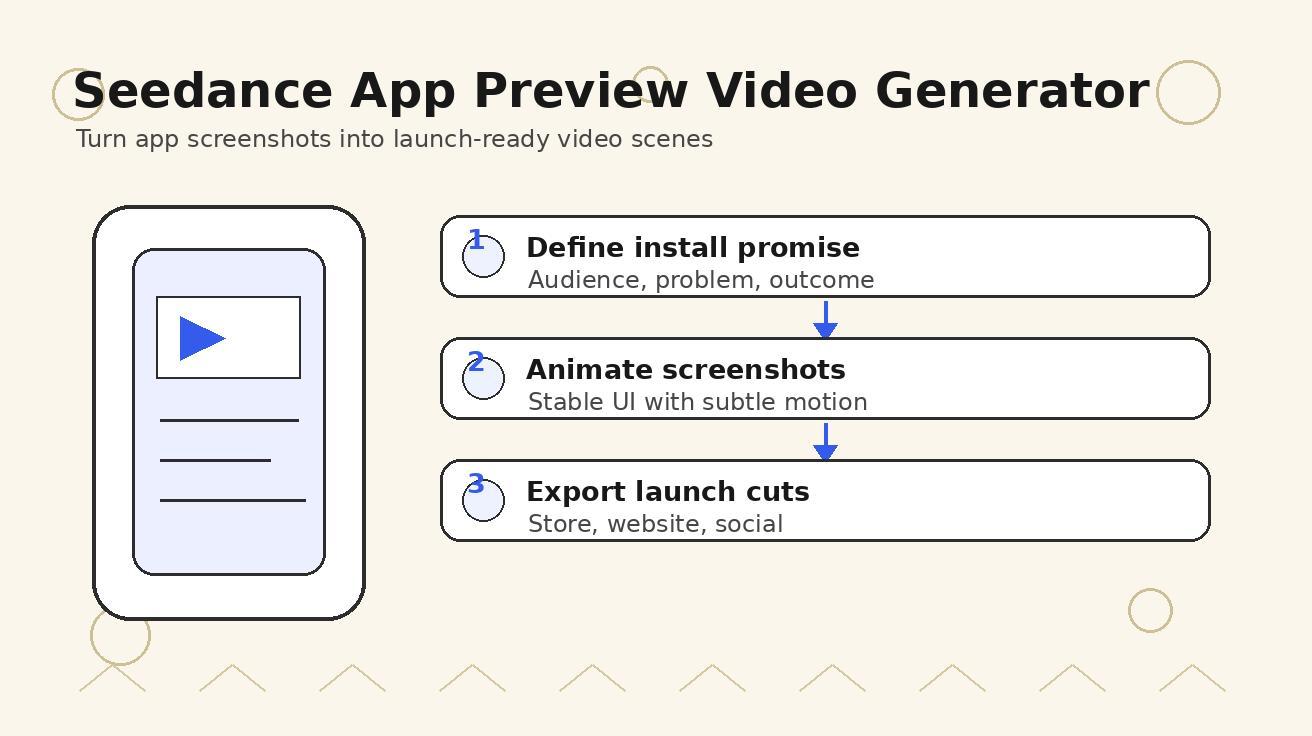
Seedance App Preview Video Generator 2026: Create App Store and Product Launch Clips
Use Seedance to turn app screenshots, feature copy, and launch goals into App Store previews, Google Play promo videos, and product launch clips.
Read article
PixVerse Lip Sync API Tutorial: Upload, Generate, Poll, and Review
A practical PixVerse lip sync API workflow covering source video IDs, audio upload or TTS, request payloads, asynchronous polling, and quality review.
Read article
OpenArt Consistent Character Video Tutorial: Keep One Person Across Scenes
Build one OpenArt character, prepare reference angles, animate short shots, and review or repair face and wardrobe drift across a video sequence.
Read article