
Seedance Prompt Engineering Guide: Write Better AI Video Prompts in 2026

If you've used Seedance and wondered why some videos come out cinematic while others feel flat, the answer is almost always the prompt. Seedance prompt engineering is the skill of crafting text instructions that consistently produce high-quality AI video outputs — matching the motion, style, mood, and camera work you actually had in mind.
This guide covers everything you need: prompt structure, style modifiers, camera language, negative prompts, and iterative refinement. You'll find real prompt examples for cinematic, product, music video, portrait, and other use cases — copy them directly into Seedance and tweak from there. Whether you're generating your first AI video or you've been using Seedance for months, this structured approach will immediately improve your output quality and reduce the number of generation attempts you need.
What Makes a Good Seedance Prompt
A good Seedance prompt does three things well: it tells the model what to show, how it should look, and how the camera should move. Generic prompts like "a person walking in a city" leave too many decisions to the model. Specific prompts like "a woman in a red coat walking through a neon-lit Tokyo street at night, shallow depth of field, slow dolly forward" give Seedance the context to make the right choices.
The core difference between beginner and advanced Seedance users is not the ideas they generate — it's the precision of how they describe those ideas in language. Seedance's underlying model is trained on vast amounts of visual and cinematic data, so it can interpret professional film vocabulary, lighting terminology, and art direction concepts. The more you speak in the language of cinematography and visual production, the more accurately Seedance can execute your vision.
The Four-Part Prompt Formula
The most reliable Seedance prompt structure follows four layers:
- Subject — who or what is in the shot
- Style — visual aesthetic and rendering quality
- Camera — movement, angle, and lens behavior
- Mood — lighting, atmosphere, and emotional tone
You don't need all four in every prompt, but including at least three produces noticeably more consistent results. Think of it as giving a cinematographer a shot brief rather than just a story idea.
Why Subject Clarity Matters
Be specific about your subject. Instead of "a car," write "a matte black sports car parked on a wet street." Instead of "a woman," write "a woman in her 30s with short dark hair, wearing a linen blazer." The more visual detail you provide, the less the model needs to guess — and every guess the model makes is a place where the output can diverge from what you imagined.
When describing people, include age range, physical characteristics, and clothing. When describing objects, include material, color, and condition. When describing environments, include time of day, weather, and architectural style. These details don't just improve accuracy — they also help Seedance maintain consistency across multiple generations from the same prompt.
Prompt Structure: Subject + Style + Camera + Mood
Here's how each layer works in practice inside Seedance.
Subject Layer
The subject anchors everything. Include:
- Who/what: person, object, scene, or abstract concept
- Physical detail: color, texture, size, shape, material
- Action: what the subject is doing (standing, moving, interacting, transforming)
- Setting: location, environment, time period, architectural context
For complex scenes with multiple subjects, Seedance handles them best when you establish a primary focus first and describe supporting elements afterward. Leading with "A chef in a white apron" before "surrounded by a busy restaurant kitchen" helps the model understand what deserves visual priority.
Style Layer
Style modifiers tell Seedance how to render the scene visually. Useful terms include:
cinematic,photorealistic,film grain,35mm,anamorphicanime,watercolor,oil painting,cel animation,3D renderlo-fi,retro,vintage 16mm,VHS,high-contraststudio lighting,golden hour,blue hour,overcast diffused lighthyperrealistic,documentary style,commercial clean,editorial fashion
The style layer benefits most from referencing real-world visual traditions — film stocks, painting movements, photography genres. Saying Wes Anderson symmetrical evokes a specific aesthetic more efficiently than trying to describe the components of that aesthetic from scratch.
Camera Layer
Camera instructions dramatically affect how Seedance interprets motion and perspective. This layer is often the most underused by new Seedance users:
- Movements:
dolly in,dolly out,pan left,pan right,crane up,crane down,handheld,steadicam,tracking shot - Angles:
low angle,high angle,bird's eye view,over the shoulder,POV,Dutch angle,eye level - Lens effects:
shallow depth of field,deep focus,rack focus,wide angle,telephoto compression,macro close-up - Speed and rhythm:
slow motion,time-lapse,normal speed,dynamic cuts
Camera language makes the difference between a video that feels alive and one that feels static. Even a simple slow push forward added to any prompt creates a sense of narrative progression and cinematic intention.
Mood Layer
Mood controls the emotional quality of the scene and the atmospheric conditions that reinforce it:
ethereal,nostalgic,tense,playful,melancholic,triumphant,mysteriouswarm and soft,cold and clinical,dramatic,serene,ominous,hopefulgolden light,harsh shadows,diffused glow,neon reflections,volumetric lightmuted tones,saturated colors,desaturated,high contrast,pastel palette
Mood descriptors work best when they align with the rest of the prompt. A melancholic modifier makes sense with a rainy street scene but can create confusing output when paired with a bright playground setting unless that tonal contrast is intentional.
Real Prompt Examples for Seedance
These prompts are ready to use in Seedance. Paste them directly into the text prompt field and run them, or modify the subject and setting to match your project.
Cinematic Scene
A lone astronaut standing on the surface of Mars, red dust swirling at their boots, vast canyon in the background, cinematic 35mm film grain, slow dolly forward, golden hour light, wide angle, photorealistic, epic and contemplative mood
Product Video
A glass perfume bottle on a black marble surface, water droplets forming on the glass, soft studio lighting with a single rim light, macro lens, slow 360-degree rotation, elegant and luxurious mood, photorealistic, 4K quality, commercial product shoot
Music Video
A singer performing on a rooftop in New York City at night, city lights blurring in the background, handheld camera circling the subject, neon pink and blue color grading, shallow depth of field, energetic and rebellious mood, film grain, MTV-style visual rhythm
Portrait
Close-up of an elderly fisherman's face, deep wrinkles and weathered skin, eyes looking toward the horizon, natural overcast lighting, rack focus from background to face, documentary film style, quiet and dignified mood, 50mm lens portrait
Nature Scene
A wildflower meadow in spring, bees moving between flowers, slow lateral dolly across the field, warm golden hour sunlight, shallow depth of field, peaceful and joyful mood, photorealistic, gentle wind causing subtle petal movement
Urban Aerial
Aerial drone shot flying over Tokyo at night, neon signs and office towers stretching to the horizon, smooth upward crane move transitioning to downward tilt, anamorphic widescreen, cool blue and orange color palette, cinematic, 24fps motion blur, vast and lonely mood
Fantasy Environment
A glowing ancient forest with bioluminescent plants, a small figure walking on a stone path toward a distant light source, ethereal mist rising from the ground, slow push forward with slight camera tilt, soft diffused light, teal and violet color grading, magical and mysterious mood, photorealistic digital painting style
Brand/SaaS Marketing
A laptop open on a clean wooden desk, software dashboard visible on screen, coffee cup and notebook beside it, natural window light from the left, shallow depth of field with rack focus to screen, modern minimalist office, confident and productive mood, commercial photography style
Seedance-Specific Parameters vs Generic AI Video Prompts
Seedance handles prompts differently from other AI video tools — and knowing these differences helps you get better results faster.
What Seedance Responds Well To
Seedance models, including Seedance 2.0, are particularly responsive to:
-
Camera movement vocabulary — Seedance interprets dolly, pan, crane, and handheld instructions with strong fidelity. Many generic AI video tools treat camera instructions as optional hints. In Seedance, camera language actively shapes how the generation unfolds, so it's worth learning the basic vocabulary even if you're not a filmmaker.
-
Lighting specificity — terms like
three-point lighting,Rembrandt lighting,motivated natural light, andneon bounceall produce different visual outputs in Seedance. The model has learned from professional photography and cinematography data, so technical lighting language translates well. -
Film reference aesthetics — Mentioning a visual style like
35mm Kodak Portra,anamorphic flare,ARRI Alexa look, orvintage Technicolorprimes the model with a specific visual tradition. You get better results than trying to describe those aesthetics component by component. -
Action verbs for motion — Words like
swirling,flowing,cascading,flickering, anddriftingcommunicate how elements within the frame should move, which is separate from camera movement. Both layers matter in Seedance.
Where Seedance Differs From Other Tools
If you've used Runway, Kling, or Pika and are now working in Seedance, there are a few differences worth noting:
-
Prompt weight distribution: Seedance tends to weight the beginning of a prompt more heavily. Put your most important elements — subject and primary action — at the start, and style/mood at the end.
-
Camera instruction fidelity: Seedance generally follows camera movement prompts more closely than some competitors, which means you can use camera language intentionally rather than as decoration.
-
Style blending: Seedance handles blended style prompts well (like
cinematic watercolororphotorealistic anime) without extreme visual artifacts. Other tools sometimes struggle when two styles are combined. -
Image-to-video prompting: When using Seedance's image-to-video feature, your text prompt should focus on motion and atmosphere, not visual description. The reference image already provides the visual anchor. Over-prompting the visual style can conflict with the reference and produce inconsistent frames.
Using Negative Prompts in Seedance
Negative prompts tell Seedance what to avoid in the generation. They're an underused but powerful refinement tool.
When to Use Negative Prompts
Use negative prompts when you:
- Consistently get an unwanted element across multiple generations
- Want to enforce a specific aesthetic by excluding its opposite
- Need to suppress common AI artifacts in your output type
For your first attempt with a new prompt, skip the negative prompt and evaluate what you get. Once you identify recurring problems — blurry faces, jerky camera movement, washed-out colors — add targeted negative prompts to address them.
Common Negative Prompt Patterns
For photorealistic video:
blurry, low quality, distorted faces, watermark, text overlay, overexposed, static, no movement
For cinematic footage:
amateur footage, shaky cam, overlit, flat lighting, digital noise, VHS artifacts, motion blur errors
For product video:
cluttered background, poor lighting, reflections on product, pixelated, low resolution
For portrait:
distorted features, extra limbs, unnatural skin, oversaturated, harsh flash, unflattering angle
Negative Prompt Best Practices in Seedance
Keep negative prompts specific rather than long. A list of 5–8 targeted terms works better than a 30-word paragraph of exclusions. Overly long negative prompts can sometimes cause Seedance to generate outputs that feel constrained or unnatural, as too many exclusions compete with the positive direction.
Iterative Refinement: How to Improve Your Seedance Outputs
Getting a good result on the first attempt is satisfying, but the most powerful workflow in Seedance is iterative refinement — systematically improving your prompt based on what each generation reveals.
The Refinement Cycle
- Run the base prompt — Generate 2–3 versions with your initial prompt.
- Identify the gap — What's different between what you wanted and what you got? Be specific: wrong camera angle, wrong mood, wrong subject detail?
- Change one variable — Adjust only one element of the prompt at a time. This isolates which change produced which effect.
- Generate and compare — Run 2–3 more versions with the change applied.
- Lock what works — Once an element is producing consistent results, stop changing it and move to the next problem.
Prompt Debugging in Seedance
When output doesn't match your intent, work through these checks in order:
- Subject not showing correctly? → Add more physical detail to the subject description. Be explicit about size, color, and position.
- Camera not moving as expected? → Move the camera instruction to the beginning or middle of the prompt. Make it more explicit:
slow push forwardinstead of justforward movement. - Style not matching? → Try referencing a specific film, photographer, or art movement rather than describing the style in abstract terms.
- Mood feels wrong? → Check that your lighting description and mood descriptor are aligned.
Harsh midday sunandwarm nostalgic moodcan conflict. - Motion feels jerky? → Add
smooth,fluid, orsteadicamto the camera layer and addjitter, shaky camto your negative prompts.
Style Modifiers Reference for Seedance
A curated list of style modifiers that work consistently well in Seedance across different video types.
Cinematic and Film
anamorphic widescreen,35mm film grain,16mm texture,cinematic color gradingARRI look,Kodak Portra tones,lens flare,shallow bokehwide angle establishing shot,long tracking shot,hero shot
Commercial and Marketing
clean commercial look,bright studio lighting,product photography stylelifestyle photography,editorial fashion,high-key lightingcorporate minimalism,modern office aesthetic
Artistic and Stylized
oil painting texture,watercolor wash,cel animation,anime styleWes Anderson symmetry,French New Wave,film noir contrastimpressionist brushwork,graphic novel flat color,pop art palette
Atmospheric and Mood-Driven
golden hour,blue hour,magic hour,overcast diffused lightfoggy,misty,hazy atmosphere,volumetric light raysneon-lit streets,candlelit warmth,harsh industrial shadows
FAQ: Seedance Prompt Engineering
Q: How long should a Seedance prompt be?
A: Most effective Seedance prompts run between 40 and 120 words. Short prompts under 20 words often produce generic results because the model defaults to common patterns when given little information. Very long prompts over 200 words can cause the model to drop or conflate elements since later parts of a long prompt receive less weight. Aim for 3–4 layers of specific detail — that typically lands in the ideal range.
Q: Can I use cinematography terms if I'm not a filmmaker?
A: Yes — Seedance responds well to film vocabulary even if you're not a professional. Start with the basics: dolly in, dolly out, pan left, pan right, crane up, crane down, handheld, steadicam, shallow depth of field, rack focus. Use them as descriptive intent — the model will interpret what you mean even if your technical understanding of the mechanics is limited.
Q: Why does Seedance sometimes ignore part of my prompt?
A: When prompts contain conflicting instructions (like handheld and steadicam together), Seedance picks one and resolves the conflict. If a prompt is very long, later elements receive less weight in the generation. Structure your prompt with the most important elements first: subject and camera before style and mood. Also check that your style and mood descriptors don't contradict each other.
Q: Should I use negative prompts every time?
A: Not necessarily. For first attempts with a new prompt, a clean positive prompt is usually enough to evaluate what the model produces naturally. Add negative prompts in refinement rounds once you identify specific recurring problems. Using negative prompts from the start without knowing what you're trying to avoid can inadvertently constrain the generation in ways that reduce quality.
Q: Does Seedance prompt engineering work the same for image-to-video as for text-to-video?
A: Not quite. In image-to-video mode, the visual style and subject come from your reference image, not the prompt. Your text prompt should focus primarily on motion and mood — how the camera moves, how elements in the scene animate, and what atmosphere you want to create. Over-describing the visual style in image-to-video prompts can conflict with the reference image and produce inconsistent results across frames.
Conclusion: Start Experimenting in Seedance Today
Seedance prompt engineering is a skill that improves with every generation you run. The four-layer structure — subject, style, camera, mood — gives you a reliable framework to start from. Negative prompts help you eliminate what you don't want. Iterative refinement closes the gap between your vision and the output.
The prompt examples in this guide are starting points, not final answers. Take any one of them, swap the subject to match your project, and run it in Seedance to see what happens. Every adjustment teaches you something about how Seedance interprets language, motion, and visual direction.
The fastest way to improve your Seedance prompt engineering is to generate often and compare results systematically. Start with the four-layer formula, learn what works in your specific use case, and build a personal library of reliable modifiers and structures. Ready to begin? Open Seedance, pick a prompt from this guide, and run your first video.
Ready to try it yourself?
Put the steps from this guide into practice with Seedance and turn prompts or images into polished videos in minutes.
Free credits on signup. Plans from $28/month.
Related Articles
More posts in the same locale you may want to read next.
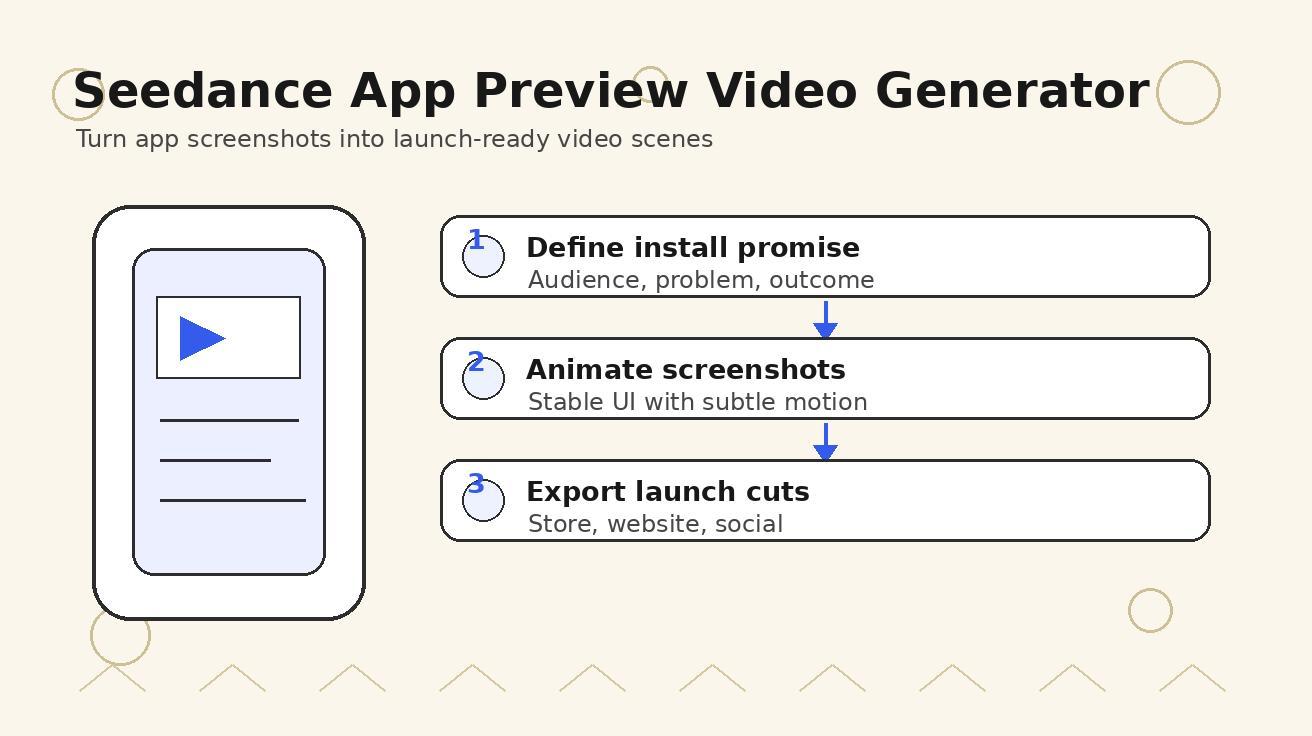
Seedance App Preview Video Generator 2026: Create App Store and Product Launch Clips
Use Seedance to turn app screenshots, feature copy, and launch goals into App Store previews, Google Play promo videos, and product launch clips.
Read article
How to Make a Talking AI Avatar You Can Reuse
Make a talking AI avatar with Seedance: design one consistent character, give it a voice, and make it speak in a talking photo or a full Seedance 2.5 scene, episode after episode.
Read article
Best AI Video-to-Video Models in 2026
The best AI video-to-video models in 2026 for editing footage you already shot: Higgsfield Genjutsu, Seedance 2.x, Runway Aleph, Luma Modify and Kling Omni compared.
Read article