
Seedance for Education: How Teachers and Students Create AI Learning Videos (2026)

Education is undergoing its most significant transformation in decades. As we move through 2026, artificial intelligence has moved from experimental technology to essential classroom tool. Among the most impactful innovations is AI video generation—and Seedance stands out as the premier platform for educators and students looking to create compelling, professional-quality learning content without expensive equipment or technical expertise.
This comprehensive guide explores how teachers, students, and educational institutions are leveraging Seedance to revolutionize learning materials, from interactive lessons to student projects and professional training content.
Why AI Video Matters for Education in 2026
The statistics tell a compelling story. Research consistently shows that video content increases information retention by up to 95% compared to text alone. Students who learn through video demonstrate better comprehension, higher engagement rates, and improved test performance. Yet traditionally, creating educational videos required significant investments in cameras, editing software, production teams, and countless hours of work.
AI video generation has democratized this process. What once required a film crew and weeks of production can now be accomplished in minutes from any computer. For educators operating with limited budgets and time constraints, this technological shift isn't just convenient—it's transformative.
The integration of AI video in education addresses several critical challenges:
Accessibility and Inclusion: AI-generated videos can include automated captions, translations, and visual representations that make content accessible to students with diverse learning needs and language backgrounds.
Personalization at Scale: Teachers can create variations of lessons tailored to different learning levels, styles, and paces without multiplying their workload exponentially.
Engagement: Digital-native students respond more positively to dynamic video content than traditional textbooks or static presentations.
Resource Efficiency: Schools and universities can redirect budget from expensive video production to other educational priorities while actually increasing their video output.
Why Seedance is the Ideal Platform for Educational Content
While several AI video generators have entered the market, Seedance offers specific advantages that make it particularly valuable for educational applications:
Superior Visual Quality for Learning Retention
Seedance produces high-fidelity videos with exceptional clarity and detail. For educational content, where visual accuracy matters—whether demonstrating scientific processes, historical events, or mathematical concepts—this quality difference is crucial. Students can see details clearly, reducing confusion and enhancing understanding.
Multi-Shot Storytelling Capabilities
Complex educational topics often require narrative progression. Seedance's multi-shot capabilities allow educators to create sequences that unfold concepts step-by-step, maintaining student engagement throughout longer explanations. This feature is particularly valuable for subjects like history, literature, and sequential processes in science and mathematics.
Text-to-Video and Image-to-Video Flexibility
Different educational scenarios call for different approaches. Sometimes you need to generate a video from a written lesson plan. Other times, you have diagrams, historical images, or student artwork that you want to animate. Seedance seamlessly handles both approaches, giving educators maximum flexibility.
Cost-Effectiveness for Educational Budgets
With generous free tiers and reasonable pricing for higher volumes, Seedance fits within typical educational technology budgets. Schools can experiment and create substantial content libraries without significant financial risk.
Fast Generation Times
Educators often need content on tight deadlines—whether preparing for tomorrow's lesson or responding to current events. Seedance's efficient generation means teachers can create videos in minutes rather than hours or days.
Key Use Cases: Transforming Education with Seedance
For Teachers: Creating Dynamic Lesson Materials
Explainer Videos for Complex Concepts
Abstract concepts in physics, chemistry, and biology become concrete when visualized. A teacher explaining photosynthesis can generate a video showing the process at the cellular level, with animated chloroplasts and energy transfer visualizations. Mathematical theorems can be demonstrated through dynamic geometric transformations.
Historical Event Recreation
History comes alive when students can visualize events. Teachers can create videos depicting historical moments—from ancient civilizations to modern events—helping students develop emotional connections to the material that textbooks alone cannot provide.
Language Learning Scenarios
Language teachers can generate contextual videos showing conversations in various settings: ordering food at a restaurant, asking for directions, or conducting business meetings. These contextual scenarios provide cultural and situational learning that flashcards cannot replicate.
Science Experiment Demonstrations
When certain experiments are too dangerous, expensive, or time-consuming for classroom settings, Seedance can generate video demonstrations. Teachers can show chemical reactions, geological processes, or astronomical events safely and economically.
For Students: Empowering Creative Projects
Visual Essays and Presentations
Students can transform traditional written essays into video presentations that demonstrate deeper understanding. A book report becomes a cinematic trailer. A historical analysis includes period-accurate visualizations. A science project includes animated explanations of findings.
Digital Storytelling Projects
Creative writing assignments gain new dimensions when students can illustrate their stories with AI-generated video. This approach particularly benefits visual learners and students who struggle with purely written expression.
Research Documentation
Students conducting independent research can create video summaries of their methodology and findings, developing communication skills alongside subject expertise.
Collaborative Group Projects
Teams of students can collaborate on video projects, with each member contributing prompts, reviewing generations, and assembling final presentations. This builds teamwork skills while producing impressive educational artifacts.
For Institutions: Professional Training and Communication
Professional Development Modules
Schools and universities can create consistent, high-quality training videos for faculty and staff. From onboarding new teachers to explaining policy changes, AI-generated video ensures everyone receives the same information in an engaging format.
Marketing and Recruitment
Institutions can produce compelling video content for prospective students and parents without traditional production costs. Campus tours, program introductions, and success stories can be created efficiently.
Internal Communications
Administrative announcements, procedural updates, and celebratory messages can be delivered through video, increasing engagement compared to email communications.
Step-by-Step Guide: Creating Educational Videos with Seedance
Getting Started with Text-to-Video
Step 1: Define Your Learning Objective
Before generating any video, clearly identify what students should learn or understand from the content. This clarity guides your prompt creation and ensures educational value.
Step 2: Craft Detailed Prompts
Effective educational prompts include:
- Subject matter specifics: Be precise about what should appear. Instead of "a science experiment," specify "a beaker containing blue liquid bubbling and changing to purple, with steam rising, in a modern laboratory setting."
- Visual style: Indicate whether you want realistic footage, animated illustration, documentary style, or another aesthetic appropriate for your audience.
- Camera movements: Specify if you want static shots, slow pans, zooms, or other movements that enhance learning.
- Duration and pacing: Consider attention spans and complexity when determining video length.
Step 3: Generate and Review
Create your initial video and evaluate it critically:
- Does it accurately represent the concept?
- Is the visual quality sufficient for classroom projection?
- Will it engage your specific student demographic?
- Does it progress at an appropriate learning pace?
Step 4: Refine and Iterate
Adjust your prompt based on review findings. Small changes to description, style parameters, or motion specifications can significantly improve educational effectiveness.
Step 5: Prepare Supplementary Materials
Plan how the video fits into your broader lesson. Prepare discussion questions, follow-up activities, and assessment materials that reference the video content.
Leveraging Image-to-Video for Visual Learning
When to Use Image-to-Video
This approach excels when you have existing visual materials:
- Historical photographs that you want to animate for documentary-style presentations
- Student artwork that can be brought to life
- Scientific diagrams that benefit from motion (e.g., showing blood flow through the heart)
- Maps that can zoom and pan to show geographical relationships
- Graphs and charts that can animate to show data changes over time
Creating Effective Image-Based Educational Videos
-
Select High-Quality Source Images: The clearer your starting image, the better the resulting video. Use high-resolution historical photos, crisp diagrams, or detailed illustrations.
-
Consider Motion Purposefully: Determine what movement enhances understanding. A historical photo might benefit from slow panning that reveals details. A biological diagram might show processes in action.
-
Add Context Through Prompts: When uploading an image, your text prompt guides how Seedance animates it. Describe the motion you want to see, the atmosphere, and any additional elements.
-
Combine Multiple Generations: Create several short video segments from different images and combine them into comprehensive presentations using simple video editing tools.
Implementation Strategies for Different Educational Levels
Elementary Education (Ages 5-11)
Young learners respond exceptionally well to visual storytelling. At this level, Seedance excels at creating:
Character-Based Learning Adventures: Generate animated characters that guide students through basic concepts. A friendly animated figure can teach phonics, counting, or introductory science concepts more effectively than static images.
Simple Process Demonstrations: Show how plants grow, how water cycles through the environment, or how animals adapt to their habitats. The visual nature of Seedance helps make abstract concepts concrete for developing minds.
Safety and Social Skills Training: Create scenarios showing proper safety procedures, social interactions, and emotional regulation techniques that young students can observe and discuss.
Best Practices for Elementary: Keep videos under 5 minutes. Use bright, engaging colors. Include repetition of key concepts. Generate content that invites questions and discussion rather than passive viewing.
Secondary Education (Ages 12-18)
Middle and high school students can handle more complex content and benefit from:
Historical Documentary Segments: Bring history to life with period-accurate visualizations. Students studying World War II can see recreated battlefield scenarios, daily life in different eras, or famous speeches in historical context.
Scientific Process Visualization: Show molecular interactions, physics principles in action, or geological processes that occur over thousands of years. Time-lapse and process animations help students grasp concepts that static textbooks cannot convey.
Literary Scene Recreation: Bring literature to life by generating scenes from assigned reading. Students can visualize Shakespearean plays, classic novels, or poetry in motion, deepening their connection to the material.
Best Practices for Secondary: Videos can extend to 10-15 minutes. Include more detailed information and complex narratives. Use videos as springboards for critical thinking and analysis rather than simple explanation.
Higher Education and Professional Training
University students and adult learners benefit from:
Case Study Visualizations: Generate videos illustrating business scenarios, medical cases, legal situations, or engineering challenges that form the basis of group discussion and analysis.
Technical Process Demonstrations: Show complex technical procedures, laboratory techniques, or professional workflows that would be expensive or dangerous to demonstrate repeatedly in person.
Research Presentation Enhancement: Graduate students can incorporate AI-generated video into thesis presentations and conference talks, making their research more accessible and engaging.
Best Practices for Higher Education: Focus on professional-quality output. Integrate videos with supplementary reading and primary sources. Use video to illustrate rather than replace rigorous academic content.
Best Practices for Educational AI Video Creation
Maintaining Educational Integrity
Accuracy First: While Seedance creates visually compelling content, educators must verify that generated content accurately represents facts, especially for science, history, and mathematics. AI video should supplement, not replace, rigorous fact-checking.
Appropriate Representation: Ensure that generated people, historical figures, and cultural contexts are represented respectfully and accurately. Review content for potential biases or inaccuracies.
Age-Appropriate Content: Tailor your prompts to create content suitable for your students' age group. What engages high school students may overwhelm elementary students, and vice versa.
Maximizing Engagement
Optimal Length: Research suggests attention spans vary significantly by age. Elementary students focus best on 3-5 minute videos, while high school and college students can engage with 10-15 minute content. Plan your generations accordingly.
Pacing and Complexity: Avoid overwhelming viewers with too much visual information simultaneously. Build complexity gradually within videos and across lesson sequences.
Audio Considerations: While Seedance focuses on video generation, remember that audio narration significantly impacts learning. Plan to add voiceover, background music, or sound effects that complement the visual content.
Technical Implementation
Resolution and Display: Generate videos at resolutions appropriate for your display environment. Classroom projection requires different specifications than individual tablet viewing.
File Management: Develop organizational systems for your growing video library. Tag videos by subject, grade level, and learning objective for easy retrieval.
Backup and Sharing: Store videos in multiple locations and establish sharing protocols that respect student privacy and copyright considerations.
Comparing Seedance with Alternative Tools for Education
While several AI video platforms serve educational markets, Seedance offers distinct advantages:
Versus Runway: Runway provides powerful editing capabilities but requires more technical expertise. For educators without video production backgrounds, Seedance's simpler interface and faster generation make it more practical for daily classroom use.
Versus Pika Labs: Pika offers impressive character consistency, valuable for narrative content. However, Seedance generally produces higher overall visual fidelity and handles educational documentary-style content more effectively.
Versus Kling AI: Kling excels at motion realism, particularly for human movement. Seedance offers superior versatility across content types and more reliable generation of non-human subjects common in educational content.
Versus Traditional Video Production: Professional video production offers maximum control but at costs and time investments impractical for most educational settings. Seedance provides 80% of the quality at 5% of the cost and 1% of the time.
Frequently Asked Questions
How much does it cost to use Seedance for educational purposes?
Seedance offers a free tier that allows educators to experiment and create limited content without any cost. For classrooms and institutions requiring higher volumes, paid plans are competitively priced compared to traditional video production or alternative AI platforms. Educational discounts may be available for institutional accounts.
Can students use Seedance directly, or should teachers create all content?
Both approaches work effectively. Teachers can create core instructional content while students use Seedance for projects and assignments. The platform's intuitive interface makes it accessible to students from middle school upward, with appropriate supervision and guidance.
What subjects benefit most from Seedance-generated educational videos?
While any subject can utilize AI video, the greatest impact appears in visual and narrative-heavy disciplines: history, science (particularly biology and physics), literature, geography, and language learning. Abstract mathematical concepts and procedural technical subjects also benefit significantly from visualization.
How can I ensure AI-generated educational content is accurate?
Always review generated content for factual accuracy before classroom use. Use Seedance as a visualization tool for concepts you've verified through reliable sources, rather than relying on AI to generate factual information. Combine AI-generated visuals with verified educational narration.
What technical requirements does Seedance have for classroom use?
Seedance operates entirely through web browsers, requiring only internet access and a standard computer. No special software installation or high-end hardware is necessary, making it accessible for schools with limited technology infrastructure. Generated videos can be downloaded and played offline if bandwidth is limited.
Can Seedance videos be integrated into learning management systems?
Yes. Videos generated through Seedance can be downloaded in standard formats and uploaded to any learning management system, including Google Classroom, Canvas, Blackboard, Moodle, and Microsoft Teams. They can also be embedded in websites and shared via standard video platforms.
How do I address copyright concerns when using AI-generated video in education?
Seedance generates original content based on your prompts rather than copying existing works. However, educators should establish clear policies about student-created content, particularly regarding prompts that reference copyrighted characters, specific artistic styles, or real individuals. When in doubt, consult your institution's copyright guidelines.
Conclusion: The Future of Learning is Visual
AI video generation represents more than a technological novelty—it's a fundamental shift in how educational content can be created and consumed. Seedance empowers educators to produce professional-quality visual learning materials that were previously impossible within typical school budgets and time constraints.
For teachers, this means the ability to illustrate any concept vividly. For students, it opens new avenues for creative expression and project-based learning. For institutions, it offers efficient communication and training capabilities.
As we progress through 2026 and beyond, the educators who embrace these tools will find themselves better equipped to engage digital-native learners, accommodate diverse learning styles, and create memorable educational experiences that stick with students long after exams end.
The classroom of the future isn't about replacing teachers with technology—it's about amplifying teacher creativity and expanding what's possible in education. Seedance represents a significant step toward that future.
Ready to transform your educational content? Start creating AI-powered learning videos today at seedance.tv. Explore the text-to-video tool for generating lessons from written descriptions, or try the image-to-video feature to bring existing educational materials to life.
Emma Chen is an educational technology specialist focused on AI tools for classroom innovation. She has helped over 200 educators integrate AI video generation into their teaching practice.
Ready to try it yourself?
Put the steps from this guide into practice with Seedance and turn prompts or images into polished videos in minutes.
Free credits on signup. Plans from $28/month.
Related Articles
More posts in the same locale you may want to read next.
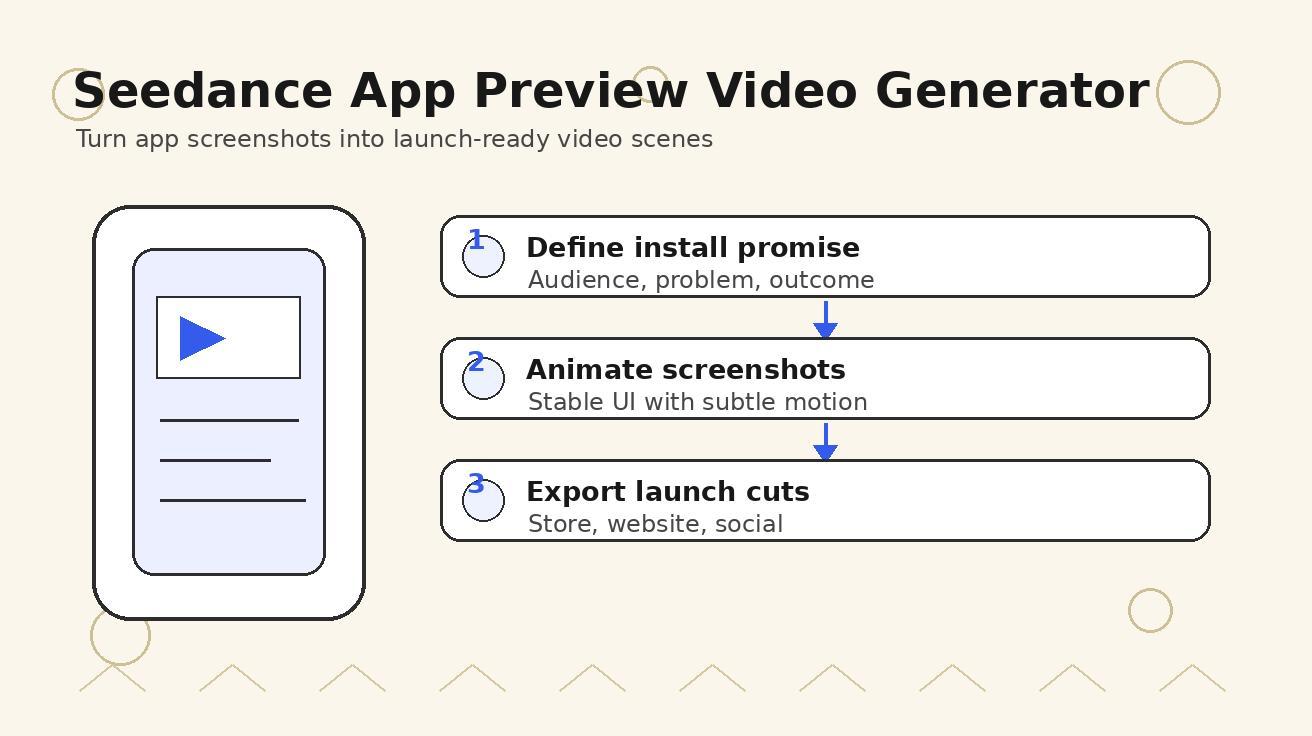
Seedance App Preview Video Generator 2026: Create App Store and Product Launch Clips
Use Seedance to turn app screenshots, feature copy, and launch goals into App Store previews, Google Play promo videos, and product launch clips.
Read article
Best AI Video-to-Video Models in 2026
The best AI video-to-video models in 2026 for editing footage you already shot: Higgsfield Genjutsu, Seedance 2.x, Runway Aleph, Luma Modify and Kling Omni compared.
Read article
Kling 4.0 vs Seedance 2.5: Full Comparison
Kling 4.0 vs Seedance 2.5 compared by spec: 30-second clips, keyframes vs 50 references, audio, 4K and 10-bit color, editing, and which model fits which job.
Read article