
How to Animate Still Images with Seedance AI: The Complete 2026 Guide
By Emma Chen · April 5, 2026
Quick Answer: How to Animate Still Images with Seedance AI: The Complete 2026 Guide — Seedance provides a comprehensive solution with cutting-edge AI video generation technology, making it easy for creators at every level to produce professional-quality content quickly and efficiently.
Bringing a still photo to life used to require expensive animation studios or hours of manual work in After Effects. In 2026, Seedance lets you animate any still image into a fluid, cinematic video clip in under a minute — no technical skills required.
This guide covers everything you need to know: how Seedance's image-to-video feature works, step-by-step instructions, tips for best results, and how Seedance compares to every other tool for animating still images.
Why Animate Still Images? The Use Cases Are Exploding
Animated photos are no longer a novelty. In 2026, they are a core content format for:
- Social media — animated profile pictures, looping story content, animated product shots
- Marketing — turning product photos into short video ads without a video shoot
- E-commerce — giving static product images motion to boost conversion rates
- Photography portfolios — making portrait and landscape photos come alive
- Memes and creative content — the "live photo" effect but with full AI control
- Storytelling — animating historical photos, artwork, and illustrations
The demand has driven an explosion of "animate still image" tools. But most of them fall into the same traps: low resolution, unnatural motion, watermarks, or short time limits.
Seedance was built to solve all of those problems at once.
What Is Seedance Image-to-Video?
Seedance is an AI video generation platform that aggregates multiple state-of-the-art video generation models — including Seedance 1.0, Google Veo 3, and Sora 2 — into a single interface. The image-to-video feature lets you upload any still image and use these models to generate a realistic, high-quality animated video from it.
Unlike most image animation tools that use a single proprietary model, Seedance gives you access to multiple models, so you can compare outputs and choose the best one for your specific image.
Key specs:
- Resolution: Up to 1080p HD
- Duration: Up to 10 seconds per clip
- Watermark: None on the free plan
- Sign-up: Google one-click only (no registration form)
- Free credits: 50 per day
- Output format: MP4
Step-by-Step: How to Animate a Still Image with Seedance
Step 1: Go to Seedance
Visit seedance.tv and click Sign in with Google. There's no registration form, no email verification, and no onboarding wizard. You're in the tool within seconds.
Step 2: Navigate to Image-to-Video
From the Seedance homepage, click the Image to Video tab. This takes you to the image-to-video tool.
Step 3: Upload Your Still Image
Click the upload area or drag and drop your image. Seedance accepts:
- JPEG and PNG files
- Images up to 20MB
- Any aspect ratio (it will adapt to the model's preferred output format)
Best image types for animation:
- Portrait photos with a clear subject
- Landscape or nature photos with natural elements (water, trees, sky)
- Product shots with clean backgrounds
- Artwork and illustrations
- Historical or archival photographs
Step 4: Write a Motion Prompt
This is the most important step. The motion prompt tells Seedance's AI how you want the image to move. Be specific and descriptive.
Weak prompt: "animate this image"
Strong prompts:
- "Gentle camera push-in, hair moving softly in a breeze, eyes blinking naturally"
- "Slow cinematic pan left to right across the landscape, clouds drifting, water rippling"
- "Product rotating slowly on a white surface, soft studio lighting, reflections moving"
- "Parallax depth effect, foreground elements moving faster than background"
- "Subject looking up from reading, slight head turn, warm window light"
The more specific your motion description, the more accurate and realistic the output will be.
Step 5: Choose Your AI Model
Seedance offers multiple models for image-to-video:
| Model | Best For | Speed | Quality |
|---|---|---|---|
| Seedance 1.0 | General animation, portraits | Fast | Excellent |
| Veo 3 | Cinematic quality, complex motion | Medium | Outstanding |
| Sora 2 | Creative, artistic, surreal motion | Slower | Exceptional |
For most still image animation, Seedance 1.0 is the fastest and most reliable. Veo 3 is better for cinematic shots or complex scenes. Sora 2 excels at artistic or stylized animations.
Step 6: Set Duration and Quality Settings
Choose your clip duration (2–10 seconds). For most social media content, 4–6 seconds is optimal — long enough to show meaningful motion but short enough to loop naturally.
Step 7: Generate and Preview
Click Generate. Depending on the model and server load, generation takes 15–90 seconds. Once complete, you can preview the video directly in your browser.
Step 8: Download or Regenerate
If you're happy with the result, download the MP4 file. If the motion isn't quite right, try:
- Adjusting your motion prompt to be more specific
- Switching to a different model
- Changing the starting frame or region focus
The 50 daily free credits mean you can iterate multiple times before committing.
Tips for Better Animated Still Image Results
1. Focus on Natural Motion First
The best animations look natural. Start by describing the most obvious natural motion in your scene: wind in hair or trees, water flowing, light shifting. Avoid asking for extreme or physically impossible movements on your first attempt.
2. Describe Camera Behavior Separately from Subject Motion
Structure your prompt in two parts:
- Camera movement: "slow zoom in," "static shot," "subtle drift right"
- Subject/scene motion: "leaves rustling," "fabric billowing," "smile widening"
Example: "Slow zoom in on subject's face, eyes blinking naturally, soft focus bokeh background"
3. Use Reference Keywords for Mood and Style
Adding cinematic reference terms dramatically improves output quality:
- "Cinematic," "film grain," "natural bokeh"
- "4K sharp," "soft diffused lighting"
- "Slow motion," "dreamy," "ethereal"
4. For Product Shots, Keep It Simple
Product animation works best with minimal, clean motion. Try:
- "Slow 360-degree rotation, sharp product edges, reflective surface"
- "Gentle hover and settle, product centered, clean white background"
5. Portraits: Prioritize Subtlety
For portrait photos, less is more. The uncanny valley effect kicks in fast if motion is too aggressive. Stick to:
- Subtle breathing motion
- Natural eye blinks
- Gentle head micro-movements
- Hair or clothing moving in a light breeze
Avoid: large head turns, exaggerated expressions, or full body movement from a tight portrait crop.
6. Try Multiple Models on the Same Image
Since Seedance gives you access to Seedance 1.0, Veo 3, and Sora 2, run the same image through two different models and compare. The difference in how each model interprets motion can be striking. Veo 3 tends to produce more physically realistic motion. Sora 2 can be more creative and stylized.
Seedance vs. Other Still Image Animation Tools
How does Seedance compare to the other tools creators use to animate still images in 2026?
Seedance vs. Runway Gen-4
Runway Gen-4 is a powerful video generation tool, but its image-animation feature is primarily designed for advanced video professionals. The interface has a steeper learning curve, and costs are significantly higher — roughly $12–$28 per month for serious use. Seedance's 50 free daily credits with no watermark makes it far more accessible for casual creators.
Winner: Seedance for accessibility and free tier. Runway Gen-4 for maximum creative control in professional workflows.
Seedance vs. Pika Labs
Pika is specifically built for image animation and does it well. Its "Pikaffects" feature (adding rain, fire, explosions to images) is creative and unique. However, Pika has a smaller model selection and its free tier is more limited than Seedance's. Pika also has a lower resolution ceiling for free users.
Winner: Tie — Pika for creative special effects animation, Seedance for general-purpose image-to-video with multiple model options.
Seedance vs. Kling AI
Kling AI (from Kuaishou) is a strong competitor with impressive image animation capabilities, particularly for realistic human motion. The downside is that Kling's free tier is limited and the interface is less intuitive for Western users. Seedance is significantly faster and easier for English-speaking creators.
Winner: Seedance for ease of use and speed. Kling for maximum realism in human subject animation.
Seedance vs. Luma Dream Machine
Luma Dream Machine produces stunning cinematic outputs, especially for landscape and nature animation. However, it's significantly slower and the free tier is very limited (only a few free generations). For high-volume animation work, Seedance's 50 daily credits win easily.
Winner: Seedance for volume and free access. Luma for maximum cinematic quality on important shots.
Seedance vs. Stable Video Diffusion / Open Source Models
For technically inclined users, open-source tools like Stable Video Diffusion (SVD) or CogVideoX offer free, unlimited use if you have your own GPU. But the setup complexity, hardware cost, and quality ceiling (compared to Veo 3 or Sora 2 via Seedance) make them impractical for most creators.
Winner: Seedance for 99% of creators who just want great results without GPU setup.
Seedance vs. Adobe Firefly / Photoshop AI
Adobe added basic image animation features to Photoshop and Firefly in 2025, but these tools are primarily designed for static image editing workflows. The video output quality is significantly lower than Seedance's Veo 3 or Sora 2 models. Adobe's tools shine for image manipulation and generation — but for animating still images into fluid video, Seedance's dedicated video generation models produce far superior results.
Winner: Seedance by a wide margin for video output quality and realism.
Seedance vs. D-ID
D-ID specializes in "talking head" animation — making portrait faces speak — and it does this well. But D-ID is narrowly focused on that single use case. It cannot animate landscapes, products, or abstract images the way Seedance can. D-ID's pricing is also higher for the quality you get.
Winner: Seedance for general animation. D-ID only if you specifically need lip-sync talking avatars.
How Seedance Handles Different Image Types
Not all images animate equally well. Here's a practical guide to what works best and why:
High-contrast, well-lit subjects — These animate most naturally. Clear separation between subject and background helps the AI identify what to move.
Low-light or grainy images — These can work but often produce softer, less defined motion. Using a "cinematic film grain" prompt can turn this into an aesthetic choice rather than a flaw.
Illustrations and digital art — Generally animate beautifully, especially with Sora 2. The AI treats stylized images differently from photographs and applies motion that matches the artistic style.
Images with multiple subjects — More complex to animate well. Be explicit in your prompt about which subject should have the primary motion.
Close-up macro shots — Excellent for animation. A close-up flower, water droplet, or eye creates stunning results with minimal prompt effort.
Common Still Image Animation Use Cases on Seedance
Animating Portrait Photos
Portrait animation is one of the most popular use cases. Upload a face photo and use a prompt like:
"Subject breathing softly, eyes blinking naturally, slight smile forming, warm light, cinematic depth of field, static camera"
The result is a living portrait — something between a live photo and a true video clip. This format performs exceptionally well on Instagram, TikTok, and LinkedIn.
Animating Landscape Photos
Nature and landscape photos are perfect for animation because natural motion (wind, water, clouds) is expected and looks realistic when AI-generated.
Try: "Slow pan left, clouds moving across sky, trees swaying in wind, sunlight shifting, cinematic wide shot"
A good landscape animation can serve as a background loop for social content, a website hero section, or a YouTube thumbnail animation.
Animating Product Photos
E-commerce brands are increasingly using animated product shots to increase engagement. The standard approach:
"Product rotating slowly 360 degrees, clean studio lighting, slight highlight reflection moving, crisp edges"
Or for lifestyle product shots: "Product on wooden table, morning light shifting, soft steam rising from coffee mug"
Animating Artwork and Illustrations
Digital artists and illustrators use Seedance to animate their static work. The AI handles stylized imagery well, especially with Sora 2. For painted or illustrated images, try:
"Painterly motion, elements drifting gently as if the painting is coming alive, wind effects, subtle parallax"
Animating Historical or Archival Photos
Bringing historical photos to life is a compelling creative and educational use case. Seedance handles older, lower-resolution photos reasonably well. Use a soft prompt: "Gentle breathing motion, eyes blinking, slight head movement, preserve vintage photograph feel"
Seedance Image-to-Video: Free Tier Details
Seedance's free tier is one of the most generous in the industry:
| Feature | Free Plan | Paid Plans |
|---|---|---|
| Daily credits | 50 | More |
| Max resolution | 1080p | 1080p+ |
| Watermark | None | None |
| Models available | Seedance 1.0, Veo 3, Sora 2 | All models |
| Max duration | 10s | 10s+ |
| Commercial use | Yes | Yes |
The 50 daily credits reset every 24 hours, making Seedance genuinely viable for daily creative work without paying anything.
Frequently Asked Questions
Can I animate any image with Seedance? Yes, Seedance accepts any JPEG or PNG image. Quality of animation depends on the image clarity, subject matter, and your motion prompt.
Does Seedance add a watermark to animated images? No. Seedance's free plan does not add watermarks to generated videos. This is a significant advantage over many competitors.
How long can my animated video be? Up to 10 seconds per generation. For longer animations, you can generate multiple clips and concatenate them.
What image resolution works best? Higher resolution input generally produces better output. Images of at least 512×512 pixels are recommended. Images up to 2048×2048 work well.
Can I use Seedance-animated videos commercially? Yes. Seedance's terms allow commercial use of generated content, including for advertising and e-commerce.
Is Seedance really free? What's the catch? The 50 daily credits are genuinely free. There's no credit card required. Premium plans exist for higher volume usage or access to additional models, but the free tier is fully functional for most individual creators.
What if my animated image doesn't look realistic? Try refining your motion prompt. Describe the specific motion you want in more detail. Switching models (from Seedance 1.0 to Veo 3) often produces different results. Small tweaks to wording can significantly change the output.
Getting the Most Out of Seedance for Image Animation
The key to consistently great results with Seedance's image-to-video is treating the motion prompt like a mini film direction. Think of yourself as a director telling a camera operator and actors what to do:
- Camera: Where is the camera? Is it moving? How fast?
- Subjects: What are the subjects doing? How are they moving?
- Environment: What's happening in the background? Wind? Light changes?
- Style: Cinematic? Dreamy? Sharp and commercial?
The more intentional you are about each of these four elements, the better your results will be.
Seedance also rewards iteration. Use your 50 daily free credits to experiment — different models, different prompt phrasings, different subjects. Within a few sessions, you'll develop an intuition for what prompts produce what results with each model.
Conclusion
Animating still images has never been more accessible or more powerful than in 2026. Seedance stands out from the crowd because it gives you:
- Multiple top-tier models in one interface (Seedance 1.0, Veo 3, Sora 2)
- 50 free credits per day with no watermark and no registration form required
- Up to 1080p resolution and 10-second clip duration
- Commercial use rights on the free plan
Whether you're a content creator bringing portraits to life, a marketer animating product shots, or an artist exploring AI-powered animation, Seedance is the most capable and accessible tool available today.
Start animating at seedance.tv/image-to-video — no sign-up form, no credit card, just results.
Further Reading on Seedance
- Seedance Image-to-Video Tool — Start generating animated videos from your photos
- Seedance Text-to-Video — Create videos from text descriptions
- Seedance Pricing and Free Plans — Details on credits and subscription tiers
- How Seedance Compares to Kling AI in 2026 — Full side-by-side comparison of both platforms
- Veo 3 on Seedance: What You Get for Free — Using Google's Veo 3 model through Seedance's free tier
Seedance is updated regularly as new AI models become available. The platform integrates new state-of-the-art models faster than any other aggregator, meaning your access to cutting-edge image animation technology will only improve over time. Bookmark seedance.tv and check back regularly for new model integrations and feature updates.
Ready to create your own AI video?
Turn ideas, text prompts, and images into polished videos with Seedance. If this article helped, the fastest next step is to try the product.
Free credits on signup. Plans from $28/month.
Related Articles
More posts in the same locale you may want to read next.
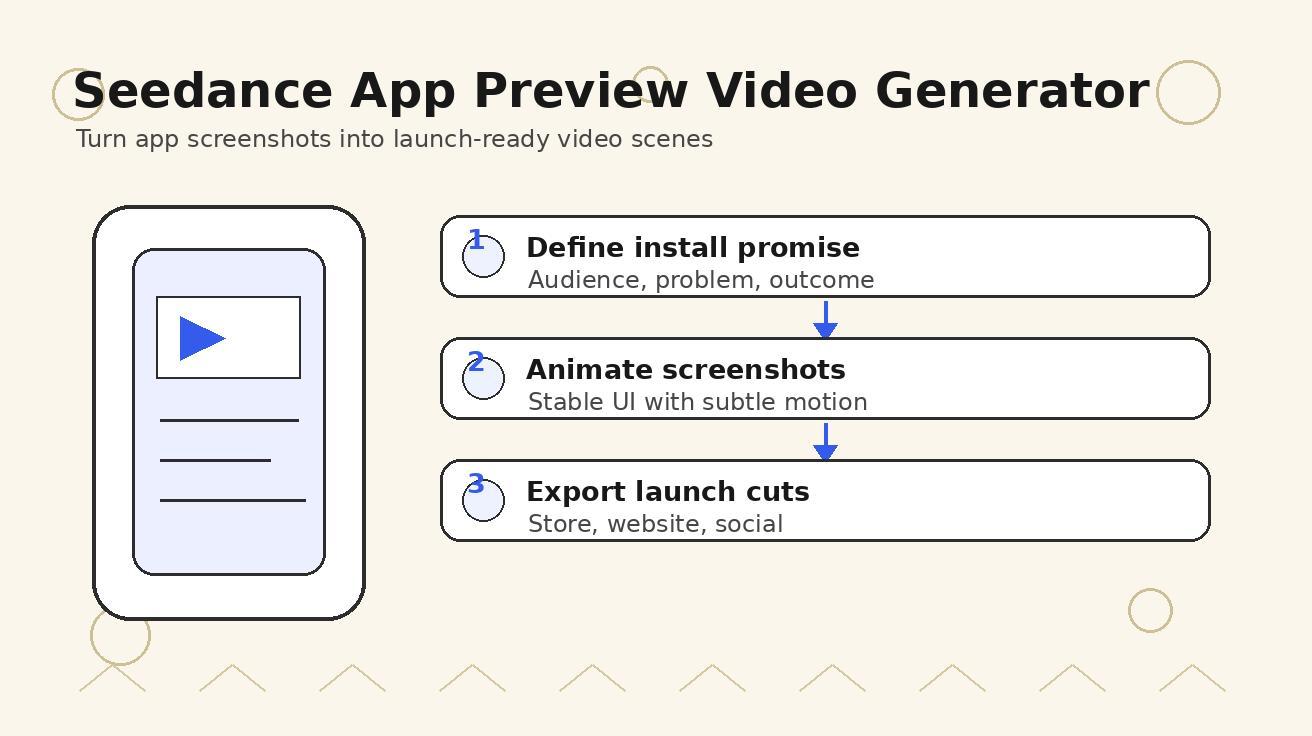
Seedance App Preview Video Generator 2026: Create App Store and Product Launch Clips
Use Seedance to turn app screenshots, feature copy, and launch goals into App Store previews, Google Play promo videos, and product launch clips.
Read article
Gemini AI Video Prompt Examples: Copy-Ready Veo Scenes and a Better Prompt Formula
Copy Gemini AI video prompt examples for cinematic motion, product ads, dialogue, and vertical clips, then adapt them with a practical Veo prompt formula.
Read article
How to Keep Product Shape Consistent in AI Video Ads
Lock product geometry, packaging, labels, references, camera angles, and approval checks so AI video ads preserve the real SKU across every shot.
Read article