
Seedance 2.5 vs Kling 3.0 Omni: Which AI Video Model Should You Use in 2026?

Seedance 2.5 and Kling 3.0 Omni are currently the two most capable AI video models for creators who need cinematic output. Both launched in mid-2026, and both claim 4K-quality video generation—but they work very differently. This guide compares them across every metric that actually matters: video quality, motion realism, prompt fidelity, clip length, pricing, and specific use cases. By the end, you'll know exactly which model to use for your next project.
Quick Answer
For most creators, Seedance 2.5 is the better all-round choice. It delivers 4K output up to 30 seconds per clip, supports both text-to-video and image-to-video in the same platform, and integrates with Seedance's multi-model interface so you can A/B test against Veo 3.1, Sora 2, and other top models without switching tabs. Kling 3.0 Omni is the stronger choice specifically for hyper-realistic human faces and complex multi-character dialogue scenes, but its shorter clip length and per-credit pricing make it expensive for volume work.
What Is Seedance 2.5?
Seedance 2.5, released in June 2026, is ByteDance's most advanced video generation model to date. It builds on the architecture of Seedance 2.0 but introduces significant improvements to subject consistency, motion fluidity, and text rendering accuracy. The model handles 4K resolution natively and supports clips up to 30 seconds—nearly double the maximum of many competing models at similar price points.
Seedance 2.5 is accessible through seedance.tv, where it sits alongside Veo 3.1, Sora 2, Kling 3.0, and other top models in a single interface. This multi-model approach lets creators generate the same prompt across multiple models and compare outputs side-by-side, which is particularly useful when deciding which model is best for a specific scene or project style.
Core capabilities of Seedance 2.5:
- 4K resolution output at up to 24fps
- Clip length up to 30 seconds per generation
- Text-to-video and image-to-video modes
- Strong multi-element scene composition
- Consistent subject motion across long clips
- High prompt fidelity for complex, multi-clause prompts
- Accurate text rendering in video (signs, labels, overlays)
What Is Kling 3.0 Omni?
Kling 3.0 Omni, released by Kuaishou in June 2026, is the flagship version of the Kling AI model series. The "Omni" designation marks a major upgrade to its transformer-based architecture, particularly in its handling of human subjects. Kling 3.0 Omni produces some of the most photorealistic human face animations available in any AI video model in 2026, making it the go-to choice for advertising agencies, film productions, and creators who work with on-camera talent representations.
Core capabilities of Kling 3.0 Omni:
- Photorealistic face and body rendering
- Multi-character dialogue scenes with accurate lip-sync
- Realistic clothing physics and skin texture
- 8-second standard clips; 16-second in extended mode
- Strong emotional expression rendering
- Cinematic color science in human-centric scenes
Detailed Comparison: Seedance 2.5 vs Kling 3.0 Omni
Clip Length
This is one of the most practical differences between the two models. Seedance 2.5 generates clips up to 30 seconds, while Kling 3.0 Omni tops out at 16 seconds even in extended mode. For social media formats like TikTok, YouTube Shorts, and Instagram Reels—where clips typically run 15–30 seconds—Seedance 2.5 lets you generate a full piece of content in a single generation. With Kling 3.0 Omni, you would need to stitch multiple 16-second segments together for the same result.
| Metric | Seedance 2.5 | Kling 3.0 Omni |
|---|---|---|
| Maximum clip length | 30 seconds | 16 seconds (extended) |
| Standard clip length | 15 seconds | 8 seconds |
Winner: Seedance 2.5 — The 30-second capability is a major practical advantage for social media content.
Video Resolution and Output Quality
Both models generate output that qualifies as 4K, but their rendering priorities differ. Seedance 2.5 focuses on environmental consistency—landscapes, interiors, product scenes, and motion behave naturalistically across the full clip duration. Kling 3.0 Omni dedicates more of its rendering budget to facial and skin detail.
In blind tests by content creators in the AI video community, Seedance 2.5 consistently outperforms Kling 3.0 Omni for landscape and product shots. Kling 3.0 Omni wins for close-up portrait and character acting scenes.
Winner: Depends on shot type. Seedance 2.5 for environment/product; Kling 3.0 Omni for close-up human character work.
Motion Realism
Seedance 2.5 handles physics-based motion well: ocean waves, fabric in wind, smoke, liquids, and crowd movement all behave consistently. The model maintains subject identity through camera pans, zooms, and transitions without the typical subject drift seen in earlier generation models.
Kling 3.0 Omni's motion realism excels specifically in human body movement. Gait, hand gestures, and micro-expressions are smoother and more realistic than Seedance 2.5 for close-up human shots. For non-human subjects, the two models perform comparably.
Winner: Tie — Different motion strengths for different shot types.
Prompt Fidelity
Seedance 2.5 follows complex multi-clause prompts accurately. You can specify camera movement, lighting, subject behavior, environment details, and timing in a single prompt, and the model incorporates all elements reliably. This makes it well-suited for precise creative briefs.
Kling 3.0 Omni is strongest at short, character-centric prompts. It performs well when the prompt describes one or two people doing something specific. It becomes less reliable when prompts require complex environmental interactions or abstract scene compositions.
Winner: Seedance 2.5 — Broader prompt vocabulary and more consistent multi-element composition.
Multi-Character and Dialogue Scenes
Kling 3.0 Omni has a significant advantage here. It can generate scenes with two or three speaking characters maintaining separate consistent identities, with lip-sync that matches implied speech. This is a technically demanding capability that most models, including Seedance 2.5, handle inconsistently.
Seedance 2.5 can generate multi-character scenes but does not offer the same precision in individual character differentiation during close-up dialogue.
Winner: Kling 3.0 Omni — The best option for scripted dialogue and character-acting content.
Text in Video Accuracy
Both models support text rendering in video, but Seedance 2.5 is notably more accurate at generating legible signs, labels, and on-screen text in motion. Kling 3.0 Omni has improved in this area since version 2.0 but still shows occasional character errors in complex text overlays.
Winner: Seedance 2.5
Generation Speed
Seedance 2.5 generates a 30-second 4K clip in approximately 2–3 minutes on standard infrastructure. Kling 3.0 Omni generates an 8-second clip in 90–120 seconds. On a per-second-of-output basis, Seedance 2.5 provides significantly better throughput per credit.
For a full minute of content (four 15-second clips), Seedance 2.5 requires two generations; Kling 3.0 Omni requires approximately four. Seedance 2.5 is more efficient in time and credits for volume production.
Winner: Seedance 2.5 — Better throughput per generation.
Pricing and Cost Efficiency
Seedance 2.5 is available through seedance.tv on a subscription model with tiered plans. There is a free tier with resolution and generation limits. Paid plans give access to full 4K resolution and the 30-second maximum duration. The subscription model is more predictable for teams that need consistent monthly output.
Kling 3.0 Omni uses credit-based pricing through the Kling AI platform. Extended 16-second generation consumes significantly more credits per clip. At equivalent per-second-of-output pricing, Kling 3.0 Omni is more expensive than Seedance 2.5 for standard commercial workflows.
Winner: Seedance 2.5 — Lower effective cost per second of output; subscription model easier to budget.
Seedance 2.5 Prompt Examples
These prompts are designed for use in Seedance 2.5 on seedance.tv:
Cinematic product reveal (ecommerce):
Close-up of a sleek matte-black smartwatch resting on brushed aluminum surface, morning sunlight filtering through frosted glass window, slow push-in camera movement, shallow depth of field with bokeh background, 4K, cinematic warm color grade, 15 seconds
Environmental landscape:
Aerial drone shot over a lavender field in Provence at golden hour, camera slowly descending, rolling hills visible in the distance, soft light, cinematic color grading, 30 seconds
Character walking scene (medium shot):
A young woman in a cream linen jacket walks along a cobblestone alley in Paris, confident stride, soft golden hour light, camera tracking from the right side at a slight angle, 24fps, cinematic look, 20 seconds
Product social ad (vertical format):
A glass bottle of premium olive oil on a rustic wooden table, fresh herbs and tomatoes arranged around it, natural morning light from the left, slow zoom in, warm Mediterranean tones, vertical 9:16 aspect ratio
Abstract brand loop:
Flowing metallic liquid morphing into a logo shape on a dark background, smooth 3D-like motion, futuristic color palette of deep blue and gold, camera slowly orbiting the shape, loopable 8 seconds
Kling 3.0 Omni Prompt Examples
These prompts highlight Kling's strength in human-centric content:
Dialogue scene:
Two people sit across from each other in a minimalist coffee shop, having an animated conversation, natural expressions, close-up alternating shots, cinematic depth of field, warm interior lighting
Character portrait:
A 30s professional woman with warm brown skin looks directly at the camera with a confident smile, corporate office background slightly blurred, natural lighting, subtle head turn, 4K portrait mode
Workflow Comparison: Content Creation Process
Using Seedance 2.5 at Seedance.tv
- Log in to seedance.tv
- Select Seedance 2.5 from the model dropdown
- Enter your prompt or upload a reference image (for image-to-video)
- Set resolution to 4K, aspect ratio (16:9, 9:16, or 1:1), and duration (up to 30 seconds)
- Generate 2–3 prompt variants to compare outputs
- Switch to Veo 3.1, Kling 3.0, or Sora 2 in the same interface for model comparison
- Download the best result and use directly in your editing workflow
The multi-model comparison is a unique advantage of Seedance.tv—you can evaluate outputs from multiple top models in a single session.
Using Kling 3.0 Omni
- Access the Kling AI platform
- Select Kling 3.0 Omni from the model options
- Enter a character-focused prompt
- Select standard (8s) or extended (16s) duration
- Wait for generation, download, and stitch segments if needed for longer content
Use Case Recommendations
Seedance 2.5 is the better choice for:
- Social media ads: TikTok, YouTube Shorts, Instagram Reels content that needs full 15–30 second clips in one generation
- Product demo videos: Strong text-in-video accuracy and product scene composition
- Travel and landscape content: Environment rendering and camera motion control
- A/B testing across models: The Seedance.tv multi-model interface makes this seamless
- High-volume production: Lower cost per second of output on subscription plans
- Brand video campaigns: Complex multi-element scene composition with consistent subject motion
Kling 3.0 Omni is the better choice for:
- Narrative short films: Two-person dialogue scenes with consistent character identity
- Luxury advertising: Photorealistic human models with close-up skin texture
- Character acting content: Emotional expression and body language rendering
- Automotive and cosmetics ads: Human-product interaction in close-up
- Content requiring specific ethnic or demographic character representation with high accuracy
The Verdict: Which Should You Use?
For the majority of content creation workflows in 2026, Seedance 2.5 is the stronger choice. The 30-second clip length alone resolves one of the most common frustrations in AI video production—having to stitch multiple short clips. Its multi-element prompt fidelity, cost efficiency, and access to a multi-model comparison interface make it the better all-round tool.
Choose Kling 3.0 Omni when you specifically need photorealistic human faces in dialogue or close-up portrait scenarios. For that narrow but important use case, Kling 3.0 Omni is still the best option available.
The ideal workflow for many creators is to use both: Seedance 2.5 as the primary production model for environmental, product, and social content, with Kling 3.0 Omni reserved for scenes that require exceptional human face quality.
Industry-Specific Recommendations
Ecommerce and D2C Brands
For product video ads on Meta, TikTok, and YouTube, Seedance 2.5 is the stronger tool. Its ability to render product materials accurately—glass, metal, fabric, liquid—and maintain consistent product identity across 20–30 second clips makes it suitable for producing multiple ad variants from the same prompt. The text-in-video capability is useful for overlaying product names, prices, and call-to-action text directly in the generated clip.
Kling 3.0 Omni is useful when the ad concept relies on a photorealistic person using or interacting with the product at close range, where face quality is a creative priority.
Content Creators and Influencers
Content creators publishing across multiple platforms benefit from Seedance 2.5's 30-second generation. A single generation can cover a TikTok or YouTube Shorts video without stitching. The multi-model interface at Seedance.tv makes it easy to test which model style fits the creator's aesthetic without switching platforms.
Kling 3.0 Omni is useful for creators whose channel format involves scripted character-driven content, short narrative sketches, or lifestyle content where human face realism is part of the creative direction.
Marketing Agencies
Agencies producing campaigns at scale benefit from Seedance 2.5's lower cost per second of output and subscription-based pricing, which is easier to incorporate into client billing. The ability to A/B test prompts across multiple models in a single session reduces production time when finding the right visual style for a brief.
For premium brand clients (automotive, luxury goods, cosmetics) where close-up human talent quality is reviewed critically, Kling 3.0 Omni may be a better fit for those specific scenes—especially if the concept is character-led and requires close-up face work.
Game Studios and App Developers
For generating promotional trailers, store listing videos, and social ads, Seedance 2.5's range of camera movements, environment rendering, and prompt fidelity makes it well-suited for cinematic game world visualization without requiring actual in-game footage. Its ability to render stylized environments matches the visual language of many game aesthetics.
Kling 3.0 Omni can be useful for rendering character close-ups in promotional materials if the game has a realistic, character-driven art style.
Common Mistakes When Comparing AI Video Models
When evaluating Seedance 2.5 vs Kling 3.0 Omni, creators often make these errors:
Comparing based on a single clip type: Generate the same prompt on both models before drawing conclusions. A prompt that works well on Kling 3.0 Omni may not be the ideal test for Seedance 2.5, and vice versa.
Focusing only on close-up face quality: Kling 3.0 Omni excels in close-up human face rendering, but most content creators do not primarily produce close-up dialogue content. Testing on the actual shot types you will produce is more meaningful.
Not accounting for clip length costs: Kling 3.0 Omni's 16-second maximum means more generations are needed for longer content. Calculate cost per second of usable footage, not cost per generation.
Ignoring the multi-model workflow advantage: Seedance.tv lets you generate from Seedance 2.5, Veo 3.1, Kling 3.0, and other models in the same session. This comparison capability has real production value that standalone model access does not provide.
Frequently Asked Questions
Is Seedance 2.5 better than Kling 3.0? For most workflows, yes—especially for longer clips, complex scene composition, and multi-model A/B testing. Kling 3.0 Omni is better specifically for close-up human face and dialogue scenes.
Does Seedance 2.5 support image-to-video? Yes. You upload a reference image and generate a video continuation in Seedance 2.5, the same way image-to-video works in Kling.
Can I use Seedance 2.5 for free? Yes, Seedance offers a free tier with reduced resolution and generation limits. Full 4K access and 30-second generation require a paid plan.
Which is faster—Seedance 2.5 or Kling 3.0 Omni? Per second of output, Seedance 2.5 is faster. Kling 3.0 Omni generates clips in roughly the same time but at a much shorter maximum duration, so Seedance 2.5 produces more total footage per generation.
Can Seedance 2.5 do the dialogue scenes that Kling 3.0 Omni is known for? Seedance 2.5 supports multi-character scenes but does not match Kling 3.0 Omni's precision in close-up dialogue with distinct character identity. For most social media and commercial content, the difference rarely matters.
Is Kling 3.0 Omni worth the higher price? Only if your specific use case requires photorealistic human close-ups. For general commercial video production, Seedance 2.5 delivers more value per dollar.
Conclusion
Seedance 2.5 vs Kling 3.0 Omni is one of the defining model comparisons of mid-2026. Seedance 2.5 wins on clip length, throughput, cost efficiency, prompt flexibility, and the convenience of a multi-model comparison interface. Kling 3.0 Omni wins the narrow but important category of photorealistic human face and dialogue rendering.
For creators who want to produce high-quality social media content, product videos, and brand campaigns at scale, Seedance 2.5 is the primary model to use. Try it today at seedance.tv, where you can also compare its output directly against Kling 3.0 Omni and Veo 3.1 in the same session.
Ready to create your own AI video?
Turn ideas, text prompts, and images into polished videos with Seedance. If this article helped, the fastest next step is to try the product.
Free credits on signup. Plans from $28/month.
Related Articles
More posts in the same locale you may want to read next.
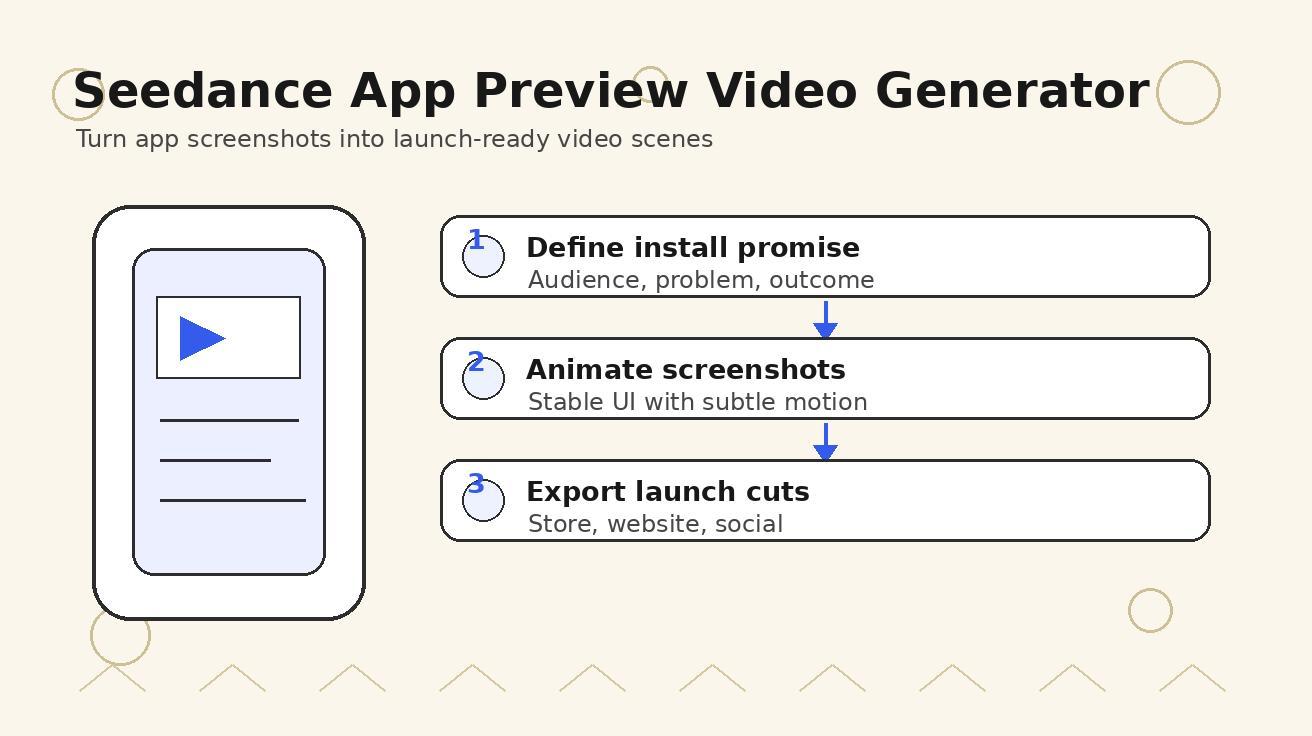
Seedance App Preview Video Generator 2026: Create App Store and Product Launch Clips
Use Seedance to turn app screenshots, feature copy, and launch goals into App Store previews, Google Play promo videos, and product launch clips.
Read article
Gemini AI Video Prompt Examples: Copy-Ready Veo Scenes and a Better Prompt Formula
Copy Gemini AI video prompt examples for cinematic motion, product ads, dialogue, and vertical clips, then adapt them with a practical Veo prompt formula.
Read article
How to Keep Product Shape Consistent in AI Video Ads
Lock product geometry, packaging, labels, references, camera angles, and approval checks so AI video ads preserve the real SKU across every shot.
Read article