
How to Make AI Videos for Free in 2026: The Complete Beginner's Guide
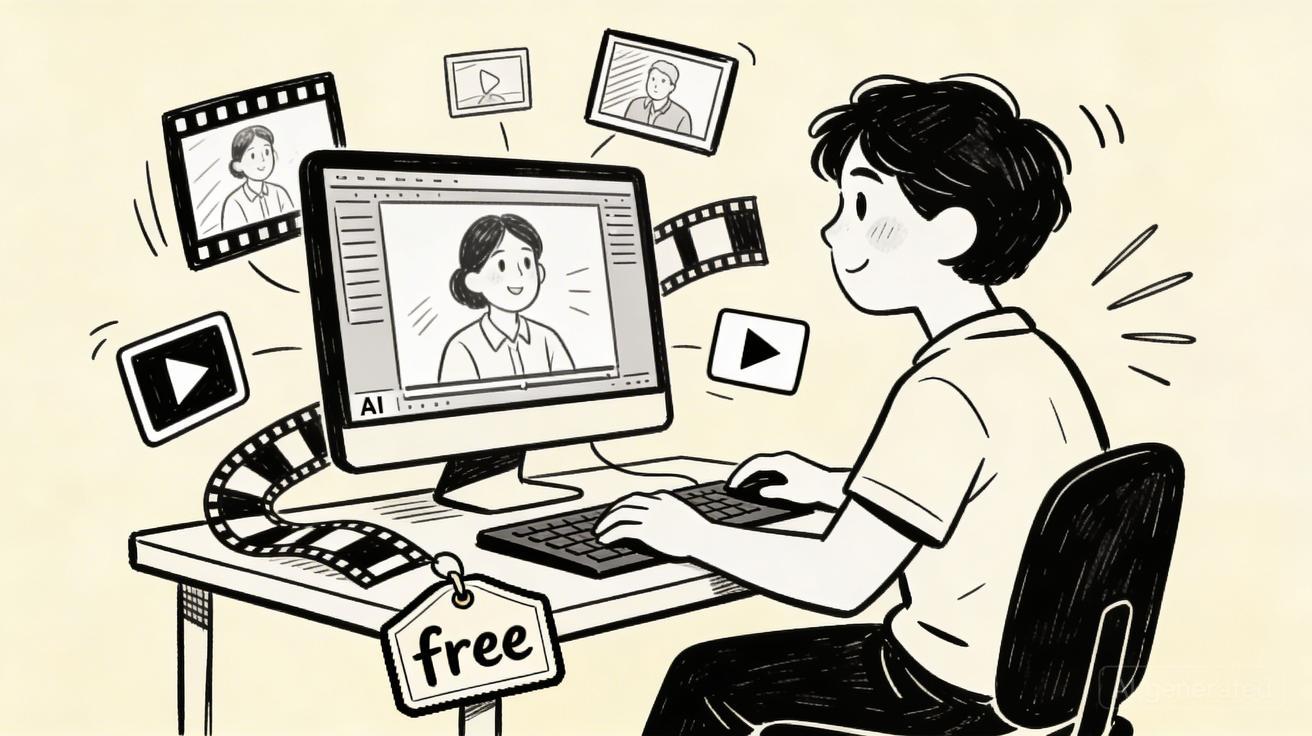
Creating professional-quality videos used to require expensive cameras, editing software licenses, and months of learning complex tools. In 2026, anyone with an internet connection can make stunning AI videos completely free — no technical skills required, no equipment to buy, no editing experience needed. This guide covers everything beginners need to know about free AI video creation: the best free tools, step-by-step workflows, how to maximize quality on a free tier, common mistakes that waste your time, and pro tips that the top creators use to get broadcast-quality results at zero cost. Whether you want to create content for social media, YouTube, marketing materials, or just to learn what AI video creation is all about, this is your complete starting point.
Quick Answer: Yes, you can get started with AI video generation for free using Seedance, which offers a generous free tier that lets you create high-quality videos without any upfront cost.
Free AI Video Tools at a Glance (2026)
| Tool | Free Tier Limit | Best For | Output Quality | Watermark? |
|---|---|---|---|---|
| Seedance | Daily free generations | Text-to-video & image-to-video | ⭐⭐⭐⭐⭐ | No |
| Runway | 125 credits lifetime | Experimental, effects | ⭐⭐⭐⭐ | Yes (free) |
| Pika | Limited daily credits | Quick social clips | ⭐⭐⭐⭐ | Yes (free) |
| Kling | Limited free quota | Realistic motion | ⭐⭐⭐⭐ | Sometimes |
| Canva Video | Generous free tier | Template-based video | ⭐⭐⭐ | No |
| CapCut | Unlimited (basic) | Editing + basic AI | ⭐⭐⭐ | No |
Why 2026 Is the Best Year to Start Making AI Videos for Free
The AI video landscape has undergone a fundamental transformation in the past 18 months. Early AI video tools in 2023 and 2024 produced shaky, dreamlike videos with distorted faces and unrealistic motion — clearly not ready for professional use. In 2026, the output quality of leading AI video generators is genuinely broadcast-quality for most content categories.
More importantly, the free tiers of these tools have become genuinely useful. In 2023, free access to AI video was mostly a brief demo experience. Today, tools like Seedance offer meaningful free generation quotas that allow creators to produce real content — social media posts, YouTube thumbnails brought to life, product demonstrations, and explainer videos — without spending a dollar.
The barrier to entry has never been lower. And the opportunity has never been higher: video content drives 82% of all internet traffic in 2026, video posts receive 48% more views than other content types on social media, and YouTube creators who add AI video elements to their content report average view duration increases of 23%. If you've been waiting for the right time to learn AI video creation, that time is now.
Understanding Free AI Video Creation: What You Can Actually Do for Free
Before diving into tools and workflows, let's be clear about what "free AI video creation" actually means in 2026. There are three categories of free access:
Truly Free with Daily/Weekly Quotas
Some tools, including Seedance, offer free generation credits that refresh on a daily or weekly basis. This means you can consistently create new content without hitting a permanent wall. The limitations are on quantity (how many videos you can generate per day) and sometimes on resolution or duration (free tier may cap at a certain video length).
For most beginners, free daily quotas are more than sufficient. If you're creating content for a personal social media account, a side project, or learning purposes, you can accomplish a great deal within standard free tier limits.
Lifetime Credits (One-Time Freemium)
Some tools give you a fixed number of credits when you sign up, and that's all you ever get for free. Runway's 125 lifetime credits fall into this category. These are useful for trying the tool and producing a small initial batch of content, but they're not sustainable for ongoing content creation.
Fully Free with Watermarks
Several tools offer unlimited free generation but add a watermark to free-tier outputs. For personal use or learning, this may be acceptable. For any professional or commercial use, watermarked content is problematic. Choose tools that either have no watermark or have easy, affordable watermark removal options.
The Best Free AI Video Tool for Beginners: Seedance
For beginners starting from zero, Seedance is the top recommendation for free AI video creation in 2026. Here's why it stands out from the alternatives:
No watermarks on free tier. Your free AI videos look professional and can be used in real content without visible branding that undermines their quality.
Two powerful creation modes. Seedance offers both text-to-video (describe a scene in words and get a video) and image-to-video (animate any photo or image you upload). This dual capability is extremely valuable for beginners because image-to-video is often easier to master while producing immediately impressive results.
High output quality. Seedance uses state-of-the-art video generation models that produce smooth motion, realistic physics, and high-resolution output even on the free tier. The quality gap between free Seedance output and paid alternatives from other providers is often negligible.
Beginner-friendly interface. The Seedance interface is designed for people who have never used AI video tools. Clear prompt input fields, style selectors, and example prompts help beginners understand what the tool can do and how to ask for it.
Responsive generation times. Free tier generation times on Seedance are typically two to five minutes per video — fast enough to maintain a productive creative workflow without long waits that break your momentum.
Step-by-Step: How to Make Your First AI Video for Free
Step 1: Choose Your Creation Mode
Decide whether you want to create a video from text or animate an existing image.
Text-to-video works best when you want to create entirely synthetic scenes: landscapes, abstract visuals, product demos in fictional settings, explainer video elements, or any scenario that would be expensive or impossible to film.
Image-to-video works best when you have photos you want to bring to life: product photos, portraits, illustrations, graphics, or any static image that would benefit from motion and depth.
For your very first AI video, image-to-video is often the easier starting point because you're working with a concrete visual reference rather than building a scene entirely from text description.
Step 2: Write Your First Prompt
For text-to-video, your prompt is your entire creative brief. Here's a simple structure for beginners:
[Subject] + [Action/Motion] + [Setting] + [Mood/Style] + [Camera/Lighting]
Example: "A cup of coffee on a wooden table, steam rising slowly, morning sunlight streaming through a window, warm and cozy mood, close-up shot with shallow depth of field."
For image-to-video, you describe what motion you want the image to come to life with: "Camera slowly zooming in, subject turns slightly and smiles, hair moves gently in breeze."
Step 3: Generate and Evaluate
Submit your prompt and wait for the generation to complete. When your video is ready, evaluate it honestly:
- Does the motion look natural?
- Is the subject stable and recognizable throughout?
- Does the lighting and atmosphere match your description?
- Is the video usable for your intended purpose?
If the result isn't quite right, don't immediately regenerate with a completely different prompt. Instead, make small, specific adjustments to address the issues you noticed. AI video prompting is an iterative skill — each generation teaches you something about how the model interprets different descriptions.
Step 4: Refine Your Prompt Based on Results
If your first generation had issues, here are common refinements that improve results:
- Shaky or unstable output: Add "smooth camera movement," "stabilized shot," or "static camera" to your prompt.
- Distorted faces or figures: Add "high detail," "photorealistic faces," "clear subject."
- Wrong mood or atmosphere: Be more specific about lighting (e.g., "golden hour sunlight" instead of just "warm lighting") and emotional descriptors.
- Too much random motion: Specify what should and should not move. "Only the flowers sway, the background remains still."
- Wrong aspect ratio: Specify "vertical 9:16 format" for mobile content, "horizontal 16:9 for YouTube," or "square 1:1 for Instagram."
Step 5: Download and Use Your Video
Once you have a result you're happy with, download it from Seedance. Free tier downloads are typically in high-quality MP4 format suitable for direct upload to any platform. No conversion needed, no additional editing required unless you want to add text overlays, music, or captions.
What Is How To Make Ai Videos Free 2026 and Why Does It Matter?
How To Make Ai Videos Free 2026 is an essential capability for modern content creators and marketers. The best tools for how to make ai videos free 2026 combine AI-powered automation with professional-quality outputs — saving hours of manual work while delivering results that meet commercial standards.
In 2025, platforms like Veo 3 and Seedance have made how to make ai videos free 2026 more accessible than ever, offering free-tier access alongside professional plans.
How Do You Get Started with How To Make Ai Videos Free 2026?
Getting started with how to make ai videos free 2026 requires just a few steps:
- Choose the right tool for your needs (see comparison above)
- Sign up for a free account — no payment required to start
- Follow the step-by-step guide in this article
- Test with simple examples first, then scale up
Most users can produce their first professional result within 30 minutes of starting.
What Are the Best Tools for How To Make Ai Videos Free 2026 in 2025?
The top tools for how to make ai videos free 2026 in 2025 are:
- Veo 3 — best overall quality, free via Google Gemini
- Kling AI — best mobile experience and free tier generosity
- Runway Gen-4 — best for artistic and cinematic styles
- Pika 2.1 — best for beginners with simple interface
Each tool has strengths in different areas — the best choice depends on your specific use case, volume requirements, and budget.
Free AI Video Workflows for Different Content Types
Social Media Content (Instagram Reels, TikTok, YouTube Shorts)
Short-form vertical video (9:16) is the highest-distribution content format in 2026. It's also the easiest format for AI video generation because short duration means faster generation and fewer opportunities for temporal inconsistencies to appear.
Recommended free workflow:
- Use Seedance text-to-video with a 9:16 aspect ratio prompt
- Generate 3-5 variations of your concept
- Select the best result
- Import to CapCut (free) for text overlays and music
- Export and upload directly to your platform
This workflow produces professional-quality short-form content in under 30 minutes per video, entirely for free.
YouTube Videos with AI B-Roll
Many YouTubers and content creators use AI video to supplement their talking-head footage with relevant B-roll — visual content that plays while voiceover or narration continues. This dramatically improves production value without requiring you to film anything.
Recommended free workflow:
- Record your main talking-head footage on your phone
- Identify moments in your script that would benefit from visual illustration
- Generate relevant B-roll clips with Seedance text-to-video
- Edit your main footage and B-roll together in CapCut or DaVinci Resolve (both free)
Product and Business Content
Small businesses and e-commerce brands can use free AI video to create product demonstrations, social proof content, and promotional material.
Recommended free workflow:
- Take high-quality photos of your product on a clean background
- Use Seedance image-to-video to animate each product photo
- Create lifestyle context shots using text-to-video
- Combine clips in a free video editor with your product name and website
Educational and Explainer Content
AI video is excellent for creating visual illustrations of concepts, processes, and ideas that would be difficult or expensive to demonstrate on camera.
Recommended free workflow:
- Script your explanation as a series of visual scenes
- Create each scene as a separate AI video clip
- String clips together with narration using a free screen recording tool
- Add captions for accessibility
Maximizing Quality on Free AI Video Tiers
The Prompt Quality Investment
The single biggest quality improvement comes from investing time in your prompt, not from upgrading to a paid tier. A well-crafted prompt on a free tier consistently outperforms a vague prompt on a premium plan. Here are the most impactful prompt improvements:
Add camera and lighting descriptors: "Cinematic lighting," "soft diffused light," "dramatic side lighting," "natural daylight" — these dramatically affect the visual quality and mood of outputs.
Specify motion type: "Slow zoom," "pan left," "static handheld," "smooth tracking shot." Without motion specification, AI generators often add random camera movement that feels uncontrolled.
Include style references: "In the style of a nature documentary," "commercial advertising aesthetic," "indie film visual style." Style references calibrate the overall visual language.
Use technical quality descriptors: "8K detail," "sharp focus," "high definition," "professional photography quality." These terms activate higher-quality generation behaviors in most AI models.
Scheduling Your Free Tier Usage
If you're working within daily free generation quotas, plan your usage strategically:
- Morning: Generate your primary content for the day using your full daily quota
- Evening: Review results, refine prompts, plan the next day's generation batch
- Weekly: Plan a week's content in advance so you never waste quota on undefined projects
Batch similar types of content together. If you're making product videos, generate all your product videos in one session. This keeps your prompting mindset consistent and produces more cohesive results than switching between completely different content types.
Post-Processing Free Outputs for Maximum Impact
AI video output is a starting point, not necessarily a finished product. Simple post-processing using free tools can significantly elevate the final quality:
Color grading: CapCut and DaVinci Resolve both offer free professional color grading tools. Even a simple contrast and saturation adjustment makes AI video look more polished.
Stabilization: If your AI video has subtle motion instability, run it through CapCut's stabilization filter.
Text overlays: Well-designed text adds context, accessibility, and branding. Use readable fonts, ensure adequate contrast with the video background, and time text to appear and disappear at natural moments.
Music and sound design: Free AI video often comes without audio. Adding background music from a royalty-free library (YouTube Audio Library, Pixabay Music) dramatically increases perceived quality and engagement.
Common Mistakes Beginners Make with Free AI Video
Mistake 1: One and Done Prompting
Many beginners generate one video, decide the tool "isn't good enough," and give up. AI video generation is an iterative skill. Your first generation is rarely your best — it's a draft. Plan to generate three to five variations of any concept before evaluating whether the approach is working.
Mistake 2: Expecting Photorealistic Humans
Current AI video generators still struggle with highly realistic human faces and natural human movement. Free tier models may exhibit more of these artifacts than paid premium models. The solution is to either work with the AI aesthetic rather than fighting it, use partial human shots (hands, silhouettes, close-ups of objects) rather than full-face close-ups, or use image-to-video with a reference photo to anchor the subject's appearance.
Mistake 3: Generating Long Videos on Free Tier
Longer videos consume more credits and generation time, and they compound any errors in the generation. A 30-second AI video that has poor motion in the middle is a bigger waste than a 5-second AI video with the same issue. Master the art of short, punchy AI video clips (3-10 seconds each) and combine them in editing to build longer content.
Mistake 4: Ignoring Aspect Ratio
Generating a 16:9 video for a platform that primarily displays 9:16 content means your video will be letterboxed or cropped. Always specify the aspect ratio in your prompt before generating. Regenerating at the correct aspect ratio wastes your free quota that could have been used for actual creative improvements.
Mistake 5: Not Saving Successful Prompts
When you generate a video you're happy with, save the exact prompt in a text file. Successful prompt templates are extremely valuable because they can be adapted for future content with minimal changes. Building a library of proven prompts is one of the most efficient practices for free AI video creators.
Mistake 6: Skipping the Brief Phase
Jumping directly into AI video generation without a clear idea of what you want produces random, unusable results. Spend five minutes before each session writing out: What is this video for? Who will watch it? What should they feel? What should they do after watching? This brief, even just a few sentences, dramatically improves the quality of your prompt and your output.
Advanced Free Techniques for Intermediate Creators
The Shot List Method
Instead of prompting for one long video scene, create a shot list of three to six short clips (3-8 seconds each) that together tell your story. Generate each clip separately, then edit them together. This approach gives you much more control over pacing, visual variety, and storytelling than trying to generate everything in a single clip.
Image-to-Video for Maximum Control
When you need a specific visual result — a particular product, a specific person (using their photo), or a precise setting — start with image-to-video rather than text-to-video. Take or source a high-quality image that captures the visual you want, then use Seedance's image-to-video to bring it to life. This hybrid approach combines the precision of photography with the dynamism of AI video.
Style Consistency Across Multiple Clips
If you're creating a series of clips for one video, maintain visual consistency by using the same style descriptors in every prompt. Create a "style string" — a set of descriptors you copy and paste into every prompt for a project. For example: "cinematic lighting, warm golden tones, shallow depth of field, slow smooth camera movement, high detail."
Using consistent style strings produces clips that feel like they belong together visually, which is essential for professional-looking final videos.
Frequently Asked Questions About Free AI Video Creation
Q: Is the free tier of Seedance really free forever, or is it a trial? A: Seedance's free tier is designed for ongoing use, with daily generation quotas that refresh regularly. You can create content consistently on the free tier without hitting a permanent paywall. Premium plans are available if you need higher volume or advanced features, but the free tier is genuinely useful for regular content creation.
Q: Can I use free AI videos commercially? A: Usage rights for AI-generated content vary by platform. Always check the specific terms of service for any tool you use. Most major AI video platforms, including Seedance, grant commercial rights to content generated on their platform, including on free tiers. Confirm the specific terms before using any AI video in commercial contexts.
Q: How do free AI videos compare in quality to paid tiers? A: For most content categories and viewing contexts, free tier AI video quality is excellent in 2026. The main differences between free and paid tiers are usually: generation speed, maximum video length, output resolution, and the number of videos you can create per day. The underlying model quality is often the same — the limits are on access, not on capability.
Q: What's the easiest AI video to make for a complete beginner? A: Start with a simple image-to-video animation using a photo you already have. Upload a photo of a landscape, a product, or anything visually appealing, and prompt Seedance to add gentle camera movement and atmospheric motion. This produces impressive results with minimal prompting skill required.
Q: Do I need a powerful computer to make AI videos for free? A: No. All the AI video generation happens on cloud servers, not on your computer. You only need a standard web browser and an internet connection. This is one of the major advantages of cloud-based AI video tools — even an older laptop or tablet can be used to create professional-quality AI video.
Start Making AI Videos for Free Today
The era of needing expensive equipment, professional skills, or a big budget to create compelling video content is over. In 2026, the tools for making high-quality AI videos are freely available to anyone willing to spend a few minutes learning how to use them.
Seedance is the best starting point for beginners: powerful free tier, no watermarks, exceptional output quality, and an interface designed for people who have never used AI video tools before. With text-to-video for generating scenes from your imagination and image-to-video for animating photos and graphics you already have, you have two complete creative workflows available at no cost.
The learning curve is gentle and the results are immediate. Create your first AI video today, share it, gather feedback, and use those insights to guide your next generation. Within a week of consistent practice, you'll have developed a reliable workflow that produces professional-quality video content completely free. The only real cost is the time it takes to learn — and based on how fast AI video quality is advancing, every day you wait is a day of creative potential you're leaving on the table.
Conclusion: Our Final Recommendation on How To Make Ai Videos Free 2026
After reviewing all available options and strategies, our verdict is clear: the best approach to how to make ai videos free 2026 in 2025 combines AI-powered tools like Veo 3 with proven content strategies.
We recommend:
- Start with free tools to test and learn
- Focus on quality and consistency over volume
- Use AI to accelerate production, not replace creative direction
Bottom line: How To Make Ai Videos Free 2026 is more accessible than ever in 2025. The tools and strategies in this guide are tested and proven — start applying them today for immediate results.
Ready to try it yourself?
Put the steps from this guide into practice with Seedance and turn prompts or images into polished videos in minutes.
Free credits on signup. Plans from $28/month.
Related Articles
More posts in the same locale you may want to read next.
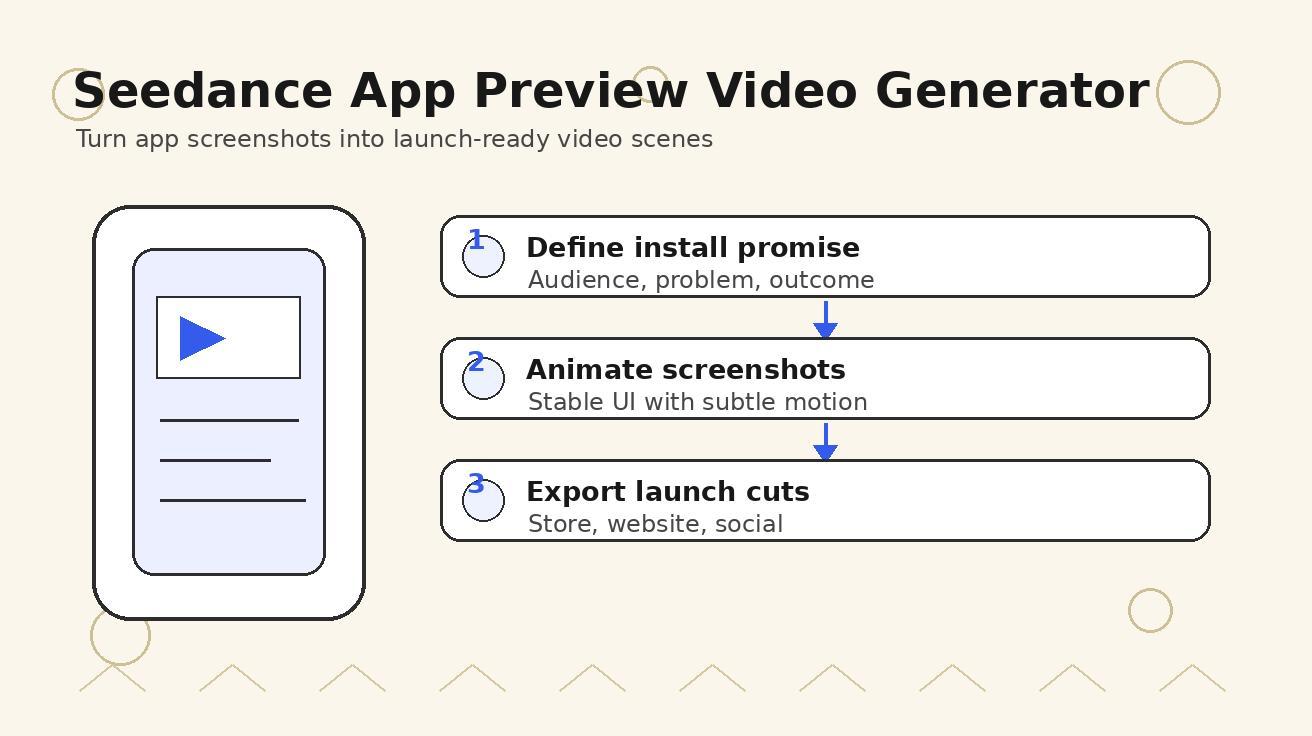
Seedance App Preview Video Generator 2026: Create App Store and Product Launch Clips
Use Seedance to turn app screenshots, feature copy, and launch goals into App Store previews, Google Play promo videos, and product launch clips.
Read article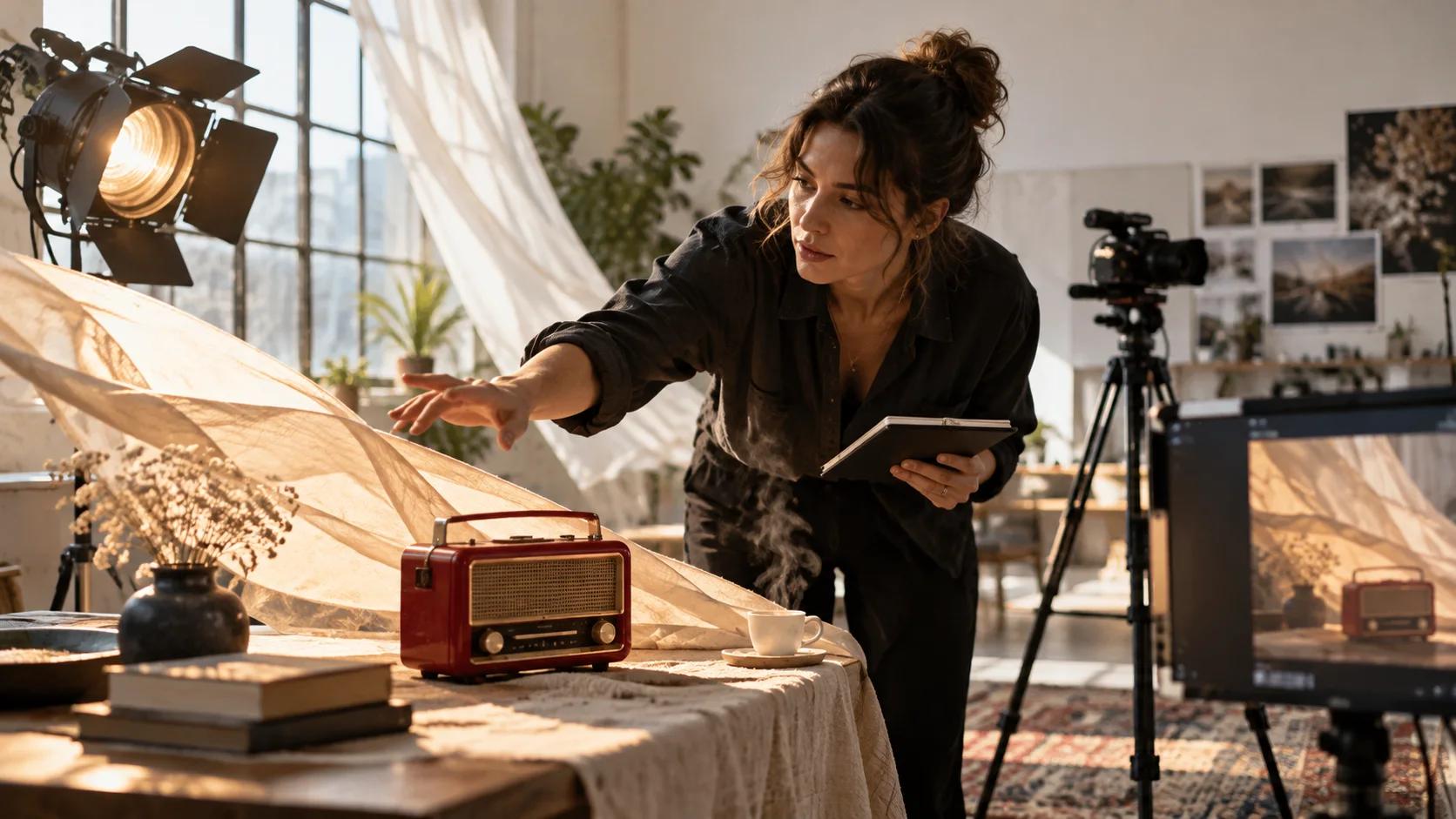
Gemini AI Video Prompt Examples: Copy-Ready Veo Scenes and a Better Prompt Formula
Copy Gemini AI video prompt examples for cinematic motion, product ads, dialogue, and vertical clips, then adapt them with a practical Veo prompt formula.
Read article
How to Keep Product Shape Consistent in AI Video Ads
Lock product geometry, packaging, labels, references, camera angles, and approval checks so AI video ads preserve the real SKU across every shot.
Read article