
Best AI Video Generator for YouTube Content Creators (2026)

YouTube content creators face a constant challenge: producing high-quality, engaging video content at scale without spending enormous budgets on production. In 2026, AI video generators have matured to the point where they can genuinely transform a creator's workflow — providing stunning B-roll, establishing shots, visual metaphors, and dynamic background footage that previously required expensive shoots or stock subscriptions.
Quick Answer: The best AI video generation tools in 2025 combine quality output, ease of use, and affordability — Seedance leads this list with its state-of-the-art models, intuitive workflow, and exceptional results for creators of all skill levels.
This guide reviews the best AI video generators specifically for YouTube creators in 2026, with detailed analysis of how each tool fits different creator workflows and content types.
Why YouTube Creators Are Embracing AI Video in 2026
The numbers tell the story: over 500 hours of video are uploaded to YouTube every minute in 2026. To stand out in this volume, creators need visual production quality that commands attention. AI video generators allow creators at every budget level to access:
- Professional-quality B-roll without location shoots or stock licensing fees
- Custom visual content that matches their exact narrative needs
- Rapid content iteration — test multiple visual treatments quickly
- Consistent brand aesthetics across a channel's content
- Time savings that allow focus on scripting, strategy, and audience engagement
The best YouTube creators in 2026 have incorporated AI video generation as a standard part of their production stack, using it alongside traditional footage to create more visually compelling videos.
What Makes an AI Video Generator Good for YouTube?
Before diving into specific tools, here's what YouTube creators specifically need from an AI video generator:
16:9 Output Quality
YouTube's primary format is 16:9 widescreen. Any tool you use should excel at 16:9 output at 1080p or higher. Some AI generators are optimized for vertical content (9:16) for short-form — you may need different tools for different formats.
B-Roll Versatility
YouTube creators primarily use AI video for B-roll — the supplementary footage that plays while narration continues. Good B-roll AI output should be:
- Seamlessly loopable or at least usable in 5-10 second segments
- Stylistically neutral enough to match your main footage
- Relevant to a broad range of topics
Audio Compatibility
Some YouTube creators want AI-generated video without audio (they'll add their own voice-over and music). Others want AI-generated ambient sound. Know which you need before choosing a tool.
Generation Speed
A YouTuber producing 2-4 videos per week needs tools that generate footage quickly. Some AI generators are faster than others — for high-volume creators, generation speed matters.
Cost Efficiency
YouTube is a long game — sustainable tools are ones you can afford indefinitely. Calculate the monthly cost relative to the value delivered and your channel's revenue stage.
Top AI Video Generators for YouTube Creators (2026)
1. Seedance — Best Overall for YouTube B-Roll
Seedance has become the go-to AI video generator for serious YouTube content creators in 2026. Here's why:
What makes Seedance excellent for YouTube:
- High-quality 16:9 output that looks genuinely cinematic, not "AI-looking"
- Text-to-video that understands complex scene descriptions needed for B-roll
- Image-to-video for animating reference images or screenshots
- Consistent stylistic output — you can establish a visual language for your channel
- Competitive pricing that makes it sustainable for regular use
Best use cases on YouTube:
- Technology review channels (product visualization, interface animations)
- Educational channels (concept visualization, historical recreation)
- Finance and business channels (abstract concept visualization, data-driven footage)
- Travel and lifestyle channels (establishing shots, scene-setting footage)
Seedance workflow for YouTube:
- Write your video script with B-roll notes
- For each B-roll moment, create a Seedance prompt
- Generate 2-3 variations per segment
- Select best clips and integrate into editing timeline
- Match color grading between AI footage and any main camera footage
2. Google Veo 3 — Best Quality, Premium Pricing
Google Veo 3 produces the highest quality AI video available in 2026, with native audio generation that's genuinely impressive. For creators who prioritize absolute quality, it's the benchmark.
What makes Veo 3 excellent:
- Highest visual fidelity available
- Native audio generation (ambient sound synchronized with visuals)
- Up to 2-minute clips in a single generation
- Photorealistic output that's difficult to distinguish from real footage
Limitations for YouTube creators:
- Higher cost than alternatives
- Access limited to Google One AI Premium subscribers or Vertex AI
- Less control over subtle stylistic choices compared to some alternatives
Best for: High-value YouTube channels (financial, educational, brand channels) where per-video production quality justifies premium cost.
3. Runway Gen-4 — Best for Character-Consistent Content
Runway remains a strong choice for YouTube creators who need character-consistent footage across multiple segments. The character consistency tools are the best in the market.
What makes Runway good for YouTube:
- Strong character consistency across multiple generations
- Excellent camera control features
- Growing library of tools beyond basic text-to-video
- Large creator community with tutorials
Limitations:
- No native audio (add music and sound in post)
- High-volume generation can get expensive
- Visual style is distinctive (recognizably "Runway")
Best for: Channels that feature recurring characters or people, narrative storytelling channels.
4. Kling AI — Best for Action and Motion
Kling AI (from Kuaishou) has strong motion generation — particularly for action sequences, sports, and dynamic movement.
What makes Kling good for YouTube:
- Superior motion quality for dynamic action
- Good for sports, fitness, and activity content
- Lower cost than premium options
- Consistent quality for movement-focused scenes
Limitations:
- Weaker on dialogue and human faces
- Less versatility for talking-head adjacent content
Best for: Fitness channels, sports commentary channels, action-focused content.
5. Pika — Best for Quick Social-First Creators
Pika is fast, accessible, and great for YouTube Shorts and quick content iterations.
What makes Pika good for YouTube (Shorts):
- Fast generation times
- Simple interface
- Good for vertical (9:16) short-form content
- Reasonable free tier for testing
Limitations:
- Lower ceiling quality than premium options
- Less control over complex scenes
- Better for short segments than long-form
Best for: YouTube Shorts creators, quick iteration, social-first channels.
YouTube Content Types and AI Video Strategy
Different YouTube niches use AI video in different ways. Here's a breakdown:
Tech Review Channels
Tech reviewers can use AI video to:
- Visualize abstract technical concepts ("how does neural network training work?")
- Create stylized product reveal sequences
- Generate montages of tech lifestyle scenes
- Animate specification comparisons
Recommended approach: Seedance for concept visualization, Runway for product-adjacent scenes.
Finance and Business Channels
Finance creators face the challenge of making abstract topics visual. AI video is perfect for:
- Market motion abstractions (rising and falling indicators)
- Business concept metaphors (growth, risk, opportunity)
- Historical economic scene recreation
- Data visualization animations
Recommended approach: Seedance for abstract business visualization, Veo 3 for premium scene quality.
Educational and Explainer Channels
Education YouTubers need to make ideas tangible. AI video helps:
- Illustrate historical events and time periods
- Visualize scientific processes and phenomena
- Create consistent visual language for concept explanation
- Generate diverse contextual footage for any topic
Recommended approach: Seedance for broad topic coverage, Veo 3 for premium educational series.
Lifestyle and Vlog-Adjacent Channels
Lifestyle channels use AI to extend their visual storytelling:
- Seasonal and location footage they haven't personally shot
- Establishing shots for different locations
- Transition sequences and intros/outros
- Abstract mood footage for voiceover segments
Recommended approach: Seedance for variety and cost efficiency.
Gaming Channels
Gaming creators use AI video to:
- Create dramatic intros and outros
- Visualize gaming metaphors and concepts
- Generate thumbnail-quality scene concepts
Recommended approach: Pika for quick iterations, Kling for action sequences.
Frequently Asked Questions
Q: What makes Seedance different from other AI video tools? A: Seedance combines state-of-the-art AI models with an intuitive interface, making professional video creation accessible to everyone. Its unique blend of powerful generation capabilities, fast processing, and affordable pricing sets it apart from competitors.
Q: How good is the video quality from Seedance? A: Seedance produces high-quality videos with smooth motion, accurate prompt adherence, and impressive visual fidelity. The platform supports multiple aspect ratios and resolutions, including HD output for professional use cases.
Q: Is Seedance suitable for professional video creators? A: Absolutely. Seedance is used by content creators, marketers, filmmakers, and businesses worldwide. Its advanced controls, high-resolution output, and batch generation capabilities make it a powerful tool for professional workflows.
Practical Workflow: Integrating AI Video into Your YouTube Production
Here's a concrete workflow for a YouTube creator adding AI video to their process:
Pre-Production Phase
-
Script your video with B-roll timestamps
- As you write, note moments that need visual support
- Tag each moment with a brief AI prompt concept
- Identify which segments are highest priority for AI footage
-
Build your prompt library
- Create a document with your channel's consistent visual style
- Define your go-to lighting descriptors ("warm golden hour," "soft studio lighting")
- Note camera styles that match your channel aesthetic
Production Phase
-
Generate AI footage in batches
- Generate all B-roll segments for an episode in a single session
- Use 2-3 variations per segment
- Download and organize by scene number
-
Quality check before editing
- Watch each clip for artifacts
- Note which clips need new generations
- Re-prompt for any segments that didn't work
Post-Production Phase
-
Edit AI footage into your timeline
- AI B-roll typically goes under voice-over segments
- Match edit points to natural pause or transition moments in narration
- Use color grading to unify AI footage with any main camera footage
-
Add audio
- AI video (except Veo 3 with audio) needs music and sound added
- Stock music or AI music generation (Suno, Udio) pairs well
Prompt Writing Tips Specifically for YouTube B-Roll
Writing prompts for YouTube B-roll has specific requirements different from creative video generation:
Keep It Relevant and Generic Enough to Reuse
For B-roll that supports spoken content, prompts should be:
- Topic-relevant but not too literal (you want footage that amplifies, not illustrates)
- Stylistically consistent with your channel aesthetic
- Broad enough that the clip is useful in multiple contexts
Too literal: "A doctor examining a patient's blood pressure results with concern on their face" Better for B-roll: "Medical professional reviewing charts in a modern clinical setting, warm professional lighting, medium shot"
Build a Prompt Template Library
For consistent B-roll across your channel, standardize your prompt structure:
Template format:
[Subject/scene description], [environment], [lighting description], [camera style], [aesthetic mood]
Example templates:
- Business: "Professional team in discussion around a glass conference table, modern open office, warm natural light, medium wide shot, productive focused atmosphere"
- Technology: "Close-up of hands typing on a laptop with code on screen, dark desk setup, blue monitor glow, shallow depth of field, tech aesthetic"
- Nature: "[Season] [location type] landscape, [weather/time], wide establishing shot, cinematic"
Match Prompt Complexity to Content Importance
Not all B-roll moments are equal. For key visual moments:
- More detailed prompts, 2-3 regenerations For background atmosphere:
- Simpler prompts, single generation
Measuring ROI: Is AI Video Worth It for YouTube?
Let's run the numbers for a practical assessment:
Cost Comparison
Traditional B-roll options:
- Stock footage subscription (Shutterstock, Getty): $50-200/month
- Shooting your own footage: equipment, time, travel
- Hiring a videographer for B-roll: $500-2000/day
AI video generation:
- Seedance: Varies by plan, typically $20-50/month for regular creators
- Runway: $15-35/month (standard plans)
- Veo 3: Google One AI Premium at $19.99/month (includes other features)
Quality Considerations
AI video in 2026 genuinely rivals mid-tier stock footage in many contexts. For abstract concepts, technology, and general lifestyle content, AI-generated footage is often indistinguishable from expensive stock.
Where stock footage may still win:
- Specific celebrity appearances (obviously)
- News and current events footage
- Sports and major events
- Medical and scientific footage requiring accuracy
Time Value
Beyond direct cost, AI video saves significant time:
- No searching through stock libraries (always the right clip available)
- Custom content that matches your script precisely
- Instant availability (no licensing delays)
Common Mistakes YouTube Creators Make with AI Video
Over-Relying on AI for Faces
AI-generated human faces and people remain a weaker area. For content featuring people, use real footage. Reserve AI for:
- Environmental and establishing shots
- Abstract and conceptual content
- Product visualization
- Non-human subjects
Ignoring Style Consistency
A mix of very different AI visual styles across a video (or your channel) undermines production quality. Develop a consistent prompt template library and stick to it.
Not Color Grading
AI video has its own default color profile that may clash with your main camera footage. A quick color grade in DaVinci Resolve or Premiere Pro can unify everything.
Using AI as a Substitute for Good Storytelling
AI video generates visual content — it doesn't tell stories. The best YouTube creators use AI to enhance their storytelling, not replace the fundamentals of compelling video narrative.
The Future of AI Video on YouTube
In 2026, AI video generation is rapidly becoming a standard tool rather than a novelty. Looking ahead:
- Quality gap with real footage will narrow further — current limitations around character consistency and fine detail are improving every release cycle
- Style personalization will improve — ability to train on your own visual library for consistent brand aesthetic
- Native YouTube integration may emerge — tools built directly into creator workflows
- Audio generation will become standard — currently a Veo 3 differentiator, soon expected everywhere
YouTube creators who develop AI video fluency now will have significant advantages as these tools mature.
Building a Sustainable AI Video Practice for YouTube
The creators getting the most value from AI video in 2026 share a few habits that separate consistent results from inconsistent ones:
Maintain a Running Prompt Library
Every time you write a prompt that generates excellent footage, save it. Document what made it work — the lighting description, the camera angle, the mood keywords. Over time you'll build a library of high-performing prompt patterns specific to your channel's visual language.
A well-organized prompt library becomes one of your channel's competitive advantages. It allows you to:
- Onboard editors with consistent visual standards
- Quickly generate content in your established style
- Train new prompts based on what's worked before
A/B Test Visual Approaches
AI video makes visual A/B testing finally accessible. You can generate two completely different visual treatments for the same content topic and compare which performs better with your audience in terms of watch time and engagement.
For example, if you're making a finance video about compound interest, test two approaches:
- Abstract visual metaphor (growing geometric forms)
- Concrete lifestyle visualization (person's life changing over time)
The data will tell you what your audience responds to.
Plan Your Thumbnail Integration
AI video tools often produce individual frames that work excellently as YouTube thumbnails. When generating B-roll, also generate some more dramatic, cinematic single-moment generations specifically designed for thumbnail use. The same tool that gives you B-roll can also produce custom thumbnail background imagery in your channel's exact visual style.
Keep Up with Model Updates
The AI video space moves fast. The top tools update their underlying models every few months, and quality improvements can be dramatic. Set a reminder to test each tool's output quarterly — a generator that didn't work for your needs three months ago might be exactly right today.
Combine AI Video with AI Audio for Fully AI-Produced Segments
One emerging creator workflow in 2026 pairs AI video generation with AI audio generation (Suno, Udio, or Veo 3's native audio) to create fully AI-produced segments within a larger video. For example:
- Intro sequences: AI visual + AI music tailored to your channel's mood
- Transition montages: 15-30 second visual interludes with AI ambient audio
- Concept explainer segments: AI visuals + AI voiceover (ElevenLabs) + AI music
Full AI production segments can reduce post-production time significantly while maintaining or improving visual quality compared to manually sourced alternatives. Many creators use them for the parts of a video where the main camera footage would otherwise be weak.
Track Which AI Footage Drives Retention
YouTube Studio's audience retention graph is your best feedback tool for AI video quality. Watch for retention patterns around AI footage segments:
- Retention bump: Your AI footage is adding value, keeping viewers interested
- Retention drop: The footage may be mismatched with your narration, or lower quality than expected
Use this data to refine your prompting approach. If abstract footage drops retention, try more specific and literal prompts. If lifestyle footage performs well, invest more in that direction.
Conclusion: Start Using AI Video for Your YouTube Channel
The best AI video generator for YouTube isn't a single answer — it depends on your niche, budget, and production style. But here's a practical recommendation:
- Start with Seedance for versatile, high-quality B-roll generation at competitive cost
- Add Veo 3 access for premium segments and when audio generation matters
- Use Runway if character consistency is critical to your content
The creators seeing the biggest benefits are those who commit to developing their prompt writing skills and building systematic workflows around AI tools. It's not about replacing production — it's about expanding what's possible.
The barrier to entry has never been lower. You don't need expensive equipment, large budgets, or advanced technical skills to start using AI video in your YouTube content. The tools are accessible, the learning curve is manageable, and the quality improvements compound quickly as you develop experience and refine your approach.
Whether you're a solo creator with a laptop and a camera, or a production team looking to streamline operations, AI video generation represents one of the highest-leverage investments you can make in your YouTube channel right now. The creators who build these skills in 2026 will carry a significant advantage through every future evolution of the platform.
Start generating your first AI B-roll this week. Your next video will be better for it — and the one after that will be even better still.
Keywords: best ai video generator youtube, ai video youtube creators 2026, ai video b-roll youtube, youtube ai video tool
Ready to create your own AI video?
Turn ideas, text prompts, and images into polished videos with Seedance. If this article helped, the fastest next step is to try the product.
Free credits on signup. Plans from $28/month.
Related Articles
More posts in the same locale you may want to read next.
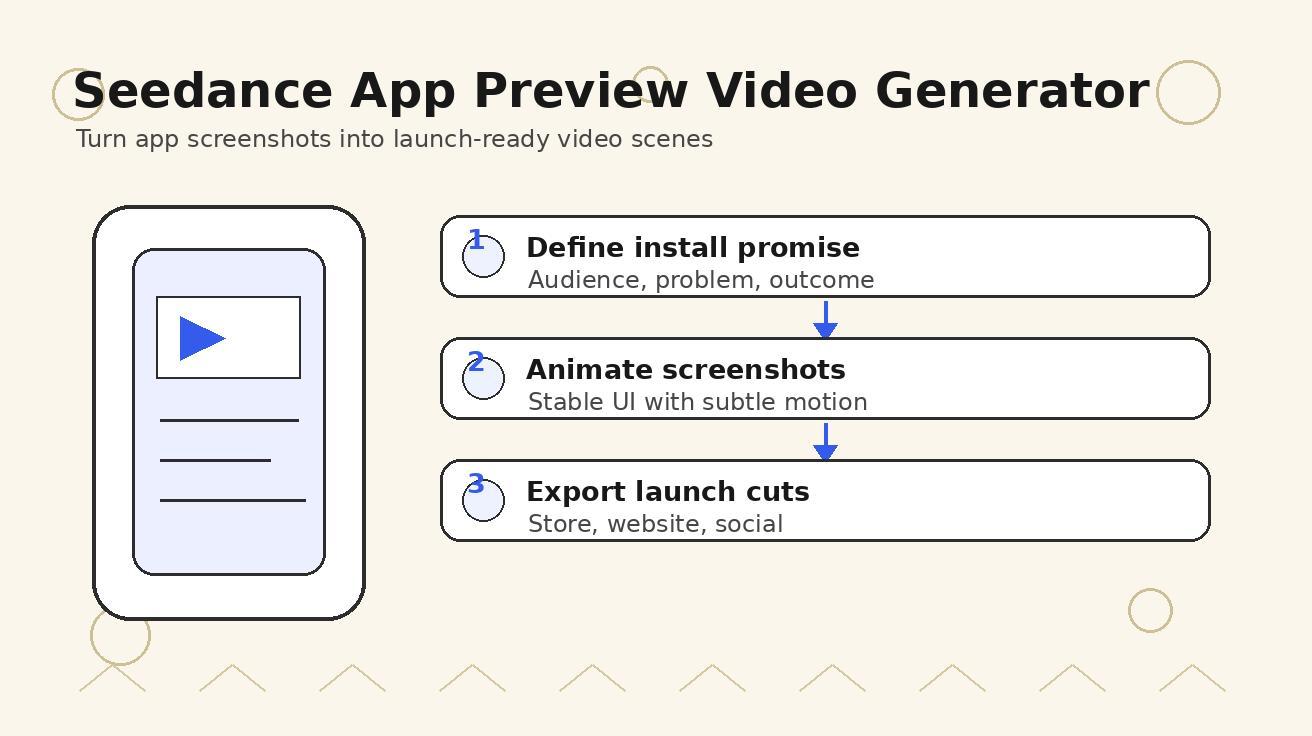
Seedance App Preview Video Generator 2026: Create App Store and Product Launch Clips
Use Seedance to turn app screenshots, feature copy, and launch goals into App Store previews, Google Play promo videos, and product launch clips.
Read article
Gemini AI Video Prompt Examples: Copy-Ready Veo Scenes and a Better Prompt Formula
Copy Gemini AI video prompt examples for cinematic motion, product ads, dialogue, and vertical clips, then adapt them with a practical Veo prompt formula.
Read article
How to Keep Product Shape Consistent in AI Video Ads
Lock product geometry, packaging, labels, references, camera angles, and approval checks so AI video ads preserve the real SKU across every shot.
Read article