
AI Video Storytelling: How to Tell Compelling Stories with AI Video Generators in 2026
Storytelling is the oldest form of human communication, but in 2026, the tools we use to tell stories have been completely transformed. AI video generators have democratized film-level storytelling, allowing individual creators, small studios, and brands to produce emotionally resonant video narratives without Hollywood budgets or crews.
Quick Answer: AI video generation with Seedance lets you create stunning, professional-quality videos from text prompts or images in just minutes — no editing experience required.
This guide explores everything you need to know about AI video storytelling—from narrative structure and character consistency to pacing, emotion, and the technical craft of making AI-generated stories that move audiences.
Why AI Video Storytelling Matters in 2026
Before diving into technique, it's worth understanding why AI video storytelling has become so significant:
Accessibility: A solo creator with a laptop can now produce 5-minute short films that would have required a production team of 20 just a few years ago. AI video tools handle cinematography, lighting, and visual effects automatically.
Speed: Traditional video production timelines measured in weeks or months have compressed to days or hours. This enables rapid iteration, real-time content creation, and the ability to respond to cultural moments instantly.
Cost: Production costs that once ran into hundreds of thousands of dollars for polished video content now run into tens or hundreds of dollars. This levels the playing field for indie creators and small businesses.
Creative freedom: AI tools don't have physical limitations. You can shoot in locations that don't exist, feature characters that aren't human, and create visual metaphors that would be impossible to film in the real world.
Try AI video storytelling free on Seedance →
The Foundations of Great Video Storytelling
Before you touch any AI tool, you need to understand the fundamentals of storytelling. AI amplifies your storytelling ability—it doesn't replace the need for it.
The Three-Act Structure
The most reliable narrative framework for short-form video follows the classic three-act structure, compressed for today's attention spans:
Act 1 – Setup (10-20% of runtime): Introduce your protagonist, their world, and the central conflict or question. In a 60-second video, this might be the first 10 seconds. In a 5-minute film, it might be the first minute.
Act 2 – Confrontation (60-70% of runtime): Your protagonist faces escalating obstacles as they pursue their goal. Tension builds. Stakes become clearer. The audience becomes emotionally invested.
Act 3 – Resolution (10-20% of runtime): The conflict resolves—not necessarily with a happy ending, but with a satisfying emotional conclusion. The protagonist has changed.
Character and Conflict
Every compelling story needs:
-
A protagonist we care about: Even in a 30-second brand video, your main character needs a clear desire and a relatable human quality.
-
A clear conflict: What stands between your protagonist and their goal? External obstacles (a competitor, a time limit, a physical challenge) create plot. Internal conflicts (self-doubt, moral dilemmas, fear) create depth.
-
Emotional stakes: Why should the audience care? The higher the emotional stakes, the more engaged the viewer.
-
A transformation: Stories that end with a character in exactly the same place they started feel incomplete. Even subtle transformations—a new understanding, a shift in perspective—create narrative satisfaction.
Planning Your AI Video Story
Scripting for AI Generation
AI video generators interpret text prompts to create scenes. Effective scripting for AI video differs from traditional screenwriting in important ways:
Be specific about visual elements: Instead of "John walks to work," write "A tired middle-aged man in a grey suit walks down a rain-slicked city street at dawn, head slightly bowed, briefcase in hand." The more visual detail you provide, the better the AI output.
Think in shots: Break your script into discrete visual moments. Each prompt or scene description should represent a coherent shot—not a sequence of actions, but a single, clear visual composition.
Include emotional cues: AI tools like Seedance can interpret emotional context. "The woman looks out the rain-streaked window with quiet longing" gives the AI guidance about lighting, expression, and atmosphere.
Plan for transitions: Consider how each shot will connect to the next. AI-generated footage works best when scenes have clear visual logic connecting them.
Storyboarding Your AI Video
A storyboard is essential for any video longer than 30 seconds. For AI video, your storyboard should include:
- Shot type (wide, medium, close-up, extreme close-up)
- Character position and movement
- Key emotional moment in the shot
- Text prompt draft for the AI generator
- How this shot connects to the previous and next shot
You can create storyboards with simple sketches, slide decks, or even rough text outlines. The goal is to visualize your entire story before you start generating footage.
The Shot List
A comprehensive shot list for an AI video story typically includes:
- Establishing shots: Wide shots that set the scene and orient the viewer in space and time
- Character introduction shots: Close-ups or medium shots that establish your protagonist
- Action shots: Footage of your characters doing things relevant to the plot
- Reaction shots: Characters responding emotionally to events
- Cutaways: Secondary footage that illustrates or contextualizes the main action
- Resolution shots: Visual confirmation that the story has concluded
Generating Footage with AI Video Tools
Writing Effective Prompts for Story-Driven Video
The quality of your AI video story depends heavily on prompt quality. Here are proven prompt frameworks for storytelling:
Character-Action-Environment-Mood formula: "[Character description] [action/movement] in/at [detailed environment], [lighting and time of day], [emotional atmosphere], [camera style]"
Example: "A young woman with curly red hair reads a handwritten letter at a weathered wooden kitchen table, warm morning light through lace curtains, expression moving from curiosity to quiet joy, handheld camera with gentle motion"
Conflict-tension prompts: "[Character] facing [obstacle/threat], [body language indicating tension], [environment reflecting conflict], [dramatic lighting]"
Example: "A tired entrepreneur stares at a spreadsheet showing declining numbers, shoulders tense, half-empty coffee cup beside her, late-night office with harsh fluorescent light and city darkness beyond the windows"
Resolution prompts: "[Character] experiencing [moment of realization or triumph], [open body language], [environment transformed or revealed in new light], [warm or hopeful lighting]"
Maintaining Character Consistency
One of the greatest challenges in AI video storytelling is keeping your characters visually consistent across multiple shots. Here are proven techniques:
Seed locking: Many AI platforms allow you to lock a visual seed that maintains character appearance across generations. Use this feature whenever possible.
Consistent character descriptions: Create a "character bible" with exact descriptive language for each character, and use identical phrasing in every prompt featuring that character.
Reference image inputs: Platforms like Seedance allow you to provide reference images for characters. Upload a reference image to establish consistent appearance across all shots.
Costume specificity: Include precise clothing descriptions in every prompt. "Man in blue shirt" becomes "man wearing a faded denim button-down shirt, sleeves rolled to elbows, worn collar."
Physical distinguishers: Give characters unique physical traits that are easy to describe and generate consistently—unusual hair, distinctive accessories, specific age markers.
Pacing and Rhythm
Pacing is one of the most powerful storytelling tools, and it translates directly to your shot selection and clip length:
For tension and drama: Use shorter clips (2-3 seconds), faster cuts, close-ups, and tight compositions.
For emotional depth: Allow longer clips (5-8 seconds), slower movements, and medium shots that give audiences time to read character emotions.
For action sequences: Quick cuts between medium and close-up shots create energy and excitement.
For contemplative moments: Long takes with minimal movement invite reflection.
For building to a climax: Gradually increase cut frequency as you approach the story's peak moment.
Advanced AI Video Storytelling Techniques
Visual Metaphor
AI video generators excel at creating visual metaphors that would be expensive or impossible to film conventionally:
- Time compression: Show the passage of time by generating shots of the same location across different times of day or seasons
- Emotional externalization: A character's internal turmoil can be represented by a stormy sea, a collapsing building, or a wildfire
- Contrast: Juxtapose shots of abundance and scarcity, warmth and cold, movement and stillness to create meaning
- Transformation: Generate parallel shots of "before" and "after" states to show change without narration
The Rule of Threes
Three is a powerful storytelling number. Ideas presented in threes feel complete and memorable. In video storytelling:
- Show your protagonist failing twice before succeeding
- Present three pieces of evidence before revealing a conclusion
- Use three character perspectives to triangulate truth
- Establish three visual motifs that recur and evolve throughout the story
Non-Linear Storytelling
AI video makes non-linear storytelling more accessible than ever:
In medias res: Begin at the climax, then cut back to show how you got there. This immediately hooks viewers and creates forward momentum through retrospective reveals.
Parallel editing: Show two storylines developing simultaneously, cutting between them to build tension and eventually bringing them together.
Flashbacks and flash-forwards: AI can generate footage of past events or imagined futures with consistent visual quality, enabling complex temporal storytelling.
Unreliable narration: Generate multiple versions of the same event from different perspectives to create mystery or explore subjective truth.
Sound Design and Music
Video storytelling is an audio-visual medium. Even if you're generating footage with AI tools, your sound choices profoundly affect how the story lands:
Diegetic sound (sounds that exist within the story world) makes footage feel real and grounded. Footsteps, ambient noise, conversation—these cues tell the audience that this world obeys physical laws.
Non-diegetic sound (music, narration, sound effects not heard by characters) shapes emotional response. A tender piano piece transforms a neutral scene into something poignant. Percussion accelerates tension.
Silence: One of the most powerful tools in a storyteller's arsenal. Removing all sound, even briefly, draws the audience into a heightened state of attention.
Voice-over narration: Well-written voice-over can bridge visual gaps, deepen character interiority, and add thematic resonance. It also allows AI video creators to compensate for the challenge of on-screen dialogue.
Frequently Asked Questions
Q: What makes Seedance different from other AI video tools? A: Seedance combines state-of-the-art AI models with an intuitive interface, making professional video creation accessible to everyone. Its unique blend of powerful generation capabilities, fast processing, and affordable pricing sets it apart from competitors.
Q: How good is the video quality from Seedance? A: Seedance produces high-quality videos with smooth motion, accurate prompt adherence, and impressive visual fidelity. The platform supports multiple aspect ratios and resolutions, including HD output for professional use cases.
Q: Is Seedance suitable for professional video creators? A: Absolutely. Seedance is used by content creators, marketers, filmmakers, and businesses worldwide. Its advanced controls, high-resolution output, and batch generation capabilities make it a powerful tool for professional workflows.
AI Video Storytelling for Different Formats
Short-Form Social Media (15-60 seconds)
Platforms like TikTok, Instagram Reels, and YouTube Shorts reward stories that:
- Establish hook in first 3 seconds
- Deliver on that hook within 15 seconds
- Include emotional payoff before 30 seconds
- End with a clear CTA or memorable image
For AI video on social platforms, prioritize high-contrast visuals, clear subjects, and universal emotional moments (joy, surprise, empathy, inspiration).
Medium-Form (2-5 minutes)
YouTube, branded content, and editorial video can sustain 2-5 minute AI stories that:
- Establish world and character in the first 30 seconds
- Build through 3-5 scenes of escalating complexity
- Deliver a satisfying emotional climax
- Allow for more nuanced character development
This format benefits most from careful planning and a genuine story arc, rather than a series of loosely connected visual moments.
Long-Form (5+ minutes)
Short films, documentary content, and long-form branded content require:
- Multiple character arcs
- Subplots that intersect the main story
- Carefully managed pacing with moments of release between tension peaks
- Strong thematic coherence
For long-form AI video storytelling, consider working with a script supervisor to track narrative logic and a detailed shot list to maintain consistency across dozens of generated clips.
What Is Ai Video Storytelling 2026 and Why Does It Matter?
Ai Video Storytelling 2026 is an essential capability for modern content creators and marketers. The best tools for ai video storytelling 2026 combine AI-powered automation with professional-quality outputs — saving hours of manual work while delivering results that meet commercial standards.
In 2025, platforms like Veo 3 and Seedance have made ai video storytelling 2026 more accessible than ever, offering free-tier access alongside professional plans.
How Do You Get Started with Ai Video Storytelling 2026?
Getting started with ai video storytelling 2026 requires just a few steps:
- Choose the right tool for your needs (see comparison above)
- Sign up for a free account — no payment required to start
- Follow the step-by-step guide in this article
- Test with simple examples first, then scale up
Most users can produce their first professional result within 30 minutes of starting.
What Are the Best Tools for Ai Video Storytelling 2026 in 2025?
The top tools for ai video storytelling 2026 in 2025 are:
- Veo 3 — best overall quality, free via Google Gemini
- Kling AI — best mobile experience and free tier generosity
- Runway Gen-4 — best for artistic and cinematic styles
- Pika 2.1 — best for beginners with simple interface
Each tool has strengths in different areas — the best choice depends on your specific use case, volume requirements, and budget.
Common Storytelling Mistakes in AI Video
Prioritizing spectacle over story: Beautiful AI footage without narrative purpose leaves audiences impressed but unmoved. Always ask: does this shot serve the story?
Inconsistent character appearance: Nothing breaks narrative immersion faster than a character who looks completely different between scenes. Invest time in character consistency techniques.
Unclear motivation: If the audience doesn't understand why your protagonist wants something, they can't be emotionally invested in whether they get it.
Missing emotional beats: In the rush to generate footage, creators often skip the quiet moments—reactions, pauses, and reflective beats—that allow emotional resonance to accumulate.
Neglecting endings: Many AI video creators front-load their creative effort and rush the resolution. The ending is what the audience will remember. Give it the attention it deserves.
Tools and Workflow for AI Video Storytellers
A professional AI video storytelling workflow typically looks like this:
1. Pre-production (1-2 hours for a 1-minute story):
- Develop concept and treatment
- Write script
- Create storyboard
- Draft prompt library for each shot
2. Generation (30 minutes to 2 hours):
- Generate character reference footage
- Produce scene footage batch by batch
- Review and regenerate unsatisfactory shots
3. Post-production (1-3 hours):
- Assemble footage in editing timeline
- Add transitions
- Layer in sound design and music
- Color grade for consistency and mood
- Add text, titles, or captions as needed
4. Review and refinement (30-60 minutes):
- Watch complete cut from audience perspective
- Note any narrative confusion, pacing issues, or visual inconsistencies
- Generate replacement footage as needed
- Final pass for technical quality
Start your AI video story with Seedance →
Real-World AI Video Storytelling Applications
Brand Storytelling
AI video enables brands to tell authentic stories at scale. Product origin stories, customer transformation narratives, founder journeys—all can be produced quickly and cost-effectively with AI tools.
Effective brand stories with AI video typically feature:
- A real human problem as the inciting incident
- The product or service as the solution, demonstrated visually
- Authentic emotional moments rather than polished commercial aesthetics
- Social proof woven into the narrative
Educational Storytelling
Complex information becomes memorable when wrapped in narrative. AI video storytelling can transform dry instructional content into engaging educational experiences:
- Historical narratives brought to life visually
- Scientific processes explained through visual metaphor and character-driven scenarios
- Case studies dramatized for emotional engagement
- Concept explanations framed as problem-solving journeys
Documentary-Style Content
AI video can support documentary storytelling approaches that blend factual content with emotional narrative:
- Visual reconstructions of events
- Illustrative footage for interview-based documentaries
- Abstract visualizations of data or concepts
- Stylized representations of reported experiences
Personal and Creative Projects
For individual creators, AI video storytelling democratizes forms of expression that were previously inaccessible:
- Short fiction films
- Personal essays in visual form
- Music videos and lyric videos
- Visual poetry and experimental narratives
Measuring Story Effectiveness
Great storytelling isn't just a subjective judgment—it produces measurable results:
Completion rate: What percentage of viewers watch to the end? High completion rates indicate strong narrative engagement.
Emotional response: Comments expressing emotional reactions (moved, inspired, nostalgic, excited) signal that your story resonated.
Share rate: Stories that move people get shared. High share rates indicate that your story has achieved social resonance.
Brand lift: For branded content, surveys measuring brand awareness, consideration, and sentiment before and after exposure reveal storytelling effectiveness.
Time on page: For website-hosted video, extended time on page indicates that the story created a reason to linger.
The Future of AI Video Storytelling
The capabilities of AI video tools are advancing rapidly. Several emerging developments will shape the next generation of AI storytelling:
Improved character consistency: Next-generation AI models are dramatically better at maintaining consistent character appearance across scenes, making long-form character-driven storytelling increasingly viable.
Real-time generation: As processing speeds improve, near-real-time video generation will enable live storytelling and interactive narrative experiences.
Narrative AI collaboration: AI tools are beginning to assist with story development itself—suggesting plot directions, identifying narrative gaps, and flagging emotional inconsistencies.
Multi-modal integration: Tighter integration between video generation, audio synthesis, and text will enable single-prompt story generation where AI produces a complete, edited story from a brief description.
Interactive storytelling: Viewer-responsive AI video that adapts the story based on audience choices is moving from experimental technology to practical creative tool.
Getting Started with AI Video Storytelling
If you're new to AI video storytelling, here's a practical path forward:
Week 1: Master the tools. Generate 10-20 individual shots using Seedance, experimenting with different prompt styles and learning how the AI interprets your descriptions.
Week 2: Create a 30-second narrative. Choose a simple three-act structure with 8-12 shots. Focus on maintaining character consistency and narrative clarity.
Week 3: Extend to 2-3 minutes. Add subplots, secondary characters, and more sophisticated emotional beats.
Week 4: Produce your first complete AI short story. Apply everything you've learned about structure, pacing, character, and visual metaphor.
The learning curve is real, but the creative rewards are extraordinary. AI video tools have made cinematic storytelling accessible to anyone with a story to tell.
Conclusion
AI video storytelling represents one of the most exciting creative developments of the 2020s. The technology has matured to the point where skilled storytellers can produce genuinely moving, professionally polished video narratives without traditional film production infrastructure.
The democratization of storytelling isn't new—every new medium has expanded who gets to tell stories. But AI video moves at a different scale and speed. In 2026, there are more stories being told through video than at any point in human history, and AI tools are a major reason why.
The fundamentals haven't changed: a compelling character, a clear conflict, emotional stakes, and a satisfying resolution still drive great stories. What's changed is that those stories can now be told visually, powerfully, and accessibly by anyone.
Start telling your story with Seedance today →
Keywords: AI video storytelling, AI story generator, how to tell stories with AI video, AI video narrative, AI filmmaking 2026
Ready to try it yourself?
Put the steps from this guide into practice with Seedance and turn prompts or images into polished videos in minutes.
Free credits on signup. Plans from $28/month.
Related Articles
More posts in the same locale you may want to read next.
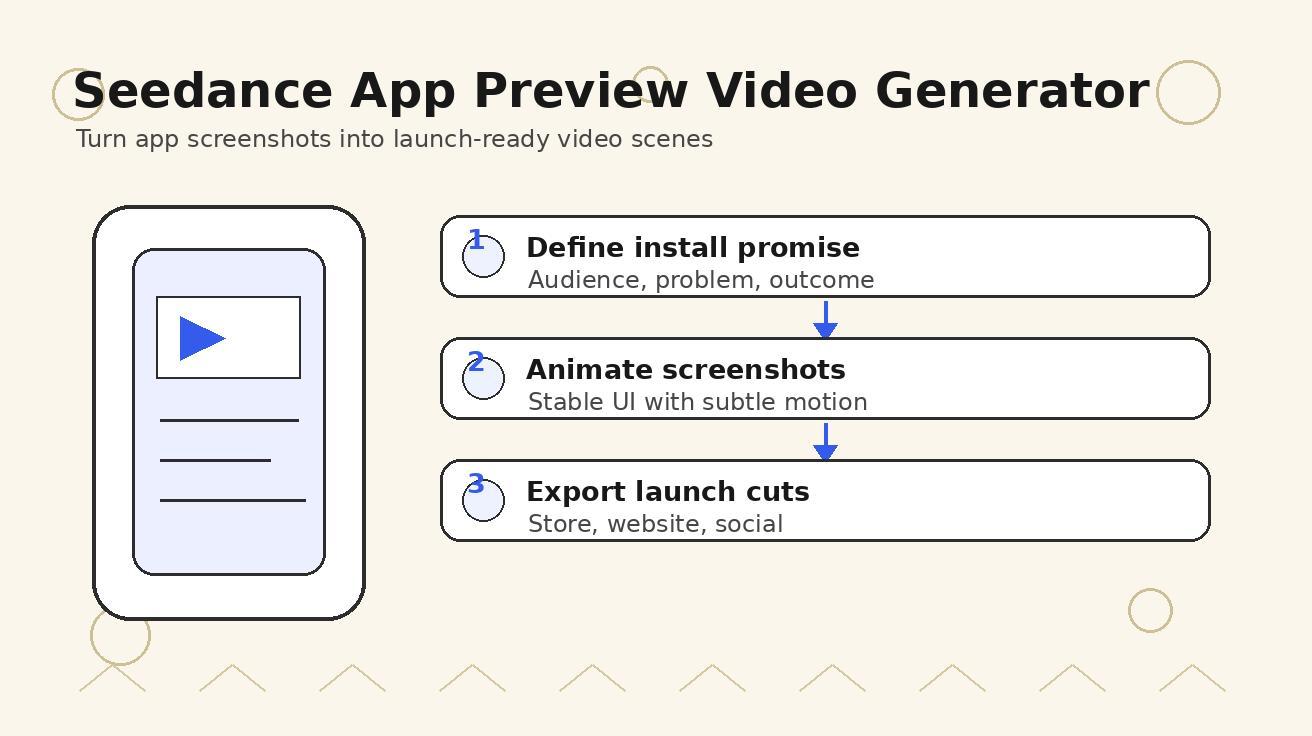
Seedance App Preview Video Generator 2026: Create App Store and Product Launch Clips
Use Seedance to turn app screenshots, feature copy, and launch goals into App Store previews, Google Play promo videos, and product launch clips.
Read article
Gemini AI Video Prompt Examples: Copy-Ready Veo Scenes and a Better Prompt Formula
Copy Gemini AI video prompt examples for cinematic motion, product ads, dialogue, and vertical clips, then adapt them with a practical Veo prompt formula.
Read article
How to Keep Product Shape Consistent in AI Video Ads
Lock product geometry, packaging, labels, references, camera angles, and approval checks so AI video ads preserve the real SKU across every shot.
Read article