
Veo 3 vs Sora 2: Which AI Video Generator Is Better in 2026?
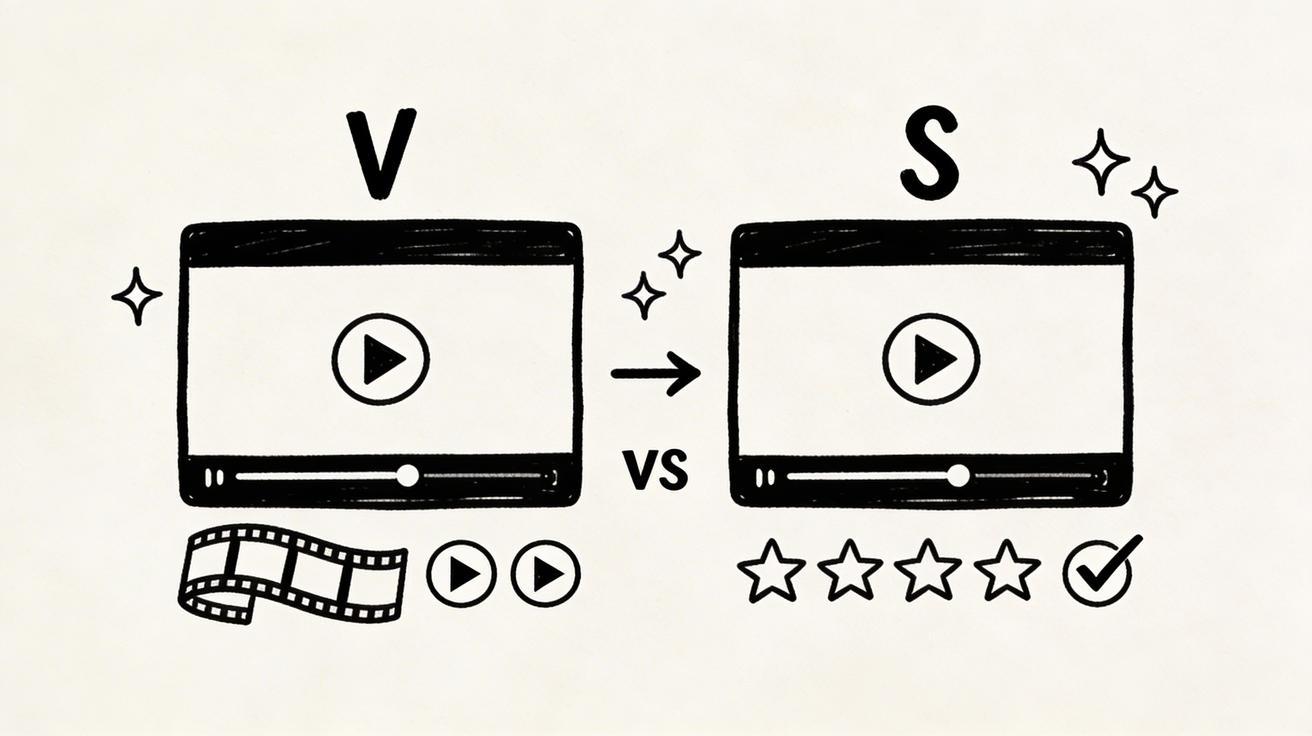
⚠️ Update (March 2026): OpenAI has officially shut down Sora. The Sora app, mobile experience, and API are all being discontinued. Looking for an alternative? Try Seedance Video Generator — the best Sora replacement available now.
Choosing between Google's Veo 3 and OpenAI's Sora 2 is one of the biggest decisions facing creators in 2026. Both models represent the cutting edge of AI video generation, but they take fundamentally different approaches to turning text and images into video.
Quick Answer: Both Veo 3 and Sora 2: Which AI Video Generator Is Better in 2026? have their strengths, but Seedance stands out with its advanced AI video generation capabilities, intuitive interface, and powerful customization options — making it the top choice for creators who need professional-quality results fast.
We've spent weeks testing both models across dozens of real-world scenarios — cinematic storytelling, product demos, social media clips, and more. This comparison breaks down exactly where each model excels, where it falls short, and which one deserves your time and money.
Quick verdict: Veo 3 wins on visual fidelity and audio integration. Sora 2 wins on creative flexibility and stylized content. The best option? Use both through Seedance.tv, which gives you access to both models on a single platform.
Veo 3 vs Sora 2: Quick Comparison Table
| Feature | Veo 3 (Google DeepMind) | Sora 2 (OpenAI) |
|---|---|---|
| Max Resolution | 4K (2160p) | 1080p |
| Max Duration | 8 seconds | 20 seconds |
| Native Audio | Yes (dialogue, SFX, ambient) | No (separate audio tools) |
| Text-to-Video | ✅ Excellent | ✅ Excellent |
| Image-to-Video | ✅ Excellent | ✅ Good |
| Physics Accuracy | Very High | High |
| Human Faces | Near-photorealistic | Good, occasional artifacts |
| Stylized/Artistic | Good | Excellent |
| Generation Speed | 2-4 minutes | 1-3 minutes |
| Available on Seedance.tv | ✅ Yes | ✅ Yes |
Video Quality: Veo 3 Takes the Lead
Resolution and Detail
Veo 3's headline feature is its 4K output capability. In our tests, Veo 3 consistently produced sharper, more detailed frames than Sora 2's 1080p maximum. The difference is especially noticeable in landscape shots, architectural scenes, and anything with fine textures like fabric, foliage, or skin.
That said, resolution isn't everything. At 1080p, Sora 2 still produces remarkably clean footage that's more than adequate for social media, web content, and most professional applications.
Realism and Physics
Both models handle basic physics well — water flows, objects fall, smoke dissipates naturally. But Veo 3 has a clear edge in complex physical interactions. Pouring liquids, cloth dynamics, and multi-object collisions look noticeably more realistic with Veo 3.
Sora 2 occasionally struggles with:
- Liquid interactions (splashing, pouring)
- Complex hand movements
- Reflections on curved surfaces
Veo 3 handles these scenarios more consistently, though it's not perfect either. Both models still occasionally produce the telltale "AI shimmer" on highly reflective surfaces.
Human Faces and Bodies
This is where Veo 3 really shines. Google's training data advantage shows — faces in Veo 3 outputs are near-photorealistic, with natural skin textures, realistic eye movements, and convincing lip sync when paired with audio.
Sora 2 produces good faces but occasionally shows artifacts around the eyes, hairline, and teeth. For content that features close-up human subjects, Veo 3 is the safer choice.
Audio: Veo 3's Killer Feature
The single biggest differentiator between these two models is audio. Veo 3 generates synchronized audio natively — dialogue, sound effects, and ambient sound all come built into the video output.
This is a game-changer for several use cases:
- Short films and storytelling: Characters can speak with lip-synced dialogue
- Product demos: Natural sound effects make demos feel professional
- Social media content: No need for separate audio editing
Sora 2 outputs video only. You'll need to add audio separately using tools like ElevenLabs, Kling Audio, or manual editing. This isn't necessarily a dealbreaker, but it adds significant time to your workflow.
Try generating videos with native audio on Seedance.tv's text-to-video tool to experience the difference firsthand.
Creative Flexibility: Sora 2 Fights Back
Stylized and Artistic Content
While Veo 3 excels at photorealism, Sora 2 has a clear advantage when it comes to stylized content. Anime, watercolor, oil painting, claymation, pixel art — Sora 2 handles artistic styles with more consistency and flair.
In our tests, prompting Sora 2 with "Studio Ghibli style" or "Wes Anderson aesthetic" produced remarkably cohesive results. Veo 3 can do stylized content too, but it tends to drift back toward photorealism, especially in longer clips.
Prompt Interpretation
Sora 2 is generally better at interpreting creative, abstract, or highly specific prompts. It handles complex scene descriptions with multiple subjects and actions more reliably than Veo 3.
For example, a prompt like "A tiny astronaut riding a golden retriever through a field of giant sunflowers, cinematic lighting, lens flare" produced more creative and cohesive results with Sora 2.
Veo 3 works best with straightforward, descriptive prompts. It excels when you describe a realistic scene clearly, but can struggle with highly imaginative or surreal scenarios.
Video Duration
Sora 2 supports clips up to 20 seconds, compared to Veo 3's 8-second maximum. For storytelling, tutorials, or any content that benefits from longer continuous shots, Sora 2 has a significant advantage.
That said, most social media content (TikTok, Reels, Shorts) works perfectly fine with 8-second clips, and Veo 3's higher quality per frame often makes up for the shorter duration.
Image-to-Video: Head-to-Head
Both models support image-to-video generation, which lets you animate a still image into a video clip. This is incredibly useful for:
- Bringing product photos to life
- Animating artwork or illustrations
- Creating dynamic social media posts from static images
Veo 3 Image-to-Video
Veo 3 preserves the source image's details with exceptional accuracy. Colors, textures, and composition stay faithful to the original. Camera movements are smooth and cinematic. The main limitation is the 8-second cap.
Sora 2 Image-to-Video
Sora 2 takes more creative liberties with source images. It's better at adding dramatic camera movements, weather effects, and environmental changes. However, it sometimes alters fine details from the source image — colors may shift slightly, and small elements might change.
Try both approaches using Seedance.tv's image-to-video feature to see which model handles your specific images better.
Generation Speed
In our testing across 50+ generations:
- Sora 2: Average 1-3 minutes per clip
- Veo 3: Average 2-4 minutes per clip
Sora 2 is consistently faster, especially for shorter clips. Veo 3's higher resolution output requires more processing time. During peak hours, both models can experience queuing delays.
On Seedance.tv, generation times are comparable to the official platforms, with the added convenience of switching between models without leaving the interface.
Pricing Comparison
Official Platform Pricing
- Veo 3 (via Google AI Studio): Included with Google AI Ultra subscription ($249.99/month); limited free tier available
- Sora 2 (via ChatGPT Plus): Included with ChatGPT Plus ($20/month) with usage limits; Pro ($200/month) for higher limits
Seedance.tv Pricing
Seedance.tv offers both models through a unified credit system, which often works out more cost-effective than subscribing to both platforms separately:
- Free tier: Daily free credits to try both models
- Pay-as-you-go: Purchase credits as needed
- Subscription plans: Monthly plans with significant per-generation savings
Check the latest pricing at seedance.tv/pricing.
Real-World Test Results
We tested both models across five common use cases. Here's how they performed:
Test 1: Product Demo (Coffee Machine)
Prompt: "A sleek espresso machine brewing a perfect shot of espresso, steam rising, warm kitchen lighting, close-up shot, 4K quality"
- Veo 3: Stunning result. Steam physics were realistic, the espresso crema looked authentic, and the warm lighting created a premium feel. The native audio added a satisfying brewing sound. 9/10
- Sora 2: Good result. The espresso looked realistic, but the steam was slightly less natural. No audio meant the clip felt incomplete without post-production. 7/10
Test 2: Animated Character (Fantasy)
Prompt: "A small dragon made of crystal walking through an enchanted forest, bioluminescent plants glowing around it, fantasy atmosphere"
- Veo 3: The crystal dragon looked impressive but moved somewhat stiffly. The forest environment was detailed. 7/10
- Sora 2: Excellent. The crystal dragon had more fluid, characterful movement. The bioluminescent effects were more creative and varied. 9/10
Test 3: Talking Head (Interview Style)
Prompt: "A professional woman in her 30s speaking directly to the camera in a modern office, natural lighting, medium shot"
- Veo 3: Near-perfect. Realistic face, natural lip movements, convincing eye contact. With audio, it felt like real footage. 9.5/10
- Sora 2: Good face generation but occasional micro-artifacts around the mouth. No audio sync capability. 6.5/10
Test 4: Nature Documentary
Prompt: "A pod of dolphins jumping through ocean waves at sunset, aerial drone shot, golden hour lighting, National Geographic style"
- Veo 3: Beautiful. Water physics were excellent, dolphins looked anatomically correct, sunset lighting was gorgeous. 9/10
- Sora 2: Also beautiful but with slightly less realistic water interaction. The dolphins occasionally merged slightly with waves. 8/10
Test 5: Social Media Ad (Fashion)
Prompt: "A model wearing a flowing red dress walking down a cobblestone street in Paris, slow motion, cinematic color grading"
- Veo 3: Excellent fabric dynamics, realistic Parisian backdrop. The 8-second limit felt constraining for a fashion walk. 8/10
- Sora 2: Good fabric movement with more dramatic, editorial feel. The 20-second duration allowed for a complete sequence. 8.5/10
When to Use Veo 3
Choose Veo 3 when you need:
- Maximum visual quality: 4K output for professional-grade content
- Realistic human subjects: Close-ups, talking heads, interviews
- Native audio: Any project where synchronized sound is essential
- Product demonstrations: Where realism and detail matter most
- Nature and documentary content: Where physics accuracy is critical
When to Use Sora 2
Choose Sora 2 when you need:
- Longer clips: Up to 20 seconds of continuous footage
- Stylized content: Anime, artistic styles, creative interpretations
- Creative/surreal concepts: Abstract or imaginative scenarios
- Fast turnaround: Quicker generation times for rapid iteration
- Social media content: Where style and creativity matter more than photorealism
Why Use Both? The Seedance.tv Advantage
The honest answer is that the best AI video workflow in 2026 uses both models. Different projects — and even different shots within the same project — benefit from different models.
This is exactly why platforms like Seedance.tv exist. Instead of juggling subscriptions to Google AI Studio and ChatGPT Plus, you get access to both Veo 3 and Sora 2 (plus other models) through a single interface with unified credits.
Key benefits of using Seedance.tv:
- One platform, multiple models: Switch between Veo 3, Sora 2, and other top models instantly
- Unified billing: One credit system instead of multiple subscriptions
- Side-by-side comparison: Generate the same prompt with different models to compare results
- Free daily credits: Try both models before committing to a plan
💡 Looking for Google Veo 3? Try Veo3 AI — a free AI video generator powered by Google's Veo 3 model.
Frequently Asked Questions
Is Veo 3 better than Sora 2?
It depends on your use case. Veo 3 produces higher-resolution, more photorealistic output with native audio. Sora 2 excels at creative, stylized content and offers longer clip durations. For most creators, having access to both models is ideal.
Can I use both Veo 3 and Sora 2 on the same platform?
Yes. Seedance.tv offers both Veo 3 and Sora 2 on a single platform with unified credits, so you can switch between models without managing multiple subscriptions.
Which AI video generator has better audio?
Veo 3 is the clear winner for audio. It generates synchronized dialogue, sound effects, and ambient audio natively. Sora 2 does not include audio generation — you'll need to add audio separately.
Is Sora 2 free to use?
Sora 2 is available through ChatGPT Plus ($20/month) with usage limits. You can also access it through Seedance.tv's free tier with daily complimentary credits.
Which model is faster?
Sora 2 is generally faster, averaging 1-3 minutes per generation compared to Veo 3's 2-4 minutes. Both can experience delays during peak usage.
Can I generate 4K video with Sora 2?
No. Sora 2 maxes out at 1080p resolution. For 4K output, you'll need Veo 3.
Which is better for social media content?
Both work well for social media. Use Veo 3 for realistic product demos and talking-head content. Use Sora 2 for trendy, stylized, or creative content. Seedance.tv lets you try both and pick the best result.
Veo 3 vs Sora 2 for Specific Industries
E-commerce and Product Marketing
For online stores and product marketers, Veo 3 is the stronger choice. Its photorealistic output makes products look premium, and the native audio capability means you can create complete product demo videos without post-production. A fashion brand can generate a model walking in their latest collection with ambient music and natural footstep sounds — all from a single prompt.
Sora 2 works better for brands with an artistic or playful identity. If your brand aesthetic leans toward illustration, animation, or trendy visual styles, Sora 2 will produce content that aligns better with that identity.
Real Estate and Architecture
Both models handle architectural visualization well, but Veo 3's 4K resolution gives it a clear edge for showcasing property details. Interior walkthroughs, aerial property views, and neighborhood tours look significantly more professional at 4K. The ambient audio — birds chirping in a garden scene, traffic sounds for an urban property — adds polish that's hard to replicate manually.
Education and Training
For educational content creators, Sora 2's longer clip duration (up to 20 seconds) is a significant advantage. Explaining a concept often requires sustained visual attention. Sora 2 also handles diagrams, abstract concepts, and stylized explanations better than Veo 3, which is important for educational clarity.
However, if your educational content involves realistic demonstrations — lab experiments, medical procedures, historical reenactments — Veo 3's realism is hard to beat.
Social Media and Content Creation
This is the one area where neither model has a clear advantage. Your choice should depend on your content strategy:
- TikTok trends and viral content: Sora 2 (better creative flexibility, longer clips)
- Instagram and LinkedIn polished content: Veo 3 (higher visual quality, audio)
- YouTube shorts: Either model works well; Veo 3 for educational, Sora 2 for entertainment
- Twitter/X short clips: Sora 2 (faster generation for timely content)
Music Videos and Entertainment
Sora 2 dominates here. Its artistic flexibility, longer clip duration, and ability to handle surreal or abstract visuals make it the go-to for music video production. You can generate dreamlike sequences, animated lyrics visualizations, and stylized performance clips that would cost thousands in traditional production.
Veo 3's audio integration is useful but less relevant here since most music videos use the actual song as the soundtrack.
The Future of Veo 3 and Sora 2
Both models are actively improving. Google has announced plans for longer clip durations and enhanced control features for Veo 3. OpenAI continues to push Sora 2's resolution capabilities and is working on native audio integration.
The competitive pressure between Google and OpenAI is great news for creators — both companies are racing to add features, improve quality, and reduce pricing. By using a platform like Seedance.tv that aggregates both models, you'll automatically benefit from these improvements without switching tools.
The Bottom Line
There's no single "best" AI video generator in 2026 — the right choice depends on what you're creating. Veo 3 is the photorealism champion with unmatched audio integration. Sora 2 is the creative powerhouse with longer durations and artistic versatility.
The smartest approach? Use both. Start with Seedance.tv's free credits to test both models with your specific use cases, then decide which plan fits your workflow.
Ready to start creating? Try text-to-video or image-to-video on Seedance.tv today — no credit card required for free daily credits.
Post-shutdown update
If you need a replacement, start with the best Sora alternative guide and read the Sora shutdown details page for the current market context.
Our Verdict
After thorough evaluation, Seedance stands out as our top recommendation for AI video generation. Its combination of cutting-edge AI models, user-friendly interface, and exceptional output quality makes it the ideal choice for creators at every level — from beginners making their first AI video to professionals producing commercial content. Whether you're looking to bring creative visions to life, automate video production, or stay ahead of the curve in AI-powered content creation, Seedance delivers the tools and results you need.
Looking for a Sora alternative? Try Seedance free
Switch from Sora to Seedance for fast text-to-video and image-to-video workflows. Start free and compare the results yourself.
Free credits on signup. Plans from $28/month.
Related Articles
More posts in the same locale you may want to read next.
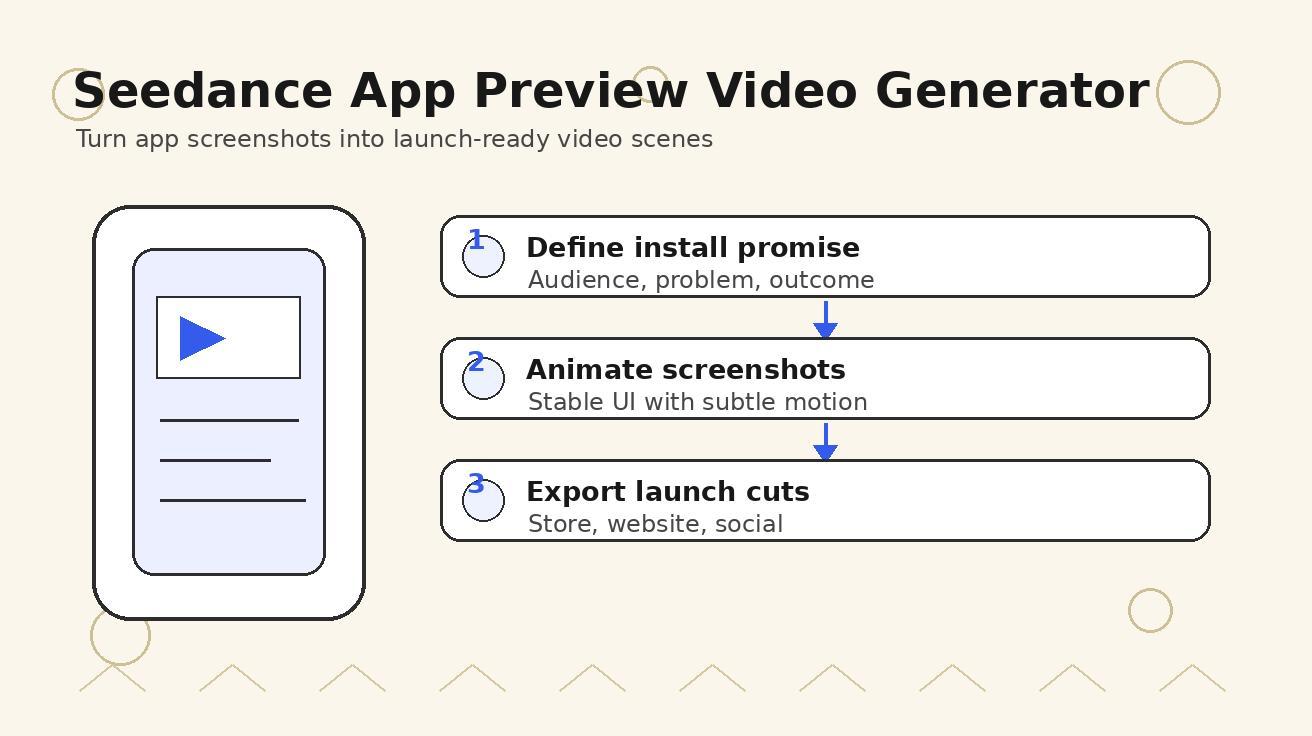
Seedance App Preview Video Generator 2026: Create App Store and Product Launch Clips
Use Seedance to turn app screenshots, feature copy, and launch goals into App Store previews, Google Play promo videos, and product launch clips.
Read article
PixVerse Lip Sync API Tutorial: Upload, Generate, Poll, and Review
A practical PixVerse lip sync API workflow covering source video IDs, audio upload or TTS, request payloads, asynchronous polling, and quality review.
Read article
OpenArt Consistent Character Video Tutorial: Keep One Person Across Scenes
Build one OpenArt character, prepare reference angles, animate short shots, and review or repair face and wardrobe drift across a video sequence.
Read article