
You've probably had this meeting already.
The campaign idea is good. The storyboard is clear. The team knows video will perform better than a static post, a PDF, or another text-heavy landing page. Then the practical questions arrive. Who's filming it? Who's editing it? Can you get multiple cut-downs for social by Friday? Can legal review it in time? Can the same concept be adapted for paid ads, a classroom explainer, and a pitch deck without rebuilding everything from scratch?
That's where interest in Seedance 2.0 2K comes from. Not from novelty. From pressure. Teams need polished video faster, with fewer production hand-offs, and with enough control to make the output usable rather than merely interesting.
The End of the Traditional Video Bottleneck
A typical marketing team doesn't struggle because it lacks ideas. It struggles because every decent video idea expands into a mini production pipeline.
A product launch clip becomes a shoot list. A simple customer story becomes location planning, edit revisions, resizes for different platforms, subtitle versions, and urgent messages in Slack about whether the close-up feels “premium enough”. By the time the team ships, the moment has often passed.
That friction matters in the UK because audiences already live in visual, message-led, and social-first environments. Ofcom reported that 89% of UK adults used WhatsApp, 76% used Facebook, and 61% used Instagram in 2024, reinforcing how normal short-form visual communication has become for UK audiences, as noted in this Seedance 2.0 overview referencing Ofcom usage data.
Where the old workflow breaks
Traditional production still works well when you need a flagship brand film, a polished documentary piece, or a campaign with controlled filming conditions. The bottleneck appears when you need volume.
That usually means:
- Multiple versions: one concept needs horizontal, square, and vertical edits
- Fast turnarounds: the team needs a draft today, not after scheduling a shoot
- Low-risk testing: marketers want to try three creative directions before backing one
- Consistent style: creators need a coherent look across a whole content series
A social team feels this first. An educator feels it differently. A filmmaker feels it in pre-production. They all hit the same wall. Visual ideas are easier to imagine than to produce.
Practical rule: if a team needs more versions than it can comfortably brief, shoot, and edit in a week, the workflow is already under strain.
Why Seedance changes the conversation
Seedance 2.0 2K matters because it shifts the unit of work. Instead of organising every shot through cameras, crews, and edit timelines, teams can start with prompts, references, scene logic, and iterations.
That doesn't remove craft. It relocates it.
The creative skill moves upstream into planning better prompts, specifying camera feel, preserving visual continuity, and deciding what requires human post-production. For marketers and creators, that's the useful change. You can prototype a campaign film, social cut-down, or training visual before committing to a full production path.
Used well, AI video doesn't replace your video process. It helps you stop wasting your best ideas on production overhead.
Understanding Seedance 2.0 and the 2K Leap
Seedance 2.0 is easiest to understand if you stop thinking of it as a single-shot clip maker. Its more useful role is a multi-shot visual storyteller. You're not only asking for “a nice video”. You're asking for scene progression, visual continuity, pacing, and a finish that can survive real publishing workflows.

What 2K means in practice
The headline term is 2K, but that phrase causes confusion because people use it to mean different things.
A simple way to think about it is this:
| Output idea | Practical meaning for creators |
|---|---|
| Lower-resolution preview | Fast to generate, good for checking motion, framing, and scene logic |
| Higher-detail final | Better for cropping, reframing, layering text, and exporting cleaner masters |
| Published platform version | What viewers actually see after YouTube, Instagram, or another service compresses the file |
If you work in design, the analogy is familiar. A rough comp helps you approve the idea. A cleaner source file gives you more room to finish it properly. The final thing your audience sees still depends on the platform that delivers it.
The resolution gap that confuses buyers
This is the part many guides avoid. Open-platform documentation for Seedance 2.0 shows native outputs of 480p and 720p, while “2K” is often discussed in demos, guides, or upscaling workflows, as described in the arXiv paper on Seedance 2.0.
That means you should treat 2K as a workflow claim, not automatically a native output guarantee.
For a marketer, that changes planning. If your social ad is going through platform compression anyway, the source clip only needs to hold up after titles, exports, and upload. For a filmmaker building a concept trailer, extra detail can matter more because the clip may be reviewed on larger screens before distribution. For an educator, legibility of diagrams and stable motion may matter more than headline resolution.
A useful companion read is this video length and resolution guide for Seedance workflows, which helps frame output choices around delivery needs rather than marketing labels.
What to do with that knowledge
Don't ask, “Is it really 2K?”
Ask these three questions instead:
-
What is my delivery channel?
A YouTube upload, paid social ad, classroom screen, and investor deck all behave differently. -
What needs to stay sharp?
Faces, product edges, on-screen text, or fine motion detail. -
Where should quality effort happen?
In generation, in upscaling, or in final editing and export.
If the platform will compress heavily, clean composition and readable motion often matter more than chasing the highest possible source label.
That's the practical leap. Seedance 2.0 2K is useful when you understand the whole path from prompt to published video, not just the number in the name.
Key Features Unlocking Cinematic Storytelling
The feature list only becomes valuable when you can connect each feature to a creative problem. With Seedance 2.0 2K, three capabilities matter most in day-to-day work: multi-shot narrative, character consistency, and style control.
A current interface example helps make that concrete:

Multi-shot narrative
Many AI videos fail because they describe a mood, not a sequence. A cinematic result usually needs progression.
A weak prompt might say:
- Before: “A woman walks through a modern office, cinematic, professional lighting”
That may produce a visually pleasant clip, but it doesn't tell the model how the scene unfolds.
A stronger version builds shot logic:
- After: “Wide establishing shot of a modern office at sunrise, a woman in a navy blazer walks through the entrance, cut to medium shot as she reviews notes on a glass wall, cut to close-up of her face as she smiles with confidence, cinematic lighting, realistic motion, polished corporate advert style”
The difference is simple. The second prompt tells the system what to show first, what to show next, and what emotional rhythm the scene should carry.
A practical shot structure
When you want a short narrative that feels deliberate, use this pattern:
- Establish: where are we?
- Focus: who or what matters?
- Detail: what action tells the story?
- Finish: what frame should the viewer remember?
Marketers can use that for product reveals. Teachers can use it for explainers. Filmmakers can use it for previs.
Character consistency
This matters any time a person appears in more than one shot. Without consistency, your “main character” can change clothing, face shape, hair, or age between cuts.
The fix starts in your prompt language. Don't keep rewriting the character from scratch. Define a stable identity and repeat the same anchor details.
For example:
| Prompt style | Result tendency |
|---|---|
| Generic person description | Higher risk of drift between shots |
| Repeated anchor traits | Better chance of visual continuity |
| Scene-specific but identity-stable prompts | Best balance of variation and consistency |
Try a structure like this:
- Identity anchor: “same woman, early thirties, navy blazer, short dark hair, calm expression”
- Scene change: “now seated in a meeting room”
- Camera change: “medium side profile”
- Mood continuity: “same polished corporate tone”
That keeps the scene moving while preserving the person.
Workflow note: lock the character first. Change environment and camera second. Teams often do the opposite and then wonder why the subject drifts.
Style control
Style isn't only about picking “photorealistic” or “animated”. It's about combining visual decisions that support a use case.
A vague prompt:
- Before: “Cyberpunk product advert”
A more directed prompt:
- After: “Premium trainers on a reflective black surface, moody studio lighting, subtle neon rim light, restrained cyberpunk palette, slow camera push-in, luxury advert tone, high contrast, clean product edges”
That second version narrows the visual language. It tells the model how bold, glossy, and commercial the output should feel.
Here's a useful rule set for style prompts:
- Name the medium: advert, short film, classroom explainer, fashion editorial
- Name the lighting: soft daylight, moody contrast, studio key light
- Name the camera behaviour: handheld, locked-off, slow dolly, overhead
- Name the finish: natural, glossy, gritty, minimal, textured
Later in the workflow, it helps to compare outputs against a moving example, especially for pacing and tone:
<iframe width="100%" style="aspect-ratio: 16 / 9;" src="https://www.youtube.com/embed/UHv61jUBx7M" frameborder="0" allow="autoplay; encrypted-media" allowfullscreen></iframe>
A better way to think about features
Don't treat these as isolated controls. They work together.
Multi-shot narrative gives you structure. Character consistency gives you coherence. Style control gives you identity. When those three align, the video stops looking like a disconnected AI experiment and starts feeling like a planned piece of communication.
Real-World Applications Across UK Industries
The easiest way to judge Seedance 2.0 2K is to ask where it removes friction in actual jobs. Three UK scenarios show the value clearly.

A London agency building campaign variations
A small agency in London wins work by responding quickly. The challenge isn't making one polished advert. It's producing multiple concepts early enough for the client to choose a direction.
That use case fits the UK market well because the UK advertising market reached £35.5 billion in 2024, with online video central to brand campaigns, according to ByteDance's Seedance 2.0 page citing Advertising Association and WARC context.
Instead of briefing three separate mood films, the team could use Seedance 2.0 2K to create:
- A premium version: dark studio lighting, slow product rotation, minimal text
- A lifestyle version: bright urban setting, fast social pacing, human presence
- A story-led version: short multi-shot narrative built around a customer problem
The practical prompt might look like this:
“Create a three-shot social advert for a reusable water bottle. Shot one, busy commuter leaves home without a drink. Shot two, close-up of sleek bottle in bag pocket, clean product detail. Shot three, commuter drinks on the train platform, confident upbeat tone, premium lifestyle brand aesthetic.”
That gives the client something reviewable fast. Then the agency can decide whether to keep iterating in AI or move the chosen concept into a live-action shoot.
A Manchester teacher creating a classroom explainer
An educator doesn't need a glossy ad. They need attention, clarity, and visual memory.
A secondary school teacher in Manchester might use Seedance to create a short historical explainer on the Industrial Revolution. The prompt doesn't need film-school language. It needs sequence and simplicity.
For example:
- Scene one: smoky mill exterior, early morning, workers arriving
- Scene two: interior machinery in motion, clear educational framing
- Scene three: close-up on a student-age narrator character pointing to key changes in working life
That can help turn a static slide deck into a short scene-led resource. The teacher still adds oversight, context, and fact-checking. The model handles atmosphere and scene visualisation.
A Glasgow filmmaker testing a concept trailer
For an independent filmmaker, the gain is different. Seedance can work as a previsualisation tool.
A director in Glasgow developing a moody sci-fi short might need a proof-of-concept trailer for collaborators or funders. Building that from scratch with practical shooting can be expensive and slow. Using AI, the filmmaker can test mood, pacing, and shot logic before spending money on production.
A trailer-style prompt could specify:
| Need | Prompt focus |
|---|---|
| World-building | location, weather, architecture, time of day |
| Tone | tense, melancholic, hopeful, unsettling |
| Shot rhythm | wide shot, insert, close-up, reveal |
| Character anchor | same lead character across scenes |
The most useful industry applications aren't the flashy ones. They're the moments where a team needs to think with video before it spends money on video.
Across all three examples, the pattern is the same. Seedance 2.0 2K is strongest when it shortens the distance between idea and reviewable visual output.
Your First Seedance 2.0 2K Workflow and Prompts
A good first project should be small enough to finish in one sitting and structured enough to teach you the workflow. Don't start with a mini film. Start with a short asset you can evaluate quickly.

Step 1 concept and outline
Choose one message only.
A weak starting brief is “make a video for our brand”. A usable brief is “show our reusable notebook as premium, portable, and useful in a workday”.
Write a four-line outline:
-
Main subject
The product, person, or idea -
Context
Where the scene takes place -
Motion
What changes across the clip -
Ending frame
What the viewer should remember
If you need extra prompt inspiration, this guide to Seedance prompts is useful because it shows how prompt components can be combined rather than treated as one long sentence.
Step 2 prompt crafting
Think in layers. Most beginners write one descriptive blob. Better prompts separate the essentials.
A practical prompt stack looks like this:
- Subject: what or who is on screen
- Setting: environment and time of day
- Action: movement or scene progression
- Camera: shot type and motion
- Style: visual finish
- Purpose: advert, explainer, trailer, social clip
Recipe 1 photorealistic product showcase
Use this for ecommerce, launches, or ad mock-ups.
“A premium reusable notebook on a clean oak desk by a bright window, morning light, shallow depth of field, slow camera slide from left to right, pages open smoothly to reveal elegant paper texture, close-up detail on embossed logo, photorealistic commercial style, polished brand advert finish”
What each part does:
- Premium reusable notebook anchors the object
- Clean oak desk by a bright window sets a believable environment
- Slow camera slide avoids frantic motion
- Close-up detail on embossed logo tells the model what must read clearly
- Commercial style keeps the finish aligned to marketing use
Step 3 generate and refine
Your first output probably won't be the final one. That's normal.
Review in this order:
| Check first | Why it matters |
|---|---|
| Subject clarity | If the main object or character is wrong, the rest won't save it |
| Motion quality | Awkward movement breaks credibility quickly |
| Shot progression | A cinematic clip needs sequence, not random visual changes |
| Text-safe framing | Leave room if titles, captions, or logos will be added later |
Change one variable at a time. If you alter camera, style, lighting, and subject details in the same revision, you won't know what improved the result.
“Fast iteration works best when the brief stays fixed and the prompt changes narrowly.”
Recipe 2 dynamic animated logo reveal
Use this for intros, event assets, or campaign bumpers.
“Dark background with subtle floating particles, a thin line of light traces the outline of a modern brand logo, the logo forms gradually from glowing edges, gentle camera push-in, crisp contrast, sleek motion design aesthetic, premium technology brand feel”
This recipe works because it prioritises sequence. Trace, form, settle. That's easier for a generator to stage than a vague request for “a cool logo animation”.
Step 4 post-production and export
The workflow gap is successfully bridged. Don't expect the generated clip to do every job alone.
A realistic finishing pass might include:
- Trimming: remove weak opening or ending frames
- Titles: add readable text outside the generation step
- Music or voiceover: layer in edit software if needed
- Upscaling: apply only if the final use really benefits
- Platform export: render for the channel you'll publish on
Recipe 3 character-driven narrative scene
Use this for a founder story, training clip, or branded short.
“Same young architect in a charcoal coat across all shots, rainy city street at dusk, first shot wide as she pauses under a streetlight, second shot medium as she looks at building sketches, third shot close-up as she smiles with quiet determination, cinematic urban drama style, realistic rain reflections, steady camera movement”
This prompt works because it preserves identity and emotional arc while changing shot size.
A simple beginner workflow is:
- Draft the outline
- Build one prompt
- Generate a rough version
- Refine only the weakest element
- Export and finish in edit software
That's enough to get a usable first result without disappearing into endless iterations.
Performance Cost and Technical Considerations
The creative upside is obvious. The operational side is where teams either build a repeatable workflow or waste time.
The first mistake is treating every generation as if it were a final render. For most projects, that's inefficient. You want cheap learning first, polished output second. Even if a platform advertises premium quality, your real cost often comes from revisions, failed prompts, and the human time spent deciding what's usable.
Where the real cost sits
For a project manager, there are four cost buckets:
- Prompting time: writing and refining instructions
- Generation time: waiting for drafts and reruns
- Review time: selecting clips, checking brand fit, spotting artefacts
- Finishing time: editing, upscaling, subtitles, approvals
That's why a “fast” AI workflow can still become slow if the team lacks a review process.
A practical approach is to separate work into passes:
| Pass | Purpose |
|---|---|
| Exploration pass | Test concept, motion, and scene logic |
| Selection pass | Choose the strongest visual direction |
| Polish pass | Improve only clips likely to ship |
| Delivery pass | Add edit, text, audio, and final export settings |
Common technical limitations
Seedance 2.0 2K can produce striking material, but it still needs supervision. The weak points are familiar to anyone using AI video:
- Complex hands and gestures: small anatomical details can still go wrong
- Crowded scenes: too many moving subjects can reduce coherence
- Text inside the scene: generated signage or interface text may not stay clean
- Fine brand details: packaging, logos, and product geometry may need extra checking
- Scene transitions: a good prompt improves continuity, but some cuts still need editing support
If your project depends on exact product representation or strict compliance, treat the generated clip as a visual draft until reviewed.
How to keep performance under control
Start lower, decide faster, then invest in finishing.
That means using preview-style generations to test the idea before spending effort on cleaner exports or external upscaling. It also means keeping prompts organised. Teams often lose more time to version confusion than to rendering.
A useful planning reference is this Seedance 2.0 1080p workflow note, especially if you're deciding when standard HD output is already enough.
Production advice: use AI video the way editors use proxies. Make decisions on lighter versions first. Save the heavier finishing work for clips that survived review.
The technical trade-off is straightforward. More iterations increase your chance of finding a strong result, but they also increase team time. The best workflow is the one that kills weak directions early.
Frequently Asked Questions about Seedance 2.0 2K
Can I use Seedance output for client work or monetised content
Potentially, yes, but you should treat commercial use as a policy and review question, not just a creative one.
The important point for UK businesses is operational fit. AI use is rising across UK firms, but adoption is uneven, and businesses still need to manage copyright, likeness, and data-protection responsibilities, as reflected in this Seedance 2.0 model overview discussing ICO-related compliance considerations.
In practice, that means checking:
- Platform terms: what the service allows for commercial use
- Input rights: whether you own or have permission to use any reference images, audio, or brand assets
- Output review: whether anything in the generated clip creates risk around resemblance, protected material, or misleading representation
If the clip is for a paying client, build review into the project rather than treating it as an afterthought.
Is it actually cheaper than traditional production for a UK small business
Sometimes. Not always.
If your alternative is booking crew, locations, equipment, and edit time for a short social campaign, AI video can clearly reduce overhead for concepting, mock-ups, and some final assets. If your project needs exact product fidelity, legal review, multiple stakeholder approvals, and careful brand sign-off, the savings can narrow quickly.
A sensible comparison isn't “AI versus film crew” in the abstract. It's this:
| Project type | Likely fit |
|---|---|
| Rapid social variations | Strong fit |
| Internal training visuals | Often a good fit |
| Previs and concept trailers | Strong fit |
| Highly regulated or exacting brand work | Use with tighter review |
| Flagship hero film | Often better as hybrid or traditional production |
If you're weighing the commercial side in more detail, this Seedance 2.0 pricing page helps frame the budgeting discussion against your workflow, not just per-generation assumptions.
What should I watch for with privacy and sensitive information
Don't put sensitive material into prompts unless your team has already approved that use.
That includes personal data, confidential campaign plans, unpublished client details, or anything tied to a real person's identity without a clear reason and governance process. Even if the output looks harmless, the prompt itself may create risk.
For schools, agencies, and SMBs, a safe rule is:
- Use synthetic descriptions instead of real personal details
- Avoid uploading identifiable material unless authorised
- Keep a record of what references were used
- Review generated content before publication
Do I need 2K if most people watch on social platforms
Often, you need a good workflow more than you need the biggest headline resolution.
If your final destination is a compressed platform, stronger composition, cleaner motion, and readable framing usually matter more than chasing maximum source detail. Use higher-quality finishing where it adds a visible benefit. Don't assume every clip needs the heaviest possible process.
What's the safest first project
Start with a low-risk asset.
A product teaser without dense text, a mood clip for a pitch, a historical scene visual for teaching, or a concept trailer fragment are all good candidates. They let you learn prompt structure and review habits without exposing the team to unnecessary brand or compliance risk.
The Future of Your Creative Workflow
Seedance 2.0 2K is most useful when you stop viewing it as a magic render button and start using it as a workflow tool.
Its key advantage isn't that it can produce cinematic-looking clips. It's that teams can move from idea to visual draft far faster, test more directions earlier, and reserve traditional production effort for the moments that need it. That matters to marketers, creators, educators, and filmmakers because all of them are under pressure to produce more video without multiplying cost and complexity.
The practical lesson is simple. Learn the resolution trade-offs. Structure prompts like scenes, not slogans. Review outputs with the delivery platform in mind. Finish with human judgement.
That's how AI video becomes useful.
If you want to test this workflow in practice, Seedance is one option for generating prompt-based video with multi-shot storytelling and style control. Start with a short, low-risk project, evaluate the output on the platform where it will be viewed, and build your process from there.
Ready to create your own AI video?
Turn ideas, text prompts, and images into polished videos with Seedance. If this article helped, the fastest next step is to try the product.
Free credits on signup. Plans from $28/month.
Related Articles
More posts in the same locale you may want to read next.
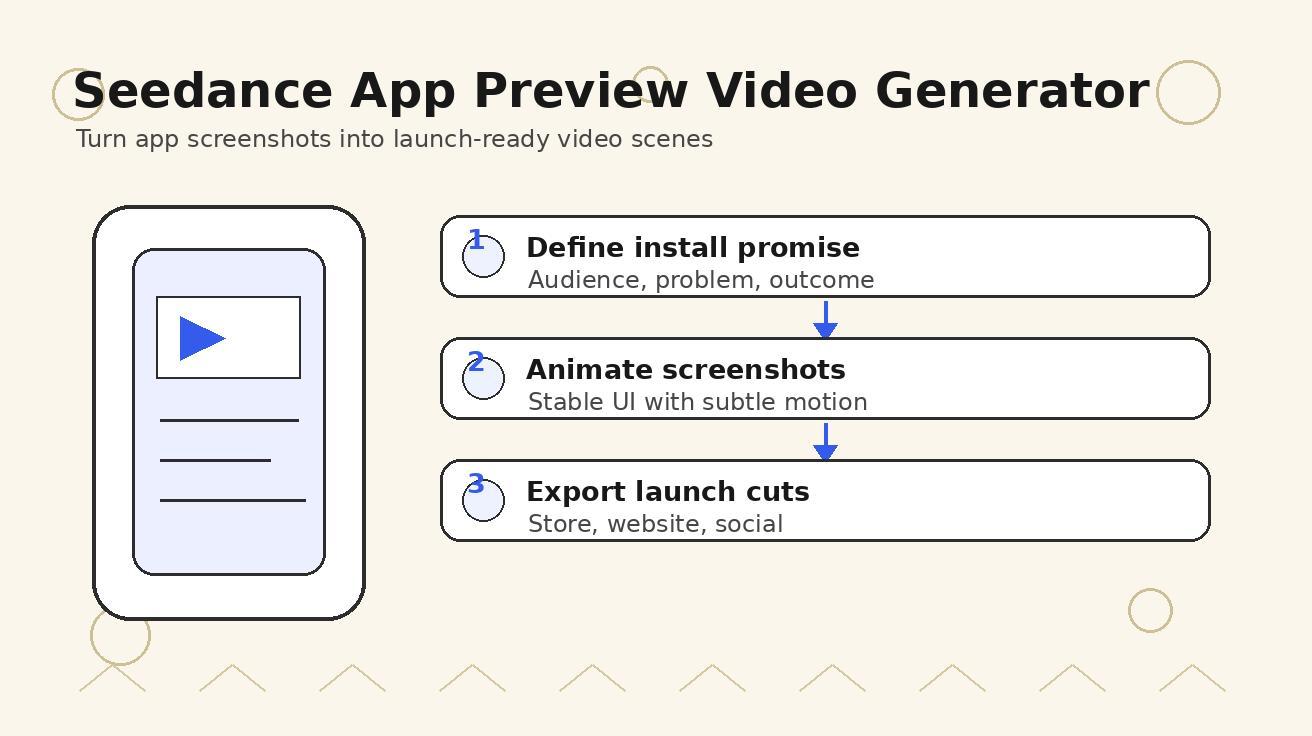
Seedance App Preview Video Generator 2026: Create App Store and Product Launch Clips
Use Seedance to turn app screenshots, feature copy, and launch goals into App Store previews, Google Play promo videos, and product launch clips.
Read article
MiniMax H3 Video Extension Gets Brighter: Fix Exposure Drift at the Join
Diagnose and fix MiniMax H3 video extensions that become brighter using seam frames, stable references, tone matching, prompt controls, and safer clip chains.
Read article
VEED Background Noise Removal Free: Clean Video Audio Without Guessing
Use VEED Clean Audio to remove background noise from video or audio, understand the one-time free allowance, compare results, and fix metallic speech, echo, and volume jumps.
Read article