
Seedance Video Length & Resolution Guide 2026: Settings, Quality & Best Practices

Understanding Seedance's video length and resolution settings is essential for producing content that looks great on every platform and device. This guide covers everything you need to know about duration options, resolution choices, aspect ratios, and how to match your output settings to your distribution platform.
Seedance Video Length Options
Seedance supports video generation in multiple duration increments. The available lengths depend on the generation mode:
Text-to-Video Durations
| Duration | Use Case |
|---|---|
| 2 seconds | Social media loops, GIF-style content |
| 4 seconds | Short social clips, Instagram Reels segments |
| 6 seconds | Standard social content, YouTube Shorts segments |
| 8 seconds | Full social clips, cinematic moments |
Recommendation: 8 seconds is the most versatile length for professional content. Most social media platforms allow clips up to 60+ seconds, so you can chain multiple 8-second clips together in editing for longer content.
Image-to-Video Durations
For image-to-video generation, Seedance typically supports:
- 3-4 seconds: Subtle animation, gentle camera movement
- 6-8 seconds: More dramatic animation, significant camera movement
Shorter durations work better for subtle animations where you want the image to breathe without overpowering motion. Longer durations allow for full camera movements — zooms, pans, and complex trajectories.
Resolution Options
Seedance generates video at two primary resolutions:
720p (1280×720)
Best for:
- Draft generation and iteration
- Mobile-first platforms
- Smaller file sizes for faster uploads
- Social media where platform compression reduces quality anyway
File size: Approximately 8-15 MB for an 8-second clip
Streaming requirement: Works well for streams up to 4 Mbps
1080p (1920×1080)
Best for:
- Final production output
- YouTube and professional platforms
- Desktop viewing
- Any content where quality is critical
File size: Approximately 20-35 MB for an 8-second clip
Streaming requirement: Needs 8+ Mbps for smooth playback
Recommendation: Always generate final content at 1080p. Use 720p only for rapid iteration during the prompt development phase.
Aspect Ratio Options
Seedance supports the major aspect ratios used across digital platforms:
16:9 (Landscape) — Standard
Dimensions: 1920×1080 at 1080p
Best for:
- YouTube
- Desktop web
- TV and connected displays
- LinkedIn video
- Twitter/X videos
Most cinematic content is produced in 16:9. This is the default for text-to-video generation.
9:16 (Portrait) — Vertical
Dimensions: 1080×1920 at 1080p
Best for:
- Instagram Reels
- TikTok
- YouTube Shorts
- Snapchat
- Pinterest video pins
Vertical video is essential for mobile-first platforms. When shooting for Instagram Reels or TikTok, always generate in 9:16 to avoid black bars or cropping.
1:1 (Square)
Dimensions: 1080×1080 at 1080p
Best for:
- Instagram feed posts
- Facebook feed
- LinkedIn carousel posts
- Pinterest standard pins
Square video performs well in social feeds because it takes up more screen real estate than landscape video on mobile devices.
4:3 (Classic)
Dimensions: 1440×1080 at 1080p
Best for:
- Digital signage
- Presentations (older format)
- Some streaming platforms
4:3 is rarely used for new content but may be required for specific display environments.
Platform-Specific Recommendations
YouTube
Resolution: 1080p Aspect ratio: 16:9 Duration: 8 seconds per clip (chain multiple clips for longer videos) Frame rate: 24 fps (cinematic) or 30 fps
YouTube's quality compression means 1080p is the minimum for content that looks sharp. The platform supports up to 8K, but 1080p is practical for AI-generated content.
Instagram Reels
Resolution: 1080p Aspect ratio: 9:16 Duration: Up to 90 seconds (chain multiple 8-second clips) Safe zone: Keep important content within center 80% of frame (UI overlays at top and bottom)
Instagram compresses video aggressively. Generate at 1080p to have quality buffer after compression.
TikTok
Resolution: 1080p Aspect ratio: 9:16 Duration: 3-60 seconds (chain multiple clips) Safe zone: Avoid bottom 15% of frame (UI buttons overlay)
TikTok's algorithm favors vertical video. Always use 9:16 for TikTok content.
Resolution: 1080p Aspect ratio: 16:9 or 1:1 (1:1 performs better in feed) Duration: 3-30 seconds (native video posts)
LinkedIn users tend to be on desktop, so 16:9 and 1:1 both work well. Square video takes up more feed space and can increase engagement.
Twitter/X
Resolution: 720p minimum, 1080p preferred Aspect ratio: 16:9 or 1:1 Duration: Up to 140 seconds
Twitter compresses video significantly. 1080p is recommended to maintain quality after compression.
Website / Landing Pages
Resolution: 1080p Aspect ratio: 16:9 (hero video) or match your design Duration: 8-30 seconds for background loops
For website hero videos, use 16:9 at 1080p. Enable autoplay with mute for background videos. Keep file sizes under 20 MB for fast page loads — use 720p if needed to hit this target.
Understanding Frame Rate
Seedance generates video at standard frame rates that determine how smooth motion appears:
24 fps (Cinematic)
The standard frame rate for film. Creates the "cinematic" look that most people associate with professional video. Slightly less smooth than 30 fps but aesthetically preferred for dramatic and artistic content.
30 fps (Standard)
The standard for television and most digital content. Smoother motion than 24 fps. Better for content where smoothness matters more than cinematic aesthetics — product demos, corporate content, educational video.
60 fps (High Frame Rate)
Ultra-smooth motion. Best for gaming content, sports, and fast-moving subject matter. Not supported on all platforms, but YouTube and most social platforms support 60 fps playback.
Recommendation: Use 24 fps for artistic and cinematic content; 30 fps for most commercial and professional content.
File Format and Compression
Seedance exports in MP4 format with H.264 encoding. This is the most universally compatible format:
H.264 benefits:
- Supported by every platform and device
- Excellent quality-to-file-size ratio
- Hardware acceleration on all modern devices
- Required by most social media platforms
For web delivery, H.265/HEVC offers better compression but is not universally supported. Stick with H.264 for maximum compatibility.
Workflow: From Generation to Distribution
Step 1: Generate at Maximum Quality
Always generate at your target distribution resolution or higher. You can downsize in post-production, but you cannot upscale without quality loss.
For social media: Generate 1080p in the appropriate aspect ratio For web: Generate 1080p, compress in post if needed For presentations: Generate 1080p 16:9
Step 2: Review and Select
From multiple generations at the same prompt, select the best clip. Resolution and length are fixed at generation time — you cannot change these in post without re-generating.
Step 3: Post-Production (Optional)
Most Seedance output is ready for direct upload, but you may want to:
- Add captions or text overlays
- Extend length by looping or chaining clips
- Color grade for brand consistency
- Add audio or music
- Create sequences from multiple clips
Step 4: Platform-Specific Export
Even if you generated at 1080p, you may want platform-specific exports:
- Social platforms: Compress to reduce upload time
- Websites: Multiple resolutions for adaptive bitrate
- Presentations: Match the presentation resolution
Step 5: Upload and Monitor
After publishing, monitor platform analytics to understand how resolution and format choices affect engagement metrics. Higher quality generally correlates with higher watch time on platforms that show quality indicators.
Common Mistakes to Avoid
Generating at Wrong Aspect Ratio
The most common mistake: generating landscape video for portrait-first platforms. A 16:9 clip on TikTok will have black bars on the sides and occupy less screen space, reducing engagement. Always match aspect ratio to platform before generating.
Using 720p for Final Output
720p might seem sufficient, but platforms compress video on upload. If you start with 720p, the compression results in noticeably degraded quality. Start with 1080p for buffer.
Not Accounting for Safe Zones
Every social platform has UI elements that overlay your video. TikTok has buttons on the right side. Instagram Reels has the caption area at the bottom. Generate with important content (text, faces, key subjects) in the center of frame to avoid conflicts with platform UI.
Generating Too Short for the Use Case
An 8-second clip is a moment, not a story. For more substantial content, plan to chain multiple clips in editing. Generate a coherent sequence of clips that tell a visual story together.
Frequently Asked Questions
What is the maximum video length I can generate with Seedance? Seedance generates clips up to 8 seconds. For longer videos, generate multiple clips and combine them in video editing software.
Can I change the resolution after generation? No — resolution is fixed at generation time. If you need a different resolution, generate again with the new settings.
Which resolution should I choose for social media? Always choose 1080p for final content. Platform compression will reduce quality, so start with the highest quality possible.
What aspect ratio should I use for TikTok and Instagram Reels? 9:16 (vertical/portrait). Horizontal video on these platforms appears with black bars and performs poorly in the algorithm.
Does higher resolution affect generation time? Yes, slightly. 1080p takes marginally longer to generate than 720p, but the difference is typically less than 10 seconds.
Can I generate at 4K? Not currently. Seedance's maximum resolution is 1080p. For 4K output, you can upscale 1080p using AI upscaling tools like Topaz Video AI.
What frame rate does Seedance use? Seedance typically generates at 24 fps for cinematic content. Specific frame rate options depend on your generation settings.
How large are Seedance video files? An 8-second 1080p clip is approximately 20-35 MB. 720p clips are approximately 8-15 MB.
Start generating with Seedance at seedance.tv →
Advanced Resolution Techniques
Multi-Resolution Strategy for Omnichannel Distribution
Professional content teams often need to distribute the same content across multiple platforms with different format requirements. A multi-resolution strategy addresses this systematically:
Strategy 1: Generate Once, Adapt in Post
Generate your master at 1080p 16:9. Then create derivatives:
- Crop to 1:1 for Instagram feed (center crop)
- Crop to 9:16 for Reels/TikTok (center crop, consider reframing)
- Keep 16:9 for YouTube and web
This approach is efficient but requires cropping, which means losing content at the edges of the frame. When using this strategy, compose your original prompt to keep all important content in the center of frame.
Strategy 2: Generate Per Platform
Generate separate clips for each platform at the correct aspect ratio. This delivers optimal quality for each platform but requires more generations.
For high-stakes campaigns, Strategy 2 is preferred. For routine content, Strategy 1 with center-safe framing is more efficient.
Resolution for Different Content Types
The optimal resolution and duration settings vary by content type:
Product demos: 1080p, 8 seconds, 16:9 or 1:1. Close-up detail requires maximum resolution to show product features clearly. 8 seconds allows enough time for a full reveal.
Brand films: 1080p, multiple 8-second clips chained. Brand films benefit from cinematic quality and longer storytelling. Generate a sequence of scenes and edit them together.
Social clips: 1080p, 6-8 seconds, 9:16 for vertical platforms. Social content needs to hook viewers immediately. Shorter duration is fine if the hook is strong.
Background/ambient video: 720p, 8 seconds looped. Background videos for websites don't need maximum quality and benefit from smaller file sizes. Generate at 720p, loop seamlessly in editing.
Training and educational content: 1080p, 8 seconds, 16:9. Educational content is viewed on desktop and needs sharp text and detail visualization. 1080p is essential.
The Quality vs. Speed Tradeoff
During prompt development and iteration, you'll generate many versions to find the right visual style and composition. For this phase:
Use 720p for iteration: Faster generation feedback, smaller files, easier to manage multiple versions.
Switch to 1080p for final production: Once you've confirmed your prompt works well at 720p, generate the final version at 1080p.
This two-phase approach reduces total generation time during development while ensuring final output is at full quality.
Optimizing File Sizes for Web Delivery
Web delivery has different constraints than social platforms. Large video files slow page loads and increase bandwidth costs. Strategies for web optimization:
Compression after generation: Use FFmpeg or a video compression tool to reduce file size:
# Compress while maintaining quality
ffmpeg -i input.mp4 -c:v libx264 -crf 23 -preset medium output_compressed.mp4

# Targeting a specific file size (10MB for web background)
ffmpeg -i input.mp4 -c:v libx264 -b:v 1000k output_web.mp4
Adaptive bitrate: For video players, use HLS or DASH for adaptive bitrate streaming that serves the right quality based on the viewer's connection speed.
WebM format: The WebM format with VP9 codec offers better compression than H.264 for web delivery. Convert after generation:
ffmpeg -i input.mp4 -c:v libvpx-vp9 -crf 30 -b:v 0 output.webm
Lazy loading: Load video elements only when they enter the viewport to avoid unnecessary bandwidth consumption on page load.
Comparing Seedance Output Quality to Competitors
When evaluating AI video platforms, resolution and quality are primary considerations:
Seedance vs. other free tools: Many free AI video tools add watermarks, limit resolution to 720p, or require paid upgrades for commercial use. Seedance provides 1080p output with no watermarks and commercial rights on the free tier.
Seedance vs. Sora 2: Sora 2 supports up to 20-second clips at 1080p through ChatGPT Plus ($20/month). Seedance's free tier delivers 8-second clips at 1080p at no cost. For shorter-form content, Seedance is the more cost-effective choice.
Seedance vs. Runway Gen-4: Runway Gen-4 supports various resolutions and durations on paid tiers starting at $15/month. Seedance's free tier delivers comparable quality for most use cases without a subscription.
Seedance vs. Veo 3: Veo 3 (Google's model, available through Vertex AI) offers the highest quality AI video generation available in 2026. However, access is restricted and pricing is usage-based. For creators who need professional quality without the access barriers and costs, Seedance is the practical first choice.
The resolution and quality capabilities that Seedance delivers on its free tier represent a significant advance in accessible AI video generation. Content that would have required professional production equipment and expensive post-production workflows is now achievable at no cost with the right prompts and settings knowledge. Mastering Seedance's resolution and duration options is the foundation of efficient, high-quality AI video production.
Generate your first video with Seedance at seedance.tv →
Understanding the full landscape of resolution and quality options — from the technical specifications to the platform-specific requirements and the competitive context — allows you to make informed decisions at every stage of your content production workflow. Whether you are a solo creator publishing daily to social media or a marketing team producing high-volume campaign content, matching your Seedance output settings to your distribution requirements is the difference between content that performs and content that falls flat due to technical quality issues.
Quick Reference: Settings by Platform
| Platform | Aspect Ratio | Resolution | Max Duration | Notes |
|---|---|---|---|---|
| YouTube | 16:9 | 1080p | Chain clips | Standard cinematic |
| Instagram Reels | 9:16 | 1080p | 90s (chain) | Safe zone at edges |
| TikTok | 9:16 | 1080p | 60s (chain) | Avoid bottom 15% |
| Instagram Feed | 1:1 or 4:5 | 1080p | 60s | Square gets more space |
| 16:9 or 1:1 | 1080p | 30s | Desktop-skewed audience | |
| Twitter/X | 16:9 | 1080p | 140s | Compression-resistant |
| Website hero | 16:9 | 720p–1080p | Loop | Keep under 20 MB |
| 2:3 or 1:1 | 1080p | 60s | Vertical performs better | |
| Presentations | 16:9 | 1080p | Any | Match slide dimensions |
This quick reference covers the most common distribution scenarios. For specialized platforms or custom display environments, always check the platform's current video specifications, as these change periodically. When in doubt, 1080p 16:9 is the universal starting point that can be adapted to any downstream requirement.
The AI video landscape continues to evolve rapidly, and resolution capabilities will expand over time. Seedance's commitment to delivering 1080p output with commercial rights on the free tier reflects a broader democratization of professional-quality content production. As these tools improve, the creators who invest now in understanding the technical foundations — resolution, aspect ratio, duration, file format — will be best positioned to leverage future improvements and maintain their competitive edge in content quality. Every technical choice — from the resolution you select at generation time to the compression settings you apply before upload — affects how your content is experienced by your audience. Make these choices deliberately, test what performs best on your target platforms, and build systematic workflows that ensure consistent quality across your entire content library. The investment in understanding these fundamentals pays dividends every time you publish content that looks sharp, plays smoothly, and fills the screen exactly as intended on every platform where your audience finds it. Professional content is defined not just by the quality of the creative ideas but by the quality of the execution — and execution starts with choosing the right settings before you generate your first frame. Seedance makes those right settings accessible and affordable for every creator.
Professional AI video production begins with mastering the technical fundamentals. Resolution, duration, aspect ratio, and frame rate are not constraints — they are creative tools. Understanding how each setting affects the final experience, and how each platform interprets your content, gives you precise control over how your audience experiences your work. Seedance puts these professional-grade settings in the hands of every creator, at no cost, with commercial rights. The quality of your output is limited only by the quality of your creative direction.
Ready to try it yourself?
Put the steps from this guide into practice with Seedance and turn prompts or images into polished videos in minutes.
Free credits on signup. Plans from $28/month.
Related Articles
More posts in the same locale you may want to read next.
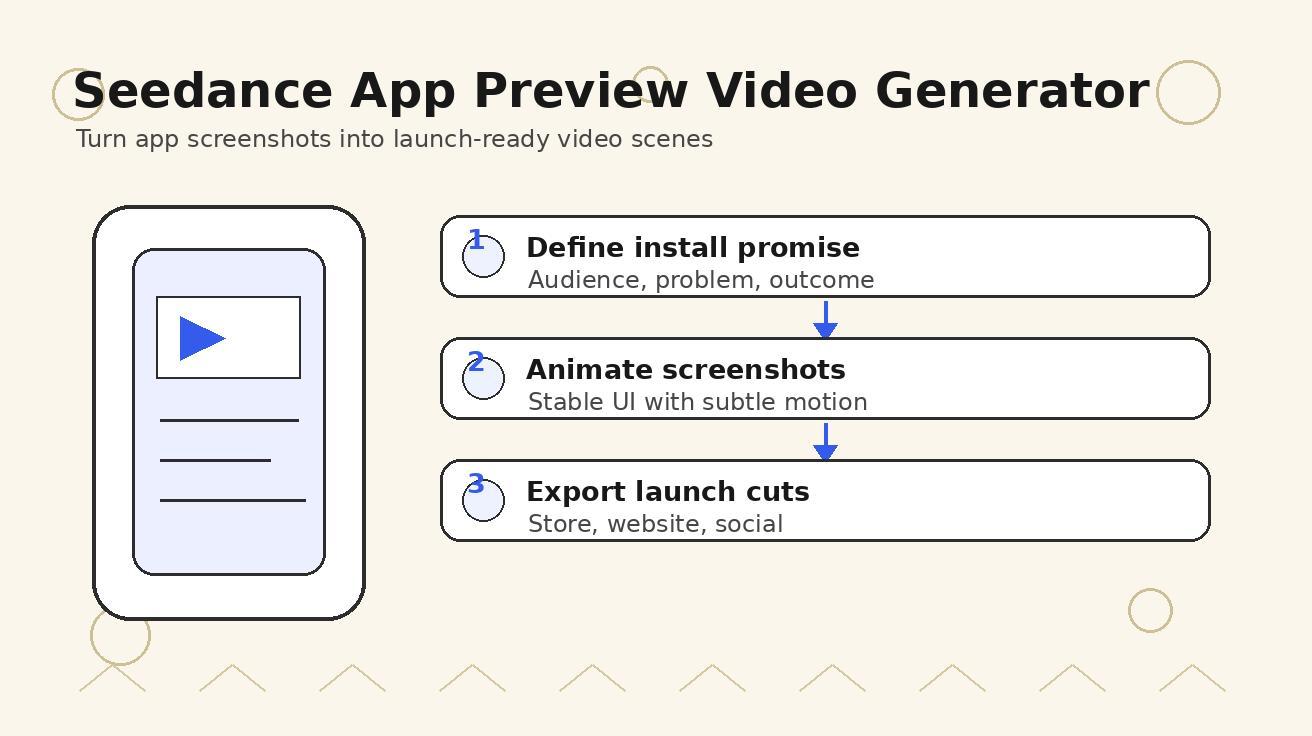
Seedance App Preview Video Generator 2026: Create App Store and Product Launch Clips
Use Seedance to turn app screenshots, feature copy, and launch goals into App Store previews, Google Play promo videos, and product launch clips.
Read article
Best AI Video-to-Video Models in 2026
The best AI video-to-video models in 2026 for editing footage you already shot: Higgsfield Genjutsu, Seedance 2.x, Runway Aleph, Luma Modify and Kling Omni compared.
Read article
Kling 4.0 vs Seedance 2.5: Full Comparison
Kling 4.0 vs Seedance 2.5 compared by spec: 30-second clips, keyframes vs 50 references, audio, 4K and 10-bit color, editing, and which model fits which job.
Read article