
You've probably done this already. You type a nice descriptive prompt into Seedance 2.0, hit generate, and get something that looks impressive for two seconds but falls apart on the details. The character changes face between shots. The camera ignores your intent. The pacing feels random. The clip is pretty, but not usable.
That gap often proves to be a challenge. Seedance 2.0 responds better to direction than decoration. One practical guide notes that prompts generally work best at 50 to 200 words, with tested examples averaging 50 to 70 words. Another recommends staying under 200 words and structuring the prompt around subject, action, camera, lighting, and ending instead of writing one vague paragraph. That shift matters in a market where speed matters. Ofcom's 2024 Online Nation reporting says 97% of UK adults used the internet in 2024, and 79% used social media, so creators need prompt systems they can iterate fast.
The best Seedance 2.0 prompts don't read like poetry. They read like a shot brief. They specify who is in frame, what happens, how the camera moves, how the light behaves, and what must stay consistent from start to finish. That's how you go from “generate me a cool video” to something you can publish, present, or unlock growth with video content.
1. Cinematic Narrative Builder
Most failed story prompts have the same problem. They describe a premise, not a sequence. Seedance can handle multi-shot storytelling, but only if you tell it how one moment leads into the next.
Start with chronology. If your launch film opens on a founder at a desk, then moves to product use, then ends on customer payoff, write those beats in order. Don't bury the timeline in style language.
To see the kind of structure that works in practice, the Seedance cinematic prompt guide is useful because it pushes you toward shot-led prompting instead of generic scene description.
The anatomy of the prompt
Use this base template:
- Subject and continuity: Main character name or role, age range, hair, clothing, distinguishing traits that must stay the same.
- Narrative arc: Opening state, disruption, turning point, ending image.
- Shot order: Scene 1, Scene 2, Scene 3, written in sequence.
- Camera language: Wide, close-up, tracking, handheld, slow push, over-the-shoulder.
- Light and mood: Morning natural light, moody tungsten office, soft overcast exterior.
- Continuity lock: Same face, same wardrobe, same location logic, no abrupt style drift.
Here's a copy-ready framework:
Multi-shot cinematic sequence. Character: female founder, dark bob haircut, navy blazer, silver watch, calm focused expression, consistent appearance in all shots. Scene 1: early morning office, she reviews sketches at a desk, soft window light, slow dolly in. Scene 2: close-up of hands testing product prototype, shallow depth of field, clean side lighting. Scene 3: customer uses finished product in bright modern home, warm natural light, gentle handheld realism. Scene 4: founder watches customer reaction, subtle smile, medium close-up. End on product hero shot on table, minimal background, smooth push-in. Maintain narrative continuity and consistent character identity.
What works and what doesn't
A product launch video is a strong fit here. So is an educational story where one recurring presenter moves through a concept across several scenes. I've also seen this format work well for customer journey ads because the beginning, middle, and resolution are easy to visualise.
What doesn't work is trying to write a mini screenplay full of abstract emotion. Seedance needs filmable instructions. “A moving journey of resilience and innovation” is weak. “Woman in green coat exits delayed train, checks phone, enters bright classroom, starts lesson with children” is usable.
Keep each scene causally linked. If one shot doesn't naturally lead to the next, the edit will feel synthetic even when the visuals look polished.
Add this if continuity matters: “Maintain same face, same outfit, same colour palette, same narrative continuity across all shots.” That one line often saves a sequence.
Here's a useful reference before building your own narrative sequence:
<iframe width="100%" style="aspect-ratio: 16 / 9;" src="https://www.youtube.com/embed/tfs8U3CbAOs" frameborder="0" allow="autoplay; encrypted-media" allowfullscreen></iframe>
2. Product Showcase & Commercial Creator
Commercial prompts fail when they obsess over specs and forget desire. A viewer doesn't need a floating list of features first. They need to see the product in a believable context, doing something useful or attractive.
That's why product prompts should begin with the user benefit in visual form. A coffee machine isn't “brushed steel with compact dimensions”. It's “quiet early-morning countertop scene, steam rising, clean pour into ceramic mug, owner takes first sip in sunlight”.
For product-focused camera direction, the Seedance camera control guide for product videos is worth studying because it forces you to think in shot types rather than adjectives.

A commercial prompt that actually sells
Use this framework:
Create a polished commercial video for a matte black countertop coffee machine. Open with close-up of steam rising from fresh brew in a bright modern kitchen at sunrise. Show a woman in cream knitwear placing a mug beneath the machine, pressing one button, and smiling at the quiet operation. Cut to detail shots of brushed metal controls, smooth pour, textured ceramic cup, and coffee crema. Follow with a wider lifestyle shot of relaxed breakfast setting. End on clean hero shot of product on white stone counter, warm natural light, premium minimal look, elegant slow camera movement, realistic product proportions, no distorted buttons or warped surfaces.
The trade-offs to manage
Lifestyle context makes products feel real, but too much lifestyle can bury the item you're trying to sell. If you're prompting for fashion, beauty, kitchenware, or gadgets, alternate between detail shots and context shots. Think close-up, medium, wide, then hero shot.
For a SaaS interface, translate the same logic visually. Open on a real person using a laptop in a believable office setting, then move into cleaner UI-focused compositions. Don't ask Seedance to “explain every feature”. Ask it to show one workflow clearly.
- Lead with the payoff: Show convenience, comfort, speed, elegance, or problem solved before listing design details.
- Name the materials: Matte aluminium, ribbed glass, soft-touch plastic, brushed steel. Texture affects believability.
- Control the scale: Add “accurate proportions” if you're prompting small devices or packaged goods.
A product ad gets weaker the moment the prompt sounds like catalogue copy.
If you produce ads for local brands, it also helps to think about market fit. UK creators often need branded output that stays consistent across campaigns, and Seedance prompting increasingly supports that through reference-led workflows. One guide says a generation can use up to 9 reference images, 3 reference videos, and 3 reference audio clips, for 15 files total, while another workflow guide lists a combined limit of 12 files total depending on setup. That's why concise prompt text plus carefully assigned references usually beats one long descriptive block. If you need more help shaping ad concepts, this guide to creating compelling video ads is a useful creative complement.
3. Educational & Explainer Video Template
Explainer prompts need discipline. If you try to make them cinematic in the same way as a brand film, you often lose clarity. The best educational prompts simplify before they stylise.
This format works for onboarding videos, software tutorials, science explainers, language lessons, and internal training. The common thread is progressive understanding. Each shot should answer one question, then hand off to the next.
The practical structure
Write explainers in three blocks: introduce, demonstrate, reinforce.
A copy-ready prompt looks like this:
Create a clear educational explainer video about password security. Scene 1: presenter in modern office, direct-to-camera introduction, clean neutral background, friendly professional tone. Scene 2: on-screen visual of weak password examples fading out, strong password examples appearing with simple icon support. Scene 3: laptop close-up showing password manager workflow, smooth screen-focused movement, legible interface. Scene 4: visual summary with three key rules on screen, presenter nods beside graphics. Use calm pacing, clean lighting, readable text, consistent presenter appearance, no visual clutter, prioritise clarity over dramatic styling.
Where most people overdo it
They add too many ideas to one scene. If a training clip explains one dashboard, one process, and one policy update in a single shot, the output feels crowded. Split the information.
Visual analogy helps when the concept is abstract. If you're teaching cloud storage, show folders moving between devices. If you're explaining cash flow, show timing gaps between invoices and payments. Don't leave abstract ideas floating in narration-only territory.
- Use a guide figure: A presenter, teacher, trainer, or branded avatar gives the viewer a stable anchor.
- Ask for readable overlays: “Simple on-screen labels” is better than “dynamic kinetic typography everywhere”.
- Build difficulty gradually: Start with the plain version, then show the advanced case.
One technical point holds more importance than might be apparent. Seedance supports up to four simultaneous input modalities: text, images, video, and audio references, according to this multimodal prompt overview. For explainers, that means you can treat the prompt like a production brief. Use text for lesson structure, an image for brand style, a video reference for movement, and audio reference for mood if the workflow supports it.
That combination is especially useful for software training. Use a reference image for the presenter, a video input for pacing or gesture style, and concise text for each instructional beat. It keeps the result far more coherent than asking for “an engaging corporate explainer” and hoping the model fills in the gaps.
4. Social Media Content Rapid Generator
Short-form content lives or dies in the opening beat. If the first visual doesn't stop the scroll, the rest of the prompt hardly matters.
That doesn't mean every clip needs chaos. It means the first shot needs immediate intent. A surprising action, a bold visual contrast, an unusual camera angle, or a very clear before-and-after all work better than a slow atmospheric opener.
The Seedance social media guide is a good reference point for adapting prompts by platform because format discipline matters more here than in longer content.

Fast prompt formula for short-form clips
Use this base prompt:
Create a vertical short-form video, 9:16, fast-paced and mobile-first. Open with a strong visual hook: skateboarder lands a clean trick in bright city square, low-angle close-up, quick impact moment in first beat. Follow with two fast cuts showing reaction, replay from side angle, and text overlay with short message. Keep colour contrast bold, motion smooth but energetic, contemporary social video style, readable captions, clean ending frame with call to action.
What to tweak for each platform
For TikTok or Reels, write for momentum. For LinkedIn, write for authority and clarity. For YouTube Shorts, the sweet spot is often one idea delivered fast with a stronger narrative payoff than a trend-led loop.
The UK context matters here because social and video habits are already firmly embedded. Ofcom reported that UK adults spend 4 hours 20 minutes per day on video content across television and online video in 2024, and children aged 8 to 15 spent 2 hours 46 minutes per day. That scale is why concise, reference-led social prompts outperform woolly descriptive ones. You're not making one precious clip. You're building a repeatable publishing workflow.
Social prompts should be modular. Change the hook, keep the structure, and generate several usable variants instead of one “perfect” attempt.
A few practical examples:
- For a fitness coach: Open on the final pose or transformation state, then reveal the movement that led there.
- For a B2B consultant: Start with one painful mistake shown visually, then resolve it in two or three beats.
- For a lifestyle brand: Use a tactile opening shot, then layer routine, product, and reaction.
Don't cram hashtags into the visual prompt body unless the workflow explicitly benefits from it. Keep the video brief clean. Use your posting copy to handle platform metadata.
5. Personal Brand & Portfolio Showcase
Personal brand videos often go wrong in one of two ways. They either feel stiff and corporate, or they swing too hard into “authenticity” and forget to show evidence of skill.
The strongest portfolio prompt balances presence and proof. Show the person, then show the work, then bring the person back in to frame why it matters.
The strongest format for experts and freelancers
Use a sequence like this:
Create a polished personal brand video for a freelance designer. Scene 1: designer in studio speaking to camera, natural window light, relaxed confidence, neutral but stylish workspace. Scene 2: hands sketching concepts in notebook, close-up details of process. Scene 3: laptop screen and printed brand boards displayed on desk, clean motion, consistent colour palette. Scene 4: designer meeting client in bright café, warm candid feel. Scene 5: return to direct-to-camera portrait, subtle smile, final message. Maintain consistent wardrobe, same person identity, elegant modern visual branding, calm cinematic pacing.
What makes it credible
Actual work samples matter more than mood shots. If you're helping a filmmaker, artist, strategist, architect, or academic, prompt for artefacts of the work. Documents, mockups, tools, stage moments, notebooks, editing timeline glimpses, workshop scenes. Those details sell competence.
This also applies to entrepreneurs telling an origin story. A founder walking through a warehouse, reviewing packaging, speaking with a team member, or testing a prototype feels more convincing than a sequence of generic “visionary leader” portraits.
- Open with your position: Designer, coach, editor, educator, consultant.
- Show process, not only results: People trust visible thinking.
- Keep the palette consistent: Repeating wardrobe colours and background tones makes the whole piece feel intentional.
The biggest mistake is writing “make it inspiring and professional” and stopping there. Seedance needs clear proof points to build around. If your work involves presentations, products, classrooms, sets, or client interaction, say so explicitly.
There's also a continuity angle here that a lot of prompt libraries still underserve. Most advice stops at subject, action, camera, style. But multi-shot stories need shot numbering, stable escalation, and instructions such as “maintain narrative continuity” or “no cuts” when relevant. That gap is highlighted in this Seedance prompting guide focused on continuity and multi-shot storytelling. For a portfolio film, that matters because your identity is the brand. If your face, wardrobe, or rhythm drifts between shots, the whole video feels less trustworthy.
6. Dynamic Data & Statistics Visualisation
Data videos become dull when the prompt treats numbers as the story. They aren't. The story is what the numbers mean, who they affect, and what should happen next.
That means your visual prompt should organise attention. Lead with the most important insight, then visualise comparison, then show implication. Don't ask for a “fancy animated chart” and leave the narrative empty.

Prompt structure for data storytelling
Use something like this:
Create a professional data visualisation video for a business performance update. Open with one key metric displayed large on screen, clean dark background, subtle motion graphics. Transition to animated bar chart comparing three categories, distinct colour coding, easy-to-read labels, smooth camera movement. Cut to contextual scene of analyst presenting insights on large display in modern meeting room. End with concise takeaway text and one action-focused closing frame. Style should be polished, corporate, legible, and visually restrained.
The main trade-off
The more cinematic you make the scene, the harder the data can be to read. If the goal is boardroom clarity or stakeholder reporting, choose legibility over spectacle. If the goal is social distribution, you can push the style further, but only if the hierarchy stays obvious.
A good real-world use case is a quarterly update video for a small business. Start with the headline metric, then show category comparison, then finish with what changes next quarter. Another is a charity impact summary, where one or two carefully chosen figures support the human story rather than overwhelm it.
Numbers need breathing room. If every frame moves, pulses, glows, and transitions at once, viewers remember the animation and forget the insight.
One more practical warning. If you don't have verified numbers for your client yet, don't fake placeholders into the prompt and promise to “swap them later”. That tends to infect the whole visual logic. Build the structure first. Then insert confirmed figures only when the script and design hierarchy are settled.
For abstract datasets, visual metaphors can help. Flowing lines for movement, stacked objects for accumulation, split-screen for comparison, countdown framing for deadlines. Just don't let the metaphor replace the information itself.
7. Emotive Brand Story & Mission-Driven Content
Mission-led videos collapse fast when they talk in slogans. “We care about people.” “We believe in change.” “We stand for community.” None of that means much unless the prompt shows actual people doing actual things.
A strong brand story prompt begins with a human moment and only then widens to the organisation. If you reverse that order, it feels like a manifesto. If you start with a person, it feels like a story.
A mission prompt with weight
Use this structure:
Create an emotive brand story about a community food organisation. Scene 1: volunteer opens delivery van at dawn, cool early-morning light, quiet street, realistic documentary feel. Scene 2: close-up of hands packing fresh produce into boxes, natural textures, focused movement. Scene 3: family receives delivery at front door, warm indoor light, visible relief and gratitude, respectful framing. Scene 4: volunteer team shares brief smile in warehouse, subtle branded colours in aprons and signage. End on simple text statement over calm closing shot of van leaving street. Keep performances understated, human-centred, honest, and grounded.
What gives it emotional credibility
Specific action. Not abstract values. Show the work, the recipient, the environment, and the consequence. That applies equally to sustainability campaigns, employee culture films, social enterprise content, and public-sector messaging.
For a sustainable clothing brand, prompt for repair, reuse, production detail, and the people behind the making. For an employer brand film, show one meaningful interaction between colleagues rather than a montage of generic office smiles.
A second issue matters for UK-facing work. Most prompt libraries barely address localisation. But branded content often needs British English, UK signage, British accents where relevant, local street cues, and ad-safe details that don't drift into generic US defaults. That gap is highlighted in this guide discussing UK localisation and compliance in Seedance 2.0 prompts. If you're producing public-sector, education, retail, or service content for a UK audience, prompt for that context directly.
- Specify British English text: Especially for on-screen graphics and signage.
- Name local cues: High street, terraced houses, NHS-style wayfinding, UK packaging conventions, pound signs where appropriate.
- Avoid cultural drift: If the brief is local, don't leave geography implied.
That extra line of localisation often does more for credibility than another layer of cinematic style.
8. Interactive & Gamified Content Framework
Interactive-feeling video is really about decision structure. Even when the output is a linear clip, the viewer should feel invited to choose, predict, compare, or anticipate the next beat.
That's why gamified prompts need branching logic before they need visual flair. If you haven't planned the forks, the “interactive” feel becomes superficial. You end up with flashy transitions and no meaningful participation.
A branch-ready prompt template
Use this base:
Create a gamified short video with decision-driven structure. Opening shot: presenter stands in bright studio holding two objects representing two choices, bold text asks viewer to pick one. Branch A visual: fast scenario showing successful product shortcut in office setting, energetic camera movement. Branch B visual: contrasting scenario showing common mistake and humorous consequence, slightly different colour tone. Return to presenter reacting to both outcomes, then final screen invites viewer to comment their choice. Keep character appearance consistent, transitions clear, pacing quick, and choices visually distinct.
Where this format shines
It works well for quizzes, training, product education, recruitment, and community engagement. A software company can ask viewers which dashboard action they'd take next. A tutor can present two answers to a problem and reveal the reasoning. A brand can build “choose your routine” or “spot the mistake” content without needing full app interactivity.
The trick is making every branch satisfying. If one path looks polished and the other feels like filler, viewers stop trusting the format. Write each branch as if it were the main path.
- Differentiate the branches visually: Different lighting, props, or camera rhythm helps the viewer track the choice.
- Use repeat anchors: Same presenter, same setting, same intro framing.
- End with consequence: Reward, reveal, lesson, or comparison.
For UK social campaigns, this format fits current viewing habits because short-form and online video are already mainstream daily media behaviours, as noted earlier. The practical use isn't novelty. It's retention. When viewers mentally answer before the reveal, they stay with the clip longer and remember it better.
One final craft note. Don't ask for too many branches in one generation. Keep the structure simple enough that each outcome remains legible. Two choices are usually stronger than five vague possibilities.
Seedance 2.0: Top 8 Prompt Comparison
| Template | Implementation Complexity (🔄) | Resource Requirements (💡) | Expected Outcomes (⭐ 📊) | Ideal Use Cases | Key Advantages (⚡) |
|---|---|---|---|---|---|
| Cinematic Narrative Builder | High 🔄🔄🔄, detailed scene & arc planning | High, full scripts, character specs, visual refs | ⭐⭐⭐⭐, feature-quality cohesive multi-scene narratives; strong impact 📊 | Filmmakers; narrative marketing; product launches | Professional scene consistency; reduces post-production; cinematic continuity |
| Product Showcase & Commercial Creator | Medium 🔄🔄, focused product sequences | Medium, product assets, close-ups, lifestyle shots | ⭐⭐⭐⭐, commercial-quality demos with conversion focus 📊 | E‑commerce, small businesses, social ads | Multi-angle product storytelling; cost-effective ad creation; CTA integration |
| Educational & Explainer Video Template | Medium 🔄🔄, pedagogical structuring & pacing | Medium, SME input, scripts, visual metaphors | ⭐⭐⭐, clearer comprehension and retention; instructional impact 📊 | Training, online courses, onboarding | Progressive complexity; visual analogies; scalable iterations |
| Social Media Content Rapid Generator | Low–Medium 🔄🔄, short-format, trend-driven | Low, short assets, trending audio, captions | ⭐⭐⭐, high engagement potential; shorter lifespan 📊 | TikTok, Reels, Shorts, rapid campaign content | Fast platform optimization; A/B testing friendly; trend-ready |
| Personal Brand & Portfolio Showcase | Medium 🔄🔄, narrative + authenticity balance | Medium, personal work samples, testimonials, branding | ⭐⭐⭐⭐, stronger personal branding and professional presentation 📊 | Freelancers, creatives, entrepreneurs, job seekers | Authentic storytelling; showcases expertise; consistent personal brand |
| Dynamic Data & Statistics Visualisation | Medium–High 🔄🔄🔄, data mapping and timing | Medium, accurate datasets, chart assets, design templates | ⭐⭐⭐⭐, makes data accessible and memorable; decision-ready 📊 | Reports, investor decks, research summaries | Engaging data narratives; comparative visuals; avoids extra animation tools |
| Emotive Brand Story & Mission-Driven Content | High 🔄🔄🔄, values-driven, authenticity required | High, real stories, behind-the-scenes access, stakeholder input | ⭐⭐⭐⭐⭐, deep emotional connection and increased loyalty 📊 | Non-profits, CSR campaigns, mission-led brands | Builds trust and loyalty; powerful shareable narratives; purpose clarity |
| Interactive & Gamified Content Framework | Very High 🔄🔄🔄🔄, branching logic and design | High, multiple assets per branch, integration, testing | ⭐⭐⭐⭐, highly engaging with increased retention and shareability 📊 | Interactive campaigns, gamified learning, engagement-focused marketing | Multiple viewing experiences; boosts watch time; encourages participation |
Your Next Shot: Putting Prompts into Practice
The best Seedance 2.0 prompts share one trait. They are built for execution, not admiration. They don't try to sound clever. They try to make the model behave like a camera crew with clear direction.
That means every strong prompt answers the same core questions. Who or what is on screen. What happens first, second, and last. How the camera sees it. What must stay consistent. What the ending frame should feel like. Once you start thinking that way, prompting stops feeling mysterious and starts feeling a lot closer to directing.
If you're still getting mixed results, the problem usually isn't that your prompt is too short. It's that it's trying to do too many jobs at once. A good prompt gives each element a role. Text handles the brief. References handle consistency. Camera language handles movement. Lighting and environment handle mood. When those pieces are organised properly, Seedance has far less room to improvise in the wrong direction.
Many creators often waste time. They rewrite adjectives instead of fixing structure. They swap “cinematic” for “ultra cinematic”, or “realistic” for “photorealistic”, hoping the output will suddenly lock in. Usually it won't. What helps is changing the prompt from a description into a sequence. Name the subject. Number the beats if needed. Say how the shot starts and ends. Add continuity instructions where identity matters.
The other big shift is treating prompting as a repeatable workflow instead of a one-off act of inspiration. Build a base prompt for each job you do often. One for product demos. One for explainers. One for social hooks. One for founder stories. One for mission-led content. Then adapt the details, not the whole structure. That's how professionals get faster without getting sloppy.
If you create for UK audiences, localisation should sit inside that workflow too. British English spellings, local signage, culturally correct retail or street cues, and ad-safe phrasing shouldn't be afterthoughts. They belong in the prompt from the start when the output needs to feel local.
The eight frameworks above are useful because each one solves a different production problem. The cinematic narrative builder gives you continuity across scenes. The product prompt sells use, not just appearance. The explainer template keeps information clear. The social framework prioritises the hook. The personal brand structure balances warmth with proof. The data visualisation format protects legibility. The mission-led template grounds emotion in action. The gamified framework adds participation without confusion.
You don't need to use every part of every template. You do need to be deliberate. Pick one framework that matches the outcome you need. Fill in the subject, action, camera, lighting, and ending. Add references with clear jobs if your workflow supports them. Generate. Review what drifted. Tighten the weak line. Run it again.
Seedance is one practical option for this style of work because it supports prompt-led video generation and multimodal control, which makes structured brief writing more useful than generic prompting. If you approach it like a director instead of a copywriter, the quality gap is obvious.
Your next strong video probably isn't waiting for a stroke of inspiration. It's waiting for a better prompt architecture.
If you want a place to turn these frameworks into actual generations, Seedance gives you a practical workflow for testing prompts, refining shot direction, and building more consistent AI video output.
Ready to create your own AI video?
Turn ideas, text prompts, and images into polished videos with Seedance. If this article helped, the fastest next step is to try the product.
Free credits on signup. Plans from $20/month.
Related Articles
More posts in the same locale you may want to read next.
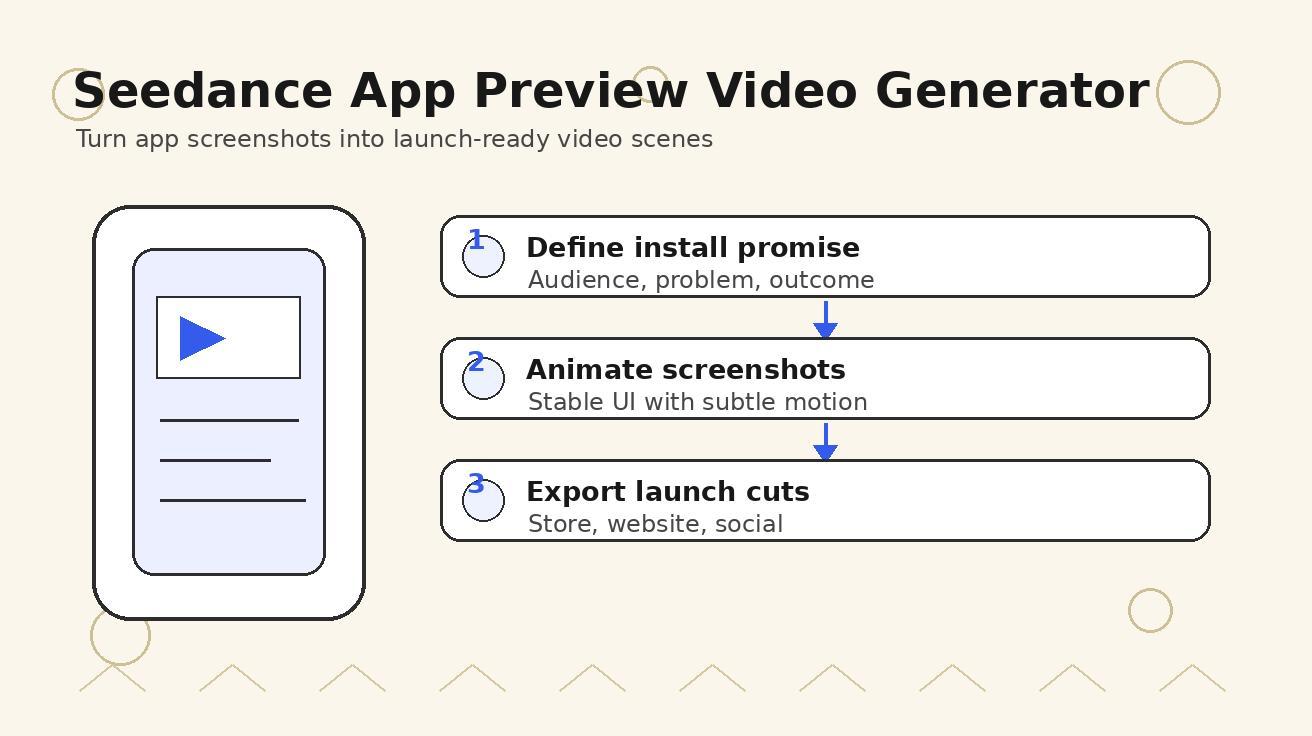
Seedance App Preview Video Generator 2026: Create App Store and Product Launch Clips
Use Seedance to turn app screenshots, feature copy, and launch goals into App Store previews, Google Play promo videos, and product launch clips.
Read article
MiniMax H3 Camera Focal Length Control: Wide, Normal, and Telephoto Looks
Control the apparent lens look in MiniMax H3 with shot size, camera distance, zoom language, reference frames, and a repeatable 24mm-to-85mm prompt test.
Read article
MiniMax H3 Two Person Video Workflow: Keep Roles, Dialogue, and Motion Clear
Build a MiniMax H3 two-person scene with stable subject labels, readable blocking, assigned dialogue, clean prop handoffs, and a practical failure-check workflow.
Read article