
Seedance Prompt Guide: Best Prompts for Cinematic AI Videos in 2026
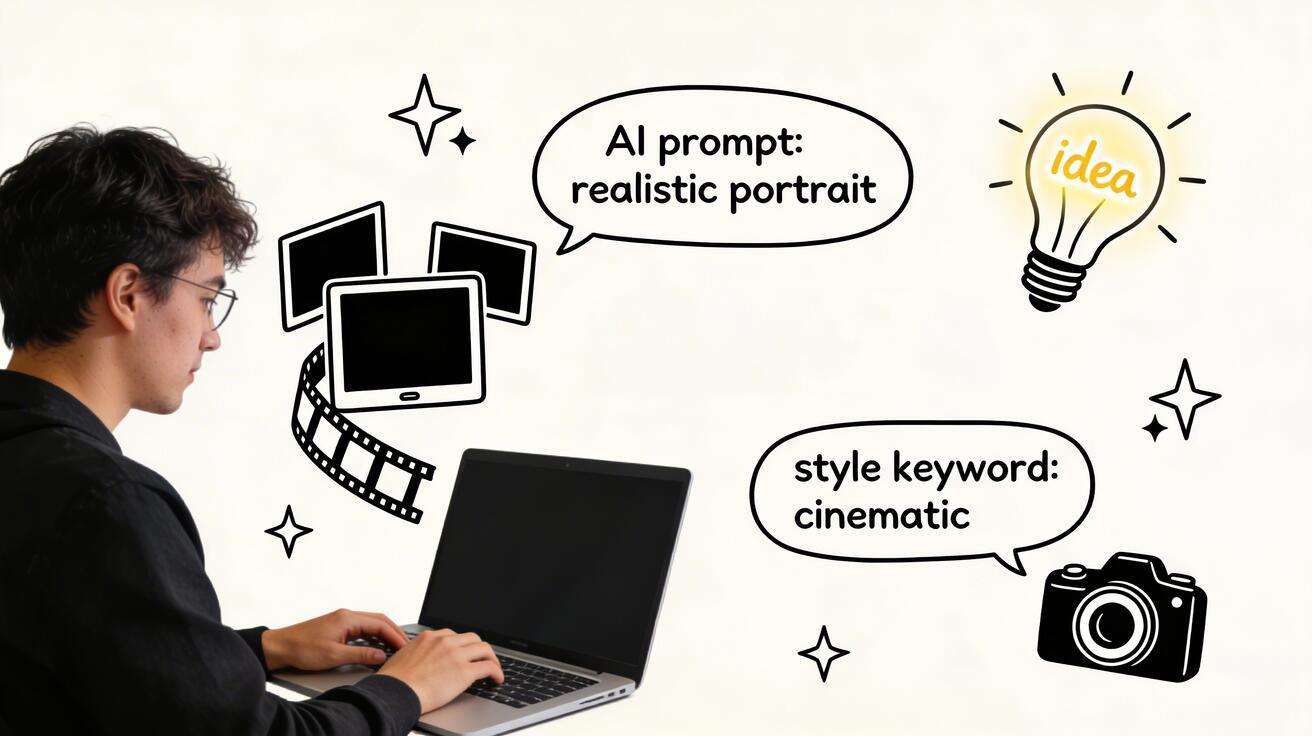
If you've been using Seedance to generate AI videos, you already know the platform is powerful. But the difference between a mediocre video and a cinematic masterpiece often comes down to one thing: your prompt.
Seedance's AI model understands natural language at a deep level, which means the way you describe your vision directly determines what you get. A vague prompt produces generic results. A precise, well-structured prompt produces videos that look like they were shot by a professional filmmaker.
This guide covers everything you need to know about writing prompts for Seedance — from the basic anatomy of a good prompt to 15+ ready-to-use cinematic templates across different genres and styles.
Whether you're creating content for social media, testing Seedance for commercial projects, or just exploring what the AI can do, these prompts and techniques will dramatically improve your output.
Understanding How Seedance Interprets Prompts
Before diving into examples, it helps to understand how Seedance processes your input.
Seedance's video generation model reads your prompt as a unified description of a scene. It parses several layers of information simultaneously:
- What is in the scene (subjects, objects, environment)
- How things move (camera motion, subject motion, physics)
- What it looks like (lighting, color grading, visual style)
- What it feels like (mood, atmosphere, emotional tone)
The more clearly you communicate each of these layers, the more control you have over the final video.
One important distinction: Seedance responds well to descriptive language rather than instructional language. Instead of saying "Make a dramatic video," describe the drama: "A woman stands at the edge of a cliff at sunset, wind pulling at her coat, camera slowly circling her as storm clouds gather on the horizon."
Seedance also handles both text-to-video and image-to-video generation. The prompt strategies differ slightly between these two modes — we'll cover both.
The Anatomy of a Perfect Seedance Prompt
A well-structured Seedance prompt typically contains five elements. You don't need all five in every prompt, but including more gives you more control.
1. Subject Description
Start with who or what is in the scene. Be specific.
❌ Weak: "A person walking"
✅ Strong: "A young woman in a red wool coat, carrying a leather briefcase, walking briskly through a rain-slicked city street at night"
Details matter: age, appearance, clothing, posture, expression, relationship to other elements in the scene.
2. Camera Movement
Seedance supports a wide range of virtual camera behaviors. Specifying camera movement instantly elevates the cinematic quality of your video.
Common camera instructions that work well with Seedance:
- Slow dolly forward — gradually moving toward the subject
- Orbital / arc shot — camera circles the subject
- Low angle tilt up — starts low and looks up, creating dramatic effect
- Handheld shake — slightly unstable, documentary feel
- Static wide shot — no camera movement, landscape or establishing shots
- Overhead drone descend — bird's eye view slowly dropping down
- Rack focus — focus shifts from foreground to background
- Tracking shot — camera moves parallel to subject
3. Lighting and Mood
Lighting is one of the most powerful cues in Seedance prompts. Describe the quality, direction, and color of light.
Examples:
- "Golden hour backlight, soft lens flare, warm amber tones"
- "Neon-lit rain, purple and pink reflections on wet pavement"
- "Harsh noon sun, deep shadows, high contrast monochrome"
- "Soft diffused studio lighting, clean white background, professional product feel"
- "Moonlight through fog, cold blue ambient glow"
- "Firelight, flickering warm orange shadows"
4. Style and Aesthetic
Tell Seedance what visual style you want. Cinematic references and aesthetic descriptors work well.
Examples:
- "Shot on 35mm film, slight grain, vintage color grade"
- "Hyperrealistic, photographic, 8K detail"
- "Watercolor animation style, soft edges"
- "Anime style, vibrant colors, Studio Ghibli atmosphere"
- "Dark gothic aesthetic, desaturated palette"
- "Commercial photography style, crisp and clean"
5. Motion Intensity
Describe how much is moving in the scene and at what pace.
- "Slow and contemplative, minimal movement"
- "High energy, fast cuts, dynamic action"
- "Gentle breeze moving leaves, otherwise still"
- "Explosion of motion — crowd surging, chaos and energy"
Best Seedance Prompts for Cinematic Videos
Here are 15+ ready-to-use prompts organized by genre. Each prompt is designed to produce cinematic-quality output using Seedance's text-to-video capability at https://www.seedance.tv/text-to-video.
Drama and Emotional Scenes
Prompt 1 — The Farewell
"A middle-aged woman stands alone on a train platform, watching a departing train disappear into the distance. Her face shows a complex mix of sadness and quiet relief. The camera slowly pushes in on her profile. Late afternoon light, long shadows, muted color palette with a single warm highlight on her face. Slow motion, cinematic 2.35:1 aspect feel."
Prompt 2 — The Discovery
"A young archaeologist kneels in a desert excavation site, carefully brushing dust from a glowing artifact. Her eyes widen as light pulses from beneath the sand. Low angle camera looking up at her face against a vast blue sky. Golden hour, warm desert tones, dramatic musical swell implied by the composition."
Prompt 3 — Reconciliation
"Two elderly men sit across from each other at a small café table, hands wrapped around coffee cups, one slowly reaching across to grip the other's arm. Tears glinting in eyes. Soft diffused window light, warm café interior tones, tight medium shot slowly zooming out to reveal the empty café around them."
Action and Dynamic Shots
Prompt 4 — Urban Parkour
"A man in his 20s races across rooftops in downtown Tokyo at night, leaping between buildings with fluid athletic grace. Camera tracks alongside him at the same height, then cuts to a low angle looking up as he lands. Neon city lights below, night sky above, motion blur on background, crisp focus on the runner. High energy, fast-paced."
Prompt 5 — The Chase
"A sports car weaves through a mountain hairpin road at dusk, headlights cutting through dust. Helicopter aerial shot tracking from above, then cuts to a low ground-level camera as the car thunders past. Dust cloud, red sky, cinematic color grade, engine roar implied by the visual intensity."
Prompt 6 — Martial Arts
"A female martial artist in traditional white gi performs a kata in slow motion on a wooden pier over still water at dawn. Each movement is precise and powerful — crane kick, spinning back kick, flowing arm movements. Wide shot showing reflection in water, mist rising from the surface. Slow-motion, serene yet powerful."
Nature and Landscape
Prompt 7 — Mountain Dawn
"Time-lapse of a mountain peak emerging from clouds at sunrise. The sun rises behind the peak, creating a golden crown of light. Snow on the summit reflects pink and orange. Camera fixed, static wide shot. Slow cloud movement, dramatic sky transformation from deep blue to warm gold. Epic and serene."
Prompt 8 — Underwater World
"A sea turtle glides through a shallow coral reef, sunlight filtering down in shafts through crystal blue water. Small fish scatter as it passes. Camera follows slowly behind and slightly above, then the turtle turns to face the camera. Vivid tropical reef colors, soft caustic light patterns, gentle movement."
Prompt 9 — Storm Rolling In
"Dark storm clouds roll over a golden wheat field as thunder rumbles on the horizon. The wheat bends in waves ahead of the approaching front. Lightning flickers in the distance. Wide establishing shot with very slow dolly backward. Dramatic sky, last rays of sun catching the field, color temperature shifting from warm to cold."
Urban and City Life
Prompt 10 — Morning Commute
"A bustling metro station at 8am. Hundreds of commuters flow past like a river. Camera positioned high on a column, slowly panning across the scene. Motion blur on moving figures, occasional sharp detail on a face looking up at the arrivals board. Fluorescent light mixing with natural light from skylights above."
Prompt 11 — Rain-Soaked Street
"A narrow Tokyo alleyway at night after heavy rain. Lanterns and neon signs reflect in puddles. A lone figure with an umbrella walks slowly away from camera, footsteps rippling the reflections. Camera at street level, very slow push forward. Color palette of deep blues, electric pinks, warm amber from lanterns."
Prompt 12 — Street Market
"A vibrant street food market in Bangkok, golden hour. Vendors cooking, steam rising, colorful produce and spices on display. Camera slowly moves through the crowd at mid-height, weaving between stalls. Warm orange and red tones, smoke and steam catching the backlight. Rich texture and detail."
Fantasy and Sci-Fi
Prompt 13 — Ancient Magic
"A robed sorceress stands in a stone circle on a misty moor, arms raised. Blue energy swirls around her hands, arcing up into storm clouds that swirl in response. Camera circles slowly at mid-distance. Gothic fantasy aesthetic, cool blue and silver palette, electric particle effects, moonlight breaking through clouds."
Prompt 14 — Space Station Exterior
"Exterior shot of a large space station orbiting above Earth. Sunlight glints off solar panels as the station slowly rotates. Earth fills the lower third of the frame, clouds visible below. A small shuttle approaches in the distance. Photorealistic, ultra-detailed, cinematic sci-fi aesthetic, silent vacuum of space conveyed through stillness."
Prompt 15 — The Future City
"A megacity skyline in 2150. Flying vehicles streak between towers that reach into clouds. Holographic advertisements glow in multiple languages. Camera pushes forward slowly into the city from a high altitude, descending toward street level. Cyberpunk color palette of cyan, magenta, and gold. Rain falling. Ultra-detailed."
Text-to-Video Prompt Templates for Seedance
Use these fill-in-the-blank templates to create your own Seedance prompts quickly.
Template 1: Character + Action + Setting
"[Character description] [performing action] in [detailed setting]. Camera [camera movement]. [Lighting description]. [Mood/style descriptor]."
Template 2: Landscape + Atmosphere
"Wide shot of [landscape]. [Weather/time of day]. [What's moving in the scene]. Camera [static/slow movement]. [Color palette]. [Overall atmosphere]."
Template 3: Two Characters + Relationship
"Two [character descriptions], [relationship dynamic visible in their posture/expression]. They [action]. Camera [movement]. [Lighting]. [Emotional tone]."
Template 4: Action + Energy
"[Subject] [high-energy action]. Camera [dynamic movement tracking]. [Visual chaos/intensity]. [Speed — slow motion / real time / fast]. [Color grade]."
Template 5: Abstract + Mood
"[Abstract concept] visualized as [concrete visual metaphor]. Camera [movement]. [Color palette and light quality]. [Textural details]. [Emotional resonance]."
Image-to-Video Prompts: Making Static Images Come Alive
Seedance's image-to-video feature animates a still image based on your motion prompt. The rules are different here: you're not describing the full scene (the image does that), but rather what should move and how.
Best practices for image-to-video prompts:
- Focus on motion, not description: The AI can see the image. Tell it what moves, not what's there.
- Be specific about what moves: "Hair blowing in wind" is better than "make it look alive."
- Specify camera behavior: Even for image-to-video, you can request camera movement.
- Describe the physics: "Waves crashing gently" or "fabric flowing slowly" gives the model physical context.
Image-to-Video Prompt Examples:
Portrait photograph:
"Slow zoom in on the face. Eyes blink naturally. Hair gently moves in a light breeze. Expression shifts slightly from neutral to a soft smile. Bokeh background breathes softly."
Landscape photo:
"Clouds drift slowly across the sky from right to left. Grass ripples in waves from the wind. Birds fly across in the background. Water in the river shimmers. Static camera."
Product shot:
"Product slowly rotates 30 degrees. Soft rim light glints around the edge. Shadow shifts subtly. Background stays static. Clean, commercial product video feel."
Architecture exterior:
"Day-to-dusk time-lapse compressed into a few seconds. Lights turn on inside. Sky transitions from blue to orange to dark purple. Clouds accelerate. Camera static."
Seedance Prompt Tips: Common Mistakes to Avoid
Even experienced users make these mistakes. Here's what to watch out for:
Mistake 1: Overloading with unrelated elements Including too many competing ideas in one prompt often produces confused results. Keep the core idea clear and simple, then add details.
❌ "A dragon flying over a city while a woman runs through a market and also there's a storm and it's the future"
✅ Write two separate prompts if you want two different scenes
Mistake 2: Using instructional language instead of descriptive Seedance responds to description, not commands.
❌ "Show a dramatic scene of a firefighter"
✅ "A firefighter emerges from thick black smoke, soot-covered face, carrying a child. Extreme close-up on determined eyes. Flashing red emergency lights, chaotic background. Slow motion."
Mistake 3: Ignoring camera direction Many users describe the scene but forget the camera. Camera direction is 30% of what makes a video cinematic.
Mistake 4: Forgetting lighting Lighting can completely change the mood and quality of a video. Always include at least one lighting descriptor.
Mistake 5: Vague style references "Make it look cool" tells the AI nothing. Use specific aesthetic descriptors: "shot on Super 8 film, warm and grainy, slightly overexposed."
How to Test and Iterate Your Seedance Prompts
Getting the perfect video often takes a few iterations. Here's a systematic approach:
Iteration Framework:
- Start with a core prompt — just subject + setting
- Generate and evaluate — what's working? What's missing?
- Add one element at a time — add camera direction, then lighting, then style
- Save what works — keep a library of effective phrases you've discovered
- Combine and remix — take the camera direction from one prompt, the lighting from another
What to look for when evaluating:
- Does the subject look right?
- Is the camera doing what you wanted?
- Is the lighting and mood correct?
- Is the motion speed and intensity appropriate?
- Does the overall aesthetic match your vision?
If multiple elements are off, fix the most important one first before regenerating.
FAQ
Q: How long should a Seedance prompt be?
A: There's no strict limit, but aim for 50-150 words for most prompts. Long enough to provide clear direction, short enough to stay coherent. Very long prompts can sometimes cause the model to lose focus on the most important elements.
Q: Can I use film/TV references in Seedance prompts?
A: Yes, stylistic references like "cinematic like a Christopher Nolan film" or "anime style like Studio Ghibli" can work well. However, results vary — descriptive language is often more reliable than pure reference-based prompting.
Q: Does Seedance support negative prompts?
A: Seedance uses natural language rather than explicit negative prompt fields. To exclude something, describe what you do want in detail, and the model will naturally de-emphasize what you haven't mentioned.
Q: How do I get slow motion in Seedance?
A: Include "slow motion" or "ultra slow motion" in your prompt, or describe the pacing: "each movement unhurried and deliberate" or "time appears to stretch, every detail visible."
Q: Can I control the video length with prompts?
A: Prompt language itself doesn't directly set video duration — that's controlled in Seedance's generation settings. But the scope of your prompt should match the duration you're targeting. A sweeping landscape scene with a time-lapse component naturally suggests a longer generation than a tight close-up moment.
Conclusion
Great AI video starts with great prompts, and great prompts start with understanding what your AI generator is looking for. Seedance responds to clear, descriptive language that covers the five key elements: subject, camera, lighting, style, and motion.
The 15+ prompt templates in this guide cover the most common cinematic scenarios — from intimate drama to epic landscapes to sci-fi futures. Use them as starting points, then customize them with the specific details that make your vision unique.
The best way to get better at Seedance prompts is to practice. Generate, evaluate, iterate. Each video teaches you something new about how the model interprets language.
Ready to put these prompts to work? Head to Seedance Text to Video to start generating, or try the Image to Video feature to animate your existing photos and artwork.
The cinematic video you've been imagining is just a prompt away.
Start with the templates in this guide, adapt them to your specific creative vision, and keep refining until Seedance produces exactly what you see in your mind. The more you practice, the more intuitive prompt writing becomes — and the more consistently impressive your Seedance videos will look.
Ready to try it yourself?
Put the steps from this guide into practice with Seedance and turn prompts or images into polished videos in minutes.
Free credits on signup. Plans from $28/month.
Related Articles
More posts in the same locale you may want to read next.
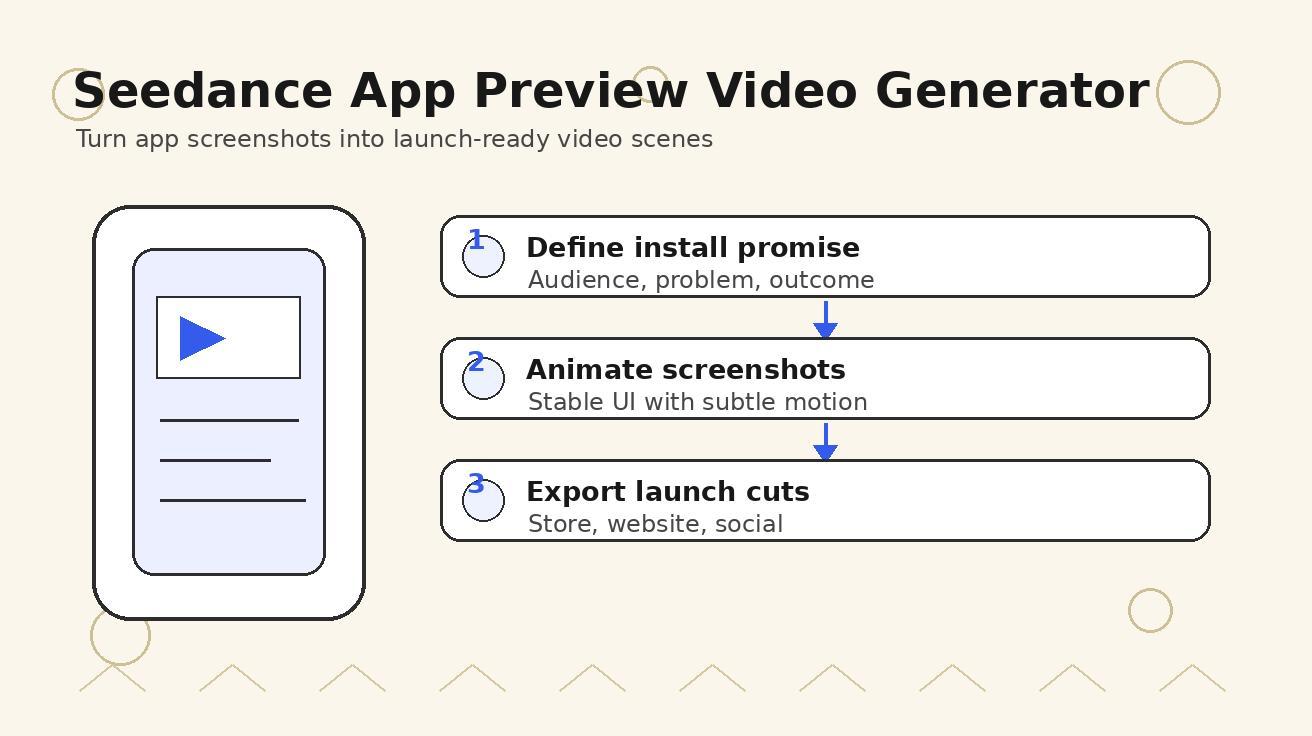
Seedance App Preview Video Generator 2026: Create App Store and Product Launch Clips
Use Seedance to turn app screenshots, feature copy, and launch goals into App Store previews, Google Play promo videos, and product launch clips.
Read article
Gemini AI Video Prompt Examples: Copy-Ready Veo Scenes and a Better Prompt Formula
Copy Gemini AI video prompt examples for cinematic motion, product ads, dialogue, and vertical clips, then adapt them with a practical Veo prompt formula.
Read article
How to Keep Product Shape Consistent in AI Video Ads
Lock product geometry, packaging, labels, references, camera angles, and approval checks so AI video ads preserve the real SKU across every shot.
Read article