
Seedance 2.5 vs Veo 3.1: Which AI Video Model Should You Use?
If you make video for a living — product demos, social ads, app previews, brand films — the Seedance 2.5 vs Veo 3.1 question is the one that decides your next month of work. Both are flagship text-to-video and image-to-video models. Both promise cinematic output. But they make very different trade-offs in clip length, resolution, audio, and how much creative control you actually get from a single prompt.
This is a Seedance-anchored breakdown, so I'll be direct about where Seedance 2.5 wins, where the Google Veo lineage has earned its reputation, and which model fits which job. By the end you'll know exactly which one to open for your next shoot — and how to run a real Seedance 2.5 workflow start to finish.
Quick Answer: Seedance 2.5 vs Veo 3.1 in One Paragraph
If your priority is long, continuous shots, native 4K, synchronized audio, and heavy reference control in a single generation, Seedance 2.5 is the stronger pick. ByteDance built it to produce one unbroken 30-second clip from a single prompt at native 4K with 10-bit color and co-generated audio — no stitching, no upscaling pass, no separate sound step. The Google Veo 3.1 line is a mature, well-regarded model with strong prompt understanding and a large existing ecosystem; it's a safe, capable choice, especially if you're already inside Google's tooling. The practical decision usually comes down to one question: do you need a single long take, or are you cutting many short shots together anyway? Long take and 4K delivery lean Seedance; short social cuts inside an existing Google workflow lean Veo.
The Core Difference: Clip Length and Continuity
This is the headline. Most current top-tier models — Veo 3.1 included — generate in the 15–20 second range per clip. That's fine for a TikTok hook or a single beat, but it forces you to stitch shots together for anything longer, and stitching introduces continuity drift: lighting shifts, the subject's face changes slightly, the camera "resets."
Seedance 2.5 generates a single continuous 30-second clip from one prompt, with no stitching. That's roughly double the per-clip ceiling of competitors in the 15–20s band. For a creator, that difference is bigger than the numbers suggest:
- A 30-second product hero film can be one shot instead of two clips welded together.
- A character can walk, turn, speak, and react across a full beat without identity drift between cuts.
- Camera moves — a slow push-in that becomes an orbit that becomes a pull-back — can play out as one continuous motion instead of three separate generations you pray will match.
If your deliverable is a 30-second ad, an explainer beat, or a continuous walkthrough, Seedance 2.5 removes the single most annoying part of AI video production: making two clips look like one.
Resolution and Color: Native 4K vs the Upscale Question
Seedance 2.5 outputs native 4K with 10-bit color depth. "Native" matters. A lot of AI video pipelines generate at a lower resolution and then upscale to 4K, which can soften fine detail and introduce artifacts on text, edges, and skin. Native 4K means the model is reasoning at delivery resolution, and 10-bit color gives you smoother gradients — important for skies, screens, gradients in brand graphics, and any footage that will be color-graded after.
Veo 3.1 produces high-quality, polished footage and is widely used for finished social and marketing content. On the resolution and bit-depth specifics, I'll stay honest: treat the exact output ceiling as something to confirm in your own account at generation time, because these specs change with model updates and tier. What I can say cleanly is that Seedance 2.5's stated spec is native 4K, 10-bit — and if your client requires a 4K master or you're grading the footage afterward, that's a concrete, checkable advantage.
Audio: One-Pass Sync vs Add-It-Later
Seedance 2.5 co-generates synchronized audio in the same pass as the video. The sound and the picture come out of one generation, so motion and audio are aligned by design rather than dragged into sync afterward in an editor.
Native audio generation has become a major battleground for flagship video models, and the Veo line has been associated with strong audio capabilities as part of Google's push into sound-enabled generation. For your workflow, the question is less "who has audio" and more "is the audio synced in one pass, or do I assemble it?" Seedance 2.5's pitch is the one-pass route: generate the clip and get matched audio with it, which cuts a whole step out of short-form production where you'd otherwise be sourcing music and timing SFX by hand.
References and Multimodal Control
This is where Seedance 2.5 quietly separates itself for production work. It accepts up to 50 multimodal references in a single generation. That's not a vanity number — references are how you enforce brand consistency:
- Feed product shots so the model renders your packaging, not a generic look-alike.
- Provide character/face references to hold identity across the full 30-second take.
- Supply style frames, color boards, or set photos so the output matches an existing campaign.
Image-to-video is fully supported: upload a JPG, PNG, or WEBP up to 10MB (minimum 300px), enter your motion prompt, and Seedance 2.5 animates from your actual asset. For ecommerce, app, and brand teams, starting from your real image is the difference between "cool AI clip" and "usable marketing asset." A model that invents a plausible-but-wrong product can't be shipped; a model that animates your actual packaging, in your actual colors, with your actual logo placement, can go straight into a campaign. The reference ceiling is what makes that reliable: instead of hoping one image is enough, you can stack the front shot, the angled shot, a lifestyle frame, and a color board so the model has no room to drift off-brand across a 30-second take.
Veo 3.1, like other top models, supports image and prompt conditioning and has strong prompt adherence in general use. If your control needs are simple — one reference image, one clear prompt — both models will serve you. If you need to pin down a product, a face, and a style simultaneously, Seedance 2.5's 50-reference ceiling gives you more room to lock the output down.
Prompt Adherence: Getting What You Asked For
Both models are marketed on strong prompt adherence, and in practice both reward specific, structured prompts over vague ones. Seedance 2.5's strong adherence pairs well with its long-clip capability: because you're describing a 30-second arc, you can write a prompt that sequences action ("the camera pushes in as she turns toward the window, then holds") and expect the model to actually follow the beats across the take, rather than collapsing everything into a 5-second blur.
The honest framing for any model comparison: prompt adherence is real but not magic. Plan to generate 2–3 variants and pick the best. The model that gives you a longer, higher-res, audio-synced base on each attempt — Seedance 2.5 — means each variant is closer to a finished deliverable.
Seedance 2.5 vs Veo 3.1: Comparison Table
| Dimension | Seedance 2.5 | Veo 3.1 (general positioning) |
|---|---|---|
| Max single clip | 30 sec, one continuous take, no stitching | Shorter per-clip range (typically ~15–20s class) |
| Resolution | Native 4K, 10-bit color | High-quality output; confirm 4K/bit-depth per tier in-app |
| Audio | Synchronized audio co-generated in one pass | Strong audio capabilities associated with the Veo line |
| References | Up to 50 multimodal references | Image + prompt conditioning supported |
| Input modes | Text-to-Video + Image-to-Video (JPG/PNG/WEBP ≤10MB, ≥300px) | Text-to-Video + image conditioning |
| Prompt adherence | Strong, sequences action across a long take | Strong, well-regarded |
| Ecosystem fit | Open in Seedance directly; multi-model platform | Integrated with Google's tooling ecosystem |
| Availability | Announced June 2026, rolling out early July 2026 | Established, broadly available |
Specs for the Veo side are kept general on purpose — verify exact per-tier limits in your own account, as flagship video specs shift with each model update.
Real Workflow: Making a 30-Second Product Film in Seedance 2.5
Here's a concrete run-through using Seedance 2.5's strengths — the kind of job where the long single take actually pays off. Say you're producing a hero film for a skincare product launch.
Step 1: Gather and upload references
Collect your product shots (front, angle, in-hand), one or two lifestyle frames that match your brand mood, and a color/style board. In Seedance 2.5, start an image-to-video generation and upload your hero product image (JPG/PNG/WEBP, under 10MB, at least 300px). Add the supporting frames as references — you have headroom up to 50, so use enough to lock product, setting, and palette.
Step 2: Write a sequenced 30-second prompt
Because you get one continuous take, write the prompt as a beat sheet, not a single static description:
"Cinematic product film, soft morning light in a minimalist bathroom. Open on a slow push-in toward the [product] on a marble shelf, water droplets catching light. Camera orbits gently as a hand reaches in and lifts the bottle. Hold on the label, shallow depth of field. Warm, premium, calm mood. Subtle ambient audio: soft water, gentle tone. 4K, 10-bit, photorealistic."
Step 3: Generate and let audio come with it
Run the generation. Seedance 2.5 produces the full 30-second clip at native 4K with synchronized audio in the same pass, so you're not scoring it separately afterward.
Step 4: Generate 2–3 variants
Re-run with small prompt tweaks — change the camera move, the light direction, the pacing. Compare variants side by side and pick the strongest. This is standard practice; never ship the first generation blind.
Step 5: QA before delivery
Run a quick checklist: Is the product accurate to your reference (label, shape, color)? Is motion physically believable (no melting hands, no warping packaging)? Does the camera move match the brief? Is the audio in sync and on-brand? Is any on-screen text legible? Fix issues by adding clearer references or tightening the prompt, then regenerate the affected variant.
Step 6: Export and deploy
Export your 4K master. Because it's a single continuous take, you can use it as-is for a landing-page hero, trim it for a 15-second paid cut, or grab stills for product cards — all from one generation.
This is the workflow where Seedance 2.5's spec sheet turns into real time saved: no stitching, no upscaling pass, no separate audio step.
Copy-Ready Prompt Examples for Seedance 2.5
Long takes reward sequenced prompts. Here are three templates you can paste into Seedance 2.5 and adapt. Notice that each one describes a progression across the 30 seconds, not a single frozen moment — that's how you use the continuous-clip capability instead of fighting it.
Product demo (image-to-video, from your product shot)
"Animate the uploaded product on a clean studio surface. Begin static, then a slow dolly-in over the first beats. Mid-clip, a soft rotating light sweeps across the label to reveal texture. Camera arcs 30 degrees while holding focus on the product. End on a calm hold with shallow depth of field. Premium, minimal, true-to-reference colors. Subtle ambient room tone. Native 4K, 10-bit."
App preview (text-to-video)
"Sleek over-the-shoulder shot of hands using a modern smartphone app. Open on the home screen, finger taps to a dashboard, smooth UI transition, then a pinch-zoom into a chart that animates upward. Bright, optimistic, soft daylight. Camera drifts in slowly throughout. Light UI tap sounds and a gentle background tone in sync with the interactions. 4K, photorealistic."
Brand / lifestyle hero (image-to-video with style references)
"From the uploaded scene, build a 30-second mood film. Start wide on the environment at golden hour, slow push-in as a subject enters frame and moves naturally through the space, camera tracking alongside. Warm, cinematic, film-grain feel matching the style references. End on an unhurried hold. Ambient outdoor audio, soft and synchronized. Maintain exact subject identity across the full take."
Run each as 2–3 variants, tweak one variable at a time (light direction, camera speed, pacing), and keep the strongest. Because Seedance 2.5 holds identity and continuity across the whole 30 seconds, your variants stay comparable instead of diverging into unrelated clips.
When Veo 3.1 Is the Right Call
I'm not going to pretend Seedance 2.5 wins every scenario. Veo 3.1 is a strong, mature model, and there are clear cases to reach for it:
- You're already inside Google's ecosystem. If your team's pipeline, billing, and tooling live in Google's stack, staying there reduces friction and that convenience can outweigh spec differences.
- You're cutting many short shots anyway. If your edit is a fast montage of 5–8 second beats, the 30-second single-take advantage matters less, and Veo's short-clip output fits the timeline.
- You have an existing Veo workflow that works. Don't break a pipeline that's already shipping good results just to chase a longer clip you may not need.
The right model is the one that fits your deliverable and your stack — not the one with the biggest number on one spec line.
Who Should Pick Which: The Verdict
Pick Seedance 2.5 if you:
- Need a single continuous 30-second shot without stitching artifacts.
- Deliver in native 4K or grade footage afterward (10-bit color helps).
- Want synchronized audio in one pass to skip the scoring step.
- Rely on heavy reference control (product, face, style) — up to 50 references.
- Build product demos, brand films, app previews, and landing-page hero videos where polish and continuity matter.
Pick Veo 3.1 if you:
- Are already standardized on Google's tooling and value that integration.
- Mostly produce short, fast-cut social content where long takes aren't the bottleneck.
- Have an existing Veo workflow that's already delivering.
For most product, ecommerce, and brand teams I work with, the combination of 30-second single takes + native 4K + one-pass audio + 50 references is what moves AI video from "fun toy" to "shippable asset" — and that's the case for Seedance 2.5.
How to Try Seedance 2.5
Seedance 2.5 was announced in June 2026 and is rolling out in early July 2026. To get started:
- Open the Seedance 2.5 model page to see current capabilities and access.
- Choose Image to Video to animate your own product or asset, or Text to Video to generate from a prompt.
- Upload references, write a sequenced prompt, and generate.
- Compare 2–3 variants, run the QA checklist, and export your 4K master.
If you're coming from an earlier release, the Seedance 2.0 review covers the baseline, and the Seedance 2.5 vs Seedance 2 Mini breakdown helps you choose between the flagship and the faster, lighter tier when speed and cost matter more than maximum quality.
FAQ
Is Seedance 2.5 better than Veo 3.1?
For long single takes, native 4K delivery, one-pass synchronized audio, and heavy reference control, Seedance 2.5 has clear, checkable advantages. Veo 3.1 remains an excellent, mature option, especially inside Google's ecosystem and for short-form, fast-cut content. "Better" depends on your deliverable — match the model to the job.
How long a clip can Seedance 2.5 make?
A single continuous 30-second clip from one prompt, with no stitching — roughly double the per-clip length of models in the common 15–20 second band.
Does Seedance 2.5 generate audio?
Yes. It co-generates synchronized audio in the same pass as the video, so picture and sound are aligned by design instead of being assembled afterward.
Can I use my own product image?
Yes. Seedance 2.5 supports image-to-video with JPG, PNG, or WEBP files up to 10MB (minimum 300px), plus up to 50 multimodal references to lock product, face, and style.
When can I use Seedance 2.5?
It was announced in June 2026 and is rolling out in early July 2026. Check the Seedance 2.5 model page for current access in your region.
Conclusion
The Seedance 2.5 vs Veo 3.1 decision really comes down to what you're shipping. Veo 3.1 is a strong, polished model with a deep ecosystem and a well-earned reputation — a safe choice, particularly for short-form work and Google-native pipelines. But if your job demands a continuous 30-second take, native 4K with 10-bit color, synchronized audio in a single pass, and up to 50 references to keep your brand locked in, Seedance 2.5 is built for exactly that workflow. Open the Seedance 2.5 model page, upload your references, write a sequenced prompt, generate a few variants, and judge it against your own deliverable — that's the only benchmark that matters.
Ready to create your own AI video?
Turn ideas, text prompts, and images into polished videos with Seedance. If this article helped, the fastest next step is to try the product.
Free credits on signup. Plans from $28/month.
Related Articles
More posts in the same locale you may want to read next.
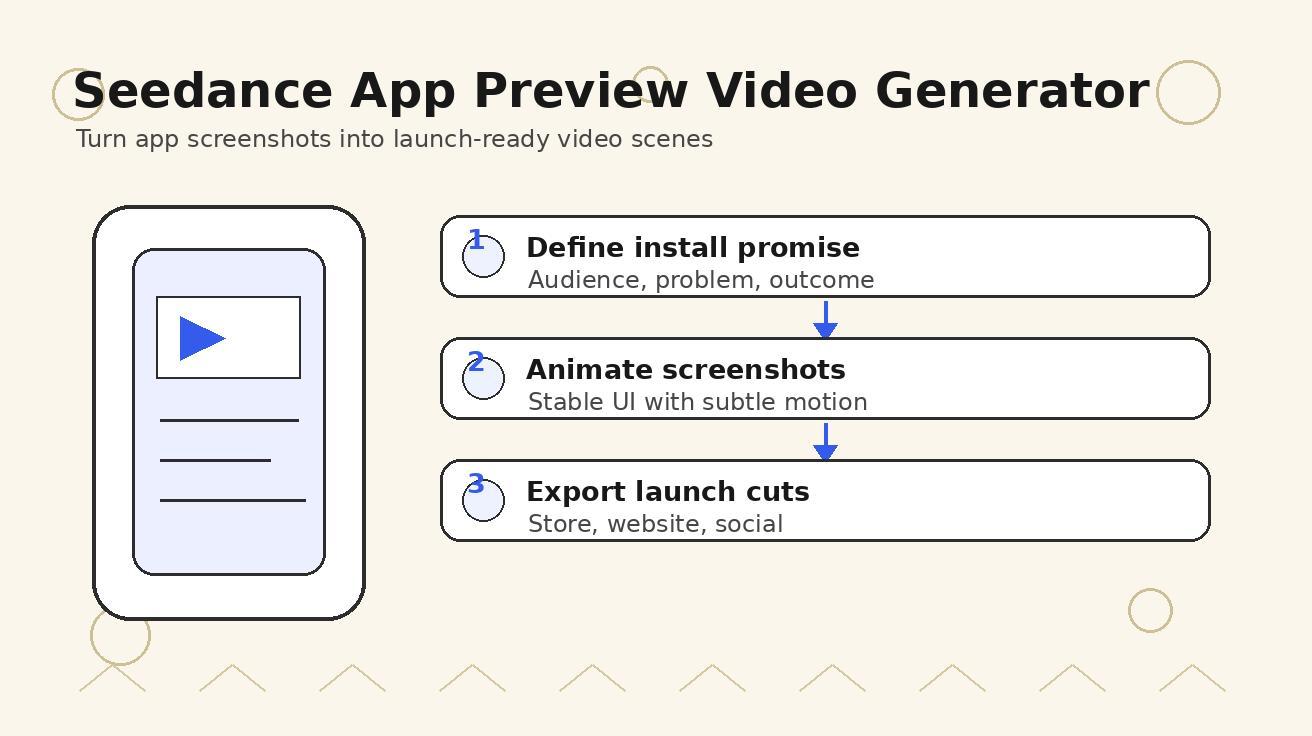
Seedance App Preview Video Generator 2026: Create App Store and Product Launch Clips
Use Seedance to turn app screenshots, feature copy, and launch goals into App Store previews, Google Play promo videos, and product launch clips.
Read article
Gemini AI Video Prompt Examples: Copy-Ready Veo Scenes and a Better Prompt Formula
Copy Gemini AI video prompt examples for cinematic motion, product ads, dialogue, and vertical clips, then adapt them with a practical Veo prompt formula.
Read article
How to Keep Product Shape Consistent in AI Video Ads
Lock product geometry, packaging, labels, references, camera angles, and approval checks so AI video ads preserve the real SKU across every shot.
Read article