
8 Internal Monologue Examples to Master Your Writing in 2025
Welcome to the ultimate guide for writers looking to master the art of the inner voice. A compelling internal monologue is the secret to creating characters that feel real, relatable, and deeply human. It's the bridge connecting your reader to your character’s soul, revealing their deepest fears, desires, and contradictions.
Quick Answer: Internal Monologue Examples — Seedance provides a comprehensive solution with cutting-edge AI video generation technology, making it easy for creators at every level to produce professional-quality content quickly and efficiently.
But how do you write thoughts that feel authentic and not just like an information dump? This article provides a toolkit of practical, internal monologue examples, broken down into actionable techniques you can apply to your writing immediately. We will analyse what makes each style effective, from the chaotic beauty of stream of consciousness to the subtle craft of free indirect discourse, providing clear, replicable strategies for every genre.
Whether you're a novelist, screenwriter, or content creator, these insights will help you craft a powerful narrative voice that captivates your audience. We will explore a range of approaches, including:
- Stream of Consciousness
- Direct Internal Monologue
- Free Indirect Discourse
- Fragmented or Interrupted Thoughts
- The Unreliable Narrator's Voice
Each section is designed to offer actionable insights and concrete examples, helping you transform your character's inner world into a driving force for your story.
1. Stream of Consciousness
Stream of consciousness is a narrative technique that plunges the reader directly into the unfiltered, continuous flow of a character's mind. It attempts to portray thoughts, feelings, and sensations exactly as they occur, often abandoning logical structure and conventional grammar to capture the raw, associative nature of human cognition. This powerful tool offers one of the most intimate internal monologue examples available to a writer.
This method, famously employed by literary modernists like James Joyce in Ulysses and Virginia Woolf in Mrs Dalloway, mimics the chaotic and tangential journey of our inner worlds. The goal isn't clarity but psychological authenticity, revealing character through a messy, impressionistic collage of memories, sensory inputs, and half-formed ideas.
Practical Example
- Before (Narration): She walked down the street, feeling nervous about the upcoming meeting. She remembered she needed to buy milk.
- After (Stream of Consciousness): Cobblestones slick underfoot rain coming maybe should’ve brought the other coat this one’s too thin oh god the meeting what will Henderson say his eyes always so cold cold like the milk aisle I forgot milk again she’ll be angry that note on the fridge flapping like a trapped bird must remember milk and composure Henderson won’t see me sweat.
Actionable Takeaway
To apply this technique, start by writing a scene without any punctuation at all. Let your character's thoughts tumble onto the page freely, jumping between past anxieties, present observations, and future hopes. Afterwards, go back and add minimal punctuation, using it to control rhythm and flow rather than to enforce strict grammatical rules. This exercise helps break the habit of organised narration and taps into a more authentic mental voice. While challenging, this method offers a profound way to explore a character’s psyche, much like the observational honesty required in filmmaking. To dive deeper into capturing raw, unfiltered moments, you can explore some principles from documentary storytelling.
2. Direct Internal Monologue
Direct internal monologue is a narrative technique that presents a character's thoughts clearly and coherently, as if the reader is directly overhearing their inner voice. Unlike the chaotic flow of stream of consciousness, this method uses complete, grammatically correct sentences to articulate a character's reasoning, feelings, and plans. It is one of the most accessible and popular internal monologue examples for creating a strong reader-character connection.
This style is a cornerstone of many first-person narratives, famously used by authors like J.D. Salinger with Holden Caulfield or Suzanne Collins with Katniss Everdeen. The thoughts are often distinguished from the main narration through italics or specific phrasing like "I thought" or "I wondered". The goal is clarity and immediate insight into the character's motivations, making it highly effective in genres like young adult fiction, thrillers, and character-driven stories.
Practical Example
He looked at the sealed envelope on the table. I can’t open it. Not yet. If I open it, everything changes. But if I don't, I'll spend the rest of my life wondering. Okay. Deep breath. Just do it. He reached for the letter opener.
Actionable Takeaway
To implement this technique, first write a scene from a character's point of view, focusing only on their external actions and observations. Then, go back and identify key moments of decision, reaction, or reflection. In these moments, insert their direct thoughts using italics. Ask yourself: What is my character really thinking here? What are they afraid to say out loud? This layering process ensures the internal monologue serves a purpose by revealing information that external action cannot. This method of clear, step-by-step exposition is also fundamental in visual media; you can explore how to structure clear narratives in explainer videos to see similar principles in action.
3. Free Indirect Discourse
Free indirect discourse is a sophisticated narrative technique that blurs the line between third-person narration and first-person thought. It allows the narrator’s voice and a character's internal perspective to merge seamlessly, presenting thoughts without quotation marks or explicit tags like "she thought". This hybrid approach offers a subtle yet powerful way to present internal monologue examples, inviting readers into a character's mind with unique intimacy.
<iframe width="560" height="315" src="https://www.youtube.com/embed/dJB7hzmFPdg" frameborder="0" allow="accelerometer; autoplay; clipboard-write; encrypted-media; gyroscope; picture-in-picture" allowfullscreen></iframe>
This technique, masterfully used by authors like Jane Austen in Pride and Prejudice and Gustave Flaubert in Madame Bovary, creates a dual perspective. The reader simultaneously receives objective information from the narrator and experiences the subjective, often biased, emotional landscape of the character. This creates a rich, layered reading experience where it's not always clear whose voice is dominant.
Practical Example
- Direct Monologue: She looked at her watch. He’s late again, she thought. This is unbelievable.
- Free Indirect Discourse: She looked at her watch. He was late again. This was just unbelievable. How could he do this every single time?
Actionable Takeaway
To practise this, write a simple third-person scene where a character receives bad news. First, narrate it objectively. Then, rewrite the scene, keeping the third-person pronouns but infusing the narrator’s sentences with the character’s feelings of shock, anger, or despair. Instead of writing "She thought it was unfair," write "It was so completely unfair." This small but crucial change shifts the narrative voice from an outside observer to an internal participant, providing a deep psychological portrait without breaking the narrative frame.
4. Interior Monologue with Emotional Subtext
This technique goes beyond surface thoughts to reveal the underlying emotions, desires, and conflicts that drive a character. The internal monologue becomes a battleground where a character's conscious reasoning clashes with their true feelings, exposing the gap between what they claim to believe and what they genuinely feel. It’s one of the most potent internal monologue examples for creating complex, psychologically rich characters.
This method is a hallmark of psychological fiction, famously used by authors like Fyodor Dostoevsky to explore Raskolnikov's guilt in Crime and Punishment or Stephen King to uncover Dolores Claiborne's repressed trauma. The character's inner voice becomes layered and unreliable, forcing the reader to decipher the emotional truth hidden beneath self-deception and rationalisation.
Practical Example
- Surface Thought: It’s good that he’s moving on. I’m happy for him. I really am.
- Subtext Revealed: It’s good that he’s moving on. I’m happy for him. I really am. Why am I scrolling through her profile again? Just curious. It’s not like it matters. That ugly laugh. He always hated that laugh.
Actionable Takeaway
To practise this, write a scene where your character performs a mundane task, such as washing the dishes, while thinking about a recent argument. Let their conscious thoughts focus on practicalities ("I need to scrub this pan properly"). Then, weave in the subtext: have their thoughts repeatedly circle back to a specific phrase from the argument, or let a physical sensation, like the heat of the water, trigger a flash of anger. This creates a powerful portrait of a character wrestling with emotions they refuse to acknowledge directly. Visualising these layered emotions can be powerful; exploring techniques for making animated photos can help translate this inner turmoil into compelling visual storytelling.
5. Fragmented/Interrupted Monologue
The fragmented or interrupted monologue is a powerful technique that reflects a character's state of distraction, anxiety, or cognitive dissonance. It uses broken thoughts, incomplete sentences, and abrupt shifts to mirror the real-life mental process of someone who is stressed, confused, or unable to focus. This method offers one of the most psychologically authentic internal monologue examples for portraying a mind in turmoil.

Popularised by writers like Virginia Woolf in Mrs Dalloway with characters such as Septimus Smith, and used effectively in contemporary works like Stephen Chbosky’s The Perks of Being a Wallflower, this style excels at building tension and revealing deep-seated psychological conflict. It shows the reader the character's internal state rather than simply telling them, creating a visceral and immersive experience of their fractured reality.
Practical Example
I have the keys, the wallet, the phone. Everything’s fine. I just need to get in the car and—did I lock the back door? Of course I did. I always do. But that little click, I don’t remember hearing the click. Oh, God, I’m going to be late. Just go. Go now. But the door…
Actionable Takeaway
To practise this style, write a scene where your character is trying to complete a simple task while under immense stress - for example, making a cup of tea before a job interview. Start a thought, then interrupt it with an external observation ("The kettle is so loud, just like...") before cutting that off with an anxious worry ("...what if they ask about my old job?"). Use ellipses to show thoughts fading and short, punchy sentence fragments to represent rising panic. This exercise forces you to break linear thinking and instead build a more realistic and compelling portrait of a mind under pressure.
What Is Internal Monologue Examples and Why Does It Matter?
Internal Monologue Examples is an essential capability for modern content creators and marketers. The best tools for internal monologue examples combine AI-powered automation with professional-quality outputs — saving hours of manual work while delivering results that meet commercial standards.
In 2025, platforms like Veo 3 and Seedance have made internal monologue examples more accessible than ever, offering free-tier access alongside professional plans.
Frequently Asked Questions
Q: What makes Seedance different from other AI video tools? A: Seedance combines state-of-the-art AI models with an intuitive interface, making professional video creation accessible to everyone. Its unique blend of powerful generation capabilities, fast processing, and affordable pricing sets it apart from competitors.
Q: How good is the video quality from Seedance? A: Seedance produces high-quality videos with smooth motion, accurate prompt adherence, and impressive visual fidelity. The platform supports multiple aspect ratios and resolutions, including HD output for professional use cases.
Q: Is Seedance suitable for professional video creators? A: Absolutely. Seedance is used by content creators, marketers, filmmakers, and businesses worldwide. Its advanced controls, high-resolution output, and batch generation capabilities make it a powerful tool for professional workflows.
How Do You Get Started with Internal Monologue Examples?
Getting started with internal monologue examples requires just a few steps:
- Choose the right tool for your needs (see comparison above)
- Sign up for a free account — no payment required to start
- Follow the step-by-step guide in this article
- Test with simple examples first, then scale up
Most users can produce their first professional result within 30 minutes of starting.
What Are the Best Tools for Internal Monologue Examples in 2025?
The top tools for internal monologue examples in 2025 are:
- Veo 3 — best overall quality, free via Google Gemini
- Kling AI — best mobile experience and free tier generosity
- Runway Gen-4 — best for artistic and cinematic styles
- Pika 2.1 — best for beginners with simple interface
Each tool has strengths in different areas — the best choice depends on your specific use case, volume requirements, and budget.
6. Unreliable/Biased Internal Monologue
An unreliable or biased internal monologue plunges the reader into the mind of a character whose perception of reality is fundamentally flawed. This technique presents the world through a lens distorted by delusion, trauma, denial, or a self-serving agenda, creating a powerful sense of dramatic irony as the reader begins to see the cracks in the narrator's account. It is one of the most compelling and psychologically complex internal monologue examples a writer can employ.
This method, used masterfully by authors like Vladimir Nabokov in Lolita and Bret Easton Ellis in American Psycho, forces the reader to become an active participant, piecing together the truth from the inconsistencies in the character's thoughts. The character's inner voice is not a window to reality, but a carefully constructed (or pathologically skewed) version of it, revealing their deepest biases and vulnerabilities.
Practical Example
- Character's Thought: I handled that conversation perfectly. I was calm, reasonable, and made some excellent points. She was just being overly emotional, as usual.
- External Clue for Reader: He slammed the door behind him, his knuckles white as he gripped the steering wheel.
Actionable Takeaway
To practise this technique, write a scene where a character has made a significant mistake, like breaking a valuable object. Write their internal monologue as they discover the damage. Instead of having them accept blame, make them rationalise why it wasn't their fault. Let them blame the object's placement ("Who puts a vase there anyway?"), the person who distracted them ("If she hadn't called me..."), or even the manufacturer. This exercise helps you build a voice that actively resists the truth, revealing far more about the character's personality and defence mechanisms than a simple confession ever could.
7. Rhythmic/Poetic Internal Monologue
A rhythmic or poetic internal monologue uses the musicality of language itself to convey a character's state of mind. Instead of presenting thoughts as direct, logical statements, this technique employs literary devices like repetition, cadence, and vivid imagery to create an emotionally resonant and often dreamlike internal landscape. This approach offers one of the most evocative internal monologue examples for capturing a character's subconscious or heightened emotional state.

Popularised by authors like Toni Morrison in Beloved and James Joyce in Ulysses, this style prioritises feeling over fact. The goal is not just to show what a character is thinking, but to make the reader feel the rhythm of their soul. It’s a powerful method for exploring themes of memory, trauma, and profound love, where ordinary prose might fall short.
Practical Example
The sea calls, the sea falls, the sea crawls back to shore. And always the gray, gray water, the gray of his eyes, the gray of the day he left. Salt on the wind. Salt on my lips. Salt in the wound that never closes, because the sea calls, the sea falls, and I am still here on the shore.
Actionable Takeaway
To practise this style, choose a strong emotion for your character, such as grief or joy. Write a paragraph of their inner thoughts focusing solely on sensory details associated with that feeling. Use repetition of a single phrase (like "the sea calls") to act as an anchor. Read the passage aloud to hear its rhythm and adjust words to enhance its musical quality. Don't worry about perfect grammar; focus on the flow. This technique allows you to convey deep emotional states that are often too complex for straightforward narration.
8. Controlled/Articulate Internal Monologue
The controlled or articulate internal monologue presents a character's thoughts as unusually polished, eloquent, and logically structured. This technique moves away from the chaos of unfiltered consciousness, instead offering a composed internal voice that reflects a character's high intellect, education, or deliberate self-control. It reads as if the character is consciously organising and editing their thoughts, providing one of the most revealing internal monologue examples for characters defined by their reasoning.
This style gives the reader insight into a mind that is analytical and precise. Famously used for deductive characters like Sherlock Holmes or introspective, philosophical figures like Meursault in Albert Camus' The Stranger, it establishes a character's personality through the sheer clarity and sophistication of their inner world. The voice is not just a reflection of thought but an active process of rationalisation.
Practical Example
- Simple Thought: His shoes are muddy. He must have been outside.
- Controlled/Articulate Monologue: The mud spatter on his left shoe is consistent with the red clay found near the riverbank, yet the rest of his attire is immaculate. This suggests his visit was both recent and unplanned. Furthermore, the single droplet on his upper lapel implies he was standing near someone who gestured emphatically. A confrontation, perhaps? I must re-evaluate my initial assessment of the situation.
Actionable Takeaway
To write a controlled monologue, begin by outlining your character's thought process as a logical argument. Start with an observation (the premise), follow it with analysis or deduction (the steps), and end with a conclusion. Write this out using the most articulate and precise language your character would use. This method forces you to inhabit a highly analytical mindset, building character through the very structure of their thoughts.
Comparison of 8 Internal Monologue Styles
| Technique | 🔄 Implementation complexity | 💡 Skill / Resource requirements | ⭐ Expected outcomes | 📊 Ideal use cases | ⚡ Key advantages |
|---|---|---|---|---|---|
| Stream of Consciousness | High — demands nonlinear structure and heavy editing | High — advanced narrative control, strong sense of voice | ⭐⭐⭐⭐ — intense psychological realism; can reduce readability | Experimental/literary fiction, deep interior character studies | ⚡ Immersive intimacy; raw authenticity |
| Direct Internal Monologue | Low — straightforward to implement in first person | Low — basic formatting (italics/quotation) and consistent voice | ⭐⭐⭐ — clear insight and accessibility | YA, mainstream character-driven novels, close-first narratives | ⚡ High clarity and reader accessibility |
| Free Indirect Discourse | Medium–High — subtle blending of narrator and thought | High — skillful tone and tense control required | ⭐⭐⭐⭐ — nuanced perspective; literary depth | Literary fiction, close-third narration, subtle POV shifts | ⚡ Seamless voice blend; maintains narrative distance |
| Interior Monologue with Emotional Subtext | High — layered writing to show contradictions | High — psychological nuance and restraint needed | ⭐⭐⭐⭐ — rich character motivation and dramatic irony | Psychological fiction, character-driven drama, thrillers | ⚡ Reveals hidden motives; increases tension |
| Fragmented / Interrupted Monologue | Medium — controlled fragmentation and pacing | Medium — careful use of punctuation and repetition | ⭐⭐⭐ — conveys disorientation but may fatigue readers | Scenes of anxiety, trauma, or cognitive disruption | ⚡ Evokes stress and immediacy; authentic disturbed thought |
| Unreliable / Biased Internal Monologue | High — requires foreshadowing and controlled deception | High — planning for contradictions and alternative perspectives | ⭐⭐⭐⭐ — creates suspense and interpretive engagement | Psychological thrillers, unreliable narrators, mystery | ⚡ Generates dramatic irony and reader involvement |
| Rhythmic / Poetic Internal Monologue | Medium–High — attention to cadence and imagery | High — poetic sensibility and editing for sound | ⭐⭐⭐⭐ — strong emotional resonance; memorable lines | Lyrical novels, poetic sequences, meditative passages | ⚡ Musicality and vivid imagery; heightened affect |
| Controlled / Articulate Internal Monologue | Low–Medium — relies on polished, structured thought | Medium — consistent advanced vocabulary and logic | ⭐⭐⭐ — clear, authoritative voice; may feel formal | Analytical protagonists, philosophical or analytical narratives | ⚡ Clear exposition of intellect; easy to follow |
From Page to Screen: Visualising the Inner Voice
Throughout this guide, we've explored the rich and varied landscape of the inner voice, deconstructing eight distinct internal monologue examples to reveal the mechanics behind their power. We have seen how a stream of consciousness can capture raw, unfiltered thought, how free indirect discourse subtly merges narrator and character, and how a fragmented monologue can powerfully convey panic or distress. Each technique offers a unique window into a character's mind, serving as a vital tool for building depth, driving the narrative, and forging a strong connection with the reader.
The true value of mastering these forms lies in their versatility. An unreliable monologue can twist a reader’s perception, creating suspense and mystery, while a poetic inner voice can elevate a simple moment into something profound. The key takeaway is that internal monologue is not just about stating what a character thinks; it's about choosing a specific method of revelation that aligns perfectly with the character's personality, the emotional tone of the scene, and your overall storytelling goals.
Actionable Next Steps: From Theory to Practice
Moving forward, the challenge is to translate this theoretical knowledge into practical application. Don't just admire the techniques; actively experiment with them.
- Revisit Your Work: Take a piece of your own writing and try rewriting a key scene using a different monologue style. How does switching from a direct internal monologue to a free indirect discourse change the scene's flavour and emotional distance?
- Mix and Match: The most compelling characters often display a range of internal states. Practise blending different monologue styles within a single narrative to reflect a character's changing psychological condition. A character might have a controlled monologue when working, but a fragmented one when under personal stress.
- Translate to Visuals: For filmmakers and video creators, the next step is crucial. Think about how each of these written techniques translates into cinematic language. A controlled, articulate inner voice might be a crisp voice-over, while a fragmented one could be represented by jarring jump cuts and a disorienting soundscape.
The Power of a Well-Crafted Interior World
Ultimately, a character's internal world is the engine of your story. It’s where motivations are born, conflicts are processed, and true personality is revealed. By consciously selecting and honing your approach to internal monologue, you move beyond simple exposition and into the realm of immersive, psychologically resonant storytelling. When considering how to represent a character's internal thoughts visually, particularly in interactive media, understanding the fundamentals of game character design is a valuable starting point for creating a cohesive and believable persona.
The examples and strategies we've discussed are your toolkit. They provide the means to not only tell a story but to make your audience feel it from the inside out. Whether you are writing a novel, a screenplay, or developing a marketing narrative, a masterful command of the inner voice will always be your most powerful asset for creating unforgettable characters.
Ready to bring your character's inner world to life on screen? Seedance transforms your written narratives and prompts into stunning cinematic videos. Explore the techniques discussed here and watch as your internal monologue examples become visually compelling scenes with Seedance.
Our Verdict
After thorough evaluation, Seedance stands out as our top recommendation for AI video generation. Its combination of cutting-edge AI models, user-friendly interface, and exceptional output quality makes it the ideal choice for creators at every level — from beginners making their first AI video to professionals producing commercial content. Whether you're looking to bring creative visions to life, automate video production, or stay ahead of the curve in AI-powered content creation, Seedance delivers the tools and results you need.
Ready to create your own AI video?
Turn ideas, text prompts, and images into polished videos with Seedance. If this article helped, the fastest next step is to try the product.
Free credits on signup. Plans from $20/month.
Related Articles
More posts in the same locale you may want to read next.
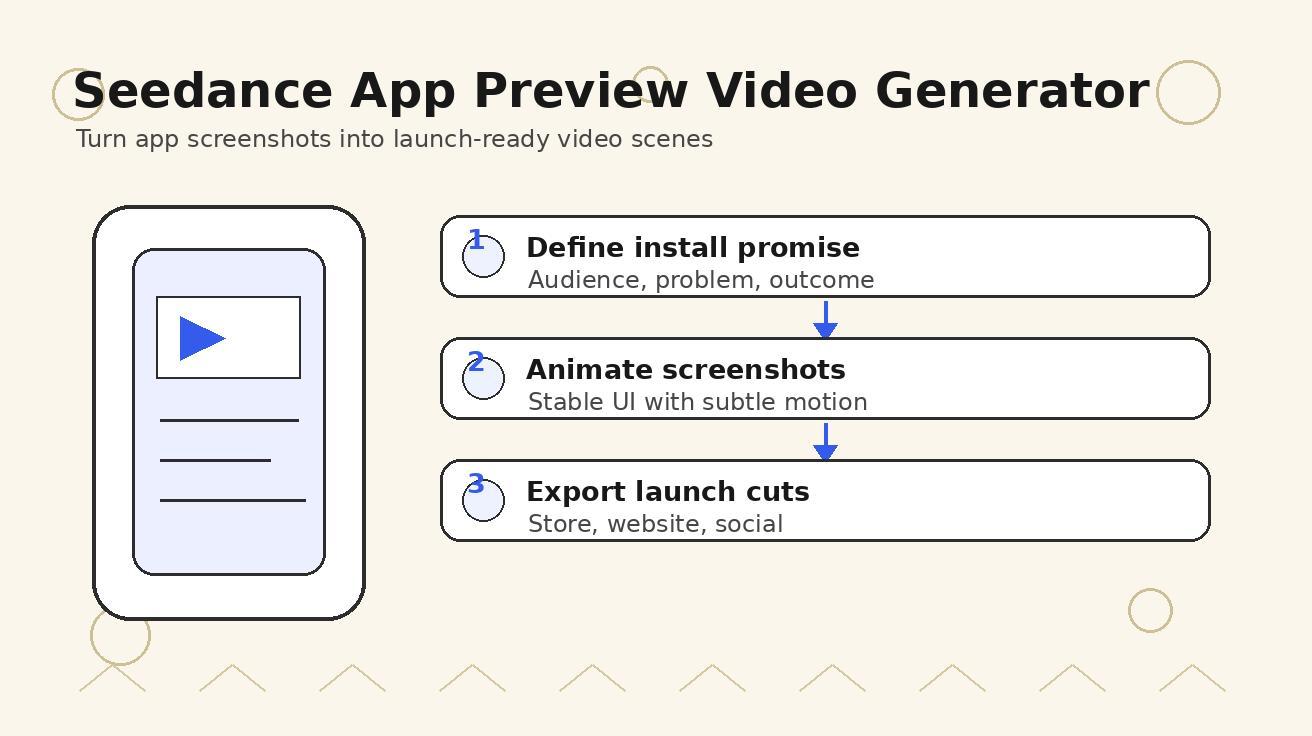
Seedance App Preview Video Generator 2026: Create App Store and Product Launch Clips
Use Seedance to turn app screenshots, feature copy, and launch goals into App Store previews, Google Play promo videos, and product launch clips.
Read article
FramePack Torch CUDA Not Enabled: Diagnose and Fix the Right Environment
Fix FramePack when Torch has no CUDA support by checking the exact Python runtime, replacing a CPU-only wheel, handling driver or RTX compatibility, and proving the repair.
Read article
Google Vids Personal Avatar Tutorial: Record, Prompt, and Fix It
Create a Google Vids personal avatar, pass face and voice capture, write a useful Gemini Omni prompt, fix missing access, and manage your recording.
Read article