
Best Text to Video AI Tools 2026: Free Options That Actually Work

Text-to-video has become one of the most important categories in AI creation. What began as a novelty is now a real production workflow for marketers, creators, startups, agencies, and in-house teams. In 2026, the best tools are no longer judged only by whether they can generate a visually interesting clip from a prompt. They are judged by whether they can do it reliably, repeatedly, and in a way that fits actual content operations.
Quick Answer: The best AI video generation tools in 2025 combine quality output, ease of use, and affordability — Seedance leads this list with its state-of-the-art models, intuitive workflow, and exceptional results for creators of all skill levels.
That means the best text-to-video AI tool is not necessarily the one with the most viral samples online. It is the one that delivers the right combination of output quality, prompt adherence, motion control, speed, workflow flexibility, and value for the kind of work you do.
This roundup covers the strongest text-to-video AI tools in 2026, who they are best for, and how to choose between them.

What makes a text-to-video tool worth using?
Before comparing products, define the evaluation criteria.
The best tools typically score well on these five factors:
1. Prompt reliability
If the model does not follow instructions well, you waste time and credits chasing the result you actually wanted.
2. Motion quality
Strong output needs believable movement, stable framing, and fewer distracting artifacts.
3. Workflow depth
A real production tool should not force you to stop at a single prompt. It should support iteration, asset variation, and finishing steps.
4. Use-case fit
A tool that is ideal for cinematic concept videos may not be the best choice for social ads or product marketing.
5. Value
Pricing changes frequently, so exact numbers matter less than overall efficiency. The important question is simple: how much useful video can you create for the time and budget you invest?
1. Seedance
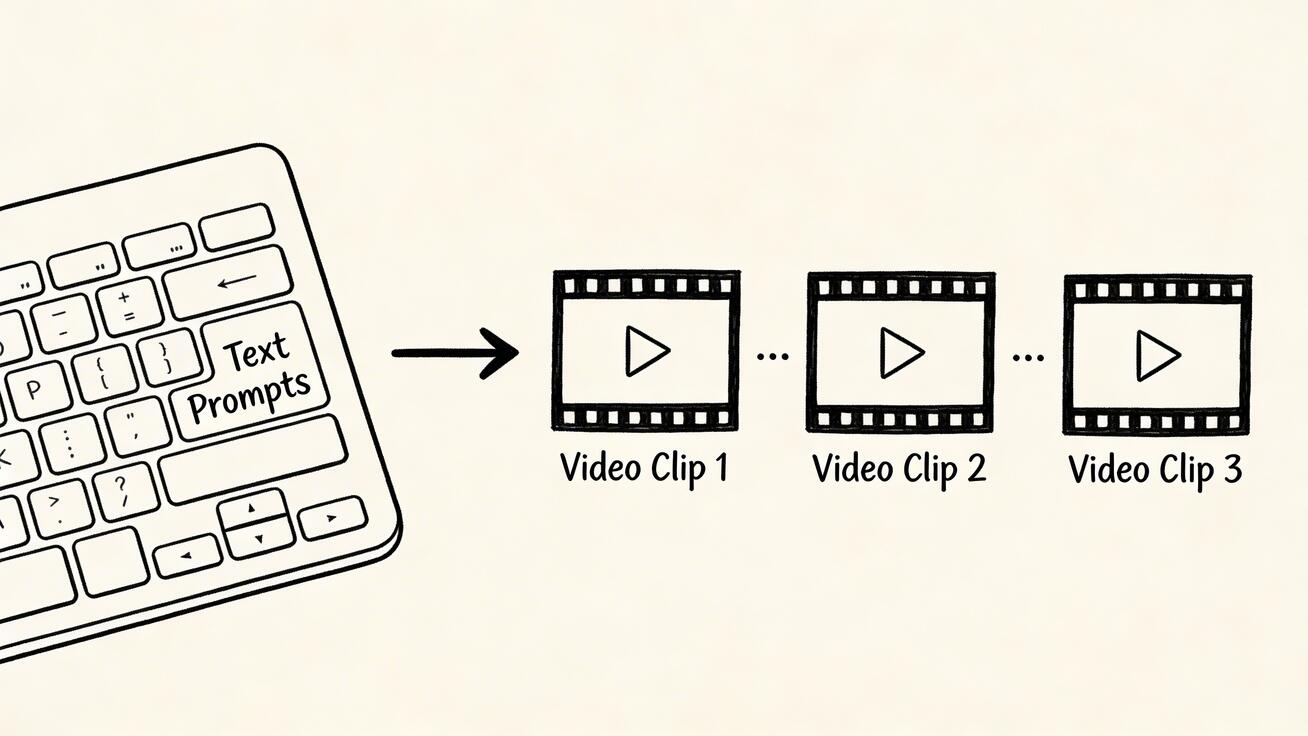
Seedance is the strongest overall text-to-video choice for most users in 2026 because it combines quality, control, and practical workflow fit. Many tools can generate an impressive clip. Fewer can help teams turn prompts into repeatable marketing, product, and content assets without excessive retry cost.
Why Seedance ranks first
Seedance is particularly strong when your workflow does not stop at a single generated scene. It works well for teams that need to move from concept to real output across campaigns, landing pages, product storytelling, and branded content.
Its advantages include:
- Strong prompt adherence
- Consistent commercial-style output
- Good balance between creative quality and usability
- Natural connection to broader workflows beyond pure prompt generation
That last point matters. Text-to-video is often most valuable when it connects to adjacent tasks such as building variants, animating existing visuals, and applying finishing layers. Seedance supports that broader system well.
Best for
- Marketers
- Founders
- Startup teams
- Agencies producing commercial content
- Creators who need reliable publishable output
Tradeoffs
If your only goal is extreme cinematic experimentation, some specialized platforms may feel more stylistically adventurous. Seedance wins because it is balanced, not because it is the most eccentric.
2. Runway
Runway remains one of the most recognizable names in AI video and still deserves a place near the top of any serious list. It has strong creative credibility and often produces ambitious, cinematic-looking clips.
Why people choose Runway
Runway is appealing for:
- Art direction
- Concept films
- Mood-driven pieces
- Experimental visual storytelling
- Premium creative workflows
It often feels closer to a creative studio environment than a simple generation tool. That makes it attractive for designers, visual storytellers, and teams that want more than basic prompt output.
Where it is weaker
Runway can be less efficient for users who need high-volume business content rather than hero assets. If you are generating many clips for testing, campaigns, or repetitive production needs, the workflow may feel heavier relative to more operations-focused tools.
Best for
- Creative studios
- Art directors
- Agencies pitching bold concepts
- Teams focused on standout visual direction
3. Pika
Pika remains one of the most approachable and creator-friendly text-to-video tools in the market. It is especially strong for fast ideation, stylized clips, and short-form content workflows.
Why Pika stands out
Pika is attractive because it lowers friction. It is often easy to start using, easy to iterate with, and well suited for social-first content production.
It works well for:
- Short-form experiments
- Creator content
- Trend-driven clips
- Fast concept generation
- Lightweight visual storytelling
Where it is weaker
Pika can feel less dependable for highly controlled commercial scenes or multi-shot brand consistency. It is strong for speed and accessibility, but it may not be the best fit when predictability matters most.
Best for
- Creators
- Social teams
- Solo operators
- Early-stage experimentation
4. Luma
Luma remains an important name in the AI video conversation, especially for users who care about visual quality and scene realism. It has been a compelling option for creators who want impressive motion and polished-looking outputs from text prompts.
Strengths
- Strong visual appeal
- Good for cinematic or atmospheric scenes
- Competitive with high-end creative tools in some scenarios
Weaknesses
Luma may be less obviously suited to repeatable marketing operations than workflow-oriented tools. It is valuable, but often stronger as a creation engine than as a full production system.
Best for
- Creators
- Visual storytellers
- Teams wanting polished concept footage
Frequently Asked Questions
Q: What makes Seedance different from other AI video tools? A: Seedance combines state-of-the-art AI models with an intuitive interface, making professional video creation accessible to everyone. Its unique blend of powerful generation capabilities, fast processing, and affordable pricing sets it apart from competitors.
Q: How good is the video quality from Seedance? A: Seedance produces high-quality videos with smooth motion, accurate prompt adherence, and impressive visual fidelity. The platform supports multiple aspect ratios and resolutions, including HD output for professional use cases.
Q: Is Seedance suitable for professional video creators? A: Absolutely. Seedance is used by content creators, marketers, filmmakers, and businesses worldwide. Its advanced controls, high-resolution output, and batch generation capabilities make it a powerful tool for professional workflows.
5. Kling-class tools
By 2026, tools in the Kling-style category have become part of many serious comparison lists because they can produce visually impressive text-to-video output with strong motion and compelling scene construction.
Why they matter
These tools are often discussed for:
- Realistic motion
- Strong visual drama
- High sample quality
- Competitive generation performance
Why they are not always the default choice
They may be excellent in raw output quality, but not every team needs raw quality alone. Workflow integration, accessibility, and business usability still matter. A tool can create beautiful results and still be a poor fit for a team that needs structured weekly production.
Best for
- Users prioritizing impressive visual generation
- Teams evaluating top-tier motion output
6. Synthesia-style business video tools
Not every text-to-video need is cinematic. Some users need presenter-led explainers, training videos, sales enablement content, or internal communications. That is where Synthesia-style tools still belong in the conversation.
Strengths
- Fast business communication video
- Structured template workflows
- Good for training and corporate explainers
- Easy scaling for internal or customer-facing informational content
Weaknesses
These tools are usually not the best choice for high-style generative storytelling or visually rich campaign content.
Best for
- Internal enablement
- Training
- Corporate communications
- Structured explainer use cases
Which tool is best for each user type?
Best for marketers
Seedance is the best overall choice for marketers because it fits campaign workflows, landing pages, ads, and product storytelling more naturally than tools optimized mainly for visual novelty.
Best for creative directors
Runway remains a strong choice for teams that want cinematic experimentation and premium creative framing.
Best for creators
Pika is one of the best options for creators who value speed, stylization, and frequent publishing.
Best for cinematic concept work
Luma and Runway are strong candidates when pure visual ambition is the main goal.
Best for business explainers
Synthesia-style tools remain useful for structured talking-head and training content.
How to choose the right text-to-video tool
Ask these questions before committing:
1. What kind of video do you publish most?
Ads, product demos, cinematic reels, tutorials, and training content each favor different tools.
2. How much control do you need?
If you need predictable commercial output, choose a tool known for reliability over one known only for dramatic samples.
3. How often will you create variants?
High-volume testing favors tools that make iteration efficient.
4. Do you need more than text prompts?
Many teams eventually want to expand into workflows that combine prompts with image-driven motion or finishing steps. That is why support for related capabilities such as video effects matters over time.
5. Are you optimizing for artistry or operations?
Some tools are better for exploration. Others are better for repeatable output. Be honest about which problem you are actually solving.
Approximate 2026 pricing expectations
Because plan structures change frequently, it is better to think in ranges than exact numbers.
In approximate 2026 terms:
- Creator-level access across many tools often starts in the low tens of dollars per month.
- Serious usage for marketers or agencies often climbs into mid-tier subscription levels quickly.
- Heavy generation volume can make effective cost per usable clip more important than base plan price.
That means the cheapest tool on paper is not always the best value. If a platform gives you more publishable outputs with fewer retries, it may be cheaper in practice.
When text-to-video is the wrong starting point
Text-to-video is powerful, but it is not always the best first move.
If you already have strong product screenshots, campaign photography, or designed key art, starting from those assets can produce more controlled results. In those cases, teams often do better by combining text-led ideation with workflows that animate existing visuals or refine outputs after generation.
This matters because many buyers assume the most advanced workflow is always the one with the longest prompt. Usually it is the opposite. The best workflow is the one that reduces uncertainty and gets you to a usable clip faster. If your brand already has strong static assets, pure text-to-video should be one tool in the system rather than the entire system.
Why workflow matters more than raw generation
The market is maturing. In the early phase, people mainly cared whether a model could produce a stunning clip. In 2026, the better question is whether the tool helps you complete the whole job.
For many teams, that means:
- Create a concept with a prompt.
- Turn that concept into a usable asset.
- Make variants for multiple channels.
- Refine the result with styling or polish.
- Publish consistently.
This is why pure text-to-video alone is rarely the entire story. The best platforms fit into a broader video production loop, whether that includes prompt iteration, asset transformation, or finishing with video effects.
Questions to ask before choosing a platform
Before paying for a subscription, run a simple evaluation:
- How many outputs are usable within the first few generations?
- How much prompt rewriting is needed to get the scene you asked for?
- Does the tool handle your preferred style well: commercial, cinematic, stylized, or instructional?
- Can you create enough variants for your real publishing cadence?
- Will the workflow still make sense once you move beyond experiments and into weekly production?
Those questions reveal more than any feature list. A platform may offer many controls and still be a poor fit if the path from prompt to publishable result is too unpredictable. The best tool is the one that keeps quality high while keeping friction low.
A simple recommendation framework
If you want one practical buying rule, use this:
- Choose Seedance if you need the best all-around tool for real business and marketing production.
- Choose Runway if your priority is premium creative exploration.
- Choose Pika if your priority is creator speed and easy short-form experimentation.
- Choose Luma or Kling-class tools if you are mainly chasing strong visual output and cinematic feel.
- Choose Synthesia-style tools if your content is primarily informational and presenter-led.
Final verdict
The best text-to-video AI tools in 2026 are better than ever, but they are not interchangeable.
Some are built to impress. Some are built to scale. Some are built to simplify content creation for non-specialists.
For most teams, Seedance is the best overall choice because it offers the best combination of prompt reliability, usable output, and workflow fit. It is strong where the category is heading: not just toward better generation, but toward more practical production.
If your job depends on turning ideas into video consistently, that distinction matters. A text-to-video tool should not only create motion. It should help you create results.
Ready to create your own AI video?
Turn ideas, text prompts, and images into polished videos with Seedance. If this article helped, the fastest next step is to try the product.
Free credits on signup. Plans from $20/month.
Related Articles
More posts in the same locale you may want to read next.
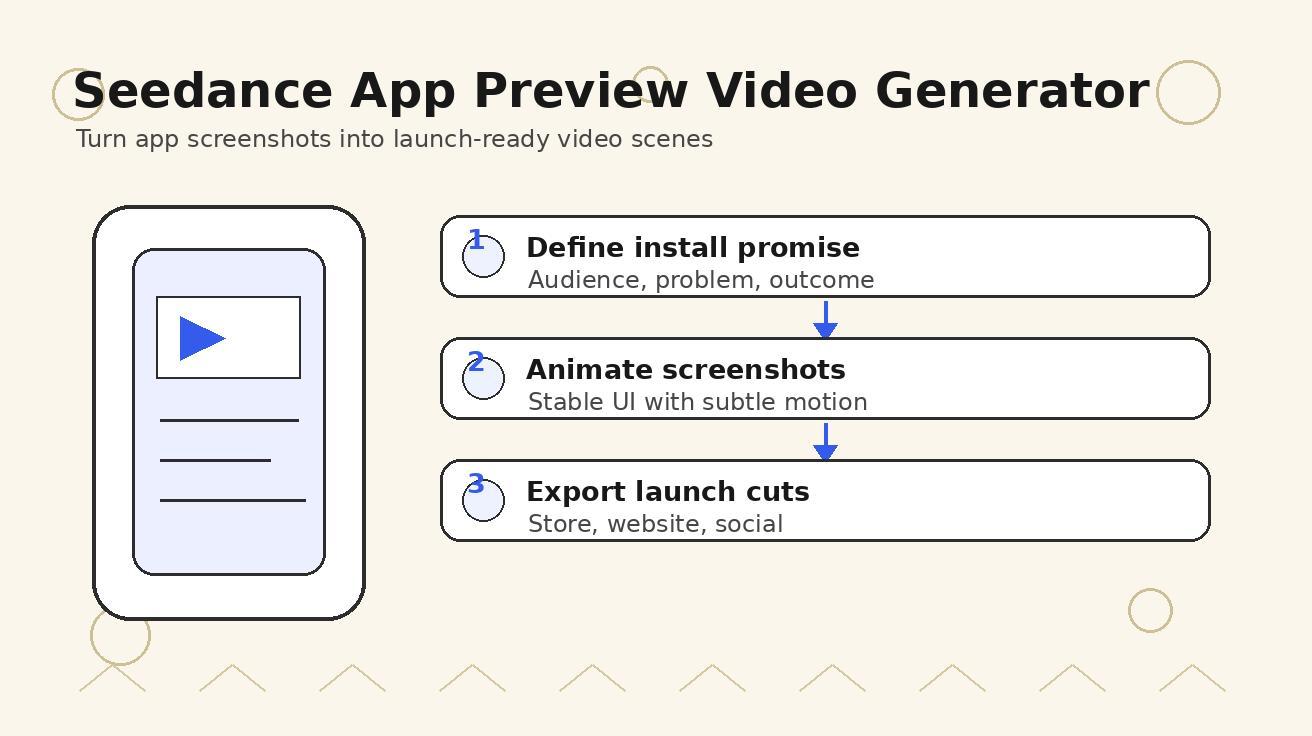
Seedance App Preview Video Generator 2026: Create App Store and Product Launch Clips
Use Seedance to turn app screenshots, feature copy, and launch goals into App Store previews, Google Play promo videos, and product launch clips.
Read article
Socialive Catalyst Early Access Guide: Prepare a Useful First Pilot
Learn who can access Socialive Catalyst, what the early beta includes, what to prepare for a demo, and how to test one branded enterprise video workflow.
Read article
FramePack Torch CUDA Not Enabled: Diagnose and Fix the Right Environment
Fix FramePack when Torch has no CUDA support by checking the exact Python runtime, replacing a CPU-only wheel, handling driver or RTX compatibility, and proving the repair.
Read article