
Master Documentary Filmmaking Techniques for Impactful Stories
Documentary filmmaking is all about making deliberate choices. It’s the craft of taking real-life, unscripted moments and shaping them into a story that feels both true and utterly compelling. It's so much more than just hitting record; it’s about having a vision and using specific techniques in planning, shooting, and editing to bring that vision to life for an audience.
The Art of Real-World Storytelling
At its heart, documentary filmmaking is the art of finding the story in reality. You're not just a passive observer capturing events as they happen. Instead, you're an interpreter—a blend of journalist, artist, and storyteller—sifting through the beautiful mess of real life to uncover a powerful, authentic narrative.
Learning the core documentary filmmaking techniques is what elevates your work. It’s the crucial difference between a home video and a film that genuinely connects with people. It’s what allows you to move beyond simply showing an interview and instead reveal the very essence of a person through a thoughtfully framed shot or a perfectly timed question.
This guide will walk you through the practical methods that experienced filmmakers use to turn hours of raw footage into a story with real impact.
What This Guide Covers
We're going to break down the intentional decisions that shape a documentary from the first idea to the final cut. You’ll get a solid, practical understanding of how to:
- Plan and Research: We'll look at how to dig deep to find the core of your story and, crucially, how to build trust with your subjects long before the camera starts rolling.
- Shoot with Intent: You'll discover the different styles of shooting, from the immersive ‘fly-on-the-wall’ approach to more direct and participatory methods where you become part of the story.
- Edit for Impact: This is where the magic really happens. We’ll explore how to build a narrative from your footage, control the pacing, and use sound to forge a deep emotional connection with your audience.
A great documentary isn’t just about the information it shares; it’s about the experience it creates. The techniques you choose are the tools that build that experience, turning someone watching passively on their sofa into an engaged participant in the story.
Think about it. The raw, observational style of a film like Gimme Shelter plunges you right into the middle of unfolding chaos, making you feel like you’re there. On the other hand, the confrontational interview style of a Louis Theroux film puts both the filmmaker and the viewer directly inside the narrative.
By getting to grips with these different approaches, you can start making your own deliberate choices to craft a film that doesn't just inform, but stays with your audience long after they've finished watching.
Building Your Documentary's Foundation
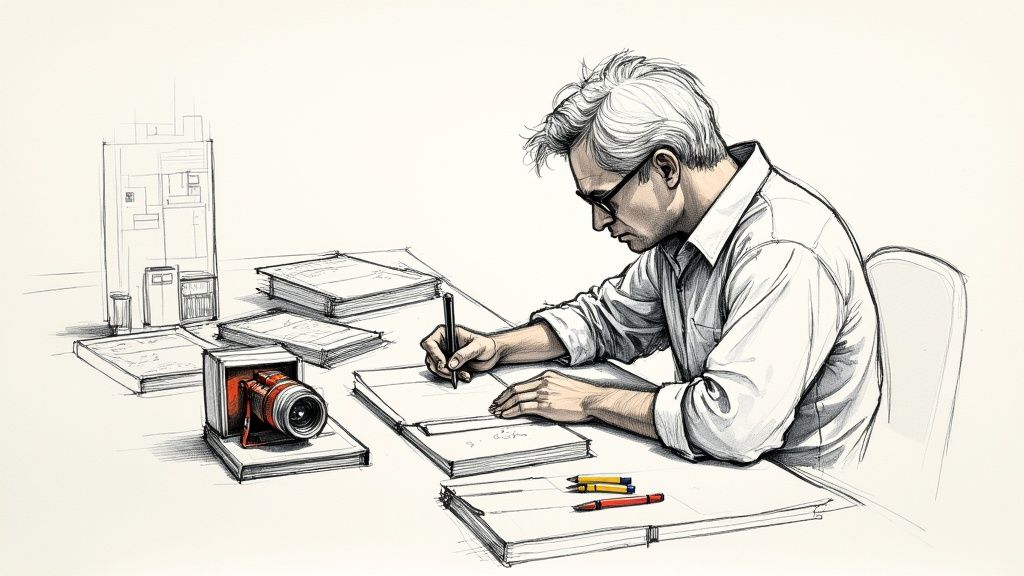
The most compelling documentaries are born long before anyone shouts "action!". It all starts in pre-production, a quiet but critical phase where you turn a flicker of an idea into a solid, workable plan. This is what separates a collection of random footage from a story that truly resonates.
Think of yourself as an investigative journalist. Your first job is to dive deep into your subject. You’re gathering intel, mapping the terrain, and figuring out who the key players are. This is how you get from a vague topic like "urban gardening" to a specific, potent question: "Can a community garden actually heal a neighbourhood fractured by gentrification?"
That central question is your North Star. It guides every choice you make, ensuring your film has a clear purpose and saving you from a jumble of disconnected interviews and pretty shots.
From Research to Relationships
With your narrative question locked in, you need to find the people who will carry the story. This isn't just about finding subjects; it’s about discovering characters—real people whose experiences give your film its emotional heartbeat.
Getting access and building trust is everything. You simply can't rush this part. It takes honest conversations, real curiosity, and showing people you’re genuinely committed to telling their story with respect.
- Make the first move: When you reach out, be upfront about your project and why their story feels so important to you. For example, instead of a generic "I'm making a film about artists," try, "I've been following your work for years, and your latest series on urban decay really moved me. I'm making a documentary about how artists are reclaiming public spaces, and I believe your perspective is essential."
- Listen more than you talk: Spend time with your subjects without a camera in sight. Get to know what drives them, what they fear, and what they hope for. Take them for coffee. Help them with a task. This groundwork pays off hugely when you finally start filming.
- Be clear about ethics: Talk openly about how they'll be portrayed and always get informed consent. Show them a release form early and walk them through it, explaining in plain language what it means. This isn't just a formality; it's the foundation of the trust you need to capture anything authentic.
The relationships you build off-camera directly shape the authenticity you capture on-camera. A subject who trusts you will reveal a vulnerability and truth that a stranger could never hope to see.
This deep dive into research also helps you see the story's potential shape. You can begin to map out possible narrative arcs, which is vital for creating a production plan that’s robust yet flexible enough to handle the unexpected.
Crafting Your Film's Blueprint
Now that you have your research and key characters, it’s time to create a treatment. Think of this document as your film's architectural plan. It can be a few pages or a detailed outline, but its purpose is the same: to articulate your vision. It's an essential tool for convincing funders or getting your team on the same page.
A solid treatment usually includes:
- Logline: Your film summarised in a single, punchy sentence. Example: "A reclusive beekeeper in a shrinking town fights to save the last pure honeybees in Europe from corporate greed."
- Synopsis: A deeper look at the story, its main characters, and where the narrative might go.
- Filmmaker's Statement: Your personal connection to the story and your vision for its look and feel.
- Character Bios: Short introductions to the people at the heart of your film.
- Audience and Distribution Plan: Who are you making this for, and how will it find them?
This is also the stage where reality sets in. Your budget, for instance, has a massive say in which documentary techniques you can actually use. Industry research consistently shows that a lack of funding is a major hurdle, often preventing filmmakers from being as creative as they'd like.
Despite these challenges, growing support from festivals and broadcasters is giving documentaries a wider platform. Understanding these dynamics is key to navigating the industry. Of course, you can also get creative with the tools at your disposal; something like an image to video converter can be a brilliant way to mock up storyboards or concept sequences from still photos, helping you visualise the narrative long before you film a single frame.
Choosing Your Visual Language
Every documentary speaks a distinct visual language. This isn't just about what you point the camera at, but how you frame the world. These decisions are at the very heart of great documentary filmmaking techniques and shape how your audience connects with the story, deciding whether they feel like a detached observer or like they're right there in the room.
Making these visual choices with intent is what separates a professional film from simple home video. It’s the difference between merely recording an event and skilfully guiding an audience on an emotional and intellectual journey. Get the approach right, and your narrative will feel authentic, immersive, and unforgettable.
Selecting Your Documentary Mode
Your first big decision is the overall style, or ‘mode’, that best fits your story. Each one establishes a unique relationship between you, your subject, and the viewer. Think of them as different dialects of your visual language.
- Observational Mode: Often called "fly-on-the-wall," this style is all about achieving a sense of impartiality. The filmmaker stays invisible and silent, capturing events as they happen naturally. The goal is to create a feeling of raw, unfiltered reality. Practical Example: In Honeyland (2019), the filmmakers followed a Macedonian beekeeper for three years, rarely interacting. The result is an intimate, powerful story that feels like you're simply witnessing her life unfold.
- Participatory Mode: Here, the filmmaker steps out from behind the camera and becomes an active part of the story. You'll see them interacting with subjects, asking questions, and their presence is fully acknowledged. This is Louis Theroux’s signature style; his direct engagement and on-screen personality are crucial to how the story develops. Practical Example: In Michael Moore's Bowling for Columbine (2002), Moore is a central character, confronting executives and driving the narrative with his own investigation and commentary.
The mode you choose fundamentally alters your film's texture. An observational style builds truth through quiet presence, while a participatory style uncovers truth through active engagement. Neither is more "real" than the other; they are simply different tools for exploring reality.
This choice ripples through every stage of your project, from initial planning to how you conduct yourself on set. For instance, a participatory documentary demands a filmmaker who is comfortable on camera and has a real knack for building rapport on the fly.
Mastering Essential Cinematography Techniques
Beyond the broad style, it’s your shot-by-shot decisions that build meaning and stir emotion. A solid grasp of basic cinematography isn't optional—it's essential for creating a visually compelling film. Even simple techniques, when used with purpose, can add incredible depth.
Take interview framing, for example. Placing a subject smack-bang in the centre of the frame can signal authority and confidence. But what if you use the Rule of Thirds and position them off to one side? Suddenly, you might create a feeling of unease or vulnerability, hinting that there's more to their story than they're letting on.
B-roll is another absolute game-changer. This is all the extra footage you gather—shots of the environment, close-ups of your subject’s hands, or scenes of them going about their day—that you can cut to during an interview. It breaks up the monotony of a "talking head," adds vital context, and makes the whole experience more immersive. Actionable Insight: If an interview subject mentions a cherished photograph, make a note to get a clean, steady shot of that photo later. When you edit, you can cut from their face to the photo exactly as they mention it, creating a powerful emotional link for the viewer. You can elevate this footage even further with subtle enhancements like colour grading or stabilisation; exploring different video effects can help you find the perfect tone for your film.
Even the choice between a tripod and a handheld camera sends a message. A tripod shot feels stable, controlled, and objective. In contrast, handheld shooting injects a sense of immediacy, intimacy, or even chaos, pulling the viewer right into the middle of the action.
The infographic below shows just how much pre-planning your visual approach with a tool like a storyboard can streamline your entire workflow.
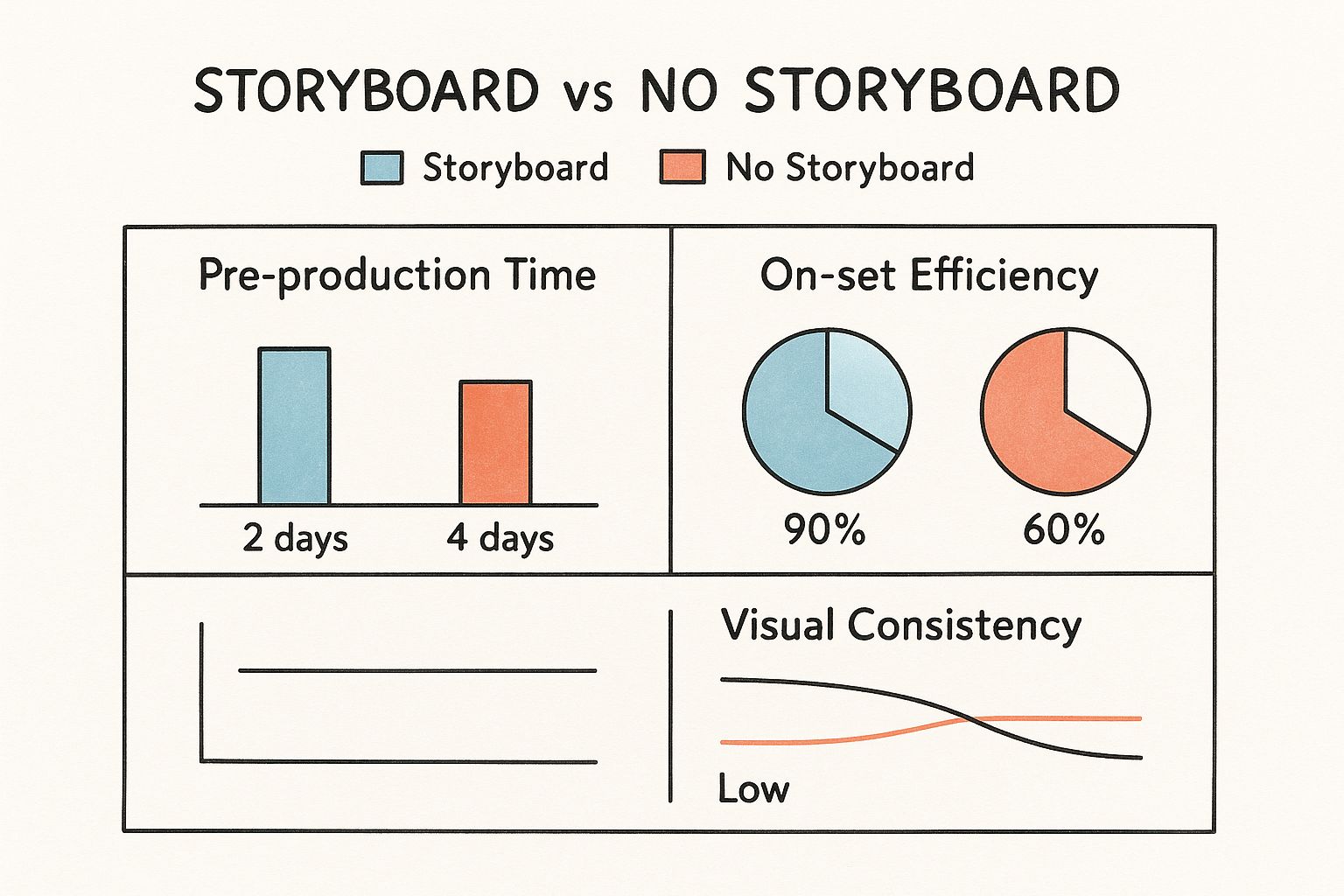
As you can see, storyboarding doesn't just save time on set; it also helps you achieve a much higher degree of visual consistency—a hallmark of a professional film.
This emphasis on powerful visual storytelling has become more important as the genre's popularity has exploded. In the UK, for instance, documentary filmmaking has seen a massive boom. Back in 2001, just four documentaries were released in the UK and Ireland. By 2021, that number had soared to 69. This growth highlights the genre's rising cultural influence, with UK documentaries earning serious respect at major festivals worldwide. You can see the full story behind this trend in the data on Statista.com.
Designing an Immersive Soundscape
In documentary filmmaking, what we hear is just as vital as what we see. Sound is the invisible thread that weaves a story together. It builds tension, sparks empathy, and can pull an audience right into the world you’ve created. Frankly, getting it right is one of the most crucial documentary filmmaking techniques.
Great sound design doesn't just happen in the edit suite. It starts on location, and it begins with choosing the right microphone. Every mic is a specialised tool, designed to capture a specific type of audio. Knowing which one to grab is the first step towards clean, professional results.
Choosing the Right Tool for the Job
Your microphone selection is what defines the quality and character of your audio. For most documentary work, you'll be dealing with three main types, each with a very different job to do.
- Shotgun Mics: These are your snipers. They’re highly directional, designed to zero in on sound from a specific area while ignoring noise from the sides. Use Case: Filming an interview in a bustling market. Point the shotgun mic directly at your subject's mouth to isolate their voice from the surrounding chatter.
- Lavalier Mics (Lavs): These are the tiny microphones you clip onto your subject's clothing. They’re the go-to for sit-down interviews because they isolate the speaker's voice, keeping audio levels consistent even if the person turns their head. Use Case: A formal, seated interview where you need pristine, consistent dialogue without any background noise.
- Omnidirectional Mics: As the name suggests, these mics hear everything, capturing sound equally from all directions. They are brilliant for recording rich, immersive ambient sound—the general background hum of a location—which breathes life and authenticity into your film. Use Case: Place one in the corner of a workshop to capture the authentic sounds of tools, machinery, and quiet conversation to use as an atmospheric sound bed.
Sound doesn't just support the visuals; it often leads them. A sudden silence can be more powerful than a loud explosion, and the subtle hum of a city can tell you more about a location than any wide shot.
Think of these microphones as different paintbrushes. The shotgun is your fine-detail brush for the sharp lines of dialogue. The lavalier is for painting a clean, clear portrait. And the omnidirectional mic? That's your broad brush for creating the atmospheric backdrop.
The Power of Sound Design in Storytelling
Once you've captured your audio, the real artistry begins in the edit. This is where you go beyond just making things sound clear and start using sound to drive the narrative. A key idea here is the dance between diegetic and non-diegetic sound.
Diegetic sound is anything that exists inside the world of your film—the dialogue, the footsteps, a passing car. In contrast, non-diegetic sound is added purely for the audience, like a musical score or a narrator's voiceover. The magic happens when you start blending these two worlds to guide your audience’s feelings.
For a masterclass in this, watch the film Senna (2010). The filmmakers use the diegetic roar of Formula 1 engines not just as background noise, but as a weapon to build almost unbearable tension before a crash. This raw, authentic sound is then layered with a melancholic, non-diegetic score, creating a profound sense of impending tragedy. It's incredibly powerful.
This level of audio sophistication is becoming more and more achievable. The UK film industry's recent growth, largely fuelled by inward investment, has given filmmakers access to better gear and facilities. In 2022, total film production spending hit around £1.97 billion, a huge jump that helps fund the use of advanced sound recording and design techniques. You can dig deeper into these industry trends by reading the full report on SocialFilms.co.uk.
Ultimately, a truly great soundscape is one the audience feels more than they notice. By making smart choices with your microphones on set and thoughtfully layering your audio in the edit, you can elevate your documentary from a simple report into a genuinely cinematic experience.
Finding Your Story in the Edit
If filming is like gathering all the raw ingredients, then editing is where the real cooking begins. It’s in the quiet of the edit suite, surrounded by hours of footage, that the true story of a documentary is often discovered. This isn’t just about trimming the fat or cutting out mistakes; it’s a profound creative process of building rhythm, shaping emotion, and unearthing meaning.
Getting this stage right is one of the most crucial documentary filmmaking techniques. It's the moment you transform a collection of disconnected scenes into a single, compelling narrative that pulls your audience in from the very first frame. This is where your film truly comes alive.
From Chaos to Coherence
The first job in any edit is to bring order to the chaos. Staring at hundreds of hours of footage can feel overwhelming, so you need a system. It all starts with logging every single clip and—this is non-negotiable—transcribing every interview. It might sound tedious, but this groundwork is the bedrock of your entire film.
Once your interviews are on paper, you can build a paper edit. This is a wonderfully low-tech but incredibly powerful way to map out your story before you even open your editing software. Actionable Insight: Use different coloured highlighters on your printed transcripts. For example, yellow for key emotional moments, blue for critical plot points, and pink for strong opening or closing statements. This visual coding makes it much easier to spot patterns and structure your narrative.
A paper edit forces you to focus purely on story. You’re not distracted by a beautiful shot or a shaky camera. You’re just listening to the words, finding the emotional arc, and figuring out if you actually have a film. It’s the cheapest, fastest way to test your narrative.
This process helps you pinpoint your core themes, identify the story's turning points, and build a solid narrative spine. Think of it as drawing up the architectural blueprints before you start laying the bricks.
Weaving A-Roll and B-Roll
With a strong paper edit as your guide, you can finally start piecing together the visual puzzle. You’ll be working with two main ingredients: A-roll and B-roll.
- A-Roll: This is your core footage—the interviews or main action that drives the story. It’s where your subjects share their truths and where the key events unfold.
- B-Roll: This is all the supplementary footage you use to add context and visual flavour. It could be a shot of the environment, a close-up of a subject's hands, or archival photos that illustrate what someone is talking about.
The real artistry is in how you weave these two together. B-roll isn't just for hiding jump cuts in an interview; it’s a storytelling tool. When a subject talks about feeling isolated, you can show that feeling by cutting to a wide shot of them alone in a vast landscape. That interplay between showing and telling is what makes a film feel truly cinematic.
Choosing Your Narrative Structure
Stories don't always have to be told from beginning to end. The structure you choose has a massive impact on the film’s pacing, suspense, and emotional weight. There are endless ways to structure a story, but two common approaches show just how different the experience can be.
Linear Structure This is the classic chronological approach, where events are shown in the order they happened. It’s direct, easy to follow, and incredibly powerful for historical docs or films that build on a sequence of events.
- Practical Example: The documentary Apollo 11 (2019) is a masterclass in linear storytelling. It uses stunningly restored archival footage to take us through the moon mission second by second. There’s no narrator telling us what to feel; the sheer chronological unfolding of the event creates all the tension and awe needed.
Non-Linear Structure Here, you play with time. You might start near the end, jump back to the past, or reveal key pieces of information out of order to create mystery. It’s a fantastic tool for character studies or investigative films where the journey of discovery is the story.
- Practical Example: Three Identical Strangers (2018) uses a non-linear structure brilliantly. It opens with what seems like a joyful, unbelievable reunion story. But then, it slowly and deliberately starts peeling back the layers of the past, uncovering a much darker truth. This structure turns the audience into investigators, piecing the puzzle together right alongside the filmmakers.
The right structure is whatever serves your story best. You have to ask yourself: what journey do I want to take the audience on? Do I want them to feel the inevitable march of history, or the dizzying shock of a hidden secret? Your answer will point you toward the right structure and shape the entire rhythm of your film.
Bringing Your Vision to the Screen
We’ve journeyed through the core techniques of documentary filmmaking, from the first spark of an idea right through to the final cut. Think of these techniques not as a strict set of rules, but as a toolkit. Each tool is there to help you tell your story with purpose and intention.
The aim is never just to point a camera at reality; it’s to interpret it, to share your unique and ethical perspective. As you step out on your own projects, don't be afraid to play around. Why not mix fly-on-the-wall observational footage with slick animated sequences? Or create a powerful contrast between intimate, handheld moments and more formal, tripod-mounted interviews? The creative possibilities are endless.
Fusing Skill with Empathy
The documentaries that truly resonate, the ones that stick with you long after the credits roll, are always a blend of technical craft and genuine human empathy. Knowing how to light and frame a beautiful interview is one thing. Creating a space where your subject feels comfortable enough to share their truth? That's something else entirely. It's in that delicate balance that the real magic happens.
Stay anchored to the truth of your story and the dignity of your subjects. Your primary responsibility is to represent real lives with integrity, using your filmmaking skills to honour their experiences, not just exploit them for dramatic effect.
This commitment to ethical storytelling should be the compass that guides every single decision you make, from the first day of shooting to the last day in the edit suite.
Your Next Steps
Becoming a filmmaker is a journey of constant learning and sharpening your skills. It’s about trusting your gut while always looking for ways to improve your craft. A fantastic place to start is making sure your final film looks as polished as possible. Our guide on how to improve video quality is packed with practical tips that can elevate your work.
Ultimately, the best documentary filmmaking techniques are the ones that serve your story. So take what you’ve learned here, trust in your vision, and get out there to create films that matter. The world is waiting to hear them.
Frequently Asked Questions
<iframe width="100%" style="aspect-ratio: 16 / 9;" src="https://www.youtube.com/embed/HdvTO9rvSm4" frameborder="0" allow="autoplay; encrypted-media" allowfullscreen></iframe>
Getting your head around all the different documentary filmmaking techniques can feel like a lot to take in. To help clear things up, I’ve put together some answers to the questions I hear most often from filmmakers, giving you practical insights to help you get on with your project.
How Do I Choose the Right Shooting Style?
There's no single "best" shooting style—the right one is always the one that tells your story most effectively. The real question to ask yourself is: what kind of relationship do I want to have with my subjects and, by extension, my audience?
If you want to capture life as it happens, with no filter and without your presence being felt, then the observational or "fly-on-the-wall" style is your best bet. This approach takes a lot of patience and a real knack for blending into the scenery. Think of the Maysles brothers in Gimme Shelter—they simply let the camera roll as events unfolded, creating a raw, immersive experience for the viewer.
On the other hand, if your own journey of investigation is a core part of the story, a participatory style is a much better fit. This is the natural choice for films where the filmmaker is discovering things alongside the audience, much like you’d see in a Louis Theroux documentary.
What Is the Best Way to Work with Subjects?
Trust. It's the absolute bedrock of any good documentary. The relationship you build with the people in your film will directly shape how authentic the final piece feels, and that bond starts long before the cameras are even out of their bags.
- Put in the time off-camera: Spend time just being with your subjects, no equipment in sight. Listen to them, learn about their lives, and try to see the world through their eyes.
- Be completely transparent: Make sure they understand what your film is about and how their story will be a part of it. Get their informed consent and be open about the entire process.
- Lead with genuine empathy: Your job is to tell their story with integrity. This isn't just a nice-to-have; it's the ethical foundation for capturing moments that are real and meaningful.
How Much B-Roll Should I Film?
One of the most common pitfalls for new filmmakers is not shooting nearly enough B-roll. It’s easy to think you have enough, only to get to the edit and realise you’re short. A solid rule of thumb is to aim for at least three to four times more B-roll than you think you’ll ever need. Honestly, you can never have too much.
B-roll is your narrative safety net. It’s the visual glue that holds your film together. It does more than just cover jump cuts in an interview; it breathes life into the story, showing the audience the world your subject is describing and adding layers of emotional context.
Try to get a good mix of shots. Capture wide shots to establish the environment, medium shots of your subjects doing things, and plenty of tight close-ups on hands, objects, and expressions. This variety will give you a world of creative options when you sit down to edit.
Can I Structure My Story if I Don't Know the Ending?
Yes, absolutely. In fact, most documentary filmmakers start their projects without a clue how things will end. The story often reveals itself during filming and really takes shape in the editing suite.
A brilliant way to get started is with a "paper edit." Once you’ve transcribed all your interviews, you can print out the best quotes and key moments. By physically arranging them on a table or in a document, you can start to see a narrative arc emerge. This lets you play around with different beginnings, turning points, and potential climaxes—all without making a single cut. It's a flexible blueprint for finding the story hidden within your footage.
At Seedance, we believe powerful storytelling should be within everyone's reach. If you're looking to bring your documentary ideas to life, create stunning visuals, or mock-up sequences with incredible speed, our AI video generator can help you turn your concepts into cinematic reality. Discover how you can create stunning 1080p videos from simple text prompts by visiting us at https://www.seedance.tv.